
Alpha Pro Tech Faces Tariff Litigation and Supply Chain Challenges in Q2 2026
Q2 results highlight ongoing tariff litigation impacts and strong liquidity amid supply chain pressures.
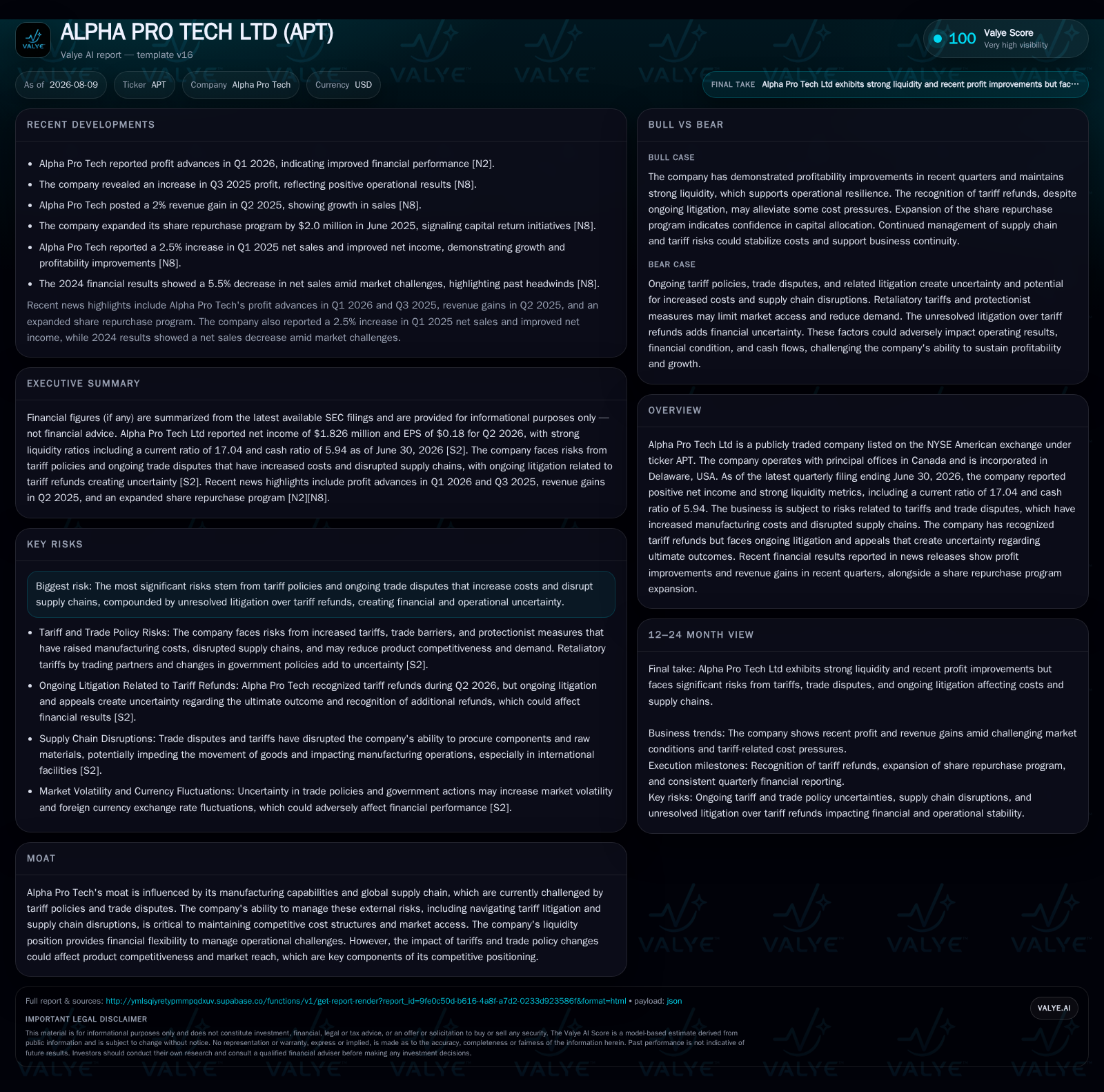
Alpha Pro Tech Ltd reported strengthening liquidity and positive net income in its latest quarter, while grappling with heightened manufacturing costs due to evolving tariff policies and trade disputes. The company recognized certain tariff refunds during the period but faces ongoing uncertainty from unsettled litigation and appeals. Alpha Pro Tech’s midstream manufacturing position, reliant on subcontracted production in Asia, exposes it to supply chain disruptions and protectionist measures that threaten product competitiveness and cost structures. Maintaining robust financial flexibility will be critical as the company navigates these external risks alongside steady demand growth in protective apparel and building products.
Latest Operating Update Highlights
In its second quarter ending June 30, 2026, Alpha Pro Tech Ltd disclosed receipt of certain tariff refunds under the International Emergency Economic Powers Act (IEEPA), including statutory interest payments during June 2026. However, the company affirmed ongoing litigation challenging these tariffs remains unresolved with the U.S. government pursuing appeals against court rulings favorable to Alpha Pro Tech [S2]. An additional $3.2 million in tariff refunds received in July 2026 has not yet been recognized as revenue due to continued uncertainty around final litigation outcomes [S2]. These developments underscore a volatile legal environment influencing the company's cost structure and cash flow visibility.
Alongside these legal headwinds, Alpha Pro Tech continues to confront increased manufacturing costs driven by heightened tariffs enacted by the U.S., with reciprocal retaliatory tariffs imposed by various trading partners. Such protectionist measures have introduced complexity to its global supply chain operations by raising input costs and disrupting cross-border movement of goods [S2]. These factors could erode product price competitiveness and may potentially dampen demand or limit access to specific international markets if policy conditions worsen.
Business Model Overview
Alpha Pro Tech operates predominantly in the industrial protective apparel and building products sector. Its core business involves designing, producing, and distributing disposable protective apparel — such as gowns and face masks — along with specialized building supply products used in construction settings [S1]. The company primarily monetizes through direct sales contracts with industrial manufacturers, healthcare providers, construction firms, and distributors.
A significant operational characteristic is the outsourcing of much of its manufacturing to subcontractors located in Asia. This approach leverages relatively lower production costs but heightens exposure to geopolitical risk factors including tariffs, supply chain disruptions, and capacity constraints at subcontractor facilities. Lead times for raw materials sourced globally also introduce variability into inventory turnover rates and order fulfillment timelines — key KPIs for maintaining customer satisfaction in B2B sales cycles.
Margin dynamics are sensitive to fluctuations in manufacturing cost per unit which are currently pressured by tariffs as well as raw material price volatility. Additionally, Alpha Pro Tech must manage working capital efficiently due to fluctuating inventory levels impacted by supply chain delays or shifting demand patterns.
Industry Structure and Competitive Positioning
The industrial protective apparel market is served by a mix of global diversified suppliers like Kimberly-Clark Corporation (known for disposable apparel) alongside integrated safety companies such as Honeywell International offering both safety products and building materials. Within the building products segment, companies typically contend with cyclical demand linked closely to construction activity.
Alpha Pro Tech's position reflects a midstream manufacturer heavily reliant on subcontracted overseas capacity rather than vertically integrated production or branded marketing scale like some peers. This model reduces capital intensity but increases vulnerability to tariffs and protectionist shocks that disrupt offshore cost advantages. In comparison to peers with diversified geographic footprints or more integrated supply chains (e.g., DuPont’s specialty materials segment), Alpha Pro Tech faces tighter pressures on sustaining competitive pricing amidst ongoing trade frictions.
Customer concentration risk exists given reliance on B2B contracts where procurement managers weigh factors including price stability, delivery reliability, regulatory compliance certifications, and overall supplier resilience post-pandemic emphasizing supply chain robustness.
Growth Drivers
Structural growth prospects remain anchored by rising global awareness of occupational health and safety standards coupled with expanding healthcare infrastructure investments requiring disposable protective gear. Construction sector rebounds in key regions also drive incremental demand for building supplies sourced from reliable manufacturers like Alpha Pro Tech.
Regulatory tightening globally around workplace safety compliance sustains a baseline demand floor for such products. Innovation efforts focusing on improved material performance or environmental considerations (e.g., biodegradable disposables) can further differentiate offerings if executed effectively.
Supply chain optimization initiatives aimed at reducing lead times or inventory buffers promise margin improvements if subcontracting partners can maintain quality at scale under escalating raw material prices.
Geographic expansion into emerging markets presents additional upside given rising industrialization trends but entails layered risks from protectionist measures potentially restricting export channels.
Risks and Constraints
Tariff policies stand as the most significant risk vector confronting Alpha Pro Tech. The unresolved litigation regarding IEEPA-based tariffs introduces earnings volatility given uncertain timing or full recognition of potential refunds [S2]. Should court decisions shift unfavorably or government policies tighten further, the direct impact on manufacturing costs could compress margins materially.
Supply chain disruptions remain salient due to dependency on Asian subcontractors who face capacity constraints alongside fluctuating raw material availability exacerbated by climatic events or labor shortages documented industry-wide [S1]. Limited alternative sourcing options magnify this risk exposure.
Currency fluctuations tied to U.S.-Asia trade flows may add variability to cost inputs denominated in foreign currencies.
Customer diversification outside North America remains constrained partially due to protectionist barriers hindering seamless market access for finished goods exported internationally.
Operational risks related to climate change effects including extreme weather events threaten both physical assets at manufacturing sites abroad and infrastructure supporting logistics networks [S1]
What To Watch Next
Key milestones include updates on ongoing tariff refund litigation progress beyond current appeal stages which will clarify revenue recognition prospects related to past tariff payments [S2]. Monitoring whether additional refunds like the $3.2 million received in July get formally recognized will signal resolution trends impacting cash flow predictability.
Operational indicators such as supply chain lead times for raw materials — especially import transit from Asia — inventory turnover rates reflecting finished goods ready for delivery, and order fulfillment percentages will provide insight into execution resilience amid tariff-induced disruptions.
Further details on share repurchase program expansions disclosed in recent quarters would elucidate management confidence regarding financial strength amidst external uncertainties.
Macro-level trade policy shifts from major governments toward either easing protectionism or increasing trade barriers remain critical contextual factors shaping Alpha Pro Tech’s medium-term risk profile.
Financial Profile Discussion
As of June 30, 2026, Alpha Pro Tech demonstrated a robust liquidity position with current assets totaling approximately $54.2 million against current liabilities near $3.18 million resulting in an exceptionally high current ratio of 17.04 — indicating strong short-term financial flexibility [F1]. Cash and equivalents alone stood at roughly $18.9 million supporting operational cash flow needs comfortably amid ongoing challenges [F1]. This liquidity buffer is pivotal given uncertainties surrounding tariffs refund settlements which could otherwise pressure working capital requirements.
Maintaining healthy working capital dynamics supported by prudent management should remain a priority given potential volatility in raw material pricing driven by both commodity markets and trade policies.
--- This analysis synthesizes publicly available SEC filings through August 7, 2026 combined with industry structuring insights relevant to industrial protective apparel manufacturing businesses relying extensively on global supply chains vulnerable to evolving trade policies [S1][S2][S3][F1]. The company's ability to navigate complex tariff environments while leveraging its liquidity position will be determinative for operational continuity amid growing external uncertainties.
Disclaimer: This is research-only, informational analysis and not investment advice. It may include AI-generated interpretation and general industry context. Always verify important details using primary sources.

Comments