
Flanigan's Enterprises Leverages Digital Ordering and Fixed-Rate Debt Amid South Florida Concentration
Recent quarterly results highlight Flanigan's growth in digital sales and strategic interest rate management amid regulatory and geographic challenges.
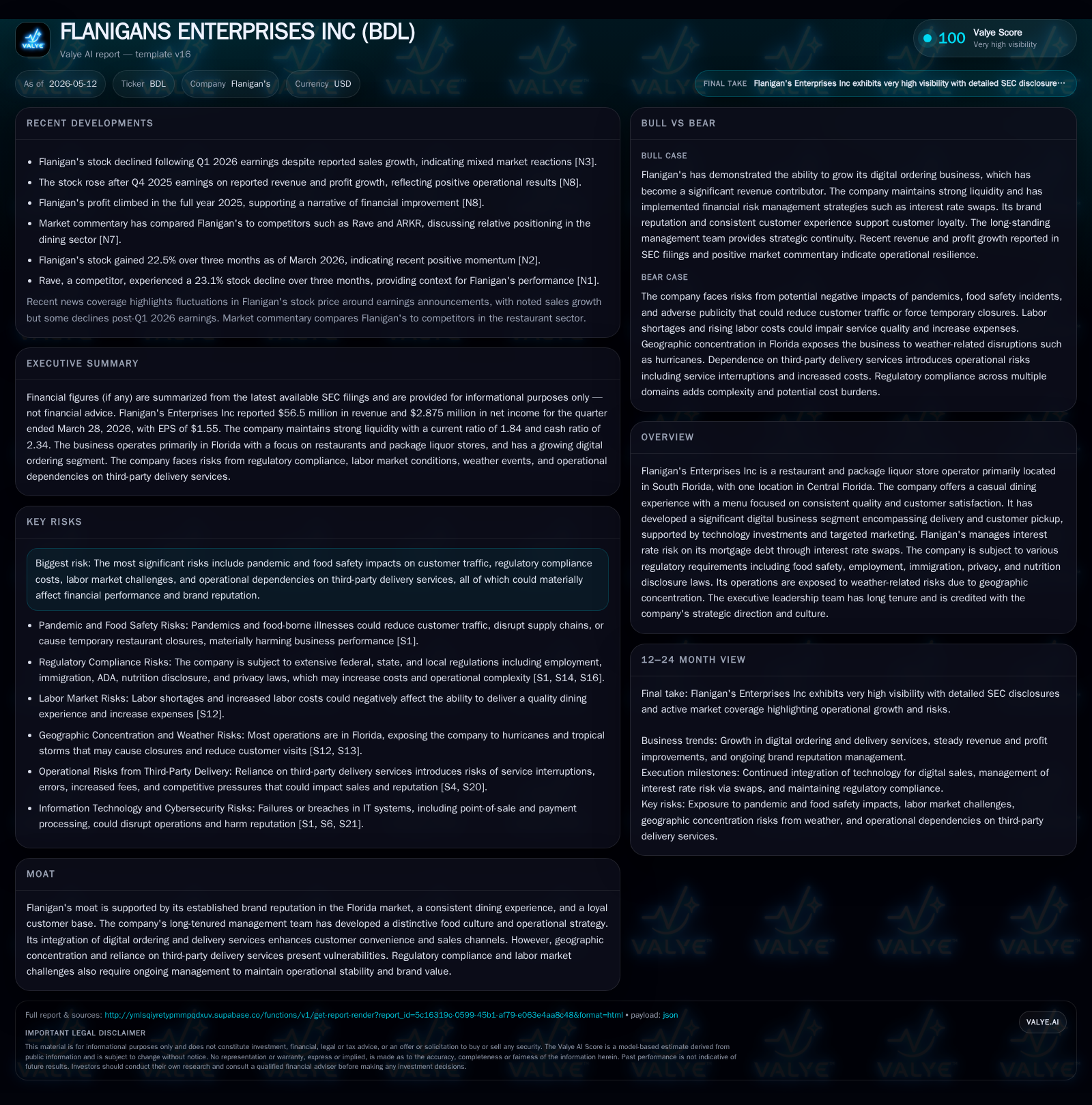
Flanigan's Enterprises Inc, a South Florida-centered restaurant and package liquor store operator, reported steady business performance with continued momentum in its expanding digital order segment in its latest quarter ending March 2026 [S2]. The company’s strategic use of interest rate swaps to fix borrowing costs reflects prudent financial risk management [S9][S10]. Flanigan's moat rests on longstanding brand loyalty, consistent dining experience, and increased digital integration, although exposure to weather-related disruptions, labor market tightness, and reliance on third-party delivery providers pose ongoing risks. Success depends on navigating regulatory complexities, sustaining labor supply, and capitalizing on growing digital demand [S1][S14].
Recent Operating Update
Flanigan's Enterprises reported its latest quarterly results as of March 28, 2026, without introducing new risk factors or operational disruptions per its 10-Q filing dated May 12, 2026 [S2]. The absence of new risk disclosures suggests operational stability despite industry challenges. Importantly, digital order revenues—comprising delivery and customer pickup—have grown substantially through investments in technology platforms and targeted marketing initiatives tailored to the evolving consumer preference for convenience [S1][S14]. This digital momentum aligns with broader restaurant industry shifts where off-premises dining channels now play a vital role.
The company’s continued reliance on third-party delivery services remains a double-edged sword: it extends reach but exposes sales to platform-level interruptions, fee escalations, or competitive prioritization that could impact Flanigan’s sales volumes [S14]. The firm appears to manage these risks proactively through technological upgrades and remodeling efforts aimed at enhancing pickup order efficiency.
Business Model
Flanigan's Enterprises operates primarily as a casual dining restaurant operator supplemented by package liquor stores predominantly situated in South Florida—with one outlier in Central Florida—forming a geographically concentrated business footprint [S1][S19]. Revenue streams flow mainly from dine-in customers and the growing digital ordering segment. The company's value proposition centers on delivering consistent food quality within an informal dining setting backed by a loyal customer base forged over decades.
The integration of technology into ordering systems allows Flanigan's to capture additional sales via delivery and pickup while gaining data-driven marketing insights. However, the company remains exposed to permutations in third-party delivery platforms which handle order fulfillment logistics—a factor handled outside direct control but critical to customer satisfaction.
From a financial risk standpoint, Flanigan's employs interest rate swap agreements to convert variable rate mortgage debt into fixed-rate obligations at approximately 4.90%, thereby stabilizing interest expenses over the life of these loans (~12 years remaining) [S9][S10][S11]. This approach signals sophisticated treasury management uncommon among mid-market restaurant operators.
Industry Structure and Competitive Position
Flanigan's operates in a highly competitive quick-casual/dining segment characterized by regional chains, local independents, and national brands. Its primary competitive advantages include strong brand recognition within its South Florida market, long-tenured management team fostering consistent culture and operational expertise, and a distinctive menu focused on quality consistency.
Nevertheless, the localized nature of operations imposes inherent limitations: geographic concentration heightens vulnerability to regional economic shifts and natural disasters like hurricanes during the June-November season [S19][S29]. Currently owning or leasing properties under various terms also exposes them to lease renewal uncertainties and occupancy cost inflation.
Competitive pressure extends beyond traditional restaurant rivals into the expanding realm of delivery platforms where market share battles influence visibility algorithms that impact order volumes from third parties [S14][S17]. These dynamics necessitate continual investment in both physical remodeling for pickup service optimization and digital engagement strategies.
Growth Drivers
Digital Sales Expansion: The most potent growth engine stems from the rapidly increasing share of revenues originating from digital orders—both delivery and pickup. This segment benefits from ongoing technology deployment aiming to improve user experience and streamline fulfillment processes [S1][S14]. Continued growth here can drive higher throughput without proportional increases in fixed costs.
Brand Loyalty and Market Penetration: Flanigan’s entrenched presence within Florida’s competitive landscape provides a loyal customer base that supports same-store sales resiliency. New restaurant openings—albeit limited due to site availability constraints—and potential package liquor store expansions can incrementally add revenues if executed effectively [S21].
Operational Efficiencies: Technological integration across point-of-sale systems coupled with refined staff training should foster efficiency gains. Investment in modernizing select locations signals intent to optimize both dine-in turnaround times and order fulfillment accuracy.
Risks / Watchpoints / Growth Constraints
Labor Market Challenges: Persistent difficulties hiring and retaining qualified personnel affect staffing stability across restaurants and stores. Wage inflation pressures along with regulatory changes requiring additional employee benefits strain operating margins [S8][S12][S25].
Regulatory Complexity: Compliance demands span nutritional disclosure laws (calorie count posting), workplace regulations related to wage/hour rules, immigration checks for workforce eligibility, food safety standards, privacy/data protection laws governing customer information security—all impose increasing costs and execution risk if not managed stringently [S1][S12][S15][S28].
Weather-Related Disruptions: Tropical storms and hurricanes represent acute risks given geographic concentration. Temporary closures or reduced foot traffic during severe weather can materially depress revenues. Difficulty sourcing adequate windstorm insurance coverage at reasonable rates exacerbates this exposure [S19, S29].
Third-Party Delivery Reliance: Outsourcing last-mile fulfillment means Flanigan's is partially exposed to service breakdowns beyond its control which could erode customer trust if frequent or severe. Platform fee increases or preferential treatment toward competitors' offerings might impair unit economics or market share within delivery channels [S14][S17].
What to Watch Next
Key milestones over upcoming quarters will include:
- Tracking growth rates in digital order revenue relative to total sales reflecting the success of tech investments.
- Monitoring labor cost trends versus pricing power implications amid wage inflation environments.
- Management commentary regarding lease renewals or property acquisition plans impacting margin structure.
- Any incidents driving regulatory scrutiny such as labor disputes or health code violations altering operational continuity.
- Operational resiliency during hurricane season (June-November), including any weather-driven disruptions impacting store closures or supply chain.
- Updates on third-party delivery platform relationships including fee structures or technological upgrades affecting order fulfillment reliability.
Financial Profile Snapshot (Latest Available)
Latest financial snapshot
| Metric | Value | Period |
|---|---|---|
| Current assets | $34mm | |
| 2026-03-28 | ||
| Current liabilities | $19mm | |
| 2026-03-28 | ||
| Current ratio | 1.84x | |
| 2026-03-28 |
Source: SEC companyfacts cache [F1].
Net debt calculated as total debt minus cash & equivalents indicating net cash position providing balance sheet flexibility [F1]
Financially, Flanigan's shows moderate scale with profitability maintained at narrow operating income margins. A net cash position allows capacity for opportunistic investments or debt repayment reducing financial stress risks.
Disclaimer
This analysis is provided solely for informational purposes reflecting data as filed through SEC disclosures up to May 12, 2026. It is not intended as investment advice or recommendation but rather an objective review based on publicly available filings. Readers should consider additional sources before forming conclusions about Flanigan’s Enterprises Inc.
Disclaimer: This is research-only, informational analysis and not investment advice. It may include AI-generated interpretation and general industry context. Always verify important details using primary sources.

Comments