
Cathay General Bancorp Q2 2026: Rising Compliance Costs and Regulatory Risks Impact Operating Environment
Cathay General Bancorp's Q2 2026 10-Q filing reveals increased compliance costs and heightened exposure to regulatory and external risks, influencing its earnings stability and risk profile.
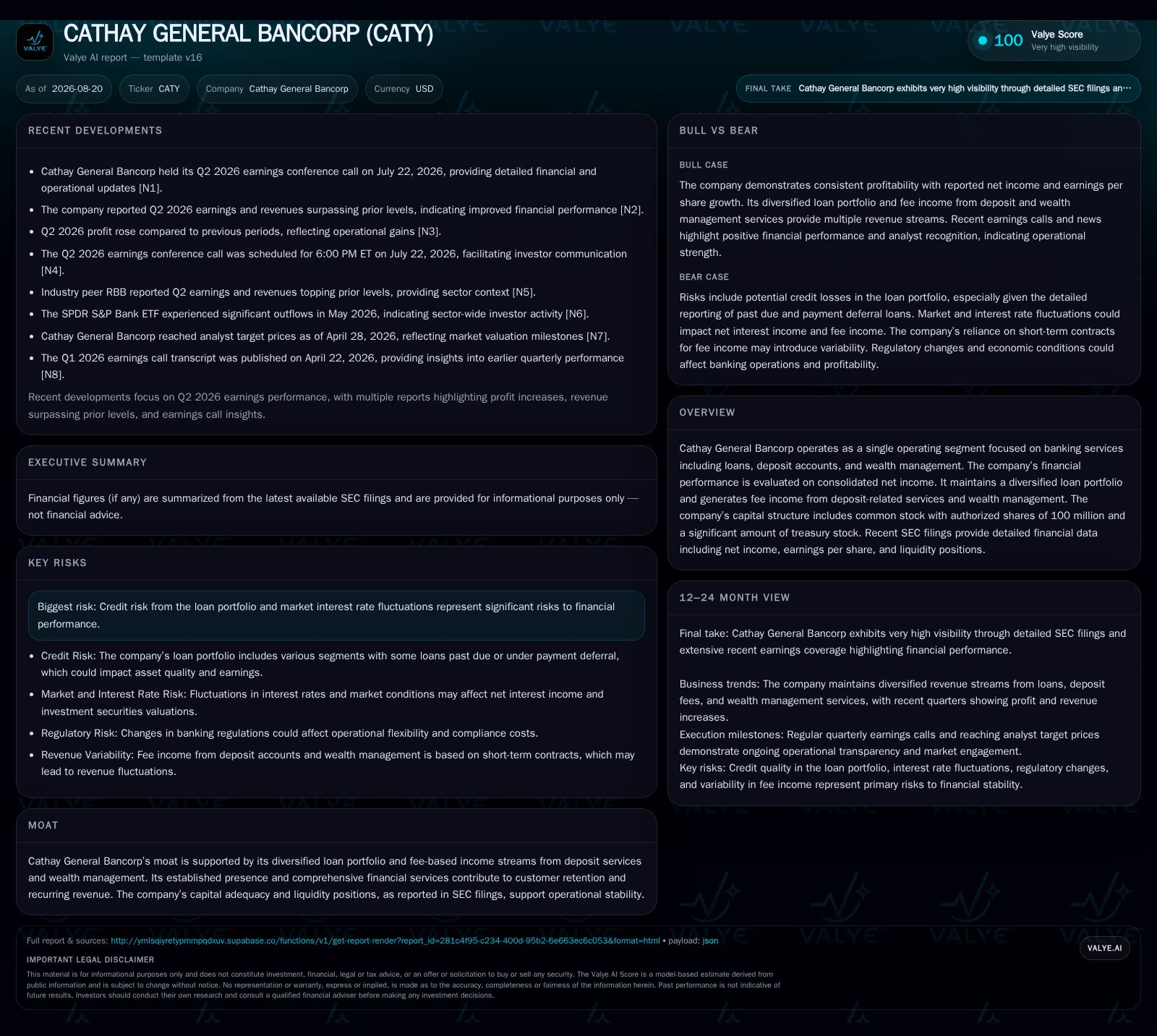
In its Q2 2026 filing, Cathay General Bancorp disclosed a notable increase in compliance costs driven by regulatory changes, alongside material risks from natural disasters, public health crises, and geopolitical events. The bank's diversified loan portfolio and fee income streams continue to underpin revenue stability. As of June 30, 2026, the company maintains capital adequacy and liquidity positions that support operational resilience. These developments present structural cost pressures and episodic risks that could affect future earnings margins and capital adequacy.
Q2 2026 Operating Environment and Risk Disclosures
Cathay General Bancorp's latest quarterly 10-Q filing dated August 7, 2026, highlights a significant increase in compliance costs driven by changes in regulatory requirements. This disclosure signals a structural cost pressure for the bank, as ongoing regulatory changes necessitate sustained investment in controls, reporting, and risk management infrastructure [S2]. Alongside regulatory challenges, the company also identified exposure to external risks including natural disasters, public health crises such as contagious diseases, and geopolitical events like wars and armed conflicts. These episodic risks pose potential operational disruptions and credit losses that could affect the bank's financial stability and capital adequacy [S2].
These developments are material because rising compliance costs can compress net interest margins, a critical profitability metric for regional banks, unless offset by revenue growth or operational efficiencies. Meanwhile, episodic external risks introduce earnings volatility and capital strain, complicating risk management and planning.
Business Model and Revenue Drivers
Cathay General Bancorp operates a diversified loan portfolio comprising commercial and consumer loans, which generate interest income, the primary revenue source [S1]. Complementing this, the bank earns fee income from deposit-related services and wealth management offerings, including letters of credit, wire transfers, and foreign exchange transactions. This diversification supports revenue stability by providing multiple income streams that can mitigate the impact of shocks to any single segment.
Borrowers pay interest on loans held for investment or sale, while depositors and wealth management clients contribute fee income [S2]. The combination of net interest income and non-interest income from fees helps stabilize margins and cash flow, although margins may be pressured by increased compliance costs disclosed in Q2 2026
Capital Adequacy and Balance Sheet Position
As of June 30, 2026, Cathay General Bancorp reported total debt of approximately $119.1 million, according to the latest SEC companyfacts and 10-Q filings [S2][F1]. The company maintains capital adequacy and liquidity positions that support operational stability amid the evolving risk environment. These financial buffers are essential for absorbing potential credit losses from external events and managing regulatory capital requirements.
Maintaining strong capital ratios and liquidity is critical for regional banks to navigate uncertainties and regulatory scrutiny. Cathay's current balance-sheet positioning provides a foundation to withstand episodic shocks while managing ongoing compliance investments.
Analytical Conclusions and Scenario Analysis
The disclosed increase in compliance costs represents a structural cost pressure that could compress Cathay General Bancorp's net interest margins unless offset by revenue growth or efficiency improvements [S2]. This is because regulatory changes require sustained spending on controls, reporting, and risk management infrastructure, which are unlikely to diminish in the near term.
Additionally, exposure to external risks such as natural disasters, public health crises, and geopolitical events introduces episodic credit and operational risks. These risks can cause loan defaults or operational disruptions, leading to volatility in earnings and capital adequacy [S2].
The base scenario envisions that compliance costs remain elevated but manageable, with the bank maintaining capital adequacy and stable earnings supported by its diversified loan and fee income streams. This scenario assumes a stable regulatory environment without major new compliance mandates and no significant credit losses from external events [S2][F1]. Confirmation would come from stable or improving net interest margins and consistent capital adequacy ratios in upcoming quarters.
Conversely, the bear scenario involves further escalation of compliance costs due to regulatory tightening, coupled with credit losses triggered by natural disasters or geopolitical tensions. This would pressure earnings margins and capital ratios, potentially leading to increased non-interest expenses and loan loss provisions [S2]. Evidence supporting this scenario would include rising compliance-related expenses and deteriorating credit quality metrics.
Conclusion and Watchpoints
Cathay General Bancorp's Q2 2026 disclosures underscore rising structural compliance costs and episodic external risks that shape its near-term operating environment. The bank's diversified revenue streams and capital position may contribute to its ability to manage these challenges, but the cost pressures and risk exposures warrant close monitoring.
Key watchpoints for investors include quarterly net interest margin trends to assess the impact of compliance cost increases, loan loss provisions and credit quality metrics for signs of external event impact, and capital adequacy ratios and liquidity positions in forthcoming filings. Additionally, regulatory developments affecting compliance cost trajectories will be critical to observe.
Understanding whether compliance costs stabilize or escalate further, and how external risks translate into credit losses, will be central to assessing Cathay General Bancorp's future earnings stability and risk profile.
Disclaimer: This is research-only, informational analysis and not investment advice. It may include AI-generated interpretation and general industry context. Always verify important details using primary sources.

Comments