
Sidus Space 2026 Q2: Strategic Partnerships and Management Changes Enhance Satellite and AI Capabilities
Sidus Space’s recent strategic and leadership developments aim to strengthen its satellite and AI product offerings amid capital-intensive growth.
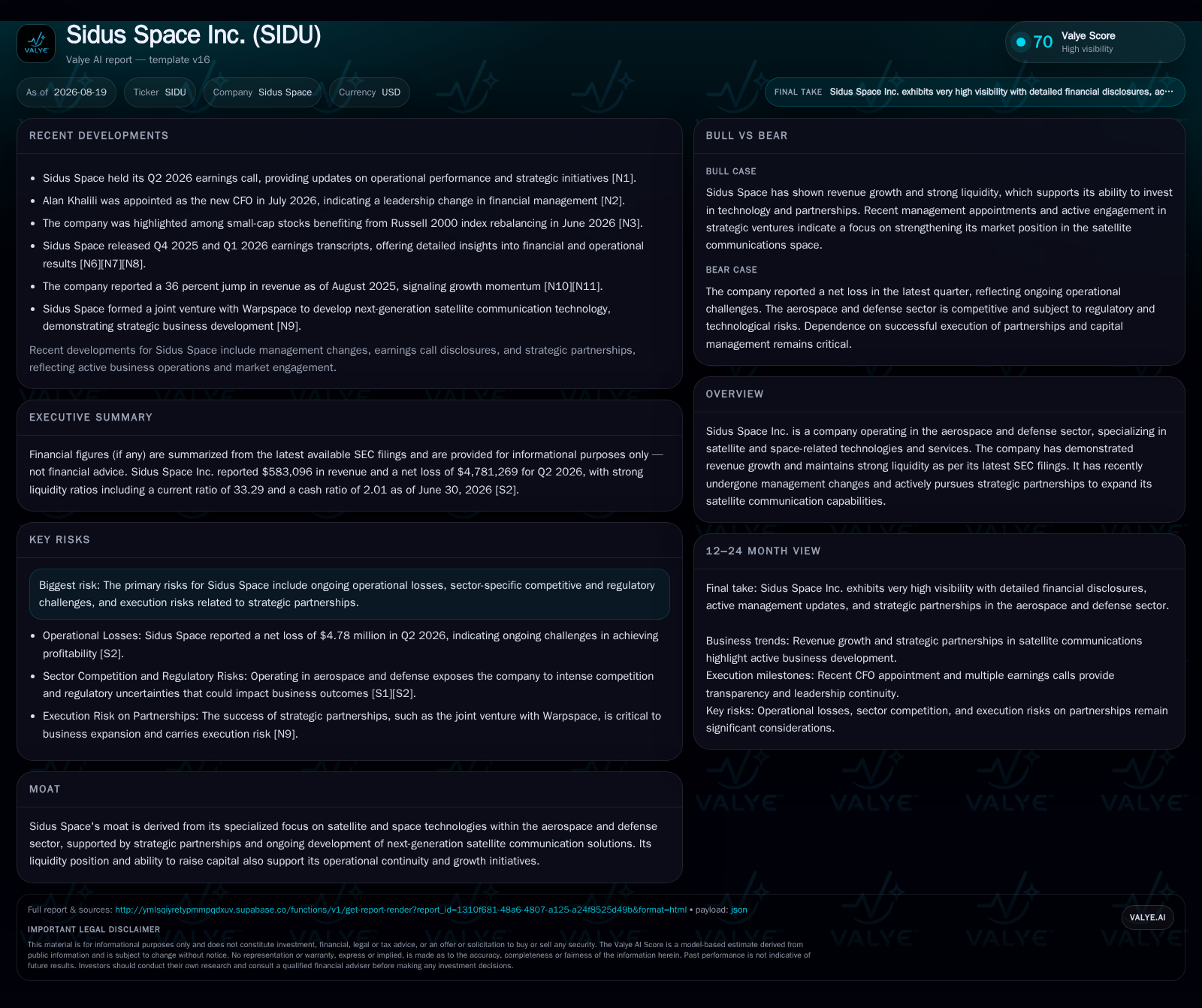
In its Q2 2026 update, Sidus Space reported a robust liquidity position with a current ratio of 33.29, supporting ongoing investments in satellite manufacturing and AI-enabled space data services. The company has appointed a new CFO and expanded strategic partnerships to enhance execution and competitive positioning in the aerospace sector. Despite continued operating losses and expected expense growth, Sidus Space’s diversified business model positions it to capture multiple revenue streams, though execution risks and revenue variability remain key challenges.
Business Model and Strategic Developments
Sidus Space operates as an integrated space and defense technology company with a diversified business model spanning satellite platform sales and customization, payload hosting and mission services, engineering and systems integration, space-grade hardware manufacturing, proprietary computing products, and emerging subscription-based access to space-derived data and analytics [S1]. Its customers include government agencies such as NASA and the Department of Defense, commercial space companies including SpaceX and Blue Origin, and other space mission customers. Revenue is generated primarily through fixed-price or milestone-based contracts that vary in scope, duration, and technical complexity, which leads to variability in revenue recognition timing and amounts.
In 2026, Sidus Space has pursued strategic partnerships aimed at enhancing its satellite communication capabilities and AI-enabled space data analytics solutions [S3][N1]. These partnerships are designed to expand the company’s technological capabilities and market reach, particularly in the growing sectors of satellite communications and space-based data services. Additionally, the company appointed Alan Khalili as Chief Financial Officer in July 2026 to strengthen financial leadership amid scaling operations [N2]. This management change is expected to support improved financial oversight and execution as Sidus Space navigates the complexities of growth in a capital-intensive industry.
These developments reflect Sidus Space’s heritage of flight-proven technology and integrated AI solutions, which may contribute to its competitive positioning. The company’s manufacturing facility on Florida’s Space Coast is located near launch sites, which could provide logistical advantages by potentially reducing production and launch cycle times [S1]. The combination of strategic partnerships and leadership enhancements may help address operational challenges and support the company’s mission of Space Access Reimagined®.
Q2 2026 Operating and Financial Update
As of June 30, 2026, Sidus Space reported current assets of $172.8 million and current liabilities of $5.19 million, resulting in a current ratio of 33.29 [F1]. This liquidity position indicates available short-term financial resources that could support the company’s capital-intensive satellite manufacturing and launch activities despite ongoing operating losses.
Sidus Space continues to incur operating losses and expects its expenses to increase as it scales production, launch cadence, and research and development activities [S1][S2]. The increase in operating expenses reflects investments in refining manufacturing processes, expanding engineering teams, and advancing AI-enabled space data services. These investments are critical to building the infrastructure necessary for future revenue growth but will likely pressure margins in the near term.
The company’s revenue recognition remains limited and variable due to the milestone-based nature of many contracts, which can cause fluctuations in reported revenue and cash flow between periods. While no specific revenue figures for the current quarter were disclosed, the variability inherent in fixed-price and milestone contracts means that revenue growth may be uneven as Sidus Space scales its operations.
Capital allocation is focused on scaling satellite manufacturing capabilities, increasing launch cadence, and developing proprietary AI-enabled space data products [S2][S3]. These efforts align with the company’s diversified business model, which aims to capture multiple revenue streams across satellite hardware sales, mission services, and subscription-based data analytics. The strategic partnerships formed in 2026 are expected to enhance these capabilities and support the commercialization of new products.
Risks and Execution Challenges
Sidus Space faces several execution risks inherent in the aerospace manufacturing and services industry. The company must manage the complexities of satellite production scale-up, regulatory approvals, and supply chain dependencies for space-grade components [S1]. These factors contribute to operational uncertainty and can impact the timing and cost of satellite manufacturing and launches.
Revenue recognition variability remains a material challenge due to the milestone-based contract structure, which can lead to fluctuations in reported revenue and cash flow between reporting periods. This variability complicates forecasting and financial planning, especially as the company invests heavily in scaling operations.
The capital-intensive nature of the small satellite market and the challenges of increasing launch cadence require sustained liquidity and operational execution. Despite the reported liquidity position, ongoing operating losses and expense growth may affect the timeline to profitability and cash flow sustainability [S2]. The company’s ability to achieve production and launch milestones on schedule, successfully commercialize subscription-based data services, and maintain a stable regulatory environment could be important factors in mitigating these risks.
Sidus Space’s competitive factors include its heritage of flight-proven technology, strategic partnerships with government and commercial customers, integrated AI-enabled space solutions, and a manufacturing facility located near launch sites [S1]. Enhanced execution from leadership and partnerships combined with reported liquidity may support capital investments. The growing global space economy may drive demand for the company’s diversified offerings. This scenario reflects the capital-intensive nature of the business and execution risks that could slow revenue ramp. Confirmation of increased risks would include declining liquidity ratios, increased debt, negative operating cash flow acceleration, and management disclosures of financial or operational distress.
Investors should closely monitor updates on strategic partnerships and new customer contracts, quarterly revenue recognition and contract milestone achievements, operating margin trends, progress on satellite manufacturing scale and launch cadence, and liquidity position including any capital raising activities. Strategic partnerships and management changes in 2026 aim to enhance satellite communication and AI product capabilities, potentially strengthening execution and competitive positioning in a capital-intensive sector [S3][N2]. However, investors should remain vigilant to execution risks, regulatory dependencies, and the timing of revenue growth as key factors influencing the investment outlook.

Comments