
International Stem Cell Corp Q2 2026: LCT Divestiture Nears Closing Amid Ongoing Clinical Development
ISCO advances toward closing its LCT divestiture in Q3 2026 while preparing for key Phase 1 Parkinson’s trial results in H2 2026.
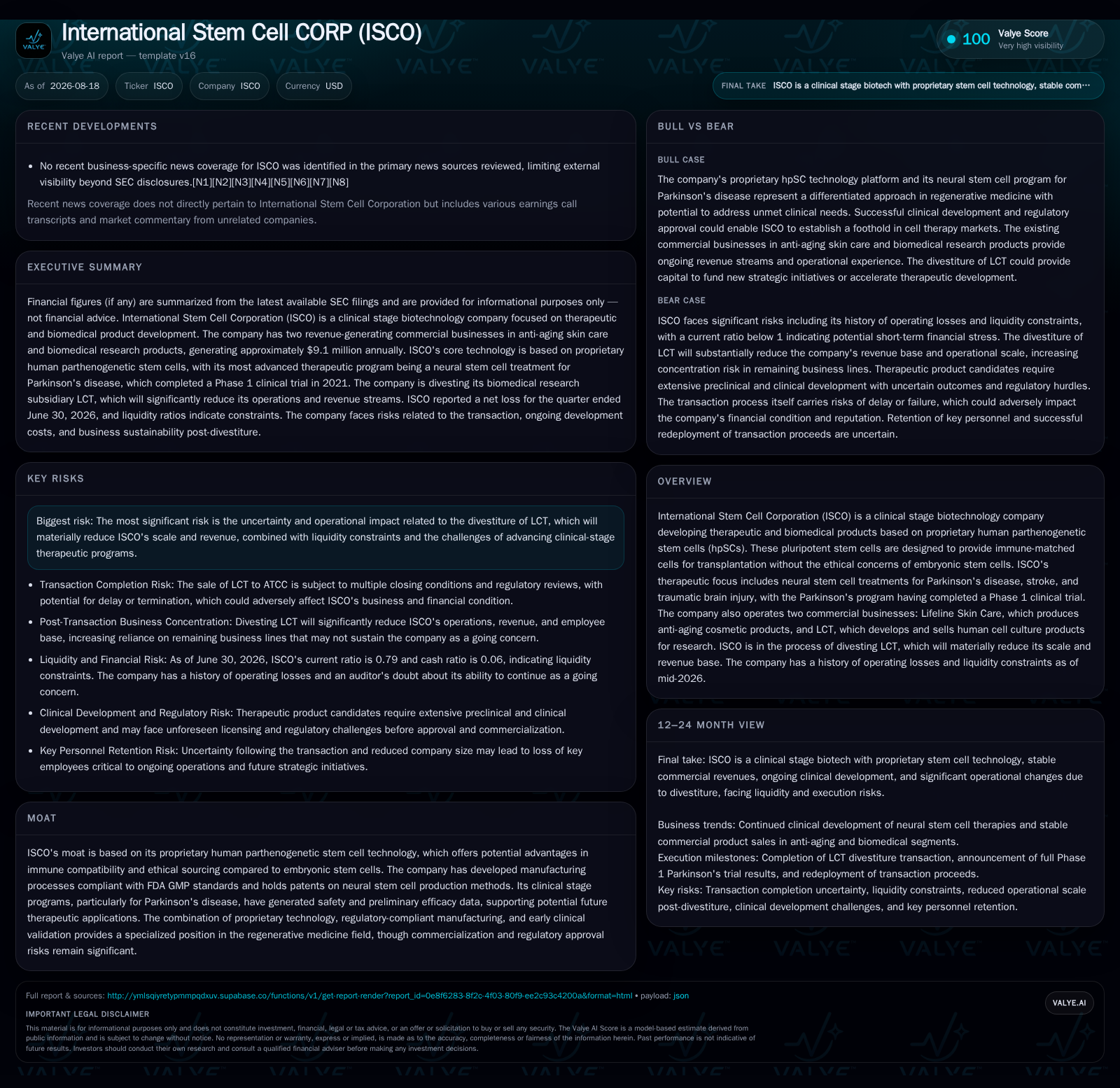
International Stem Cell Corporation (ISCO) is progressing toward the expected third-quarter 2026 closing of its divestiture of the Lifeline Cell Technology (LCT) business to ATCC, a transaction subject to customary closing conditions and SEC review. Concurrently, ISCO anticipates announcing full Phase 1 clinical trial results for its ISC-hpNSC® neural stem cell therapy for Parkinson’s disease in the second half of 2026. The divestiture will materially reduce ISCO’s commercial revenue base and operational scale, shifting strategic focus toward clinical-stage therapeutic development. As of June 30, 2026, ISCO reported a current ratio of 0.79, reflecting current liabilities exceeding current assets amid ongoing clinical investment and transaction-related obligations.
International Stem Cell Corporation (ISCO) is advancing toward the anticipated closing of its divestiture of Lifeline Cell Technology (LCT), a wholly owned commercial subsidiary, with the transaction expected in the third quarter of 2026. This sale to ATCC is subject to customary closing conditions, including the accuracy of representations and warranties, performance of pre-closing covenants, absence of material adverse effects, and completion of SEC review processes [S2][S3]. Stockholder approval has been secured, and the company is progressing through regulatory and contractual steps necessary to finalize the transaction.
The LCT divestiture is a transformational event for ISCO, as LCT currently represents a significant portion of the company’s commercial revenue base. The sale will materially reduce ISCO’s scale and revenue-generating operations, shifting the company’s focus more exclusively toward its clinical-stage therapeutic development programs [S2][S3]. This change will impact ISCO’s future financial profile by removing a key revenue stream and altering operational scale, which may affect margins and cash flow dynamics given ongoing research and development expenses.
Parallel to this strategic divestiture, ISCO is advancing its clinical-stage neural stem cell program for Parkinson’s disease, based on its proprietary human parthenogenetic stem cell (hpSC) technology. The ISC-hpNSC® product candidate is designed to address the underlying pathology of Parkinson’s by replacing damaged neural cells, leveraging hpSCs' potential for immune compatibility and ethical advantages over embryonic stem cells [S1][S2]. The company expects to announce full Phase 1 clinical trial results in the second half of 2026, which will provide important data on safety and preliminary efficacy. This milestone is critical for validating the therapeutic potential of ISC-hpNSC® and will influence ISCO’s regulatory and commercial outlook [S1][S2].
As of June 30, 2026, ISCO reported current assets of $3.92 million against current liabilities of $4.98 million, resulting in a current ratio of 0.79 [F1][S2]. The company’s operating losses and continued investment in clinical development, combined with transaction-related obligations, contribute to this liquidity position. However, this liquidity metric should be interpreted cautiously within the context of ongoing clinical and divestiture activities that require significant capital allocation [F1][S2].
ISCO’s business model currently combines revenue-generating commercial operations with clinical-stage therapeutic development. The commercial segment includes anti-aging skin care products and human cell culture research products, which generate all current revenue. Therapeutic products, including ISC-hpNSC®, remain in clinical development and do not yet contribute revenue, requiring sustained R&D investment [S1][S2]. The divestiture of LCT will remove one of the two commercial revenue sources, intensifying reliance on the clinical pipeline’s advancement for future growth and value creation.
The company’s proprietary hpSC technology offers potential competitive advantages, including the ability to create immune-matched cells that reduce the likelihood of rejection after transplantation, and ethical advantages over embryonic stem cells due to the absence of fertilized egg or embryo destruction in derivation [S1]. These features underpin ISCO’s therapeutic development strategy, particularly in neurological indications such as Parkinson’s disease, traumatic brain injury, and stroke, where cell replacement therapies address unmet medical needs.
The upcoming closing of the LCT sale and the Phase 1 Parkinson’s trial results are pivotal near-term events for ISCO. Successful completion of the divestiture will provide capital and allow the company to concentrate resources on therapeutic development. Conversely, delays or failure to close the transaction could exacerbate liquidity constraints and operational challenges. Similarly, positive Phase 1 data demonstrating safety and dose-dependent efficacy would support further clinical advancement and potential partnerships, while negative or inconclusive results could challenge the clinical program’s viability and investor confidence.
Investors and observers should monitor official announcements regarding the LCT transaction closing and the publication or release of the full Phase 1 clinical trial data. Additionally, ongoing updates on liquidity and cash flow will be important to assess ISCO’s operational runway amid these strategic shifts. Regulatory developments affecting the transaction or clinical programs also represent key watchpoints.
From a financial perspective, the divestiture will materially reduce ISCO’s revenue base and scale, as LCT contributes a significant portion of commercial revenue. This reduction will likely impact margins negatively due to the loss of revenue-generating operations while clinical development expenses continue. Working capital constraints are evident in the current ratio below 1.0, reflecting that current liabilities exceed current assets as of June 30, 2026 [F1][S2]. Operating cash flow remains negative due to ongoing clinical investments and limited commercial revenue, underscoring the importance of the divestiture’s timely completion to improve financial flexibility.
In summary, ISCO is at a strategic inflection point, with the LCT divestiture expected to materially alter its business scale and financial profile, and the Phase 1 Parkinson’s clinical data anticipated to provide important evidence regarding its proprietary stem cell technology’s therapeutic potential. These developments could significantly influence ISCO’s future economic prospects and strategic positioning within the clinical-stage biotechnology sector. The company’s ability to successfully navigate the closing conditions of the LCT sale and deliver compelling clinical data will be important factors for its near-term valuation and longer-term outlook.
These factors will collectively determine ISCO’s operational runway and strategic trajectory in the coming quarters.

Comments