
PVH CORP.'s Q1 Shift: Growth Headwinds Temper Brand Momentum
PVH’s Q1 results reveal operational resilience with revenue beating estimates but margin pressures and cautious guidance highlight near-term challenges.
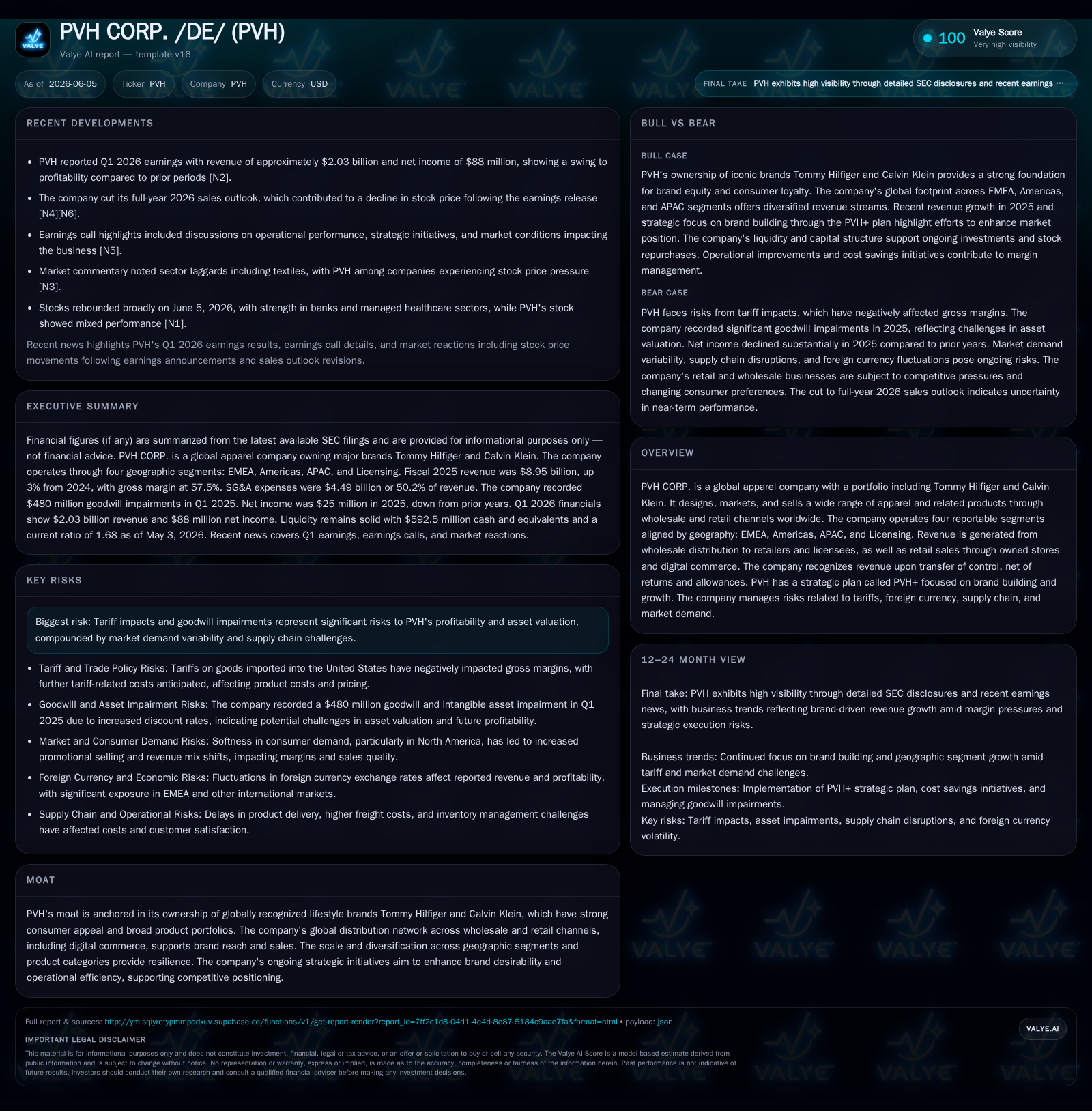
In its latest quarterly filing, PVH CORP. reported a rebound to profitability and revenue growth driven by key lifestyle brands Tommy Hilfiger and Calvin Klein. However, the company trimmed its full-year sales outlook amid macroeconomic uncertainties, supply chain disruptions, and currency volatility. PVH’s dual-channel business model leverages both wholesale partnerships and direct-to-consumer digital commerce, with geographic diversification cushioning some regional headwinds. Key risks include tariff exposure related to China’s UEL listing and ongoing supply chain constraints. Near-term growth is expected to hinge on successful omnichannel execution and stabilization of operating costs.
Q1 Operating Update: Profit Rebound Amid Cautious Outlook
PVH CORP.’s latest quarterly filing for Q1 2026 reports a return to net profitability with reported net income of $25.3 million supported by revenue strength mainly from Tommy Hilfiger and Calvin Klein brands. While total annualized revenue approximates $8.95 billion per the latest snapshot data, margin pressures emerged due to inflationary raw material costs and elevated logistics expenses [F1][S2]. Despite this operational momentum, the company revised down its full-year sales guidance citing weakening consumer demand amid macroeconomic headwinds including inflation persistence and geopolitical tensions that exacerbate tariff uncertainties particularly related to China [S3][N3].
Wholesale channels remained robust complemented by mid-single-digit growth in owned digital commerce platforms which partially offset softness in physical retail store traffic [S2]. Foreign currency translation positively impacted revenues but added volatility to margins given PVH’s extensive global footprint
Business Model Overview: Dual Channels Anchored by Lifestyle Brands
PVH’s revenue generation stems from two principal channels: wholesale distribution supplying department stores, specialty retailers, digital pure-plays, and off-price outlets; alongside direct-to-consumer operations encompassing company-owned retail stores (notably premium outlets) and e-commerce platforms worldwide [S1]
The portfolio is anchored by flagship brands Tommy Hilfiger and Calvin Klein offering diverse product lines including casualwear, denim, underwear, accessories, and footwear. The company manages these brands across four geographic segments: EMEA (48% of revenue), Americas (31%), APAC (17%), plus Licensing (4%) where third parties handle brand distribution under contractual agreements [S1]
Digital commerce has become a key growth vector within direct-to-consumer operations delivering approximately 4% year-over-year revenue gains after adjusting for foreign exchange effects [S1]. The Americas segment notably expanded wholesale revenues following the insourcing of previously licensed women’s product categories. Conversely, EMEA experienced flat retail store sales excluding FX benefits while APAC faced calendar-driven demand fluctuations impacting apparel sales tied to Lunar New Year timing
This dual-channel structure allows PVH flexibility in assortment management and pricing strategies tailored to channel-specific consumer behaviors while leveraging digital capabilities for higher-margin sales.
Industry Context and Competitive Positioning
Within the global lifestyle apparel sector alongside peers such as Ralph Lauren Corporation and Capri Holdings Limited, PVH differentiates through proprietary brand ownership combined with a wide-reaching channel footprint balancing wholesale depth with growing omnichannel capabilities.
The company’s international brand deployment across multiple retail formats mitigates risks associated with localized economic downturns or regulatory disruptions — an advantage evident in its diversified presence across mature markets in Europe/North America balanced against targeted growth initiatives in APAC [S1]. Channel diversification also supports inventory optimization relative to competitors more reliant on singular distribution models.
Challenges remain sector-wide including inflationary cost pressures compressed into price-sensitive fashion categories where discretionary spending is cyclical. Regulatory risk linked to China’s Ministry of Commerce investigation culminating in the Unreliable Entity Listing (UEL) status poses potential threats to manufacturing sourcing flexibility and Chinese market access through possible trade restrictions or fines [S15].
Growth Drivers: Strategic Brand Elevation & Digital Expansion
PVH’s medium-term growth outlook is underpinned by its PVH+ strategic plan focused on elevating Tommy Hilfiger and Calvin Klein as premier global lifestyle brands while investing substantially in digital transformation initiatives aimed at enhancing consumer engagement via e-commerce channels [S1].
Consistent mid-single-digit gains in digital commerce support overall direct-to-consumer revenue growth—a segment less vulnerable to traditional retail disruptions. Licensing activities contribute stable royalty income though at comparatively lower margins than owned operations.
Geographically, the Americas region benefited from internalizing women’s product lines expanding wholesale assortment depth via owned outlets enabling improved pricing control [S1]. Concurrently, EMEA efforts involve rationalizing store footprints coupled with intensifying online marketing programs.
Successful mitigation of supply chain delays remains pivotal; easing inventory constraints would reduce markdown risk while improving working capital efficiency positively impacting margins.
Risks & Watchpoints: Tariffs, Currency Volatility & Supply Chain Pressures
Key external risks shaping PVH’s outlook include:
- Tariff & Regulatory Exposure: Inclusion on China’s UEL list raises the possibility of trade sanctions or personnel restrictions disrupting sourcing operations based partly in China as well as limiting market access impacting revenues [S15].
- Foreign Exchange Volatility: With over half of revenues generated internationally, currency fluctuations materially influence reported results; while short-term FX gains occur when the dollar weakens versus major currencies like euro, ongoing volatility complicates forecasting [S2][S1].
- Supply Chain Constraints: Elevated costs for fabrics combined with logistics backlogs hamper gross margins; excessive inventory risk looms if cautious demand necessitates markdowns eroding profitability [S2].
These factors necessitate careful price/mix management despite competitive pressures limiting near-term pass-through ability.
Forward-Looking Indicators & Execution Milestones
Investors should monitor several indicators post-Q1 disclosures:
- Comparable direct-to-consumer digital commerce sales trends excluding FX impacts reflecting organic growth momentum.
- Progress in reducing supply chain lead times facilitating improved inventory turnover rates enabling tighter markdown cadence.
- Effectiveness of pricing initiatives balancing inflationary inputs without dampening demand.
- Foreign currency movement trends amid geopolitical tensions affecting translational earnings.
- Implementation pace of PVH+ operational efficiencies improving SG&A leverage across segments.
These metrics will clarify whether internal execution can offset macroeconomic headwinds or if cautionary guidance persists [N3][S3]
Financial Position & Liquidity Profile
As of May 2026 data shows PVH holding approximately $593 million in cash against $2.28 billion total debt yielding net debt near $1.69 billion with a current ratio of 1.68 indicating sufficient liquidity coverage for near-term obligations without immediate refinancing pressure [F1][S2]
The capital structure is supported by fixed-rate senior unsecured notes maturing through 2030 spreading refinancing risk over time [S5][S25]. The company continues stock repurchases prudently funded alongside planned capital expenditures approaching $250 million focused primarily on store upgrades and enhanced digital platforms
Overall leverage appears manageable despite margin pressures underscoring importance of working capital discipline coupled with diversified cash flow sources ensuring financial flexibility.
This analysis synthesizes public filings including the latest quarterly 10-Q dated June 5, 2026 [S2], recent event disclosures [S3], annual report content from March 31, 2026 [S1], third-party news transcripts, plus validated financial snapshot metrics [F1] without offering investment advice. It provides an informed perspective on PVH CORP.'s current operational environment within its competitive apparel industry context.
Disclaimer: This is research-only, informational analysis and not investment advice. It may include AI-generated interpretation and general industry context. Always verify important details using primary sources.

Comments