
Rein Therapeutics Advances Pulmonary Fibrosis Pipeline with Capital and Regulatory Momentum
Following FDA clearance, Rein Therapeutics accelerates its Phase 2 IPF trial amidst a solid liquidity backdrop and focused R&D spend.
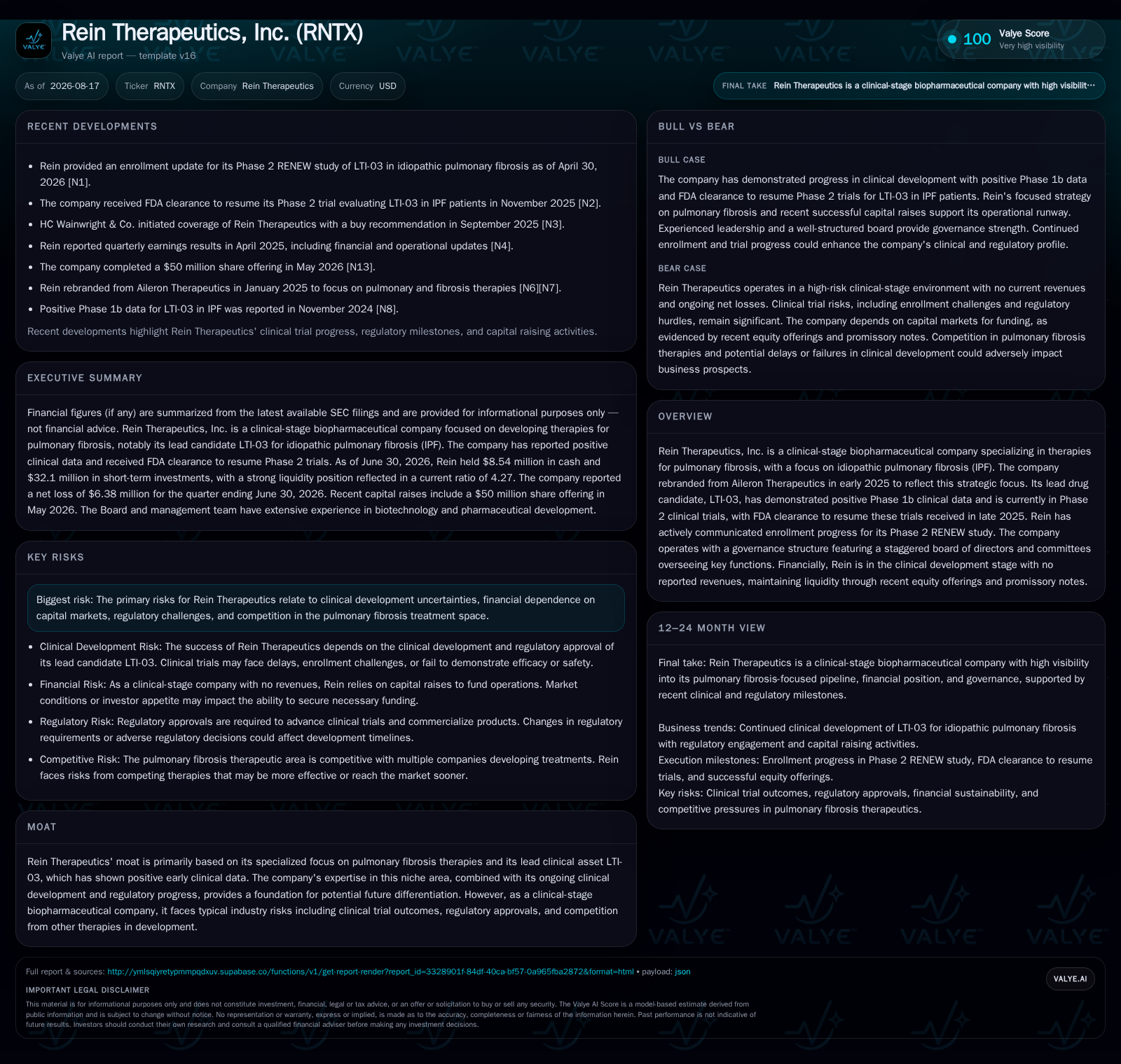
Rein Therapeutics has resumed enrollment in its Phase 2 clinical trial of LTI-03 for idiopathic pulmonary fibrosis (IPF) after the FDA lifted earlier holds, marking a key operational milestone that de-risks near-term development. The company’s latest quarterly filing confirms ongoing clinical progress supported by positive early data published externally, underscoring its commitment to this niche fibrotic lung disease indication. With about $8.5 million in cash and manageable debt, Rein maintains a runway focused on sustaining R&D amid no product revenues typical for clinical-stage biotechs. The company’s clear pipeline focus and governance structure provide strategic discipline, though risks persist from clinical uncertainties and capital dependence.
Latest Clinical Milestones Post FDA Clearance Accelerate Trial Progression
Rein Therapeutics’ latest quarterly report filed August 14, 2026 confirms active enrollment progress in its Phase 2 RENEW study for LTI-03, a drug candidate aimed at treating idiopathic pulmonary fibrosis (IPF), following FDA clearance received in late 2025 [S2][S20]. This regulatory milestone allowed Rein to resume clinical trial activities after prior holds that had paused patient recruitment. Achieving FDA clearance is a crucial value inflection event because it reduces regulatory uncertainty—a major risk factor inherent to clinical-stage biopharma—and permits the company to advance patient enrollment rates, a key KPI that drives trial timelines and eventual data readouts.
Supporting this momentum is recent scientific validation: Rein published compelling LTI-03-related data in the peer-reviewed journal Nature [N1], highlighting evidence of lung tissue regeneration potential in pulmonary fibrosis. Such external scientific endorsement not only enhances the therapeutic hypothesis but bolsters investor confidence regarding LTI-03’s mechanism of action. It also signals that the RENEW study might yield meaningful clinical benefit data if current enrollment can be sustained or accelerated.
While precise enrollment metrics are not disclosed, the resumption itself is significant given industry norms where setbacks from regulatory holds frequently delay or derail therapeutic development. Thus, continued patient recruitment will be an important performance marker; slower recruitment or new regulatory hurdles would pose obstacles amplifying clinical development risk.
Focused Pipeline Strategy Anchored on LTI-03’s Clinical Development for IPF
Rein Therapeutics operates under a concentrated business model fully dedicated to advancing LTI-03 as a first-in-class treatment for IPF [S1][S2]. This approach aligns closely with typical clinical-stage biotech archetypes that often contain singular proprietary drug candidates requiring extended pre-commercialization R&D investment without parallel revenue streams or diversified pipelines.
The company derives no product revenues to date; instead, operations are financed through equity raises and unsecured promissory notes carrying original issue discounts rather than interest [S16][S23]. For example, several private placements of notes totaling approximately $5 million were closed during early 2026 as working capital support.
From a cost perspective, research and development expenses constitute the bulk of operating outflows legitimizing cash burn as an indicator of trial intensity rather than inefficiency. Recent filings suggest a prioritization toward progressing enrolment and preparing for subsequent data analyses [S2]. Intellectual property protection around LTI-03 is another pillar since exclusivity around novel pulmonary fibrosis treatments underpins long-term commercial value post-regulatory approval.
Successful advancement through later clinical phases with robust efficacy and safety readouts would confirm this business model’s viability by materially increasing asset valuation and attracting licensing or partnership opportunities which commonly supplement revenues later.
Positioning in Pulmonary Fibrosis Biotech Landscape: Peer Comparisons Highlight Strategic Differentiation
Within the biotechnology sector's subset of companies developing therapies for orphan or hard-to-treat pulmonary fibrotic diseases, Rein Therapeutics finds itself among specialty biopharmaceutical firms focusing narrowly on lung disorders with high unmet medical need. Compared to broader pharmaceutical firms with large pulmonary fibrosis portfolios (including those with marketed products), Rein operates at an earlier stage primarily geared towards proving clinical proof-of-concept.
In terms of regulatory cadence, responsiveness such as obtaining FDA clearance to resume Phase 2 studies within ~12 months demonstrates competitive agility relative to peers who may face lengthier approval lags or unenforced holds [S20]. Fundamentally however, Rein shares common risks related to patient recruitment challenges endemic to rare disease trials — factors like site activation speed and patient availability directly affect timelines.
Financially, securing growth capital through equity placements amidst biotech funding markets remains vital; Rein’s ability to sustain funding without dilutive pressure beyond its latest rounds mirrors common patterns seen in similarly sized peers focused on orphan indications.
Peer benchmarking also involves intellectual property portfolio evaluation; although patent details are not specified herein, proprietary composition-of-matter claims around LTI-03 likely enhance competitive moat versus generic or off-label treatment options prevalent in fibrotic disease categories.
Drivers Behind Enrollment Momentum and Regulatory Engagements in Phase 2 Stage
Fast patient recruitment coupled with constructive FDA interactions underpin Rein’s continuation trajectory. Resuming enrollment shortly after hold removal implies effective communication channels with regulators that mitigate trial stoppages — a known source of dilutive delays for biotechs [S2][N1]
Moreover, the recently published data demonstrating potential lung repair mechanisms enhances biological plausibility arguments that can accelerate investigator enthusiasm at clinical sites, possibly boosting referral rates – a valuable dynamic because recruitment speeds strongly influence cash burn duration before obtaining actionable datasets.
If recruitment accelerates beyond current pace targets without compromising safety reporting standards, this would support assumptions of attractive operational execution capability within niche specialty clinical development — rare skillsets important when dealing with limited patient populations in orphan diseases.
Conversely, challenges such as slower-than-planned enrollments due to COVID variants resurgence or competing trials could dampen milestone timing forecasts while regulatory re-review cycles could impose unanticipated procedural burdens slowing trial completion.
Operational Risks from Trial Dependency and Financing Needs Underpin Uncertainties
Clinical-stage biopharma firms like Rein face heightened dependency on successful trial outcomes: adverse safety signals or failure to meet predetermined endpoints could result in complete write-downs of their lead assets given lack of commercial backstops [S2]. This risk is magnified by single-product concentration which means pipeline diversification cannot offset failed outcomes.
Additionally, substantial capital inflows must be continuously secured due to absence of product sales revenue. While recent promissory notes and equity capital infusions have extended runway [S16][S23], eventual necessity for additional financing carries dilution risks impacting shareholder value.[S2]
Competition against other therapies targeting IPF poses further risk; entrants developing alternative mechanisms of action may capture market share rapidly if they gain earlier approvals or demonstrate superior efficacy/safety profile post-commercial launch.
Intellectual property enforcement challenges could also erode exclusive commercialization rights—common headaches where patent cliffs threaten revenue periods once products reach market readiness.
What to Watch: Key Interim Data Readouts, Enrollment Timelines, and Funding Activities Ahead
Investors and stakeholders should monitor forthcoming interim analyses from the Phase 2 RENEW study assessing efficacy signals expected over the next several quarters according to typical clinical timelines [S2]. Achieving planned enrollment milestones exactly controls pace towards these readouts; hence weekly or monthly status updates become critical indicators.
Regulatory interactions remain important—any FDA feedback modifying trial protocols or requesting supplementary studies must be tracked closely for potential schedule impacts post-enrollment resumption.
On financing frontiers, watch for announcements related to follow-on public or private equity offerings given prevailing cash reserve levels approximating $8.5 million as per Q2 reporting [F1]; timely funding completion would buttress uninterrupted R&D progress while delays increase refinancing risk premiums.
Financial Profile Discussion
Disclaimer: This is research-only, informational analysis and not investment advice. It may include AI-generated interpretation and general industry context. Always verify important details using primary sources.

Comments