
Aebi Schmidt Q2 2026: Post-Shyft Acquisition Growth and Strong Liquidity
Aebi Schmidt's Q2 2026 results highlight ongoing integration of the Shyft Group acquisition, supporting revenue growth and operational resilience amid supply chain and tariff risks.
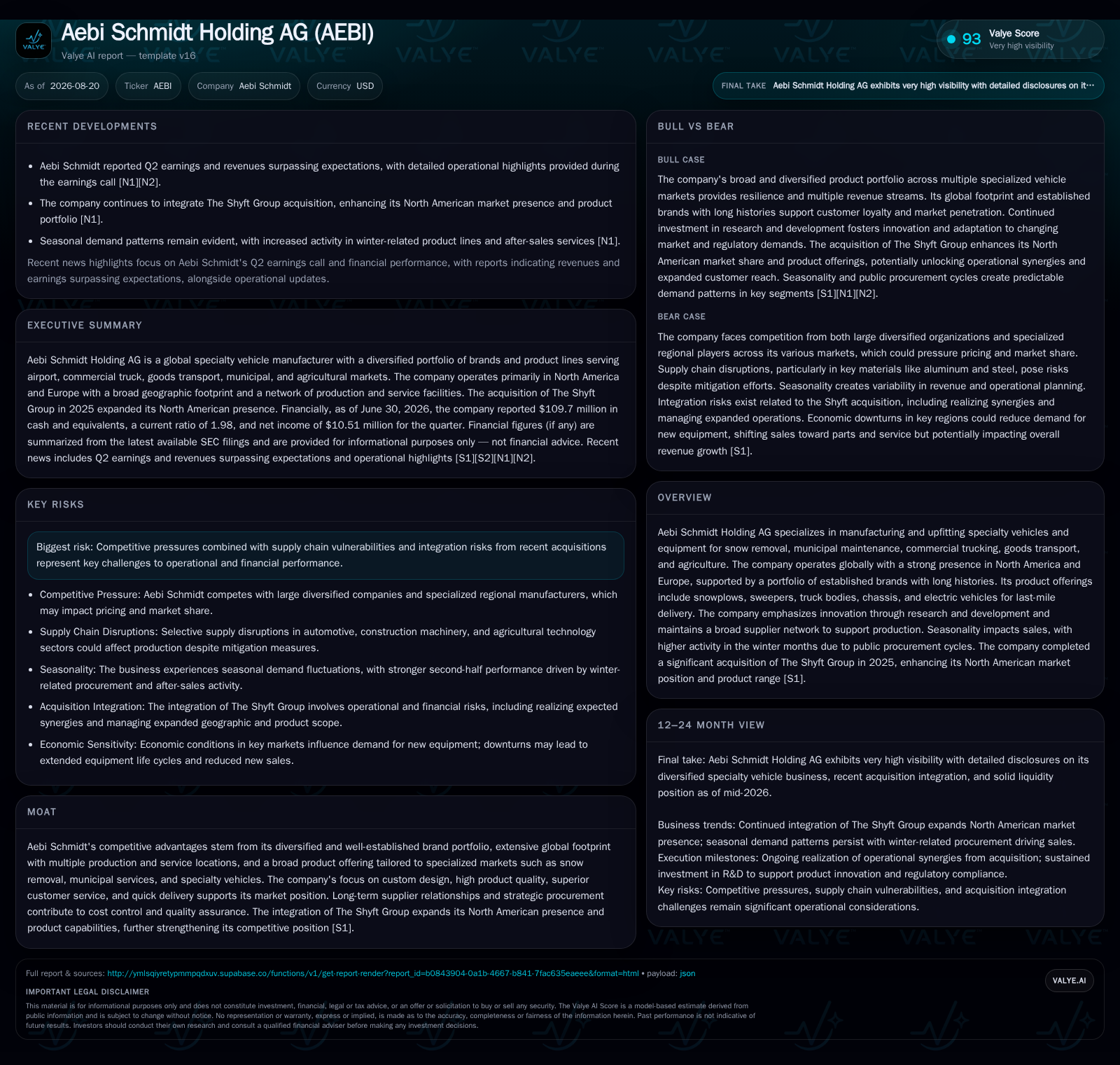
Aebi Schmidt Holding AG's second-quarter 2026 financial disclosures reveal continued progress integrating the 2025 acquisition of the Shyft Group, which has expanded the company's North American footprint and product portfolio. While supply chain disruptions and tariff uncertainties remain significant risks that could pressure margins and delay deliveries, the company maintains a strong liquidity position with a current ratio of 1.98 as of June 30, 2026. Seasonal demand patterns and geographic diversification further influence sales dynamics. Investors should monitor upcoming revenue and margin trends, supply chain developments, and integration milestones to assess the sustainability of growth.
Integration of Shyft Acquisition and North American Expansion
Aebi Schmidt Holding AG's Q2 2026 results reflect ongoing integration of its July 2025 acquisition of the Shyft Group, a niche market leader in specialty vehicle manufacturing and assembly for commercial and recreational vehicles in North America. This acquisition materially expanded Aebi Schmidt's geographic footprint and product portfolio, particularly in the North American market, enhancing its offerings across specialty vehicles and equipment. The merger enabled Aebi Schmidt to combine its commercial business with Shyft's fleet and commercial operations, optimizing purchasing and production capacity.
The impact of this acquisition is evident in the company's financial performance for the year ended December 31, 2025, when sales increased by $440.7 million, or 41%, to $1,526.6 million compared to 2024 [S1]. This growth was partly attributable to the Shyft acquisition, which added established brands and expanded product lines in commercial and specialty vehicles. The integration supports potential cross-selling opportunities and a higher revenue base, positioning Aebi Schmidt for continued growth in the North American market.
Operational Risks: Supply Chain and Tariff Challenges
Despite the positive growth trajectory, Aebi Schmidt continues to face significant operational risks related to supply chain disruptions and tariff uncertainties. The specialty vehicle manufacturing sector depends heavily on the timely supply of critical components such as vehicle chassis, engines, and transmissions. Disruptions in these supply chains can materially affect production schedules and product availability.
Additionally, changes in U.S. trade policy, including the imposition or modification of tariffs on goods imported from key sourcing regions, pose cost and operational challenges. Tariffs may increase the cost of components, forcing the company to raise prices, which could reduce demand, or absorb costs, thereby pressuring margins. The uncertainty surrounding the duration and scope of tariffs, especially following recent legal rulings on tariff authority, adds complexity to supply chain and pricing strategies [S1][S2]. These risks could delay deliveries and impact customer satisfaction if not effectively managed.
Liquidity and Balance Sheet Strength
Aebi Schmidt's liquidity position as of June 30, 2026, provides a buffer against these operational risks [F1]. This liquidity strength underpins the company's capacity to invest in growth initiatives and manage the complexities of integrating Shyft's operations. The company's product portfolio includes snow removal and de-icing equipment, which experience heightened demand during winter months driven by public procurement cycles. This seasonality affects sales timing and working capital management, requiring careful inventory and production planning.
Geographic diversification, enhanced by the Shyft acquisition, helps mitigate some seasonality effects by balancing demand across regions and product lines. However, the company must continue to navigate these cyclical dynamics alongside structural growth drivers such as urbanization and infrastructure maintenance needs [S1].
Business Economics and Strategic Implications
Aebi Schmidt operates in the specialty vehicle manufacturing sector, producing highly customized vehicles and equipment tailored for municipal maintenance, commercial fleets, airport services, and agriculture. Revenue is generated through vehicle manufacturing, upfitting services, and aftermarket parts sales via a global dealer network.
The Shyft acquisition strengthens Aebi Schmidt's competitive position by expanding its product mix and geographic reach, particularly in North America, a key market. This expansion supports potential operational synergies, scale benefits, and cross-selling opportunities, which could enhance margins over time if supply chain and tariff risks are controlled.
Margins and cash conversion in this sector are sensitive to product mix, supply chain efficiency, pricing power, and seasonal demand. Supply chain disruptions or tariff-related cost increases could compress margins, while successful integration and scale could improve profitability.
Watchpoints and Forward-Looking Considerations
Investors should monitor several key indicators to assess Aebi Schmidt's integration progress and operational resilience:
- Quarterly revenue and margin trends to evaluate whether the Shyft acquisition is translating into sustained growth and profitability.
- Updates on supply chain conditions and tariff developments, which could materially affect costs and delivery schedules.
- Liquidity and working capital metrics in upcoming filings to ensure the company maintains financial flexibility amid integration and market challenges.
- Management commentary on North American market penetration, product innovation, and risk mitigation strategies.
The bull case envisions successful integration leading to accelerated revenue growth and margin expansion through operational synergies and expanded market share [S1]. Conversely, the bear case involves integration difficulties compounded by worsening supply chain and tariff pressures, resulting in margin compression and delivery delays. The base case assumes steady integration with manageable risks and moderate growth.
Conclusion
Aebi Schmidt's Q2 2026 results underscore the transformative impact of the Shyft Group acquisition on its North American market presence and product portfolio. Seasonal demand patterns and geographic diversification also shape the company's revenue dynamics.

Comments