
Expand Energy Corp Q1 2026: Surpassing Estimates with Operational and Financial Resilience
Expand Energy’s latest quarterly results underscore its robust production growth, operational efficiencies, and solid liquidity supporting sustainable value creation.
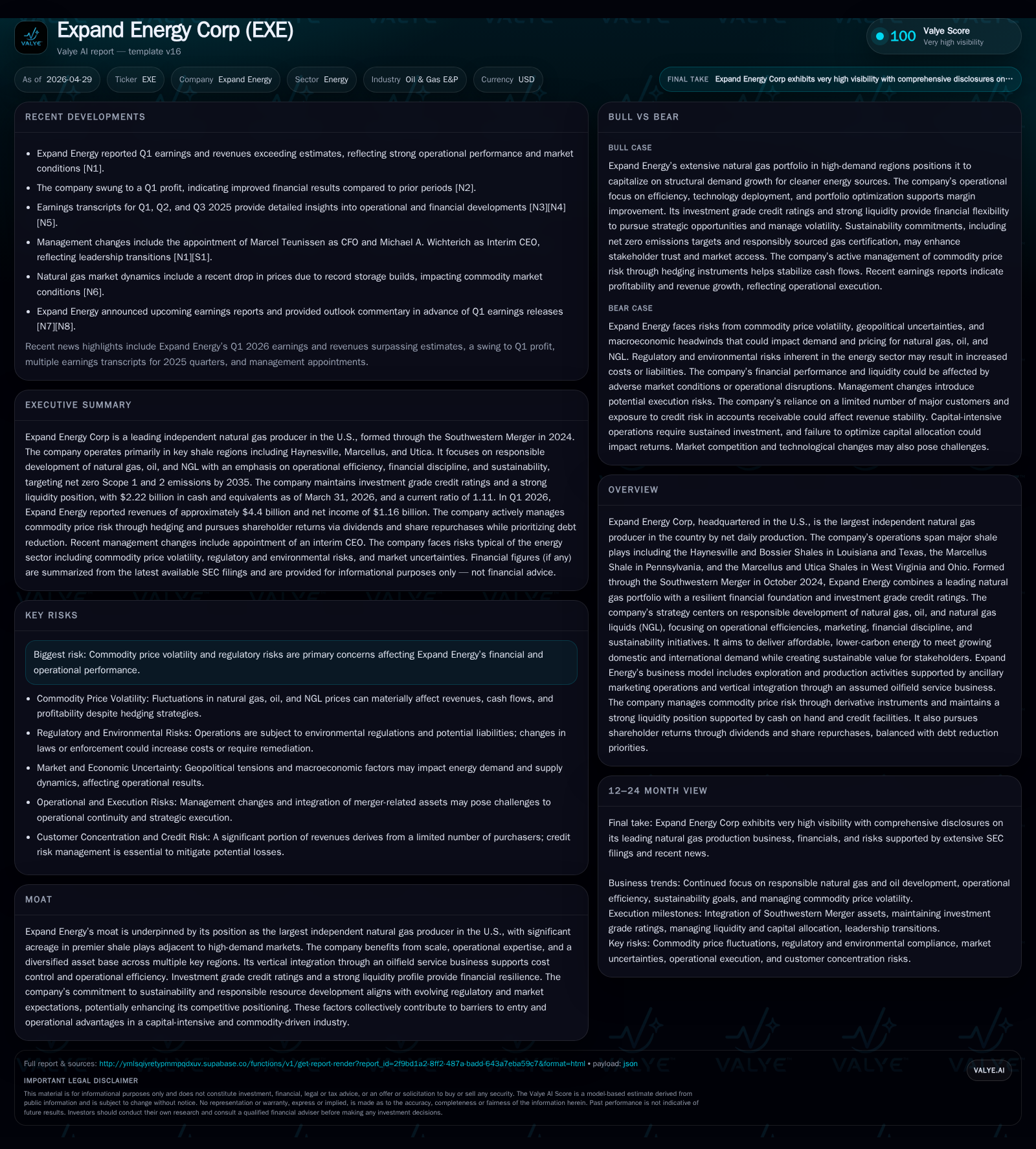
In Q1 2026, Expand Energy Corp reported earnings and revenues above consensus estimates, reflecting improved natural gas production volumes and effective cost controls across its diversified shale portfolio. The company’s strategic asset base in leading U.S. shale plays, complemented by vertical integration and investment grade credit ratings, anchors its competitive strength amid commodity price volatility. Growth is supported by targeted capital deployment in high-return areas and disciplined financial management. Key risks include exposure to regulatory changes and commodity price swings. Monitoring production volumes, hedge performance, capital spending execution, and ESG progress will be critical going forward.
Q1 2026 Operating Update and Impact
Expand Energy reported its first quarter 2026 results on April 28, surpassing revenue and earnings expectations driven primarily by increased natural gas production volumes coupled with disciplined cost controls across its shale portfolio [S2][N1]. Production growth marked a meaningful uplift relative to prior periods as drilling activity in key regions such as the Haynesville and Marcellus Shales remained robust amid improving takeaway infrastructure. Margins held firm despite ongoing commodity price pressure thanks to operational efficiencies and the benefit of derivative hedges that protect cash flow volatility for over 60% of forecasted volumes through year-end [S1][N9].
The company’s financial stewardship was bolstered by recent leadership additions including the appointment of Marcel Teunissen as CFO earlier in April 2026, signaling a reinforced focus on financial discipline within volatile energy markets [N10][S3]. This management shift aligns with Expand Energy’s strategy to balance growth with prudent capital allocation.
Overview of Expand Energy’s Business Model and Asset Quality
Founded through the Southwestern Merger in October 2024, Expand Energy is now the largest independent U.S. natural gas producer by net daily output. The company operates primarily within four premier shale plays: the Haynesville and Bossier Shales (Louisiana/Texas), Marcellus Shale (Pennsylvania), and Marcellus & Utica Shales (West Virginia/Ohio) [S1]. These assets provide geographic diversification across supply basins adjacent to major northern U.S. demand hubs.
Revenue flows predominantly from the extraction and sale of natural gas alongside oil and natural gas liquids (NGLs), with pricing influenced by volume produced, realized commodity prices, contract structures, and marketing capabilities. Vertical integration into oilfield services supports cost control measures by internalizing drilling and completion activities where feasible [S1]. This integrated business model enhances operational reliability while mitigating third-party cost inflation.
The company's reserves quality is underpinned by premium inventory positions offering favorable drilling economics — a key element enabling capital allocation towards high-return development projects aimed at maximizing free cash flow generation. Sustainability initiatives target net zero Scope 1 & 2 greenhouse emissions by 2035 along with full responsible sourcing certification across the portfolio to meet evolving regulatory demands [S24].
Competitive Positioning in U.S. Natural Gas E&P
As an industry leader among independent producers, Expand Energy benefits from scale advantages including extensive acreage holdings in top-tier shale formations near major consumption centers. This positioning reduces midstream transportation costs through proximity advantages while accommodating growing domestic and LNG export demand.
Operational expertise in hydraulic fracturing techniques contributes productivity gains that differentiate the company versus smaller peers lacking similar resource depth or technical know-how. Simultaneously, vertical integration via its oilfield services arm lowers exposure to vendor pricing swings typical in this cyclical industry segment.
Regulatory risk remains a persistent factor given heightened scrutiny on methane emissions, water usage permits, and local community impacts around drilling sites. However, proactive environmental risk management programs including audits and reserves for remediation maintain regulatory compliance buffers while positioning Expand credibly within ESG frameworks valued by stakeholders [S11][S23].
Drivers Behind Growth and Margin Expansion
Near-term growth prospects rely heavily on advancing development activities in the Haynesville/Bossier area characterized by robust drainage area economics supported by expanding pipeline takeaway capacity which can alleviate bottlenecks experienced previously during peak production periods [S26].
Capital expenditure guidance for full-year 2026 expects deployment between $2.75 billion and $2.95 billion directed at completing between approximately 205 to 235 gross wells utilizing about 11 to 12 rigs—consistent with sustained upstream momentum aiming to optimize well productivity at controlled unit costs [S19][N9].
Operational efficiency gains are also pursued through technological improvements in drilling/completion processes along with enhanced logistics coordination reducing nonproductive time.
On the financial front, hedging instruments using costless collars combined with three-way collars deliver downside protection while allowing participation on upside price moves effectively smoothing operating cash flows in a volatile commodity environment [S1][N9].
ESG objectives further contribute indirectly to margin sustainability by potentially unlocking preferred access to capital via green financing channels or contracts requiring responsibly sourced gas certification—currently maintained at 100% portfolio-wide [S24].
Risks, Constraints, and Regulatory Considerations
Despite hedges mitigating some price risk exposure, commodity price volatility remains a principal operational risk for Expand given reliance on spot market realizations for uncovered production volume which materially influences revenues—especially if prices soften due to macroeconomic or inventory-driven factors [S11].
Regulatory headwinds emanate largely from environmental legislation imposing additional compliance costs or delaying permitting timelines essential for timely well development. While mitigation strategies exist—including environmental reserves funding potential liabilities—the inherently capital intensive nature of upstream operations constrains rapid responsiveness to adverse regulatory shifts [S23].
Legal proceedings related to routine business operations currently carry no material expected financial impact per management assessments; however unresolved litigation particularly tied to predecessor Southwestern exposures remain under watch though separated legally via claims reconciliation processes in bankruptcy contexts [S11][S22].
Capacity constraints in takeaway infrastructure historically pose production curtailment risks especially when regional pipelines approach utilization limits but planned expansions may alleviate these pressures progressively over coming years—monitoring these developments is crucial for sustaining production growth trajectories.
Upcoming Catalysts and Key Metrics to Monitor
Key investor focus points include forthcoming Q2 production volumes against raised guidance expectations given prevailing operational trends observed in Q1 reported outcomes [N6][N7].
Hedging program updates will reveal shifts in derivative coverage levels post-2026 rollout affecting cash flow stability metrics under different price scenarios.
Capital expenditure execution aligned with drilling rig activity alongside well completion milestones will serve as tangible indicators of operational discipline driving free cash flow generation.
Progress against ESG targets such as emissions reduction roadmap adherence or RSG certification renewals may influence the company’s reputational standing impacting stakeholder engagement.
Potential M&A activity or asset optimization through acquisitions/divestitures could reshape portfolio mix impacting long-term growth outlook although no explicit transactions have been announced recently.
Current Financial Profile and Liquidity Snapshot
As of March 31, 2026 end-of-quarter balance sheet data reflect:
- Cash & Equivalents: $2.22 billion
- Current Assets: $4.39 billion versus Current Liabilities: $3.95 billion yielding a Current Ratio of approximately 1.11 indicating reasonable short-term liquidity coverage [F1].
Total debt and net debt figures are from December 31, 2025, with Total Debt approximately $5.03 billion and Net Debt approximately $2.81 billion after accounting for cash balances [F1].
This liquidity profile supports Expand Energy’s ability to fund capital programs and service debt obligations without undue pressure on credit metrics, maintaining strategic optionality amid fluctuating oil & gas market cycles.
Disclaimer: This analysis is based solely on publicly available information as referenced from SEC filings up to April 28, 2026, company disclosures, industry reports, and validated financial datasets as noted; it does not constitute investment advice or endorsement.
Disclaimer: This is research-only, informational analysis and not investment advice. It may include AI-generated interpretation and general industry context. Always verify important details using primary sources.

Comments