
Home Depot Q2 2026: Advancing Omnichannel Growth Through Digital and Leadership Investments
Home Depot's Q2 2026 results and leadership changes highlight strategic investments in digital platforms and labor tools to enhance customer experience and operational efficiency.
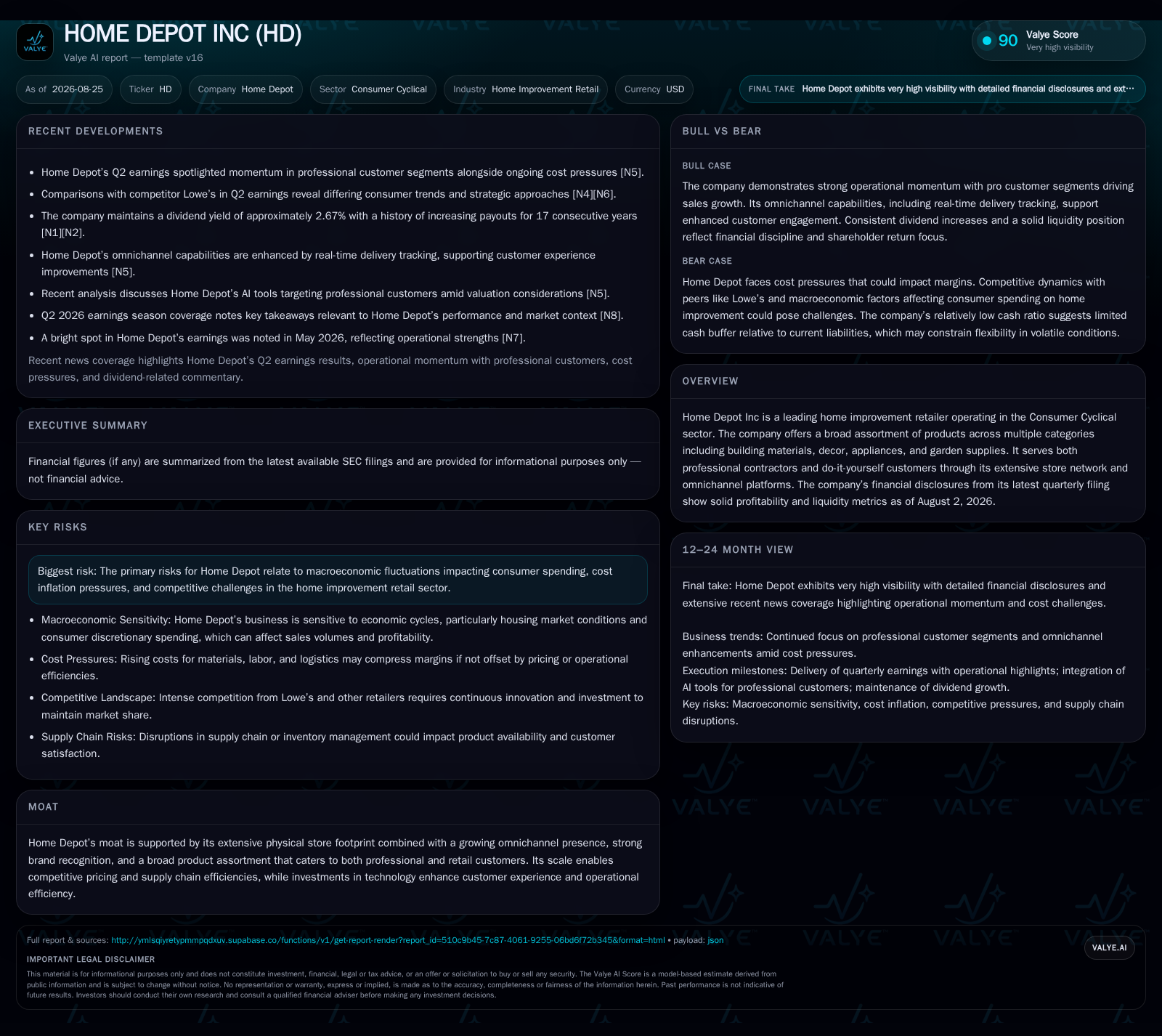
In Q2 2026, Home Depot reported solid profitability and liquidity, maintaining stable operating performance amid ongoing cost inflation and macroeconomic risks. The company continues to invest in digital platforms and labor model tools aimed at improving omnichannel customer engagement and store operations. Recent executive leadership portfolio expansions assign greater focus to product development and interconnected retail functions, potentially strengthening Home Depot's competitive positioning and growth prospects. These developments together underscore Home Depot's structural resilience and strategic emphasis on innovation within the home improvement retail sector.
Business Model Enhancements and Competitive Positioning
Home Depot continues to advance its omnichannel capabilities through strategic investments in digital platforms and labor model tools. These initiatives focus on improving the customer experience by enabling more seamless interactions across physical stores and digital channels. Store associates leverage applications such as Sidekick, which directs them to prioritize high-value tasks like replenishing low-stock items, thereby enhancing operational efficiency and customer service. Additionally, labor model tools help better align associate activities with customer needs by transitioning certain store tasks to specialized merchandising execution teams. This approach allows in-aisle associates to concentrate on direct customer engagement. These digital and labor innovations support Home Depot’s broad product assortment and extensive physical footprint, which serve both professional contractors and retail do-it-yourself customers. Together, these factors reinforce Home Depot’s competitive positioning by enhancing supply chain efficiency, inventory management, and customer satisfaction across channels [S1].
Executive Leadership Changes and Strategic Implications
In August 2026, Home Depot announced key executive leadership portfolio expansions that reflect a sharpened strategic focus on product development and interconnected retail functions [S3]. William D. Bastek, Executive Vice President – Merchandising, assumed responsibility for the product development merchant portfolio, including private brands. Meanwhile, Jordan Broggi, Executive Vice President – Interconnected Retail, took on oversight of the loyalty program, credit services, and payments organization. These leadership changes suggest an increased emphasis on strengthening product assortment and enhancing customer engagement through loyalty and payment solutions. Such focused roles could accelerate innovation and integration within Home Depot’s omnichannel platform, potentially driving higher customer retention and competitive differentiation.
Q2 2026 Operating Performance and Financial Health
Industry Context and Peer Comparison
Home improvement retail operates in a sector characterized by a large physical store footprint complemented by growing e-commerce capabilities. Key performance indicators in this industry include same-store sales growth, foot traffic, average ticket size, private-label penetration, and omnichannel sales contribution. Home Depot’s scale and store density may provide advantages relative to peers such as Lowe’s, while its digital platform investments and labor productivity initiatives support operational efficiency and customer experience enhancements. The sector is sensitive to macroeconomic cycles but benefits structurally from demand driven by professional contractors and do-it-yourself trends. Home Depot’s ongoing focus on integrating digital and physical retail functions could contribute to its competitive positioning within this landscape.
Financial Bridge and Capital Structure
The company’s financial metrics as of Q2 2026 support its operating thesis of structural resilience [S2][F1][S3]. Profitability metrics remain solid despite cost pressures, underscoring effective operational management. The stable financial position enables continued capital allocation toward technology enhancements and product portfolio development. No recent changes in capital allocation policy have been disclosed.
Analytical Conclusions and Outlook
Home Depot’s Q2 2026 operating results indicate ongoing operational resilience, supported by scale and omnichannel capabilities that have helped maintain profitability amid cost inflation and macroeconomic headwinds [S2]. The company’s extensive store network and ongoing digital investments may contribute to differentiation, potentially enabling it to navigate sector challenges more effectively.
The recent executive leadership portfolio expansions focusing on product development and interconnected retail functions could enhance Home Depot’s product assortment and customer engagement. Assigning merchandising and loyalty/credit services to dedicated EVP roles signals a strategic emphasis on these critical areas for omnichannel growth and customer retention, potentially strengthening competitive positioning [S3]. Investors and analysts should monitor the following to assess the trajectory of Home Depot's strategic initiatives and operating performance:
- Progress on implementation and effectiveness of digital platforms and labor model tools in improving customer experience and operational efficiency.
- Subsequent quarterly revenue and margin trends to confirm ongoing operating resilience and cost management.
- Execution and impact of product development efforts, including private brand rollouts, under the expanded merchandising leadership.
- Adoption and performance of loyalty programs and credit services overseen by the EVP – Interconnected Retail.
- Macroeconomic indicators affecting consumer and professional spending in the home improvement sector.
- Customer engagement metrics and omnichannel sales contributions reflecting integration success.
These factors will provide insight into whether Home Depot can sustain its competitive advantages and growth momentum amid sector headwinds.

Comments