
Roku's metamorphosis from device pioneer to a commanding TV streaming platform
A detailed exploration of Roku’s strategic pivot, Q4 2025 financials, and the dynamics shaping its evolving streaming ecosystem.
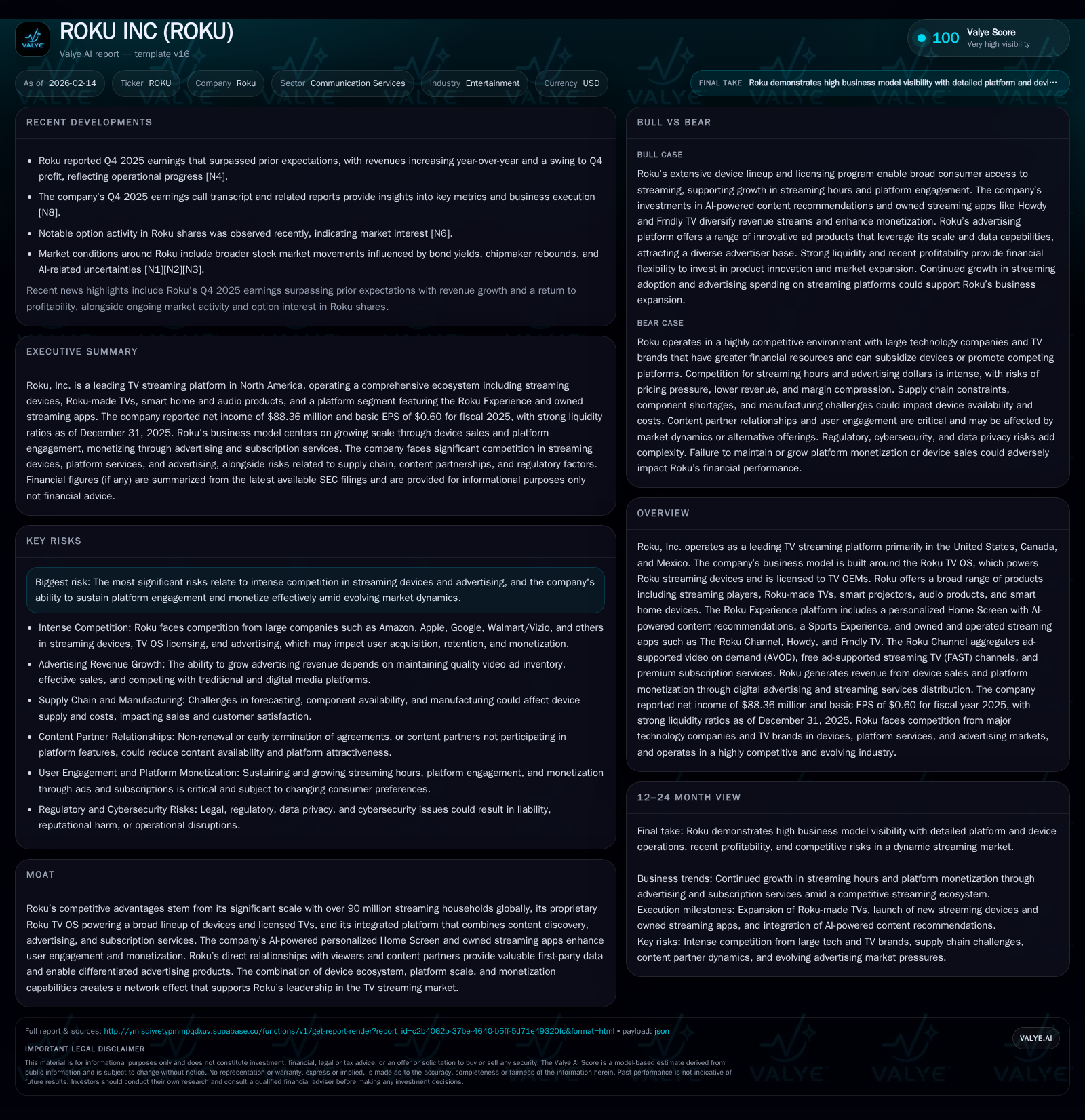
Roku’s recent Q4 2025 earnings surpassed expectations, underscoring a significant transition away from hardware sales to platform-centric growth. Central to this evolution is Roku TV OS, which powers a diverse ecosystem of devices and licensed smart TVs, driving user engagement and monetization. While Roku leverages advertising, subscriptions, and owned content channels to deepen revenue streams, it faces persistent competitive pressures and supply chain complexities amid shifting macroeconomic conditions. Continued innovation and strategic balance will be critical for Roku’s trajectory in the increasingly fragmented streaming media landscape.
From Devices to Platform: Roku's Strategic Evolution
Roku began its journey as a hardware innovator, famed for its approachable streaming players that democratized access to internet-based television content. Over time, however, the company has orchestrated a deliberate pivot toward establishing itself as a comprehensive TV streaming platform powerhouse. This strategic evolution revolves around intensifying focus on platform revenues—which now encompass digital advertising sales, subscription sharing arrangements, and streaming service distribution—while continuing to leverage device sales primarily as a funnel for growing total streaming households [S1][F1].
This shift is far from merely a change in income streams; it reflects Roku’s nuanced understanding of market forces where device sales margins are often thin or even negative at times as the company prioritizes expanding its user base. The trade-off—lower average selling prices (ASPs) on devices—allows more consumers to enter the Roku ecosystem. In turn, the enlarged base amplifies platform advertising inventory and subscription opportunities with scalable monetization potential. The symbiosis between devices as gateways and the platform as the monetization engine lies at the core of Roku's evolving business model [S1].
Decoding Q4 2025: Earnings Beat and The Metrics Behind Growth
Roku’s fourth quarter results for fiscal 2025 signaled more than just a routine earnings beat—they illuminated key performance areas validating the company’s strategic transformation [N1][N2][N3][N4][N14]. Closing the year with net income of approximately $88 million marked a positive inflection point compared to previous periods [F1]. Crucially, platform revenues continued their upward trajectory driven by robust digital ad sales coupled with gains in subscription revenue shares.
Underlying these results are operational metrics revealing substantive engagement growth. Streaming Hours—the aggregate time users spend consuming content via Roku devices—remain central to assessing viewer attachment. Increased Streaming Hours correlate strongly with advertising load capacity and subscription conversions that feed directly into higher average revenue per user (ARPU) over time [S1]. Although hours streamed include passive viewing segments due to how measurement works (e.g., unattended playback), steady increases still provide evidence of sustained platform utilization.
The earnings call transcript detailed management’s emphasis on innovating user experience features around their AI-powered Home Screen interface combined with sustained investments in owned channels such as The Roku Channel boosting user stickiness [N2]. Observers noted that these factors collectively supported the margin expansion despite lingering macroeconomic uncertainties.
Roku TV OS: The Engine Driving Scale and Engagement
At the heart of Roku’s ecosystem is the proprietary Roku TV OS—a purpose-built operating system designed exclusively for television hardware [S1]. Unlike generic operating systems repurposed for smart TVs, Roku TV OS optimizes low-cost hardware performance while delivering seamless content navigation through its intuitive UI.
This OS powers not only Roku’s lineup of proprietary streaming players but also an extensive catalog of licensed smart TVs manufactured by third-party OEM partners. Through this licensing model—operational for over a decade—Roku has expanded its footprint substantially across North America [S1]. This breadth enables the company to maintain its dominant position in over 90 million global streaming households while capturing invaluable first-party data from direct viewer interactions.
Importantly, Roku has integrated advanced AI capabilities within the Home Screen experience that personalize content recommendations by learning preferences continuously. Features like a Sports Experience hub appeal directly to avid viewers seeking curated live coverage. These intelligent UX elements enhance engagement duration, which directly feeds into higher monetization through ads or subscription conversions.
Monetizing User Engagement: Advertising and Subscription Synergies
Monetization on the Roku platform operates along two primary axes: advertising revenue and subscription services [S1][S2]. Advertising benefits from Roku’s ability to leverage first-party data collected via its OS-connected devices—a rare commodity in an era prioritizing user privacy but demanding targeted ad efficacy.
Digital ad revenue streams incorporate both direct sales relationships and programmatic video advertising that automates inventory distribution with demand-side platforms. Advertisers are attracted by Roku’s capacity to reach cord-cutters unreachable through traditional linear TV while measuring campaign effectiveness through sophisticated analytics.
Subscription revenue complements ads through offerings such as The Roku Channel—a free ad-supported service enriched by premium subscriptions bundled within it—as well as newly launched owned services like Howdy and Frndly TV [S1]. The synergy arises when engaged users navigate fluidly between ad-supported content discovery and paid premium tiers bolstered through streamlined billing solutions orchestrated by Roku. Adding branded app buttons on remotes also fosters deeper subscription uptake.
However, this model requires careful balancing; unengaging or irrelevant ad campaigns risk eroding viewer tolerance while dependency on advertiser payment promptness adds financial risk dimensions [S2]. Successful monetization depends equally on technological innovation in ad delivery algorithms alongside maintaining high viewer satisfaction.
The Content Balancing Act: Owned Channels, Partners, and Originals
Content remains king in streaming media—and Roku plays a multifaceted role both as an aggregator hosting third-party apps and as an owner/operator of its own channels [S1][S2]. This dual posture demands sophisticated strategy execution.
On one hand, maintaining solid partnerships with major content owners is critical. Risks loom if popular or new publishers elect not to participate or lessen their involvement in features that drive engagement on the Roku platform. Non-renewals or early contract terminations could significantly affect available inventory or viewer choices.
On the other hand, investment in owned channels such as Howdy (a niche channel) and Frndly TV (family-friendly curated offering) aims at diversifying content sources that generate predictable monetization internally without licensing price escalations or dependence on external negotiations [S1]. Moreover, original programming under 'Roku Originals' seeks to capture exclusive audiences fostering longer-term loyalty.
Balancing these competing demands involves ongoing calibration amid fluid consumer preferences—increasingly fragmented content habits require both breadth across partner catalogs and depth within owned offerings to sustain compelling value propositions.
Navigating Competitive and Supply Chain Pressure Points
The streaming industry sits at a confluence of intense competition not only between platforms vying for viewer attention but also among device manufacturers tackling cost pressures [S1][S2]. As an integrator straddling hardware sales and platform services, Roku is especially vulnerable here.
Supply chain considerations feature prominently due to dependencies on sole-source suppliers for critical components used across devices—a risk factor explicitly disclosed by the company [S2]. Fluctuations in component availability can constrain inventories or compel pricing adjustments that reverberate through customer acquisition efforts.
Simultaneously, competitive pressures extend beyond pure hardware rivals like Amazon Fire TV or Google Chromecast into digital advertising domains where giants such as Google/YouTube challenge programmatic ad share growth targets [S2]. To mitigate these pressures, continual product innovation on both physical devices (e.g., smart projectors) and software layers becomes imperative.
Macro Risks and Market Sentiment Impacting Roku’s Horizon
Beyond industry-specific hurdles lie broader macroeconomic uncertainties shaping market sentiment toward firms like Roku [S1][N6][N7][N8][N9]. Rising inflationary environments elevate component costs; increasing interest rates elevate capital expense challenges; geopolitical developments complicate global manufacturing logistics.
The confluence of these factors tempers enthusiasm somewhat despite technology sector rebounds observed recently. Particularly notable are lingering investor concerns about AI-related market volatility impacting multiples even if fundamentals show improvement [N6][N7]. Such headwinds place greater emphasis on transparency around operational discipline in managing growth versus profitability trade-offs embedded within quarterly disclosures.
Future Outlook: Innovation and Monetization in a Streaming World
Looking ahead beyond Q4 2025 results, Roku appears poised to lean into innovation as a core lever for sustained momentum [S1][S2][N12]. Analyst upgrades reflect growing confidence fueled by anticipated enhancements in AI-powered home screen personalization which could unlock incremental engagement layers alongside more granular targeting capabilities within advertisements.
Expansion of programmatic advertising infrastructure remains a priority along with deepening integration of subscriptions billed directly via Roku’s unified platform—steps designed to bolster recurring revenues while optimizing lifetime customer value metrics.
Yet navigable risks remain—from competitive encroachment challenging viewer share to potential shifts in content partnerships—that warrant cautious optimism balanced with agile execution strategies.
In sum, Roku's transformation illustrates how nimble adaptation coupled with ecosystem orchestration underpins leadership within an increasingly complex streaming universe. As consumer viewing habits steadily tilt toward interactive digital experiences—where discovery meets convenience—the company's blend of device accessibility married with advanced platform dynamics defines an industry blueprint shaping tomorrow’s TV landscape.
Disclaimer: This analysis is provided solely for informational purposes reflecting data available as of February 14, 2026. It does not constitute investment advice or recommendations.
Disclaimer: This is research-only, informational analysis and not investment advice. It may include AI-generated interpretation and general industry context. Always verify important details using primary sources.

Comments