
Shutterstock Advances Creative Platform Strategy as UK Regulatory Pressure Mounts
The latest quarterly results spotlight Shutterstock’s operational resilience amid regulatory challenges posed by the UK Competition and Markets Authority.
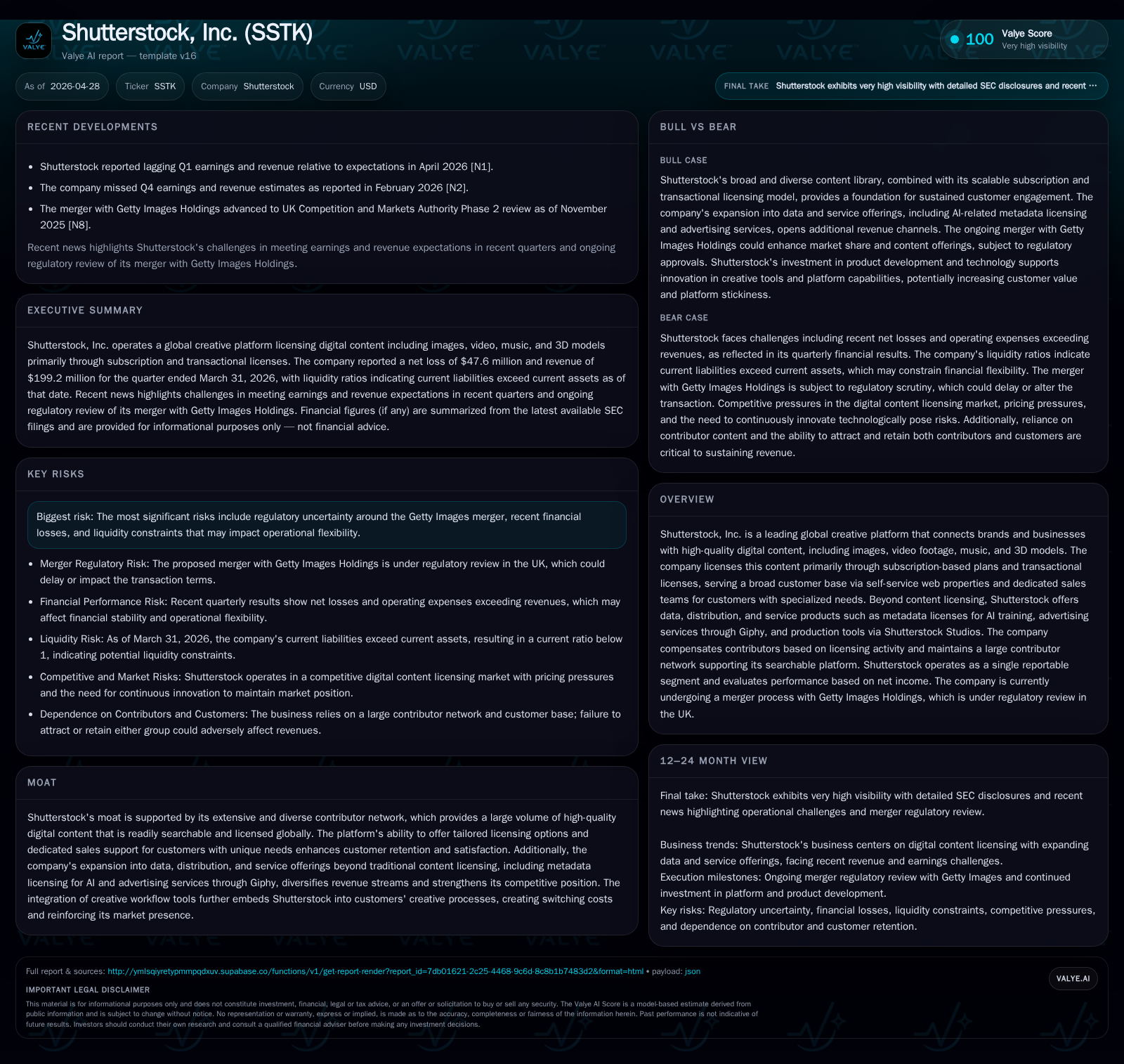
Shutterstock's Q1 2026 update reveals ongoing regulatory headwinds from the UK CMA concerning its merger with Getty Images, particularly the potential divestiture of editorial content units. The company’s core business remains supported by a diversified product portfolio spanning subscription and transactional licensing for digital assets, alongside growing service offerings such as AI metadata licensing and advertising via Giphy. Despite near-term execution pressures and a low current ratio, Shutterstock retains credit facility access and is managing regulatory uncertainty while pursuing growth through expanding digital content formats and higher-value service integration.
Q1 2026 Operating Update Reflecting Regulatory Developments
Shutterstock’s first quarter ended March 31, 2026 filing spotlights the dual challenge of delivering operational results while navigating intensifying regulatory scrutiny in the UK. The Competition and Markets Authority (CMA) published an Interim Report on Remedies indicating a provisional finding that the proposed merger with Getty Images could substantially lessen competition within editorial content supply. This has specifically placed pressure on units such as Rex Features, Backgrid, and Splash News which the CMA views as candidates for divestiture to mitigate anti-competitive risks. Such divestitures could involve sales of these businesses either collectively or segmentally to separate buyers to satisfy competition concerns [S2].
Despite this friction point potentially impacting revenue from editorial content segments in the near term, Shutterstock continues operating as a single reportable segment centered on its global creative platform connecting customers to licensed digital content. The company's revenue recognition remains rooted in performance obligations fulfilled upon customer downloads under both transactional purchases and subscription plans. In subscription models where customers have allotted download limits, the company estimates unused licenses but recognizes revenue when actual downloads occur during subscription periods [S2].
Recent earnings missed analyst estimates according to market commentary pointing to softness partially linked to merger uncertainty impacts on executive focus and market confidence [N1]. The company disclosed legal contingencies related to CMA proceedings.
Overview of Shutterstock’s Business Model and Product Suite
Shutterstock derives most revenue from licensing digital assets—images, videos, music tracks, and increasingly 3D models—to a broad customer base including individual creators, SMBs, agencies, and enterprises. Licensing mechanisms combine self-service e-commerce platforms supporting subscription plans that grant periodic download allowances plus pay-as-you-go transactional licenses for one-off content needs. Customers seeking tailored rights or workflows engage with dedicated sales teams offering contract flexibility such as multi-seat access or multi-brand packages catering to more complex usage scenarios [S1][S2].
Beyond core digital asset licensing, Shutterstock strategically expands into ancillary services encompassing Data, Distribution, and Services solutions. These include metadata licensing designed for AI model training datasets—a fast-growing demand sector—as well as advertising services delivered through its Giphy subsidiary helping brands drive engagement with culturally resonant GIFs. Further embedding into customer creative processes is facilitated by production tools via Shutterstock Studios enhancing content creation workflows. This diversification strengthens switching costs while broadening monetization beyond traditional stock media licensing royalties paid out based on contributor download activity [S1][S2][F1].
Market Position and Competitive Dynamics in Digital Content Licensing
Shutterstock sustains a competitive moat driven by its extensive contributor ecosystem which supplies rich searchable inventories unmatched in scale. This contributor scale generates network effects where a larger library attracts more customers who in turn incentivize contributors through royalty payments calibrated against license activity. The company also differentiates itself through its dedicated sales force serving enterprise clients requiring bespoke licenses—an important counterbalance against commoditization often seen in pure e-commerce stock image platforms.
Competition remains fierce with Getty Images (merger target), Adobe Stock, Alamy, and emerging specialist platforms jostling over client spend in a consolidating landscape. However, regulatory pushback especially in markets like the UK underscores how industry concentration risks can constrain deal-making strategies and long-term growth potential. Pricing power is moderated by abundance of digital content alternatives yet enhanced by specialist licensing features Shutterstock offers alongside multi-format asset coverage (image/video/music/3D) which rivals generally cannot match uniformly across categories [S1][S2][F1].
Growth Catalysts Amid Industry Headwinds
Structural growth drivers include robust secular demand for digital assets accelerated by new media formats driven partly by AI adoption necessitating large AI training datasets derived from quality imagery metadata licenses—a niche Shutterstock targets aggressively.
Moreover, expansion beyond static images into higher-margin video footage and music libraries broadens addressable markets while its production services augment customer lifetime value through workflow integration. Advertising via Giphy opens another dimension tapping social media trends allowing brand marketers dynamic creative channels—this leverages cultural virality absent in typical stock imagery websites.
Operational KPIs indicating growth focus include subscriber acquisition velocity on subscription plans coupled with expansion of transactional downloads powered by new platform features conceived post-merger announcement; retention metrics remain critical given recurring revenue implications amid pricing pressures [N1][S1][S2].
Constraints: Regulatory Risks and Financial Leverage Considerations
The most palpable constraints materialize at the intersection of regulatory intervention and balance sheet flexibility. The CMA's IRR underscores tangible structural concerns about competitive dynamics that if resolved unfavorably could force asset sales impairing editorial content portfolio income—a non-trivial risk influencing strategic prioritization internally [S2].
Financially, Shutterstock carries net debt approximating $111 million against cash reserves near $163 million at quarter end resulting in a current ratio around 0.51 that reflects modest short-term liquidity stress given current liabilities outpacing current assets significantly [F1]. This leverage profile necessitates careful cash flow management especially if divestiture proceeds are delayed or if operating earnings fluctuate meaningfully.
Key Upcoming Events to Watch for Execution Verification
Critical near-term milestones will revolve around CMA’s final remedy decision following ongoing consultations on dividing Rex Features, Backgrid, and Splash News amongst separate buyers—or approving alternative proposals possibly impacting transaction timing.
Investors and observers should also note updates in quarterly earnings guidance informed by these outcomes together with announcements outlining strategic responses such as reallocation of resources toward scalable digital product lines or cost optimization initiatives contingent on regulatory rulings [S2][S3]. Tracking subscriber trends post any divestment announcements will shed light on operational resilience in transitioning toward diversified revenue sources.
Current Financial Profile in Support of Strategic Fit
As of March 31, 2026 Shutterstock held cash & equivalents roughly at $162.5 million alongside total debt approximating $274 million yielding net debt near $111 million illustrating moderate leverage consistent with mid-cap technology/media peers maintaining credit access but constrained current liquidity indicated by a current ratio of 0.51 [F1]. Credit facilities include a $100 million unsecured revolving loan facility established in 2022, providing operational flexibility; however prudent capital management will be essential given ongoing merger-related regulatory uncertainties [S2].
Dividend payments continue quarterly ($0.36 per share declared April 2026) sustaining shareholder returns balanced against strategic reinvestment needs while share repurchase authorizations remain available though no purchases were executed this quarter reflecting cautious cash deployment priorities amid volatile external environment [S7].
This analysis synthesizes publicly filed SEC disclosures up to April 28, 2026 (including latest quarterly 10-Q), supplemented by recent market commentary without offering investment advice. All financial figures are sourced directly from official filings or reported statements ensuring rigorous grounding in verifiable data.
Disclaimer: This is research-only, informational analysis and not investment advice. It may include AI-generated interpretation and general industry context. Always verify important details using primary sources.

Comments