
ZIM Integrated Shipping Services: From Peak Profitability to Strategic Transition
ZIM’s recent financial fluctuations and its merger plans with Hapag-Lloyd highlight operational challenges and strategic shifts amid container shipping volatility.
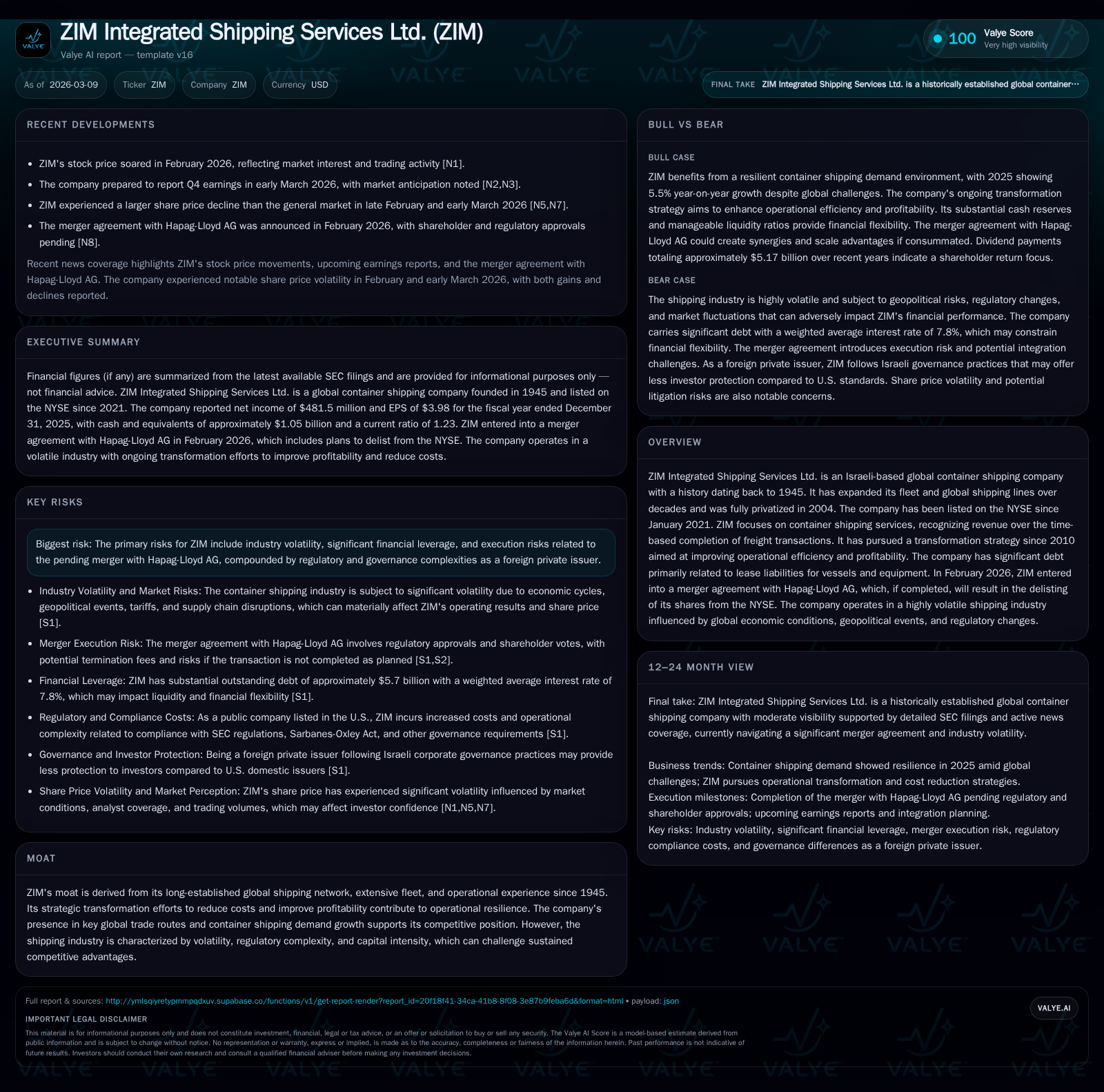
ZIM Integrated Shipping Services experienced dramatic profitability swings between 2022 and 2025, culminating in a sharp net income drop of approximately 78% from 2024 to 2025. This volatility reflects cyclical dynamics in global container demand and cost pressures despite ongoing efficiency-driven transformation efforts dating back to 2010. Concurrently, ZIM’s February 2026 merger agreement with Hapag-Lloyd introduces complex integration and governance considerations, signaling a pivotal transition from independence to consolidation. Capital structure remains anchored by vessel and container lease liabilities, while dividend payouts continue steadily amid profit variability.
From Historic Growth to Recent Profit Volatility
ZIM Integrated Shipping Services Ltd.'s financial performance over the last four years reveals pronounced volatility typical of the container shipping sector's cyclicality. In fiscal year (FY) 2022, ZIM reported net income of $4.63 billion, a peak reflecting robust global trade volumes post-pandemic surge. However, the following year saw an abrupt reversal—a net loss of approximately $2.69 billion—stemming from softened freight rates and supply-demand imbalances across containerized trade lanes [F1]. Recovery followed with net income of $2.15 billion in FY2024 but was short-lived; FY2025 saw earnings decline sharply by approximately 78%, settling at $481.5 million [F1]. This dramatic swing underscores how factors such as shifting demand, elevated fuel costs, and volatile tariff environments directly impact profitability margins.
Such swings are exacerbated by long cycle times for vessel charters and lease agreements that constrain quick capacity adjustments. The freight revenue recognized on a time-based completion basis further ties earnings closely to cargo flow timing rather than spot market prices alone [S5].
Historical performance (annual)
| FY | Net ($bn) | Net YoY |
|---|---|---|
| 2025 | 0.5 | -77.6% |
| 2024 | 2.2 | +180.1% |
| 2023 | -2.7 | -158.1% |
| 2022 | 4.6 |
Source: SEC companyfacts cache [F1].
Capital returns and efficiency (annual)
| FY | Div ($bn) | ROE% |
|---|---|---|
| 2025 | 0.5 | 12.0 |
| 2024 | 0.6 | 53.3 |
| 2023 | 0.8 | -109.4 |
| 2022 | 3.3 | 78.5 |
Source: SEC companyfacts cache [F1].
Note: Revenue figures not specified; Dividend amounts reflect actual payments [F1]
Operational Transformation and Efficiency Enhancements Since 2010
Since adopting its strategic transformation program in 2010, ZIM has prioritized initiatives aimed at optimizing its operational footprint and controlling costs against an unpredictable market backdrop [S1][S14]. Core facets include fleet renewal through acquisition or chartering of more fuel-efficient vessels under time charter agreements; streamlining global service routes focusing on high-density container throughput corridors; and leveraging advanced scheduling technologies to reduce waiting times and bunker consumption.
These efforts aim not only at immediate margin improvements but also enhance agility enabling ZIM to better weather headwinds like geopolitical tensions disrupting Red Sea passage or fluctuating consumer demand patterns [S11]. Container leasing practices also form an important part of asset flexibility strategies linked with operational leases that provide options for extension or purchase reflective of current vessel value trends [S4][S6].
Financial and Capital Structure Overview: Debt Profile and Liquidity
ZIM's capital structure is characterized by significant long-term indebtedness primarily composed of lease liabilities associated with its fleet of vessels and leased container assets [S1][S4]. As of December 31, 2025, total debt stood at approximately $5.73 billion – down modestly from just over $6 billion in the prior year due mainly to lease liability reductions totaling around $274 million [F1][S1]. The effective weighted average interest rate on this debt is relatively high at about 7.8%, consistent with the high capital intensity and financing risk profile common among maritime shippers reliant on leased assets [S4].
Short-term credit facilities supplement liquidity requirements but remain modest versus the lease-dominated indebtedness profile [S6][S8]. The company's liquidity position remains robust at roughly $2.8 billion as measured against covenant minimums near $250 million, providing confidence in sustaining operational cash flow needs without immediate refinancing pressure [S1][S4]. Capital expenditures have trended upward recently near ~$218 million annually as investment supports both fleet upgrades and IT systems critical for competitive scheduling efficiency [F1][S6].
Merger Agreement With Hapag-Lloyd AG: Terms and Strategic Implications
In February 2026, ZIM entered into a definitive merger agreement with Germany's Hapag-Lloyd AG wherein ZIM will become a wholly owned subsidiary upon completion [N5][S3]. Shareholders are set to receive $35 per ordinary share in cash consideration leading to the delisting of ZIM’s shares from the NYSE once consummated.
This consolidation reflects broader industry pressure toward scale efficiencies amidst growing cost pressures and slower container shipment growth forecasts post-peak demand years [N5][S9]. From a governance perspective, integration poses challenges including harmonizing collective bargaining arrangements governing substantial maritime labor forces subject to union agreements that restrict managerial flexibility and affect pension liabilities [S9]. Regulatory scrutiny given foreign ownership structures adds layers of complexity unique to this cross-border transaction.
While this merger could yield enhanced network reach across complementary trade lanes and vessel sharing arrangements enhancing load factors, transitional execution risks remain material with potential impacts on reputation if labor disputes or regulatory delays occur during integration phases.
Near-Term Outlook: Market Environment and Demand Signals
ZIM’s outlook draws guidance primarily through external industry indicators rather than explicit company forecasts due to usual shipping sector uncertainties [S11][N3]. Drewry Container Forecaster projects global container shipping demand grew approximately 5.5% year-over-year for full-year 2025 despite ongoing geopolitical disruptions including tariff regimes and regional conflicts impacting supply chains [S11]. This demand strength may mark a cyclical peak as growth forecasts slow toward mid-single digits in subsequent years (~1.8% in 2026), moderating further toward ~2.7% annual growth through late decade.
Revenue recognition according to IFRS15 shows contract liabilities representing unfinished freight obligations—a proxy for backlog visibility—important for assessing near-term revenue streams against spot market volatility [S5][N3]. These contractual commitments provide partial cushioning but overall earnings remain sensitive to evolving global trade patterns influenced by macroeconomic factors such as GDP growth rates across major consumer markets.
Capital Allocation: Dividends, Buybacks, and Return on Equity Trends
Despite large net income swings between years—with negative returns in FY2023 followed by rebounds—ZIM has maintained regular dividend distributions totaling approximately $515 million in FY2025 alone after paying out even higher sums during peak earnings years (e.g., over $3.3 billion in dividends in FY2022) reflecting management commitment to shareholder returns within constraints posed by Israeli law requiring distributions be paid only from distributable profits [F1][S18][S24].
No evidence indicates share buybacks during this period; capital allocation emphasizes dividends alongside ongoing reinvestments into operational assets.[F1]
Calculated return on equity (ROE) based on FY2025 net income relative to equity stands around a moderate ~12%, down substantially from historically elevated levels driven by cyclical conditions but illustrating residual value generation despite profit compression [F1]. This decline corresponds with rising leverage ratios attributable mostly to vessel lease accounting rather than traditional bank borrowings.
Risks Embedded in Industry Cyclicality and Integration Challenges
Operational risk is multifaceted for ZIM given volatile freight markets traditionally prone to steep booms/busts stemming from supply chain shifts or macroeconomic shocks compounded by capital-heavy fleet financing obligations predominantly via fixed-rate leases limiting short-term cost flexibility [S7][S20]. Tulip courses through potential labor unrest risk intensified under merger circumstances where unionized employees maintain strong negotiating power through collective agreements affecting cost structures related not only wages but pensions—with termination provisions constraining managerial responses during restructuring phases [S9]. As a foreign private issuer listed on the NYSE since only early-2021,ZIM faces incremental compliance costs including Sarbanes-Oxley mandated controls plus governance requirements that absorb senior management time detracting focus from core operations—an intangible yet real cost burden accentuated prior to delisting proceedings[S7][S9]. Additionally,currency exposure affects revenue/expense streams requiring risk management protocols typical across internationally operating container carriers[S10].
Market perception risks fueled by stock price volatility might amplify shareholder activism potential absent controlling ownership blocs leading to governance uncertainties just before merger completion which depend heavily on regulatory approvals subject to jurisdictional caprice[S15],[S19].
What to Monitor Going Forward: Key Catalysts and Analytical Considerations
Post-merger developments represent primary milestones deserving close monitoring including timely receipt of various antitrust regulatory approvals globally alongside successful resolution of labor negotiations underpinning workforce stability throughout transition periods[S23],[N5]. Freight rate trends remain crucial: brokerage forecasts relative to realized contract liabilities accounting entries will shed light on future revenue momentum beyond spot tariffs[S11],[N3]. With leverage materially composed of lease liabilities bound by fixed commitments,S analysts should observe covenant compliance metrics particularly if external pressures persist beyond initial merger synergies[S1],[S4]. From macroeconomic vantage,the interplay between slowing global GDP growth projections versus emerging markets’ import/export volatility will influence container throughput volumes directly affecting consolidated financial outcomes[S11].
Overall,the pathway ahead positions ZIM at a crossroads: delivering integration gains that capitalize on operational transformation advances while mitigating inherited sector volatility risks will define its sustainable financial trajectory amid consolidation-driven shipping industry trends.
This analysis is based exclusively on publicly available information including SEC filings ([F1], [S#]) and recent news reports ([N#]). It is intended solely for informational purposes without expressing any investment advice or recommendation regarding securities or financial instruments associated with ZIM Integrated Shipping Services Ltd.
Disclaimer: This is research-only, informational analysis and not investment advice. It may include AI-generated interpretation and general industry context. Always verify important details using primary sources.

Comments