
Ascentage Pharma Advances Clinical Presence with Multiple Trial Data Ahead of ASCO 2026
Ascentage Pharma intensifies clinical and commercial momentum through key upcoming data presentations while managing operational risks in China.
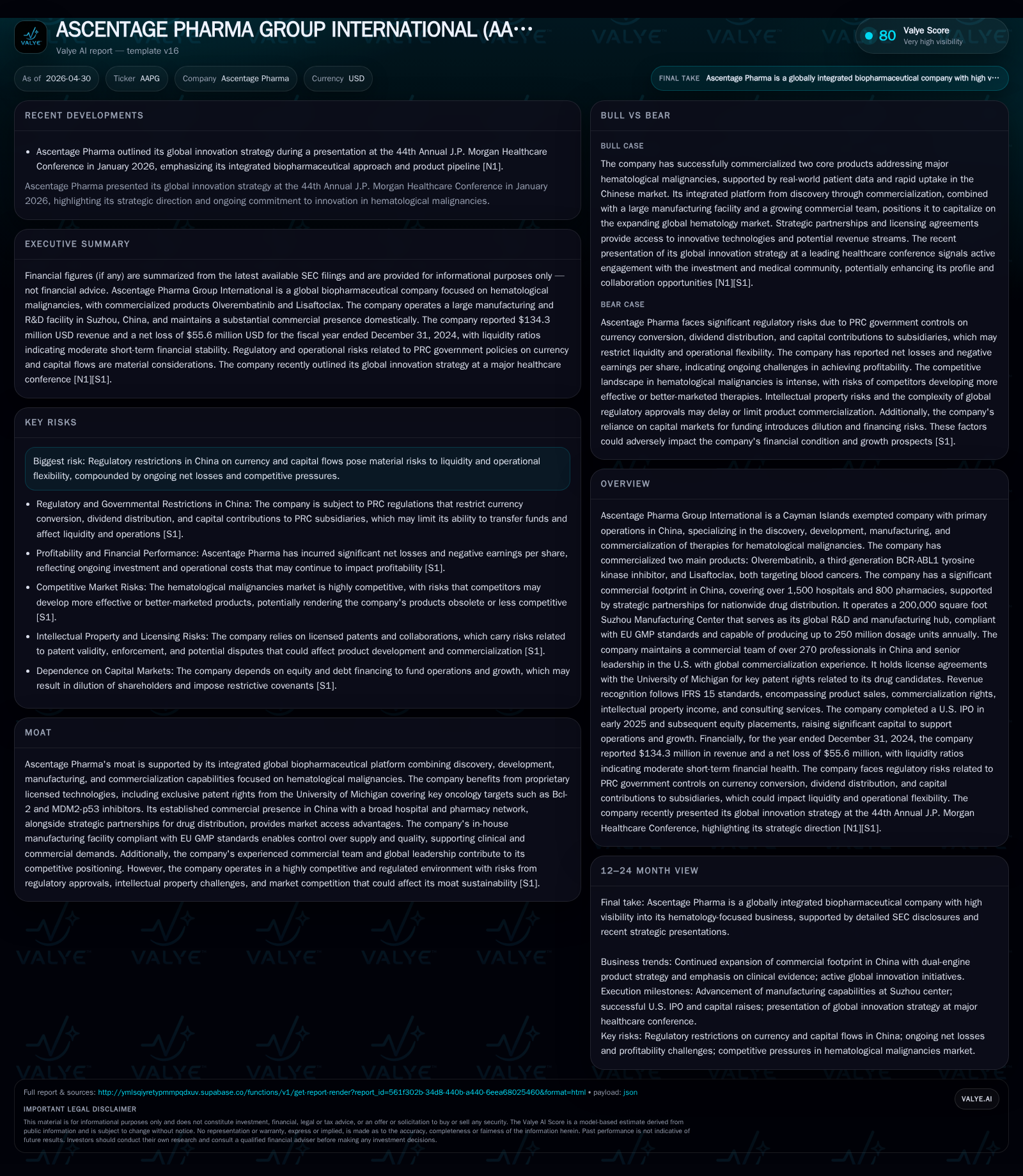
In its recent quarterly disclosures, Ascentage Pharma announced multiple data presentations at high-profile oncology conferences, including three rapid oral sessions at ASCO 2026 and four preclinical combination therapy studies at AACR 2026. These developments underline the company’s robust R&D capabilities and pipeline advancement in hematological malignancies. Leveraging an integrated model combining proprietary drug discovery, licensed patents, a China-focused commercial network, and EU GMP-compliant manufacturing, Ascentage is positioned for growth despite regulatory and liquidity constraints linked to Chinese currency controls and ongoing net losses.
Recent Clinical Data Milestones and Operating Update
Ascentage Pharma Group International’s latest SEC disclosures in April 2026 highlight significant near-term catalysts tied to multiple upcoming oncology conference presentations. The company announced it will present data from multiple clinical trials at the American Society of Clinical Oncology (ASCO) 2026 Annual Meeting, including three rapid oral presentation sessions—an indicator of the relevance and novelty of its research to the oncology community [S2]. Rapid oral sessions at ASCO are highly selective, signaling strong scientific interest and supporting pipeline credibility.
In addition to ASCO engagements, Ascentage disclosed plans to present four promising preclinical combination therapy studies at the American Association for Cancer Research (AACR) 2026 Annual Meeting [S3]. These preclinical proofs-of-concept reflect advancements in combination regimens potentially improving therapeutic efficacy in hematological cancers—a critical area addressing often refractory patient populations.
These high-visibility academic milestones validate Ascentage’s R&D execution strength. Regular presentations at premier medical congresses enhance the company’s global profile among clinicians and stakeholders while reinforcing its strategy of innovation in apoptosis-modulating therapies.
Integrated Biopharmaceutical Business Model and Product Portfolio
Ascentage operates an integrated biopharmaceutical platform focused primarily on hematologic malignancies such as chronic myeloid leukemia (CML), acute myeloid leukemia (AML), chronic lymphocytic leukemia (CLL), acute lymphocytic leukemia (ALL), myelodysplastic syndrome (MDS), and multiple myeloma (MM) [S1]. The company combines proprietary small molecule drug discovery with global development capabilities anchored by a 200,000-square-foot manufacturing center in Suzhou that complies with EU GMP standards. This facility supports both clinical trial supply demands and commercial production—with annual capacity up to 250 million dosage units—enabling supply chain control critical for quality assurance and regulation adherence.
Commercially, Ascentage leverages a substantial sales footprint across China encompassing more than 1,500 hospitals and over 800 pharmacies supported by a direct sales team exceeding 270 personnel [S1]. Its strategic partnership with Innovent empowers commercialization reach for Olverembatinib through branding rights within China; this collaboration includes upfront payments plus developmental and commercialization milestone-based revenue streams enhancing financial stability amid ongoing net losses [S1].
The company's flagship products Olverembatinib—a third-generation BCR-ABL1 tyrosine kinase inhibitor—and Lisaftoclax—a Bcl-2 family apoptosis regulator inhibitor—are rooted in licensed intellectual property from the University of Michigan covering key targets involved in programmed cell death pathways [S1]. This positions Ascentage uniquely as the only global player with active clinical programs targeting all three known classes of apoptosis regulators according to industry reports.
Competitive Positioning and Industry Dynamics in Hematological Oncology
The hematological oncology sector is marked by high specialization focusing on apoptosis-modulating therapies targeting Bcl-2 family proteins, MDM2-p53 interaction inhibitors, and tyrosine kinase inhibitors. Ascentage’s portfolio covers all these major classes—a broad clinical coverage uncommon among peers—and is protected by exclusive licenses conferring technological moat [S1]. This extensive IP coverage acts as a barrier against generic entrants.
Their proprietary manufacturing capabilities grant supply reliability not always accessible to late-stage biotech companies dependent on contract manufacturers. In-house production capability also facilitates rapid scale-up for clinical trials globally while controlling product quality at scale.
However, industry innovation cycles are long due to necessary rigorous testing for safety/efficacy in oncology indications. Competitive dynamics feature both multinational pharmaceutical incumbents with diversified portfolios and nimble biotech firms innovating targeted therapies. In this context, Ascentage’s integration from discovery through commercialization provides operational synergies but also necessitates sustained R&D investment amid evolving science.
Growth Catalysts: Pipeline Progression and Commercial Expansion Strategies
Key growth drivers derive from nine ongoing registrational trials spanning U.S. FDA-regulated studies evaluating Olverembatinib and Lisaftoclax across various hematologic malignancies [S1]. Positive results from these pivotal trials would enable label expansions beyond initial approvals fostering revenue growth.
Commercial expansion efforts focus on deepening penetration into China’s hospital/pharmacy network beyond the existing footprint (>1,500 hospitals/800 pharmacies) via both direct sales force scaling and the leveraging of strategic distribution partnerships such as Innovent [S1,S2,S3]. The breadth of distribution combined with targeted messaging around apoptosis modulators addresses unmet patient needs amid rising incidence of blood cancers.
The preclinical combination therapy data presented at AACR underscore potential enhancement of frontline or salvage regimens by synergizing Ascentage’s novel agents with other treatment modalities—a longer-term pipeline extension source that could unlock additional indications or licensing opportunities [S3].
Overall, sustained R&D investment reflected by heavy spending (over 60% of operating expenses) suggests management prioritizes innovation depth over short-term profitability to build durable competitive advantage [S5,S6].
Risks and Constraints: Regulatory, Financial, and Market Factors
Operating primarily through Chinese subsidiaries exposes Ascentage to regulatory challenges including significant PRC foreign exchange restrictions limiting cash remittances abroad—particularly dividends—and cross-border capital flows that can constrain financial flexibility despite reported liquidity positions [S1,S8,S27]. These controls pose substantive operational risks as offshore holding companies rely on upstreaming earnings.
The company continues recording material net losses as it invests heavily in R&D infrastructure development; reliance on future financing rounds or milestone payments under collaborations like Innovent introduces execution risk around capital raises potentially diluting shareholders or affecting strategy pacing [S1,S17].
Moreover, heightened scrutiny from PRC anti-bribery laws creates compliance complexity given widespread concerns over pharmaceutical commercial practices; though no current penalties are noted the environment mandates robust internal controls restricting aggressive marketing tactics [S8].
Cybersecurity risk is also actively managed given potential disruptive impact from breaches affecting confidential research data or operations; governance structures place oversight at board level supported by dedicated IT leadership ensuring continuous monitoring though residual risk persists like many peers [S14].
Near-Term Catalysts and Key Monitoring Points
Investors should closely monitor updates from ASCO 2026 where critical efficacy/safety data from multiple pivotal trials will be disclosed—readouts expected to influence regulatory timelines particularly FDA decisions on ongoing nine registrational studies related to Olverembatinib/Lisaftoclax indication expansions [S2,S3,S1].
Milestone payments triggered via collaboration agreements (notably Innovent) tied to regulatory approvals or commercial achievements should be tracked as indicators of progress converting clinical investment into revenue streams.
Expansion metrics such as broadened hospital/pharmacy penetration or increased sales force effectiveness within mainland China will serve as tangible markers of commercial execution capability extending beyond initial launch successes.
Additionally, new licensing deals or announcements reflecting global partnerships beyond China could signal ambition for international footprint expansion leveraging Suzhou manufacturing hub capacity.
Financial Snapshot and Capital Structure Considerations
As of December 31, 2024, Ascentage held $122 million in cash & equivalents with current assets significantly exceeding current liabilities resulting in a current ratio of approximately 1.26—indicating reasonable short-term liquidity levels supporting operation continuity [F1]. However, the company posted net losses ($55.5 million for FY2024) driven predominantly by high R&D expenses which accounted for over 60% of operating costs reflecting an early-stage biotech growth profile focused on hefty pipeline investments rather than immediate profitability [F1,S5,S6,S17].
Funding has been sourced through equity offerings including U.S. IPO proceeds augmented by upfronts and milestones received within collaborations such as Innovent’s agreement related to Olverembatinib commercialization rights amounting initially to a $30 million upfront plus up to $115 million contingent milestones providing non-dilutive financing inflows supportive amid sizeable operating deficits [S1,S21].
In aggregate, the company’s financial posture aligns with innovation-led biopharmaceutical companies balancing near-term cash burn against expected market-launch-inflected inflection points.
Disclaimer: This analysis is based solely on publicly available filings without incorporating unpublished proprietary information. It does not constitute investment advice nor recommendations regarding securities transactions.
Disclaimer: This is research-only, informational analysis and not investment advice. It may include AI-generated interpretation and general industry context. Always verify important details using primary sources.

Comments