
Apple Inc. Q1 2026 Earnings and Strategic Dynamics in Consumer Electronics
Apple’s latest quarter highlights robust iPhone demand, growth in services, and cost pressures amid a complex supply landscape.
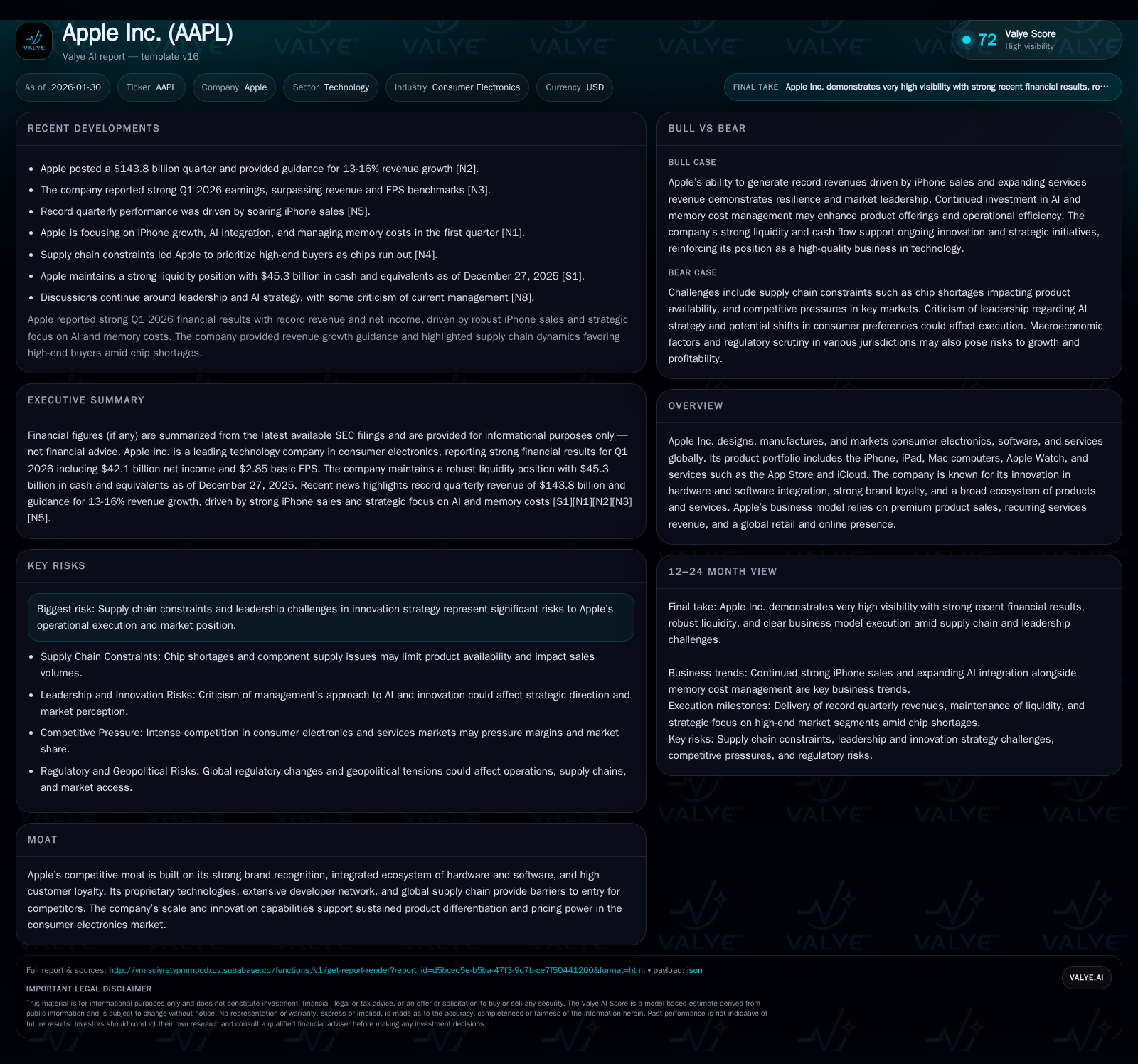
Apple reported a strong Q1 2026 with $143.8 billion in revenue, beating estimates driven primarily by iPhone sales and expanding services. The company’s focus on premium hardware combined with a growing ecosystem of recurring revenue streams continues to anchor its competitive moat. However, rising memory costs and chip supply constraints pose operational challenges. Apple’s integrated business model, global supply chain, and brand power remain critical to navigating an evolving consumer electronics industry.
What Changed Recently
Apple reported its fiscal Q1 2026 earnings with revenue reaching $143.8 billion, surpassing Wall Street estimates and signaling robust demand for its flagship iPhone line alongside continued growth in its services ecosystem, including the App Store and iCloud offerings [N2][N4]. The quarter also brought forward guidance projecting 13-16% revenue growth for the next period, reflecting cautious optimism amid macroeconomic uncertainties [N2][N13]. However, the company flagged rising memory costs and chip shortages as emerging operational challenges, leading to supply prioritization for higher-end customers and products [N1][N14]. Analysts have updated their price targets post-earnings, reflecting confidence in Apple's brand strength and innovation capacity despite near-term cost headwinds [N3].
Business Model as a System
Apple’s business model operates as a tightly integrated system combining premium hardware products, proprietary software, and recurring services. At its core, Apple designs, manufactures, and markets a portfolio including the iPhone, iPad, Mac computers, Apple Watch, and AirPods, all interconnected through its ecosystem. This hardware suite is complemented by software platforms like iOS, macOS, and watchOS, which power a seamless user experience and foster developer engagement through the App Store [S6].
The services segment — encompassing digital content, cloud storage, payment services, and subscription offerings — generates high-margin, recurring revenue that has grown proportionally faster than hardware sales. This diversification mitigates cyclicality in product sales and enhances customer lock-in. Apple leverages its global retail footprint and online channels to maintain direct customer relationships and premium pricing power. Its capital allocation emphasizes R&D investment, ecosystem development, and shareholder returns, supported by substantial cash and cash equivalents totaling over $45 billion as of the recent quarter-end [S6].
Industry Map & Competitive Battlefield
Apple operates within the broader consumer electronics and technology sector, where competition is multifaceted and dynamic. The smartphone market, dominated by Android OEMs like Samsung and emerging Chinese brands, exerts continuous pricing and feature pressure. However, Apple’s ecosystem-centric approach creates high switching costs that defend its premium positioning. The lines between hardware, software, and services providers are increasingly blurred, as players like Google and Microsoft deepen integration across platforms and cloud offerings.
Additionally, artificial intelligence is reshaping consumer expectations and software capabilities, introducing competitive dynamics on the AI assistant and intelligent services front. Apple’s pace of AI integration into its products will be critical in maintaining differentiation. Supply chain control remains a strategic battlefield, with semiconductor shortages and memory cost inflation creating bottlenecks that affect product availability and margins industry-wide [N1][N14].
Where the Economics Become Real
Apple’s unit economics benefit from premium pricing, scale, and operating leverage. The company achieves gross margins north of 40% in hardware segments, enhanced by proprietary chip design and tight supplier negotiations. The shift toward services increases margin stability, with subscription-based revenues exhibiting high retention rates and lower incremental costs. However, memory price inflation and constrained chip supply exert upward pressure on component costs, challenging margin expansion and product availability [N13][N14].
Apple’s strategy to prioritize shipments to high-end buyers and flagship products reflects an effort to protect unit economics. Its capital intensive investments in R&D and supply chain resilience are vital to sustaining innovation and operational excellence. Liquidity remains strong but the current ratio below 1 (0.97) signals tight working capital management amid large current liabilities [S6]. Maintaining balance between growth investments and shareholder returns will be key as cost headwinds persist.
Diligence Questions / Disconfirming Signals
- How sustainable is Apple’s premium pricing power in the face of intensified competition and potential economic softness?
- Can Apple maintain innovation leadership amid rising costs and potential talent or leadership challenges in R&D?
- What is the company’s strategy to mitigate semiconductor supply constraints and memory price volatility?
- How rapidly can Apple scale AI-driven features across devices and services to stay competitive?
- Are recurring services revenues sufficiently diversified to offset hardware cyclical risks?
- Does the current liquidity and working capital position support agile responses to supply chain shocks?
- How might shifts in consumer preferences (e.g., towards cheaper alternatives or new form factors) impact Apple’s product roadmap?
- To what extent do geopolitical risks (e.g., trade tensions) threaten global manufacturing and sales operations?
Conclusion
Apple’s Q1 2026 results underscore its resilience and strategic depth in the consumer electronics industry. The company’s integrated ecosystem, premium hardware focus, and expanding services business model create a differentiated platform with significant competitive moats. Yet, supply chain complexities, rising input costs, and innovation execution remain critical operational challenges. Navigating these while sustaining growth will require continuous strategic agility and capital discipline. The evolving competitive landscape, especially around AI and software ecosystems, will test Apple’s ability to maintain its leadership and profitability in coming years.
This analysis is based on publicly available information as of January 30, 2026, including news reports and SEC disclosures. It is presented for informational purposes only and does not constitute investment advice.
Disclaimer: This is research-only, informational analysis and not investment advice. It may include AI-generated interpretation and general industry context. Always verify important details using primary sources.

Comments