
Delta Air Lines Navigates Regulatory Complexities and Sustainability in a Competitive Airline Industry
Delta leverages its slot controls, loyalty programs, and refinery operations to maintain resilience amidst regulatory and labor challenges.
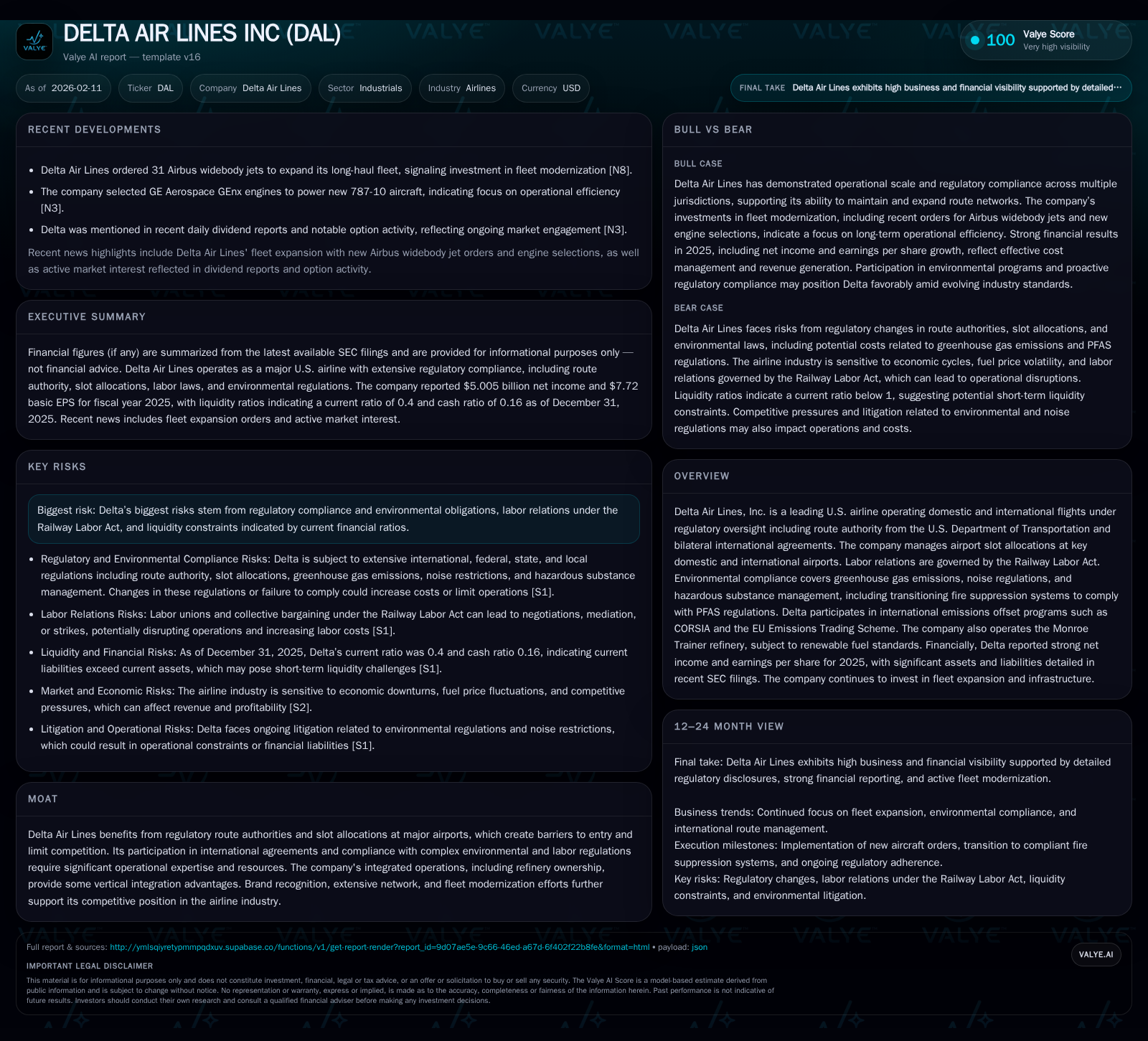
Delta Air Lines holds a distinct competitive edge through its control of coveted airport slots and extensive international route authorities, embedded within a complex regulatory framework. The airline demonstrated robust financial performance in 2025 despite rising operational costs driven by capacity growth and labor expenses. Delta’s loyalty program constitutes a significant deferred revenue stream that enhances passenger revenue beyond ticket sales. Meanwhile, the company confronts evolving environmental regulations, including PFAS liabilities and international carbon offset agreements, requiring integrated sustainability efforts. Labor relations under the Railway Labor Act and systemic air traffic control inefficiencies add layers of operational risk, while vertical integration via the Monroe Trainer refinery provides strategic fuel cost management advantages.
The Heightened Value of Route Authorities and Slot Allocations
At the heart of Delta’s competitive fortress lies its regulatory entitlements: permanent slot allocations at pivotal hubs such as JFK, LaGuardia, and Washington National airports alongside bilateral international route authorities. These assets are not mere conveniences—they represent formidable barriers to entry preserved through complex negotiations and adherence to U.S. Department of Transportation (DOT) directives and bilateral treaties. While Open Skies agreements have liberalized certain markets, many of Delta's routes remain subject to renewals contingent on performance metrics and government discretion [S1].
This regulatory mastery demands constant vigilance; changes in aviation policy or shifts in antitrust perspectives could diminish these privileges, threatening market share in the dense Northeast corridor or lucrative international destinations. Furthermore, local slot coordinators globally enforce analogous constraints that require active management to expand or adjust service offerings without losing critical takeoff and landing rights [valye_report_excerpt].
Financial Resilience Amid Operational Complexities
Despite operating cost headwinds, Delta demonstrated substantial profitability with reported net income approximating $5 billion for the fiscal year ending 2025 [F1]. Quarter-over-quarter comparisons reveal operating income gains driven by revenue growth in premium product offerings and loyalty award redemptions [S2]. Nevertheless, the company operates with liquidity constraints; a current ratio of around 0.4 underscores working capital challenges—current liabilities notably outnumber current assets as of year-end 2025 [F1].
Operating expenses increased by roughly 5% in Q3 2025 versus prior year estimates due largely to expanded capacity (+4%) and higher employee wages reflecting labor negotiations [S2]. Notably, refinery sales to third parties inject both revenue and related costs, adding complexity to margin calculations yet enhancing cash flow flexibility by partially offsetting fuel price volatilities.
Loyalty Program: Strategic Revenue Driver Beyond Flights
Delta’s SkyMiles program functions as more than just customer retention; it is a significant deferred revenue generator requiring sophisticated accounting treatment aligned with marketing agreements such as those involving American Express [S1]. Revenue recognition is staggered based on mile redemption timing, with most miles redeemed within two years post-issuance—a critical assumption shaping deferred revenue liabilities.
Components such as award travel, baggage waivers, lounge access, priority boarding, and brand royalties propel deeper monetization streams beyond direct ticket sales. This multi-faceted approach strengthens revenue visibility as loyalty redemptions are systematically recognized upon fulfillment of transport or service obligations. Consequently, loyalty-related revenues have grown faster than main cabin ticket sales, highlighting its strategic value [S1].
Confronting Environmental Regulations and Sustainability Commitments
As environmental scrutiny intensifies globally, Delta must manage an expanding remit covering greenhouse gas emissions, noise pollution mandates, hazardous substance controls—including newly designated PFAS compounds—and compliance with renewable fuel standards at its Monroe Trainer refinery [valye_report_excerpt][S1]. The EPA’s recent regulation defining PFAS as hazardous substances imposes potential contamination remediation liabilities associated with airport firefighting foam usage—a complex exposure given historical deployment patterns.
Participation in international carbon-offset frameworks such as CORSIA and the EU Emissions Trading Scheme situates Delta within an elevated global governance domain necessitating further investments in emission reduction initiatives. This intertwined regulatory landscape elevates operational costs but also positions Delta as a proactive industry player integrating sustainability into long-term strategy.
Labor Relations Under the Railway Labor Act: The Delicate Flight Plan
Delta’s workforce is governed by the Railway Labor Act rather than traditional labor statutes governing airlines elsewhere—introducing procedural rigor into negotiations over wages, hours, and working conditions that influence overall cost structures [valye_report_excerpt][S1]. Recent increases in employee compensation correlate directly with reported rising operational expenses.
This legal framework mandates dispute resolution via specialized boards that temper rapid collective bargaining agreements but may complicate swift reaction to economic stresses. Maintaining labor peace is critical to avoid interruptions reminiscent of past nationwide disruptions affecting service reliability.
Operational Risks in an Aging Air Traffic Control Ecosystem
FAA oversight highlights persistent deficiencies within the U.S. air traffic control system encompassing outdated technology platforms alongside staffing shortages that exacerbate flight delays especially during peak periods at congested airports where Delta operates extensively [S1]. Without timely modernization funding or systemic reform efforts materializing soon enough, persistent bottlenecks threaten capacity optimization.
Such inefficiencies not only erode customer experience but translate into measurable financial impacts through cascading crew reassignments and delayed aircraft utilization—signaling an external vulnerability area outside direct corporate control but firmly tied to regulatory infrastructure investment decisions.
Leveraging Vertical Integration: The Monroe Trainer Refinery and Fuel Strategy
Delta’s ownership stake in the Monroe Trainer refinery distinguishes its operational model by offering partial insulation from volatile fuel markets through captive refining capabilities [valye_report_excerpt][S2]. This vertical integration additionally complicates financial reporting—as sales to third parties introduce revenue offsets balanced by corresponding expenses.
Furthermore, compliance with renewable fuel standards imposes capital intensity demands but aligns with broader decarbonization trajectories impacting aviation fuels—a segment poised for transformation amid tightening emissions benchmarks internationally.
Competitive Context: Delta Amidst a Turbulent Industry Landscape
The airline industry presents a volatile backdrop characterized by mixed competitor earnings signals—in February 2026 alone LATAM stock declined by over 8%, SkyWest posted earnings misses down year-over-year while Allegiant rallied more than 14% post-Q4 releases; JetBlue gained approximately 6.6% [N1][N2][N11][N13]. Within this turbulence Delta's entrenched regulatory moats offer comparative durability against smaller carriers lacking scale or slot control.
However, external shocks such as global economic slowdowns or renewed travel restrictions could compress yields leading to margin pressure irrespective of structural advantages described herein [valye_report_excerpt]. Hence ongoing strategic agility remains paramount.
In sum, Delta Air Lines exemplifies an airline balancing layered regulatory requirements—from slot allocations to international air service agreements—with emergent sustainability imperatives embedded across operations including refinery ownership. Financial robustness evidenced through strong net income contrasts against liquidity tightness requiring careful working capital management. Persistent risks emanate from labor frameworks under the Railway Labor Act along with infrastructural inefficiencies within U.S. air traffic control systems.
Delta’s comprehensive loyalty program underscores innovative revenue diversification aligned with brand value monetization strategies amid competitive industry headwinds featuring divergent performance among peers globally. As regulatory landscapes continue evolving rapidly—especially around environmental compliance—the company must maintain nimbleness while leveraging entrenched slots and routes that constitute its most durable assets.
This analysis is based solely on publicly available information including SEC filings dated February 11, 2026 ([S1],[S2]), company financial snapshots ([F1]), and relevant market news ([N1],[N2],[N11],[N13]). It does not constitute investment advice.
Disclaimer: This is research-only, informational analysis and not investment advice. It may include AI-generated interpretation and general industry context. Always verify important details using primary sources.

Comments