
MGM Resorts Navigates Margin Pressures Amid Shifting Gaming Dynamics in Q2 2026
The latest quarterly filing highlights MGM’s operational challenges from gaming revenue mix shifts and margin compression, alongside resilient lodging metrics and robust cybersecurity governance.
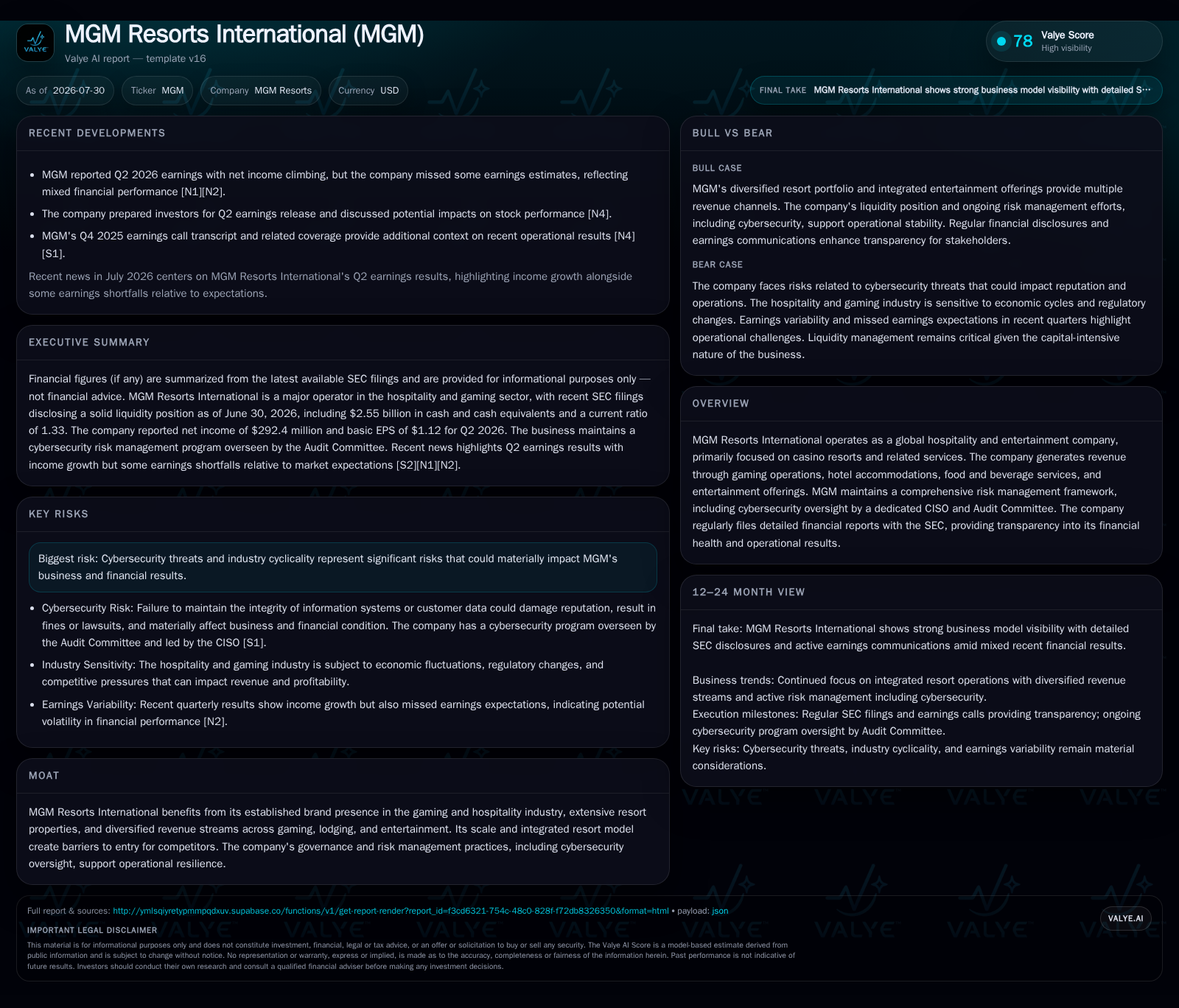
MGM Resorts International’s Q2 2026 results reveal pressure on core gaming revenue yields and operating margins driven by evolving customer behavior and competitive promotional intensity. While hotel occupancy remained stable, slight softness in average daily rate suggests moderated pricing power. MGM’s integrated resort business model continues to provide diversified revenue streams from gaming, lodging, food and beverage, and entertainment, though near-term margin headwinds persist. Strong cybersecurity oversight underpins operational resilience amid increasing technology risks.
Q2 2026 Operating Update: Margin Pressures during Evolving Gaming Demand
MGM Resorts International’s Q2 2026 filings reveal a nuanced operational environment where shifts in gaming revenue composition have exerted downward pressure on profitability [S2][S3]. The decline in gaming revenue per available room (GRevPAR) signals that core casino floor yields softened despite stable visitation levels [N1][S2]. Concurrently, hotel occupancy rates remained resilient quarter-over-quarter; however, average daily rate (ADR) declined modestly, suggesting subdued pricing power or increased discounting to maintain volume [N2][S2]. These dynamics contributed to operating margin compression driven by elevated promotional expenses necessary to offset competitive pressures and variable gaming hold percentages [S2]. This underscores the challenge MGM faces in maintaining profitable throughput while navigating shifting consumer preferences.
Robust cybersecurity governance remains integral to operational resilience. The Audit Committee exercises active oversight of cybersecurity risks with regular updates from the Chief Information Security Officer (CISO), who leads efforts to mitigate technology threats within the company’s complex IT infrastructure supporting hospitality operations [S1][S24]. The ongoing search for a dedicated CISO highlights MGM’s commitment to strengthening this critical control environment.
Integrated Resort Business Model: Diversified Revenue Streams and Operational Synergies
MGM operates an integrated resort model combining multiple revenue channels including traditional casino gaming floors, sports betting platforms, hotel accommodations measured by occupancy and ADR metrics, food and beverage services across various outlets, and entertainment bookings [S1]. This multi-pronged approach creates synergies where customer loyalty programs incentivize repeat visits through complimentary services (comps), driving longer stays and higher overall spend per guest.
Managing volatility in gaming hold percentages—the proportion of wagers retained by the house—is a key operational focus to sustain growth without alienating customers through overly aggressive play margins or excessive promotions [S2]. Hotel economics require balancing ADR optimization against occupancy levels while maintaining competitive positioning during broad market sensitivities [S1]. Food and beverage revenues fluctuate with visitation patterns but also respond to evolving consumer tastes within resort settings. Entertainment offerings not only generate direct revenue but indirectly stimulate ancillary spending across other resort businesses.
Competitive Positioning: Scale Advantages with Premium Market Challenges
MGM competes alongside major integrated operators such as Las Vegas Sands Corp. and Caesars Entertainment leveraging scale advantages across regional markets but must continually enhance operational efficiency—improving ADR management and slot machine yields—to sustain profitability benchmarks [S1]. Compared with Wynn Resorts’ luxury boutique strategy targeting premium clientele with higher ADRs, MGM’s broader demographic focus requires volume-driven approaches supported by brand strength.
In lodging and food & beverage segments, Marriott International offers a useful point of comparison for unit economics outside of gaming dependency. This highlights the importance of competitive pricing strategies combined with service quality embedded within loyalty programs that drive customer retention [S1]
Growth Drivers: Digital Integration and Loyalty Enhancements
Key growth catalysts include expanding online and mobile gaming platforms tightly integrated with physical resorts—a sector benefiting from ongoing regulatory liberalization enabling entry into new jurisdictions [S1]. Enhanced customer loyalty programs aim to increase retention by delivering personalized offers that elevate average spend across gambling, hotel stays, dining experiences, and entertainment attendance.
Sports betting handle growth represents a significant opportunity as favorable regulatory changes unfold across states and countries. Seamless integration between online wagering and onsite amenities creates distinct value propositions difficult for standalone digital operators to replicate [S1]. Effective execution here can improve GRevPAR by concentrating spend within captive audiences.
Risks and Watchpoints: Regulatory Complexity, Cyclicality, Capital Intensity
MGM faces substantial risks including complex regulatory compliance requirements across global markets alongside persistent cybersecurity threats requiring continuous mitigation investment [S1][S2]. Economic cyclicality impacts discretionary consumer spending which directly affects visitation volumes and top-line revenues.
The capital-intensive nature of integrated resorts constrains short-term flexibility due to fixed asset renewal cycles coupled with fluctuating business volumes. Additionally, volatility in casino hold percentages introduces earnings variability necessitating careful management of promotional budgets relative to throughput targets [S2]. Industry-specific risks include potential legal or licensing challenges related to anti-money laundering enforcement or regulatory revocations.
Near-Term Monitoring: Key Operational Indicators
Investors should closely watch hotel occupancy trends during upcoming seasonal periods post-Q2 to determine if ADR softness persists or rebounds with demand recovery [S2]. Slot machine yield performance alongside hold percentage fluctuations will offer early insight into margin trajectories amid macroeconomic uncertainties. Progress on digital platform expansions—including geographic rollouts or regulatory approvals—will clarify growth prospects within online revenues complementing physical assets.
Capital expenditure disclosures related to property refurbishment or technology upgrades will signal MGM’s strategic intent to maintain competitive differentiation against peers [S2]. Tracking sports betting handle evolution will confirm whether regulatory opportunities translate into material operational gains.
Financial Profile Discussion
Disclaimer: This is research-only, informational analysis and not investment advice. It may include AI-generated interpretation and general industry context. Always verify important details using primary sources.

Comments