
McGrath RentCorp’s Modular and Rental Diversification Faces Margin Pressure in Q2 2026
McGrath RentCorp reported softer Q2 2026 earnings amid geopolitical supply chain risks and seasonal demand variance, challenging growth momentum.
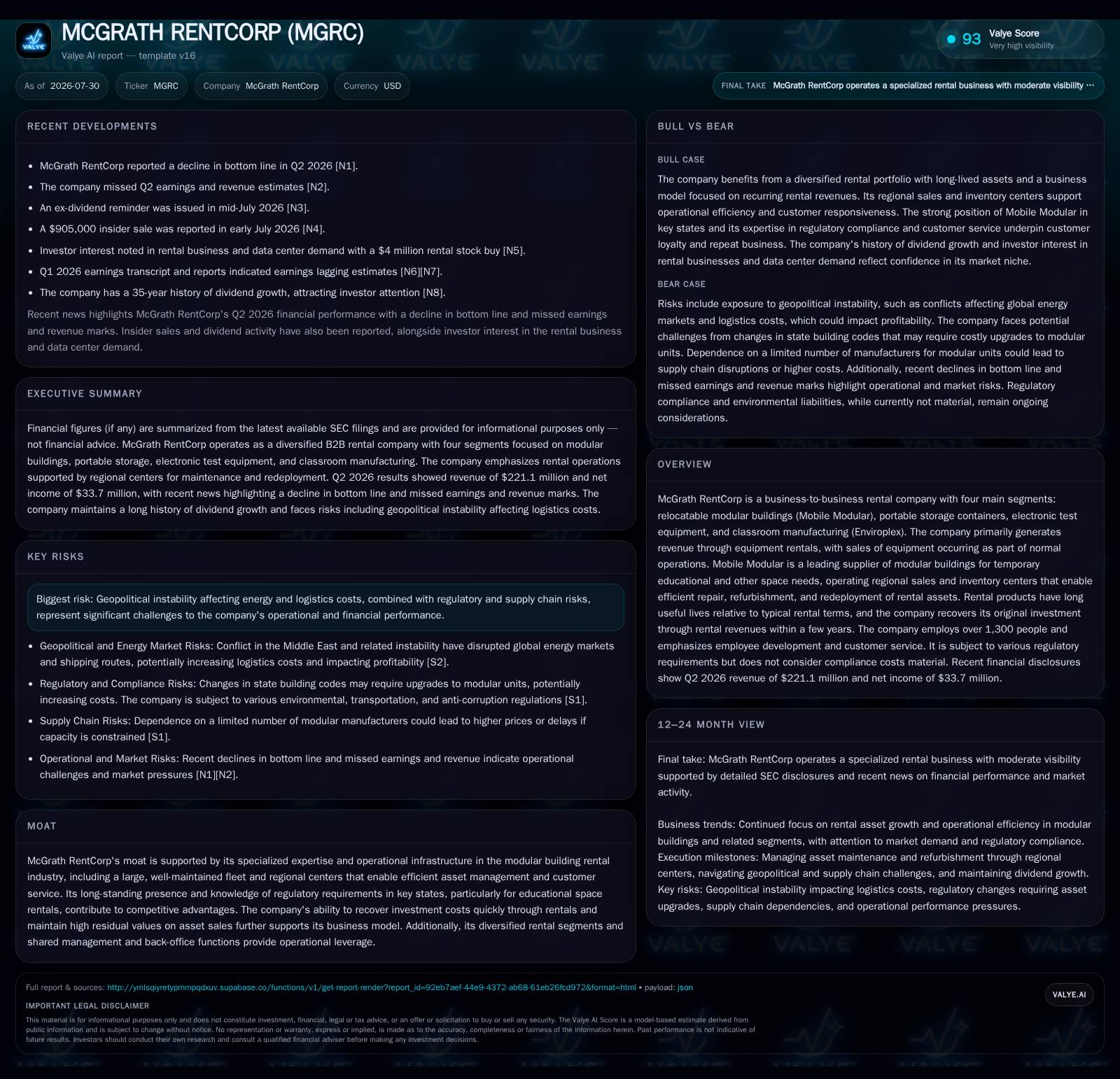
McGrath RentCorp's latest quarterly filing for Q2 2026 reveals pressure on operating results primarily driven by geopolitical instability affecting logistics costs and persistent seasonality in its modular building and portable storage rental segments. The company’s capital-intensive rental model depends heavily on efficient asset utilization and rapid capital recovery, but costs linked to Middle East conflicts have increased, impacting margins. Despite near-term softness, McGrath remains strategically positioned through diversified rental segments, operational infrastructure including regional refurbishment centers, and a broad product portfolio serving temporary space and equipment needs across multiple industries. Key risks from regulatory environments and supply chain disruptions loom, while monitoring rental utilization trends and capital expenditure effectiveness remain critical for future performance.
Recent Operating Update
McGrath RentCorp’s Q2 2026 results released in late July showed a disappointing miss relative to analyst estimates with both revenue and earnings coming under pressure primarily due to elevated logistic expenses linked to ongoing geopolitical tensions in the Middle East. The conflict between the United States, Israel, and Iran has disrupted global energy markets and key shipping lanes such as the Strait of Hormuz, increasing freight costs significantly during the quarter [S2]. These cost escalations materially impacted delivery expenses across McGrath’s geographically dispersed rental fleet. Alongside these external cost headwinds, standard seasonality factors weighed on demand especially in the company's modular building and portable storage container segments that commonly experience slower activity during holiday periods and inclement weather in early calendar quarters [S18]. The tight interplay between high fixed-cost infrastructure for equipment maintenance plus variable demand cycles presents a key near-term challenge for sustaining margin levels.
Business Model Overview
McGrath RentCorp operates a capital-heavy business-to-business rental model focused on four main segments: relocatable modular buildings (under Mobile Modular), portable storage containers, electronic test equipment (through TRS-RenTelco), and a niche classroom manufacturing operation (Enviroplex) primarily in California [S1]. Its primary revenue driver is rental fees from its sizable fleet of expensive equipment assets that have long useful lives — for instance, modular buildings typically last around eighteen years while customers rent these products for only one to two years [S1]. This dynamic allows McGrath to recover its initial capital investment relatively quickly through recurring monthly rental charges before eventually selling used units at residual values close to their acquisition costs.
This structure underscores asset utilization rates and average rental term lengths as critical operating KPIs influencing cash flow generation [S19][S24]. Additionally, McGrath focuses on intensive asset maintenance and refurbishment at regional service centers which facilitate efficient redeployment cycles once contracts expire. Their modular building segment particularly benefits from specialized operational expertise around regulatory compliance for educational spaces and facility setups — an area requiring local knowledge that strengthens barriers to entry versus competitors. Similarly, TRS-RenTelco employs centralized distribution combined with ISO-certified calibration labs to maintain high service reliability for electronic test equipment customers who rely on precision instruments often tied to aerospace or semiconductor sectors
Revenue growth mechanics depend not only on volume increases but also maintaining or raising average rental rates amid competitive pressures — especially within the electronic test equipment sector where pricing elasticity is higher due to competition from leasing firms and brokers [S19]. The portable storage container unit remains geographically diversified with thousands of units nationally distributed; this segment is subject to pricing competition but counters it through superior product quality standards and prompt customer service [S18][S27].
Industry Structure & Competitive Position
Within the broader equipment rental services industry characterized by cyclical end-market demand fluctuations such as construction booms or educational capital spending cycles, McGrath occupies a leading position in specialized modular building rentals along with notable presence in portable storage solutions. Peers like WillScot Mobile Mini provide analogous offerings in modular structures yet McGrath differentiates via ownership of significant refurbishment infrastructure enabling faster turnaround times.
The company benefits from operating leverage gained through shared management functions including finance, marketing, IT systems, human resources, and insurance coverage across segments that mitigate overhead scaling challenges [S13]. However, the industry overall faces risks including fluctuating asset impairment charges due to damage or obsolescence—a particular concern for technology-heavy test equipment inventories—as well as regulatory compliance costs such as environmental laws governing disposal or transport of hazardous materials embedded in assets [S6][S9].
Seasonality impacts all segments variably but are more pronounced in modulars tied to construction schedules which face weather disruptions while electronic test equipment rentals draw diversified clientele making them somewhat more resilient but still cyclical with macroeconomic conditions.
Growth Drivers
Key growth catalysts include expanding demand from customers preferring to rent rather than own costly temporary facilities or specialized equipment due to budget constraints or project uncertainty. Increasing infrastructure investments support the need for flexible workspace increments. Regulatory trends favoring rentals over permanent ownership because of reduced financial risk for end-users also create a favorable environment.
Operationally, McGrath's expansion of its regional refurbishment centers enhances asset lifecycle management efficiency allowing faster redeployment—this lifts effective utilization rates improving return on invested capital over time. Strategic acquisitions or fleet expansions targeting underserved geographies or niche applications could further drive revenue diversity.
Technological advances facilitating online order placement or real-time tracking may also improve customer engagement leading to better retention rates especially important given competitive price pressures across some segments like TRS-RenTelco.
Risks & Watchpoints
Among principal risks are sustained elevated energy prices increasing transportation/logistics costs beyond anticipated levels which compress margins unless offset by pricing power or fixed cost absorption improvements [S2]. Supply chain disruptions prolonging delivery lead times reduce fleet availability during peak demand cycles chipping away at utilization KPIs.
Regulatory compliance requirements impose ongoing expense burdens particularly environmental mandates associated with waste handling or hazardous substance controls tied to certain legacy assets. Rising interest rates can increase financing costs given the company’s sizable debt load, constraining free cash flow amid capital expenditure needs.
The prior merger agreement termination with WillScot Mobile Mini yielded a one-time cash payment but forfeited consolidation scale benefits that could have boosted competitive positioning [S1][S12], meaning organic growth execution will be critical moving forward.
Maintaining employee expertise remains important given no unionized workforce yet high dependency on proficient operational personnel across branches who enable rapid refurbishment cycles and personalized customer service that underpin repeat business.
What to Watch Next
Monitor upcoming quarterly filings for changes in rental utilization rates particularly within Mobile Modular during temperate months when project activity typically rises. Watch incremental logistic cost trends related to geopolitical developments impacting fuel prices or port operations as these directly influence delivery expenses.
Assess any announced capital expenditures expanding refurbishment capabilities or fleet enhancements which would signal management confidence in future demand recovery.
New regulatory developments at state levels regarding temporary educational facilities could materially shift compliance costs — disclosures here will shed light on potential margin impact.
Lastly, observe any shifts in pricing strategy across modular versus storage segments reflecting competitive dynamics or input cost pass-through ability.
Financial Profile Discussion
As of June 30, 2026, McGrath held approximately $4.4 million in cash and cash equivalents according to the latest balance sheet data [F1]. Readers should consider the inherent uncertainties tied to geopolitical events and economic cycles affecting capital-intensive rental businesses when evaluating operational outlooks discussed herein.
Disclaimer: This is research-only, informational analysis and not investment advice. It may include AI-generated interpretation and general industry context. Always verify important details using primary sources.

Comments