
Mohawk Industries Shows Durable Growth and Innovation Triumph in Q1 2026
Mohawk Industries’ Q1 2026 results highlight resilient demand, operational efficiency, and innovation leadership despite market headwinds.
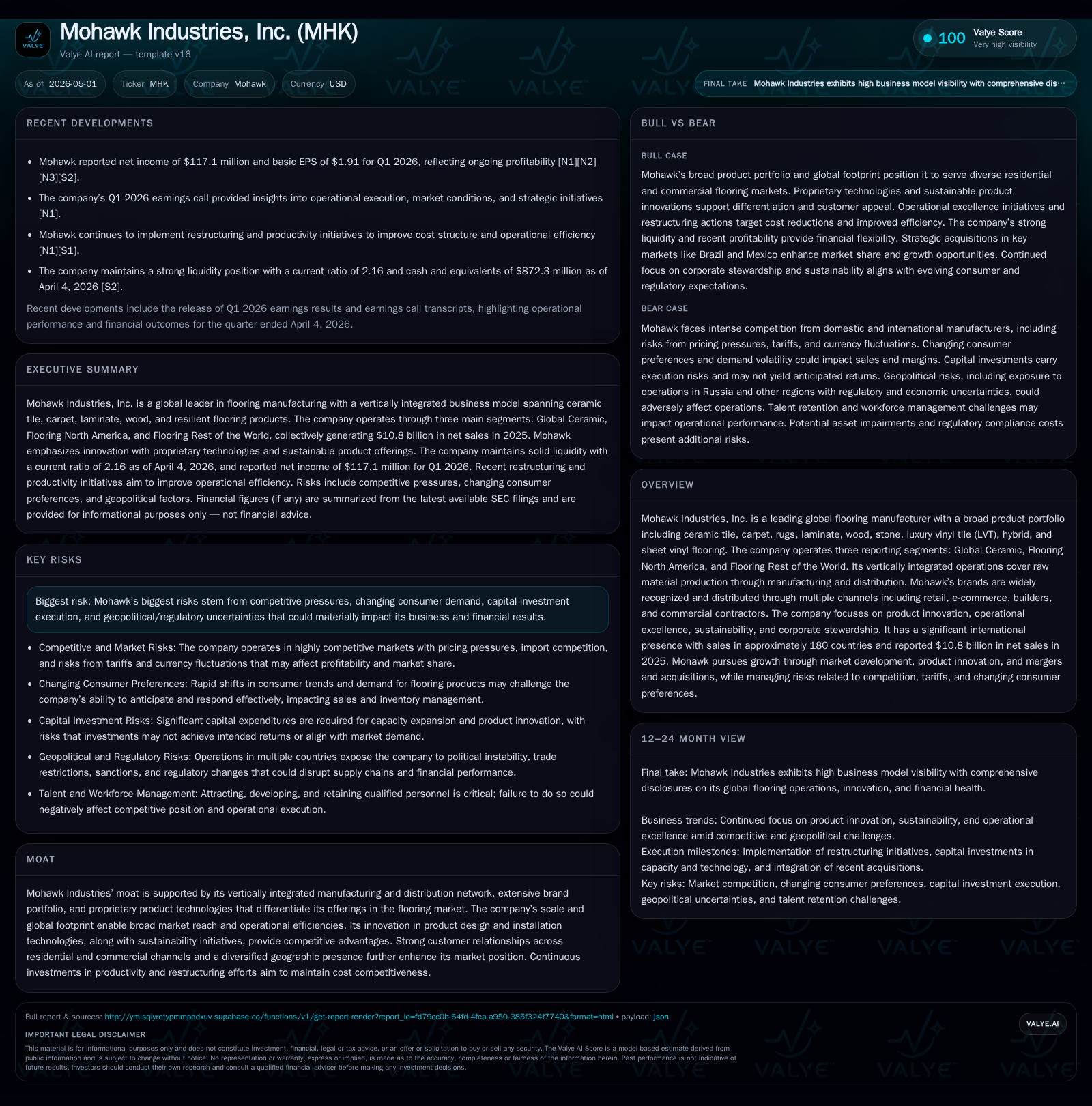
In its latest quarterly filing, Mohawk Industries demonstrated robust execution with solid top-line durability and margin management amid ongoing macroeconomic challenges such as inflation and housing market softness. The company continues to leverage its vertically integrated manufacturing platform and broad product portfolio across ceramic tile, carpet, LVT, and other flooring segments to sustain competitive advantages globally. Growth is driven by product innovation including sustainability initiatives and strategic channel expansion, while risks remain from economic cycles, tariff pressures, and litigation exposure. Near-term catalysts include new product rollouts and productivity programs aimed at margin expansion.
Q1 Operating Results Underscore Resilience Amid Market Tightening
Mohawk Industries reported first quarter operating results ending April 4, 2026 that reflect underlying resilience in flooring demand despite macroeconomic challenges including elevated interest rates and inflationary pressures affecting mortgage affordability and home remodeling budgets [S2,S3]. The company’s three segments—Global Ceramic (40% of 2025 revenue), Flooring North America (34%), and Flooring Rest of the World (26%)—each contributed to steady top-line performance with balanced volume and pricing dynamics.
The Global Ceramic segment benefited from continued demand for premium porcelain slabs and quartz countertops alongside ceramic tile offerings. Despite economic tightening in some end-markets, the segment sustained shipments through diversified channels such as home centers, retail stores, e-commerce platforms, builders, and commercial contractors—leveraging its vertically integrated production from raw materials to finished goods distribution for cost stability [S2,S3,S1].
Flooring North America maintained robust carpet sales aided by proprietary fiber technologies such as SmartStrand®, alongside increased capacity deployment in luxury vinyl tile (LVT) and premium laminates. Price realization initiatives were complemented by productivity improvements offsetting input cost inflation pressures. The Flooring Rest of the World segment also recorded steady demand leveraging a varied mix of laminate, wood flooring, LVT, sheet vinyl, broadloom carpet, plus roofing materials primarily in Europe with growing presence in Asia-Pacific regions [S2,N1,S3].
Margin trends indicated effective cost controls supported by recent restructuring actions aimed at simplifying operations and enhancing supply chain flexibility. These efforts have permitted Mohawk to partly absorb tariff-induced raw material cost increases while competing against imports benefiting from lower labor or subsidy advantages. Overall, the quarter underscored Mohawk’s ability to navigate a mixed global construction environment through scale benefits in procurement and manufacturing efficiency [S2,S3,N3].
Comprehensive Business Model Anchored on Vertical Integration and Brand Leadership
Mohawk’s business model is distinguished by deep vertical integration spanning extraction of raw materials through fiber extrusion (including recycled polymers), ceramic body preparation, tile manufacturing technology advancement, to final distribution logistics [S1]. This integration facilitates control over quality benchmarks while enabling rapid innovation cycles.
The company boasts an extensive product portfolio encompassing ceramic tile brands such as Daltile® and Marazzi®, carpet solutions incorporating proprietary fibers like SmartStrand®, various hard surface options including wood flooring under Quick-Step®, laminate brands Pergo®, hybrid floors combining durability with eco-conscious materials—as well as sheet vinyl collections renowned for commercial-grade performance [S1]. In all categories, Mohawk leverages patented product features aligned with consumer trends around aesthetics, durability, sustainability, installation ease, and maintenance.
Multiple sales channels enhance market penetration: beyond traditional retail floor covering outlets it reaches consumers via e-commerce interfaces backed by Omnify™ digital synchronization technology ensuring accurate product availability data at local dealers; it also taps professional residential builders and large-scale commercial contractors providing seamless specification-to-install workflows tailored per regional regulations or design preferences [S1,S29].
This comprehensive integration offers defensible advantages in controlling supply variability seen across commodity chains recently while sustaining aggressive new product introductions responsive to evolving lifestyles post-pandemic. Strong brand equity combined with technical differentiation sustains customer loyalty where switching costs across major segments can be moderate but preferences gravitate toward trusted warranties or innovative features [S1].
Industry Dynamics: Competitive Pressure Met With Scale and Innovation
The global flooring industry is intensely competitive with multiple fragmented regional players plus international low-cost importers applying downward price pressure. Tariffs imposed by the U.S. government on certain imported goods have raised landed costs but also created sourcing complexity for Mohawk’s multi-continent supply network [S1]. Currency fluctuations further exacerbate pricing challenges especially for Flooring ROW products sold out of Europe.
Despite these headwinds, Mohawk’s scale affords negotiating leverage on raw material contracts and transportation logistics. Its geographically diversified footprint spanning approximately 180 countries dilutes localized demand shocks inherent in cyclical construction markets. It also allows flexible production allocation based on capacity utilization rates aimed at optimizing operating margins during periods of overcapacity risk which is persistent in ceramic tile globally [S1].
The company continues investing heavily in R&D aimed at introducing unique surface finishes or textures utilizing proprietary manufacturing techniques that competitors cannot easily replicate without substantial capital outlays. Innovations around waterproof LVT variants or ecologically sustainable carpeting fibers resonate well with both commercial clients pursuing LEED certification goals as well as environmentally conscious consumers influencing builder specifications [S1,S12]. This technical patent portfolio (~3,800 patents) also provides a recurring stream of licensing fees that partially diversifies income away from direct sales volatility [S22].
Customer loyalty in commercial sectors is particularly strong due to reliability demands combined with long installation cycles—creating moderate switching costs—and recurring replacement timelines aligned with building life cycles which support predictable reorder streams complementing residential renovation upsides [S1].
Growth Drivers: Innovation, Channel Expansion, and Sustainability Initiatives
Mohawk is actively pursuing growth through continual innovation pipeline developments focused on higher-value sustainable products integrating recycled content without compromising performance or design appeal. For example, billions of discarded plastic bottles are converted annually into polyester carpet fiber while reclaimed wood debris feeds laminate flooring production—both reducing primary resource utilization consistent with emerging global ESG expectations [S12,S26].
Expansion in digital commerce infrastructures such as Omnify™ enhances customer experience by synchronizing updated inventories seamlessly among retailers supporting accelerated order fulfillment rates especially important in decentralized pandemic-era buying behaviors [N1,S29]. The company also targets penetration gains via new channel relationships including partnerships with specialty e-commerce flooring platforms providing curated selections backed by branded warranties.
Geographically, emerging economies exhibiting rising middle-class disposable incomes offer runway opportunities particularly within Asia-Pacific for engineered wood panels or LVT formats tailored for tropical climate resistance along with accessory installation products such as adhesives developed under proprietary formulations [S21]. Meanwhile established Western European markets favor eco-certified tiles coupled with quartz countertop combinations appealing to luxury remodels monitored closely through design trend analytics driving SKU rationalization investments.
Capital expenditures focus heavily on expanding state-of-the-art LVT manufacturing capacities both in North America and Europe to capitalize on shifting consumer preferences away from traditional hardwood where supply constraints exist. Moreover productivity programs anchored on automation deliver incremental margin expansion prospects amidst raw material cost inflation uncertainty evidenced in Q1 commentary [N3,S2].
Risks and Constraints: Macroeconomic Sensitivity and Trade Challenges
Despite robust operational positioning Mohawk remains vulnerable to several key risks articulated extensively in its filings. The largest near-term concern derives from macroeconomic variability affecting residential homebuilding activity driven by mortgage rate volatility constraining affordable housing pipelines thereby impacting remodeling budgets which constitute a significant portion of product demand [S1,S7]. Prolonged downturns would depress volumes materially.
Tariffs on imported materials remain unpredictable variables elevating input prices which may not be fully recovered via price increases without shifting volumes negatively given intense competition including dumping allegations from foreign manufacturers benefiting from subsidies or lower wage structures [S1]. Currency exchange risks introduce earnings translation effects for international sales which require thoughtful hedging strategies.
Litigation exposures linked to PFAS chemicals used historically create contingent liabilities coupled with associated reputational risks even if claims lack merit. Product recall or warranty claims could escalate expenses affecting profitability absent adequate insurance coverage levels noted explicitly within risk factor disclosures but without recent material developments reported [S7,S19,S27].
Acquisition integration risks persist though Mohawk has sophisticated experience executing deals historically; foreign operational complexity especially across European building codes or environmental regimes introduces execution risk possibly delaying growth synergies or inflating costs temporarily post-close [S22,S23].
Near-Term Catalysts: Guidance, Product Launches, and Capital Allocation Updates
Management commentary from the recent earnings call reinforces confidence in sequential volume growth driven by backlog acceleration tied to new sustainable product launches poised for rollout mid-2026 supported by enhanced digital marketing campaigns targeting ecommerce adoption acceleration among younger demographics who prioritize environmental attributes (N1). Further margin expansion is anticipated via ongoing supply chain simplification projects accelerating realized cost savings initiated during previous restructurings described comprehensively in annual reports [N1,S2]
Capital allocation priorities emphasize disciplined share repurchase programs backed by $500 million authorization plus measured reinvestment into capacity expansions particularly focusing on premium LVT lines critical for market share defense in key geographies; investments aim at seamless scalability of omni-channel selling platforms integrating retail partners more tightly enhancing sell-through velocity (S5,N1).
Operational KPIs mentioned include order intake growth rates used as leading indicators for sustained revenue momentum alongside careful monitoring of raw material price inputs enabling dynamic pricing decisions preserving gross margin targets.
Condensed Financial Snapshot: Balance Sheet Strength and Liquidity
Latest financial snapshot
| Metric | Value | Period |
|---|---|---|
| Cash & equivalents | $872mm | |
| 2026-04-04 | ||
| Current assets | $6.2bn | |
| 2026-04-04 | ||
| Current liabilities | $2.9bn | |
| 2026-04-04 | ||
| Current ratio | 2.16x | |
| 2026-04-04 |
Source: SEC companyfacts cache [F1].
As of the quarter ended April 4, 2026 Mohawk Industries held cash & equivalents totaling approximately $872 million supported by current assets near $6.2 billion versus current liabilities around $2.9 billion yielding a healthy current ratio of 2.16 indicative of ample short-term liquidity responsiveness capacity (F1). Total debt appears modest relative to scale though specific up-to-date debt balances were not detailed explicitly within recent filings; historical best-effort figures suggest conservative leverage positioning contributing to financial flexibility needed for strategic initiatives [F1,S2].
This strong balance sheet foundation underpins confidence in funding ongoing capex programs while maintaining share repurchase activity aligned with shareholder return objectives without sacrificing liquidity needs amid unpredictable macroeconomic backdrops.
Disclaimer: This report is an independent analysis prepared solely for informational purposes regarding Mohawk Industries Inc. It does not constitute investment advice or a recommendation to buy or sell securities.
Disclaimer: This is research-only, informational analysis and not investment advice. It may include AI-generated interpretation and general industry context. Always verify important details using primary sources.

Comments