
Netflix's Strategic Shift: Subscription Innovation and Margin Dynamics in Q2 2026
Netflix’s latest quarterly results underscore evolving subscription plans and content spending to sustain global growth amid competitive pressures.
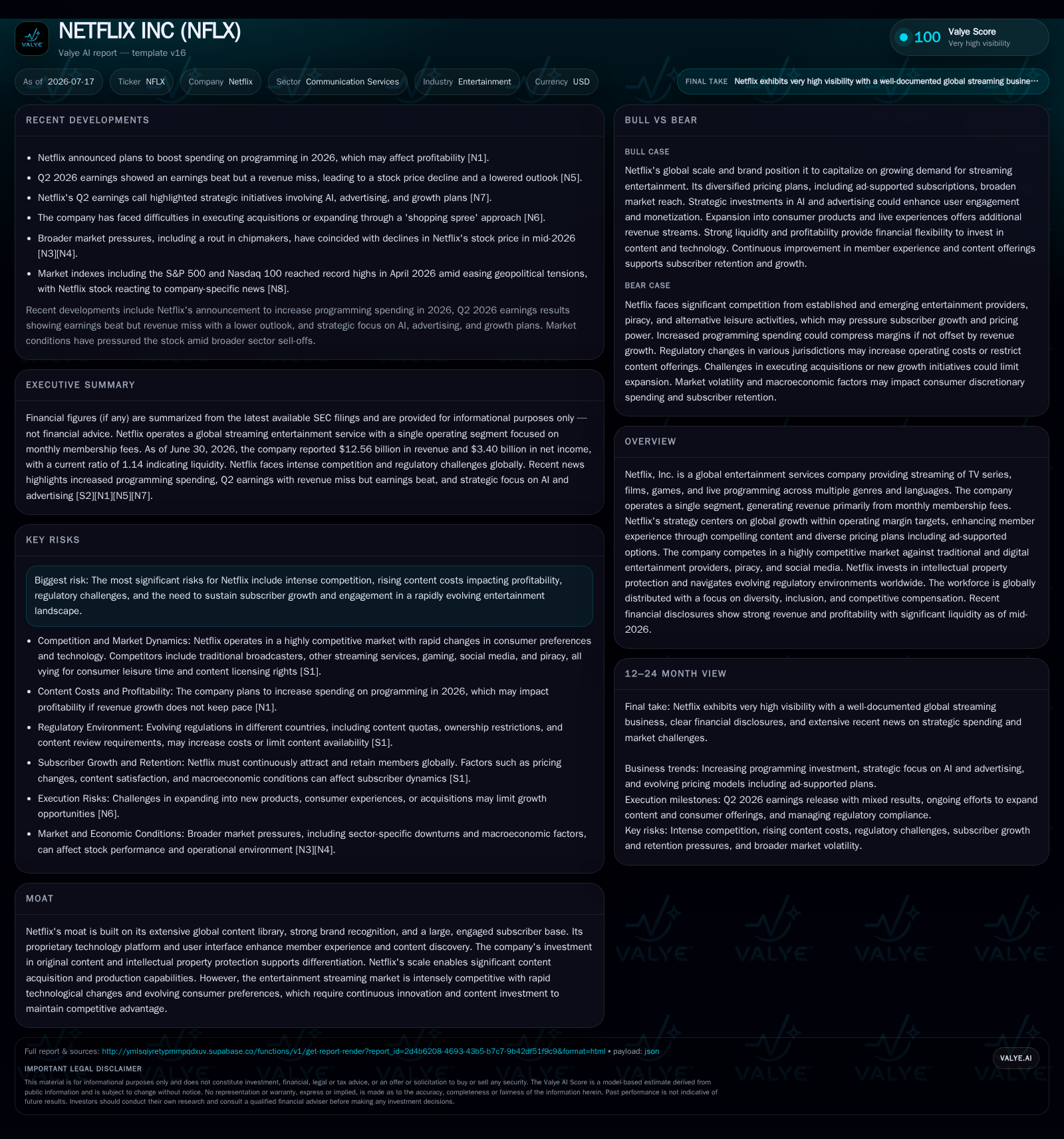
In its Q2 2026 filings, Netflix showcased deliberate recalibration of its subscription model with expanded ad-supported tiers, while managing content investments to protect operating margins. Despite a fiercely competitive landscape involving SVOD peers like Disney+ and AVOD platforms such as YouTube, Netflix maintains momentum through global subscriber additions and technology-driven user engagement enhancements. Margin pressures from rising content costs remain a challenge but are being addressed by strategic pricing diversification and disciplined content spend. Close monitoring of subscriber dynamics, ARPU trends, and margin trajectory will clarify sustainability.
Q2 Operating Shifts Underscore Subscription Model Evolution
Netflix's Q2 2026 filing reveals a strategic recalibration of its subscription model featuring enhanced adoption of lower-priced ad-supported tiers alongside traditional premium plans [S2][S3]. This evolution reflects efforts to balance subscriber growth with maintaining acceptable average revenue per user (ARPU), which often declines as mix shifts toward lower-priced ad tiers. Despite this downward ARPU pressure, Netflix leverages this pricing diversification to attract users who might otherwise forgo paid subscriptions entirely. These moves underline Netflix’s commitment to broadening global accessibility in a saturated mature-market environment while managing engagement and churn carefully.
Indeed, total subscribers continued their global expansion trajectory during the quarter with notable progress in less penetrated regions where broadband penetration is growing [S2][N1]. The company’s focus on improving user interface and personalized content research views supports engagement as measured by monthly active users (MAUs) and mitigates churn risks tied to consumer choice elasticity. This refined subscription architecture demonstrates Netflix’s recognition that recurring revenue stability depends not just on subscriber count but on the nuanced mix of subscriber types replicating varying willingness-to-pay thresholds.
Content Library Depth Versus Cost: Navigating Margin Pressure Points
Content remains the cornerstone of Netflix’s competitive differentiation. The company continues investing heavily in original programming along with licensing strategically selected third-party titles to maintain an expansive content library appealing across international markets [S1][S2]. However, as disclosed, these content acquisition and production costs represent a substantial fixed expense that strains operating margins particularly when subscriber growth decelerates or ARPU softens due to increased weight of ad-supported subscriptions.
This dynamic creates a margin squeeze characteristic in streaming entertainment where upfront investment scale is essential but inflexible. Netflix’s response involves more selective content financing intended to optimize member engagement per dollar spent—not simply expanding volume but focusing on high-impact originals that drive conversation and loyalty. Such programming quality focus positions Netflix aggressively against peers like Disney+, whose franchise-backed originals benefit from existing IP leverage but also entail considerable production scale.
Competitive Set Dynamics: Netflix Amid SVOD Giants and AVOD Rivals
Within the SVOD arena, Netflix competes principally with Disney+ and HBO Max that emphasize strong brand franchises offering exclusive content libraries appealing to loyal fanbases [S1]. While these peers leverage ingrained IP ecosystems offering perceived value robustly defensible through brand affinity, Netflix counters with broader genre diversity and significant original production capacity.
Simultaneously, advertising-supported video-on-demand (AVOD) platforms such as YouTube and TikTok present alternative entertainment forms competing intensely for viewers’ leisure time via free content models driven by user-generated material rather than licensed or produced programming [S1]. This dichotomy represents a crucial bifurcation in the streaming market: premium paid subscriptions versus free ad-supported consumption targeting very different consumer segments and monetization structures.
Netflix’s embrace of ad-supported tiers represents a tactical acknowledgment that it must capture cross-section audiences who may not commit fully to paid subscriptions but can be monetized through advertising revenues—a domain in which pure-play AVODs excel.
Diverse Pricing Strategy: Ad-Supported Tier Adoption and ARPU Impact
The introduction and broader acceptance of ad-supported subscription plans have introduced important tradeoffs for Netflix’s unit economics. While these lower-priced tiers broaden market accessibility especially in cost-sensitive regions or demographics, they inherently yield lower ARPU compared with ad-free plans due to reduced price points offset partially by incremental ad revenues [S1][S2][N1].
The recent filings reveal active management of this pricing mix to optimize overall revenue despite ARPU headwinds accompanying shifts toward these alternative models. This balancing act is critical because content costs remain largely fixed irrespective of tier distribution; thus, margin preservation hinges upon successfully scaling subscriber volumes sufficiently within each tier while maximizing profitability per member.
Recognizing potential customer resistance to ads—historically a source of cancellation—Netflix’s curated approach aims for minimal disruption enhancing acceptance without alienating core premium subscribers.
Growth Catalysts in Global Expansion and User Engagement Innovations
Netflix continues pressing into underpenetrated geographies benefiting from improving broadband infrastructure globally where lower population-level streaming penetration offers fresh growth avenues [S1][S2][N1]. Its ongoing localization efforts—including tailored language support and culturally resonant originals—strengthen regional appeal crucial for sustainable subscriber acquisition beyond saturated Western markets.
Technologically, Netflix has enhanced its platform to improve content discovery algorithms leveraging AI-driven research views alongside interface improvements lowering friction in members’ journey from login through viewing selection [N1]. These advances aim directly at boosting user engagement metrics linked causally to lower churn rates—a key determinant of lifetime customer value (LTV) underpinning long-term revenue visibility.
Key Risks - Competitive Churn, Content Inflation, Regulatory Complexity
Risks outlined in the latest annual filing largely persist unabated: intensifying competition both from established SVOD players with deep IP resources and emergent creators disrupt audience attention spans potentially inducing elevated subscriber churn [S1]. Moreover, continued inflationary pressures on content acquisition escalate fixed cost bases jeopardizing margin targets if offsets via pricing or volume gains falter.
Regulatory regimes across diverse international markets complicate rights management, advertising standards compliance for new tiers, data privacy mandates, and intellectual property enforcement—all adding operational complexity potentially constraining growth initiatives or inflating legal risks [S1][S2].
What To Watch — Next Steps in Subscriber Metrics and Pricing Execution
In near-term quarters, actionable indicators will include verification of sustained subscriber additions particularly outside mature US/Europe segments where penetration plateaus; improvement or stabilization of blended ARPU reflecting pricing strategy execution; ongoing control or reduction of churn rates correlated with technological platform upgrades; and clarity regarding incremental margin improvements despite rising content expenses [S2][N1][N2]. Monitoring adoption curves for ad-supported service tiers will be pivotal in understanding future revenue composition shifts and their implications.
Financial Profile Discussion: Liquidity Buffer and Margin Trends
As of June 30, 2026, Netflix reported cash and cash equivalents totaling $9.1 billion alongside current assets exceeding current liabilities sufficiently to yield a current ratio of approximately 1.14—signaling adequate near-term liquidity despite substantial fixed obligations embedded within its cost structure [F1]. Although precise current debt levels have not been updated post-2021 figures, existing resources provide cushion facilitating ongoing sizable investments into content creation and platform innovation critical for competitive positioning [F1][S2].
Operating income remains robust though pressured by elevated content costs mitigated partially by top-line subscription revenue growth aligned with strategic pricing changes. Free cash flow dynamics deserve continued scrutiny due to high upfront capital intensity typical of streaming services.
This analysis reflects information available as of the latest quarter filing dated July 17, 2026 ([S2]), supplemented by recent event disclosures ([S3]), annual report context ([S1]), financial snapshot data ([F1]), and relevant news commentary ([N1], [N2]). It comprehensively appraises Netflix’s recent operational adjustments within an intensely competitive streaming industry ecosystem marked by rapid content innovation cycles and evolving consumer monetization preferences.
DISCLAIMER: This report is prepared solely for informational purposes based on publicly available documents as cited. It does not constitute investment advice or research views.
Disclaimer: This is research-only, informational analysis and not investment advice. It may include AI-generated interpretation and general industry context. Always verify important details using primary sources.

Comments