
Ranpak’s Recurring Revenue Engine: Sustainability, Automation, and the Next Phase of Packaging Economics
Ranpak’s proprietary packaging systems and consumables drive a recurring revenue model rooted in sustainability, but operational losses and the push into automation highlight both the opportunities and execution risks facing the business as e-commerce and regulatory pressures reshape global packaging demand.
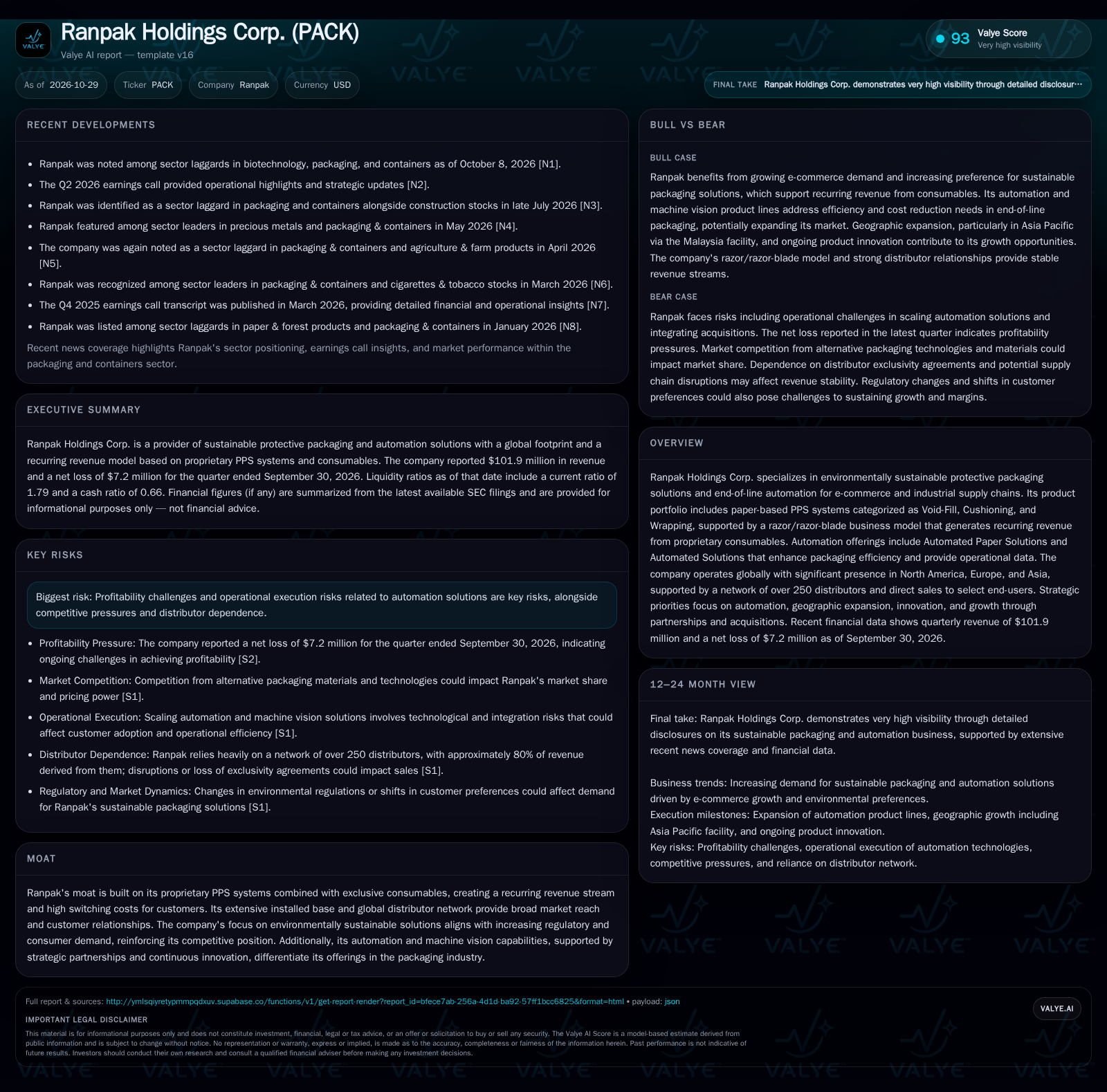
Ranpak’s razor/razor-blade packaging model, anchored by exclusive consumables and a large installed base, generates recurring revenue and high customer stickiness. With nearly half of revenue tied to e-commerce and a growing automation portfolio, the company is positioned to benefit from long-term structural shifts toward sustainable, efficient packaging. However, persistent net losses, the challenge of scaling automation, and heavy distributor reliance present real execution and margin risks. The next phase hinges on Ranpak’s ability to convert innovation and global expansion into sustained profitability while defending its proprietary ecosystem.
Ranpak Holdings Corp. stands at the intersection of two powerful trends: the rise of global e-commerce and the growing mandate for environmentally sustainable packaging. Its business model, centered on proprietary, recyclable paper-based systems and the recurring sale of exclusive consumables, creates a sticky, high-margin revenue stream. Yet, as Ranpak accelerates investment in automation and expands globally, it faces mounting pressure to deliver profitability amid operational complexity and intensifying competition. The company’s ability to scale innovation, deepen customer entrenchment, and execute across regions will determine whether it can convert its strategic position into lasting value.
Q3 2026 Snapshot: Recurring Revenue Strength Meets Profitability Hurdles
As of September 30, 2026, Ranpak reported $101.9 million in quarterly revenue and a net loss of $7.2 million, translating to a basic and diluted EPS of -$0.08 [S2]. This follows a 2025 performance of $395 million in net revenue, with approximately 40% of sales linked to e-commerce end-users and 10% from automation products [S1]. The company’s installed base exceeds 145,000 PPS systems, serving over 30,000 end-users globally [S1]. The company reported a current ratio of 1.79 for the period. [S2] The operationalization of its Malaysia facility in late 2024 also marks a strategic push into Asia Pacific, potentially lowering costs and improving service in a key growth region [S1].
How Ranpak Monetizes Packaging: Razor/Razor-Blade, Automation, and Geographic Scale
Ranpak’s core business economics are anchored in its razor/razor-blade model: the company retains ownership of its proprietary protective packaging systems and generates recurring revenue from the sale of high-margin, exclusive paper consumables [S1]. This structure yields predictable, sticky revenue streams—especially as customers are effectively locked into Ranpak’s ecosystem, given that the consumables are designed to work only with its machines. With over 145,000 systems installed worldwide, the recurring sales of void-fill, cushioning, and wrapping consumables (which together make up over 90% of product revenue) provide operational leverage as the installed base grows [S1].
Automation products, comprising Automated Paper Solutions (APS) and Automated Solutions (AS), are generally sold outright, though some APS components remain on Ranpak’s balance sheet. These offerings target cost and labor reduction at customer fulfillment centers and may provide higher upfront revenue but likely lower ongoing consumable pull-through compared to the core PPS model. The capital requirements for automation innovation and global facility expansion (e.g., the Malaysia site) are significant, and scaling automation profitably remains a key challenge. Ranpak’s distributor-centric channel—over 250 global partners generating 80% of revenue—enables wide reach but also limits direct pricing power and margin expansion.
Sustainability, Proprietary Ecosystem, and Automation: Ranpak’s Defenses and Exposures
Ranpak’s competitive edge rests on its proprietary system-and-consumables ecosystem, which creates high switching costs for customers and recurring revenue for the company. The environmental sustainability of its offering—100% recyclable, renewable, and biodegradable paper solutions—positions Ranpak favorably as regulators and large customers increasingly demand eco-friendly packaging [S1]. Its large installed base and global distribution network reinforce market reach and customer entrenchment.
However, the competitive landscape is dynamic. Alternative packaging technologies, including molded pulp, plant-based foams, and reusable systems, threaten to erode Ranpak’s market share if they achieve cost parity or superior performance. Automation competitors—ranging from specialized packaging robotics firms to broader fulfillment technology vendors—are also targeting the end-of-line automation opportunity. Ranpak’s reliance on distributor relationships could become a vulnerability if partners shift allegiance or if direct-to-customer channels gain traction in the market. The question is whether Ranpak’s pace of innovation and integration can offset these competitive pressures and prevent commoditization.
From Installed Base to Margin Expansion: What a Virtuous Cycle Could Look Like
A favorable scenario for Ranpak involves continued growth in its installed base, driving recurring consumables revenue and expanding operating leverage. If e-commerce demand remains robust and regulatory trends further favor sustainable packaging, Ranpak could capture outsized share of new deployments—especially as global brands and logistics players standardize on eco-friendly materials. Automation products could gain traction if customers see clear ROI in labor and waste reduction, leading to higher attachment rates of automation systems to existing PPS customers.
Confirmation of this scenario would include sustained double-digit growth in consumables sales, rising automation order volumes, and expanding gross margins as the Malaysia and other regional facilities drive down costs. Evidence of large new customer wins, successful integration of automation with core packaging systems, and improved profitability (e.g., consistent positive net income and free cash flow) would further validate the thesis.
Sustainable Packaging Demand Drives Growth, but Margin Pressures Persist
The most plausible outlook is that Ranpak continues to benefit from secular demand for sustainable packaging—particularly from e-commerce and industrial supply chains—while gradually scaling its automation portfolio. Revenue growth remains solid, led by recurring consumables sales and moderate expansion in automation, especially in Asia Pacific following the Malaysia facility ramp. The company reported profitability for the period.
Confirmation would come from steady increases in installed base and consumables pull-through, stable or slightly rising gross margins, and modest improvement in operating income. Falsification would be evident if revenue growth slows materially, automation adoption lags, or net losses widen despite top-line expansion.
When Recurring Revenue Isn’t Enough: Margin Compression and Execution Risk
In a more adverse scenario, Ranpak’s recurring revenue engine is offset by intensifying competition, margin compression, and operational missteps in automation. If alternative packaging solutions gain traction or if large distributors defect to competitors or introduce private-label offerings, Ranpak’s installed base growth could stall. Automation may prove harder to scale profitably, with prolonged integration cycles, lower-than-expected customer adoption, or price erosion due to competitive pressure.
Evidence supporting this downside would include declining or stagnant consumables revenue, shrinking gross margins, major distributor losses, or continued net losses with no clear path to profitability. Additional warning signs would be delays or underperformance from new facilities, automation write-downs, or significant changes in regulatory or customer preferences away from paper-based solutions.
Milestones That Will Test Ranpak’s Ability to Turn Recurring Revenue Into Durable Profits
Growth in the installed base of PPS systems and the associated consumables pull-through rate—especially by region and end-market—would help test the stickiness of Ranpak’s core model.
Gross margin trends, particularly as automation and Asia Pacific expansion scale, are essential for assessing operating leverage and cost competitiveness.
Adoption rates and revenue contribution from automation products (APS, AS), if disclosed, would signal customer uptake and Ranpak’s ability to diversify beyond core consumables.
Facility utilization and cost savings from the Malaysia and other regional plants would clarify the benefits of geographic expansion.
Customer concentration and distributor retention metrics—such as the top 10 distributor share or any major contract turnover—would illuminate channel risks.
New product launch traction, including signs of cross-selling between packaging and automation, would indicate the effectiveness of innovation.
Progress toward sustained net profitability and positive free cash flow would be the ultimate validation of Ranpak’s ability to monetize its strategic position.
Monitoring regulatory developments and customer sustainability mandates, particularly in Europe and Asia, could reveal external tailwinds or headwinds for Ranpak’s product portfolio.
Disclaimer: This is research-only, informational analysis and not investment advice. It may include AI-generated interpretation and general industry context. Always verify important details using primary sources.

Comments