
ResMed Advances Cloud-Connected Respiratory Care with Strategic Portfolio Expansion
ResMed’s latest quarterly results and recent acquisitions reinforce its leadership in integrated respiratory care by expanding its clinical portfolio and optimizing therapy adherence via cloud-connected devices and digital software.
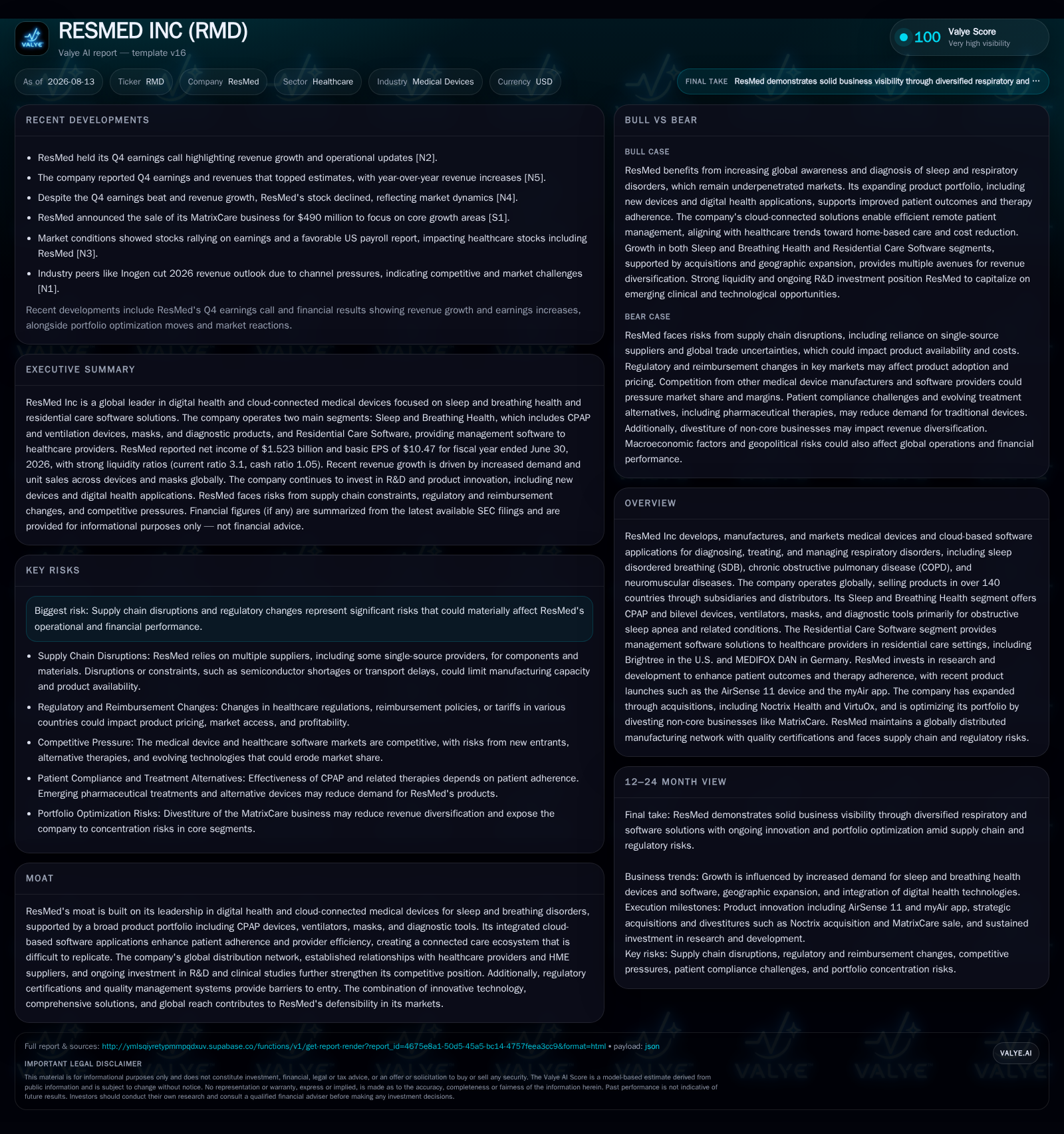
In its Q3 2026 report, ResMed demonstrated robust financial growth driven by increased net income and improved operating margins, underscored by operational resilience amid supply chain challenges. Recent acquisitions of Noctrix and integration of VirtuOx have broadened its therapeutic reach into adjacent sleep health areas and in-home diagnostics, boosting the company’s competitive moat through vertical integration. Coupled with ongoing investments in cloud-connected devices and software platforms enhancing patient adherence, ResMed is well-positioned to capitalize on secular growth drivers such as aging demographics and rising prevalence of chronic respiratory disorders. However, risks around global supply chains, regulatory compliance, and reimbursement remain material watchpoints.
New Quarterly Operating Results Underpin Integrated Care Expansion
neration amid cautious macroeconomic conditions [S3].
Innovations in Device Portfolio and Software Boost Therapy Effectiveness
ResMed continues to fortify its competitive moat through product innovation and strategic acquisitions that enhance therapeutic breadth. In June 2026, the company completed the acquisition of Noctrix Health LLC, introducing an FDA De Novo classified medical device treating restless legs syndrome (RLS), a previously unmet adjacent sleep disorder need within its clinical portfolio [S1]. This expands beyond ResMed's core obstructive sleep apnea (OSA) focus into complementary neurological sleep-related therapies that may leverage existing cloud connectivity for patient engagement.
Earlier acquisitions like VirtuOx, integrated since 2025, provide proprietary software-enabled independent diagnostic testing facilities specializing in home-based diagnostics for sleep, respiratory, and cardiac conditions across the U.S., positioning ResMed to offer a more complete care journey from testing through therapy [S1]. These additions align with industry trends valuing end-to-end patient management where integrated hardware-software ecosystems drive higher patient adherence rates — a critical KPI given the chronic nature of respiratory diseases.
The company’s Residential Care Software segment features platforms such as Brightree in the U.S., catering to durable medical equipment (DME)/home medical equipment (HME) suppliers by automating clinical workflows and billing compliance; as well as MEDIFOX DAN in Germany serving residential care providers with care management solutions enabling operational efficiencies. These cloud-based software-as-a-medical-device (SaMD) offerings generate recurring revenue streams distinct from traditional one-time device sales while strengthening provider stickiness through integration within healthcare provider networks [S1]
Average selling price (ASP) dynamics remain favorable due to premium product positioning exemplified by devices like AirSense 11 featuring touchscreen interfaces and over-the-air updates enhancing user experience and therapy adherence—a notable differentiator against commodity-tier competition like Philips Healthcare or Fisher & Paykel Healthcare [S1][N2]. Ongoing R&D investment at approximately 6% of revenues supports continuous product enhancement.
Competitive Landscape: Defensibility Through Technology and Service Breadth
ResMed operates within a fragmented but innovation-driven respiratory care market where differentiation increasingly hinges on digital health capabilities rather than standalone devices. Its combination of cloud-connected CPAP machines, ventilators, masks, and diagnostic tools paired with interoperable software platforms sets it apart relative to competitors who may focus narrowly on hardware or software alone.
Peers such as Philips Healthcare also emphasize integrated connected health offerings; however, ResMed's geographic diversification—selling in over 140 countries via subsidiaries and distributors—and deep penetration into residential care software verticals via Brightree and MEDIFOX DAN provide wide ecosystem reach uncommon among pure device manufacturers [S1]. Regulatory certifications across multiple jurisdictions deliver barriers to entry for emerging entrants given the complexity in aligning hardware-software combinations with quality standards.
Further defensibility arises from established relationships with home healthcare dealers, sleep clinics, specialist physicians managing comorbidities (cardiac disease, diabetes), and payors familiar with ResMed's brand reliability. These partnerships influence purchasing decisions heavily around reimbursement policies and perceived long-term clinical efficacy rather than price alone.
Growth Catalysts: Chronic Disease Trends and Cloud-Powered Patient Engagement
Secular tailwinds underpinning ResMed's growth include aging global populations correlated with greater prevalence of chronic respiratory illnesses such as obstructive sleep apnea (OSA), COPD, neuromuscular conditions impacting breathing control, as well as related comorbidities like hypertension or obesity that complicate disease management [S1]. Rising diagnosis rates driven by improved awareness fuel demand for diagnostics and treatment devices.
Moreover, technological advances leveraging AI-powered algorithms embedded within SaMD platforms enable superior remote patient monitoring (RPM) capabilities compared to legacy systems. By enhancing therapy adherence rates—where non-compliance often leads to worsened patient outcomes—ResMed improves long-term utilization metrics that support recurring revenues from subscription models tied to cloud-based data access for providers.
Geographic expansion into emerging markets complements mature regions like North America and Europe by tapping underpenetrated markets growing healthcare infrastructure investment forecasts significant addressable market expansion beyond installed base replacement cycles.
Risks to Execution: Supply Chains, Regulatory Compliance, and Market Pressures
Despite a solid strategic position, several risks warrant attention. ResMed relies on multiple suppliers including some single-sourced components crucial for device manufacturing; any disruption could constrain volume output temporarily until alternative sources are qualified—a costly process exacerbated amid global logistics uncertainties [S17]
Regulatory oversight intensifies especially following acquisitions such as VirtuOx—which settled a False Claims Act civil matter related to Medicare billing practices—and Noctrix now subjecting the combined business areas to new compliance burdens spanning fraud/abuse laws impacting interaction transparency with healthcare providers [S17][S21]. Non-compliance could result in penalties or reputational damage.
Healthcare payment reforms emphasizing cost containment pose potential threats to reimbursement levels especially if third-party payors reduce coverage or lower payment rates for CPAP devices or diagnostic tests impacting ASP trends negatively [S21]. Additionally, cybersecurity risks associated with collection/storage of sensitive patient data via connected devices remain material concerns with consequences ranging from legal liabilities to loss of customer trust.
Competitive pressures require continued innovation investment lest newer entrants leveraging disruptive AI-driven digital health solutions erode legacy market shares.
"Monitoring Ahead": Key Milestones in Product Launches, Adoption Rates and Financial Metrics
Near-term catalysts include tracking integration progress for Noctrix products alongside sales volume ramp-ups indicative of successful cross-selling within existing customer networks [N2][S3]. Upcoming regulatory filings or approvals concerning product modifications or new model launches may materially affect ASP trajectories supporting top-line growth projections.
On the software side, sustained subscription revenue growth from Brightree/MEDIFOX DAN platforms will be critical indicators validating recurring revenue strength while confirming customer retention rates that mitigate cyclicality typical of hardware sales.
Financially, continued non-GAAP EPS progression serves as a proxy signal for operational leverage realization from scaling efforts amidst supply chain normalization; any prolonged disruptions would challenge this thesis.
Financial Profile Discussion
As of June 30, 2026, ResMed holds approximately $1.47 billion in cash and equivalents against total debt near $400 million, resulting in a strong net cash position that supports both organic R&D initiatives and opportunistic M&A activity without excessive leverage risk [F1]. The current ratio stands at about 3.1, reflecting strong short-term liquidity cushions for operations amid macroeconomic uncertainties [F1].
Management's dividend augmentation amid elevated share repurchase cadence illustrates disciplined capital return philosophy balanced against preservation of financial flexibility given ongoing geopolitical trade tensions affecting component sourcing costs.
This analysis synthesizes publicly filed SEC disclosures up to August 13, 2026 ([S1], [S2], [S3]) augmented with recent earnings call insights ([N2]) grounded solely on verifiable evidence without forward-looking speculation beyond documented guidance or statements. It aims to provide detailed understanding of ResMed’s business model nuances within its sector context highlighting durable advantages alongside evolving execution risks common to medical devices combined with digital health ecosystems.
Disclaimer: This is research-only, informational analysis and not investment advice. It may include AI-generated interpretation and general industry context. Always verify important details using primary sources.

Comments