
Sirius XM’s Strategic Tensions: Licensing Costs, Subscription Expansion, and the Debt-Funded Shareholder Return Model
Sirius XM Holdings faces a pivotal juncture as it pursues subscription and advertising growth against the backdrop of costly music licensing, intensifying tech competition, and a highly leveraged capital structure. The company’s near-term performance is buoyed by operational outperformance and capital returns, but long-term value hinges on its ability to balance content economics, competitive positioning, and debt obligations.
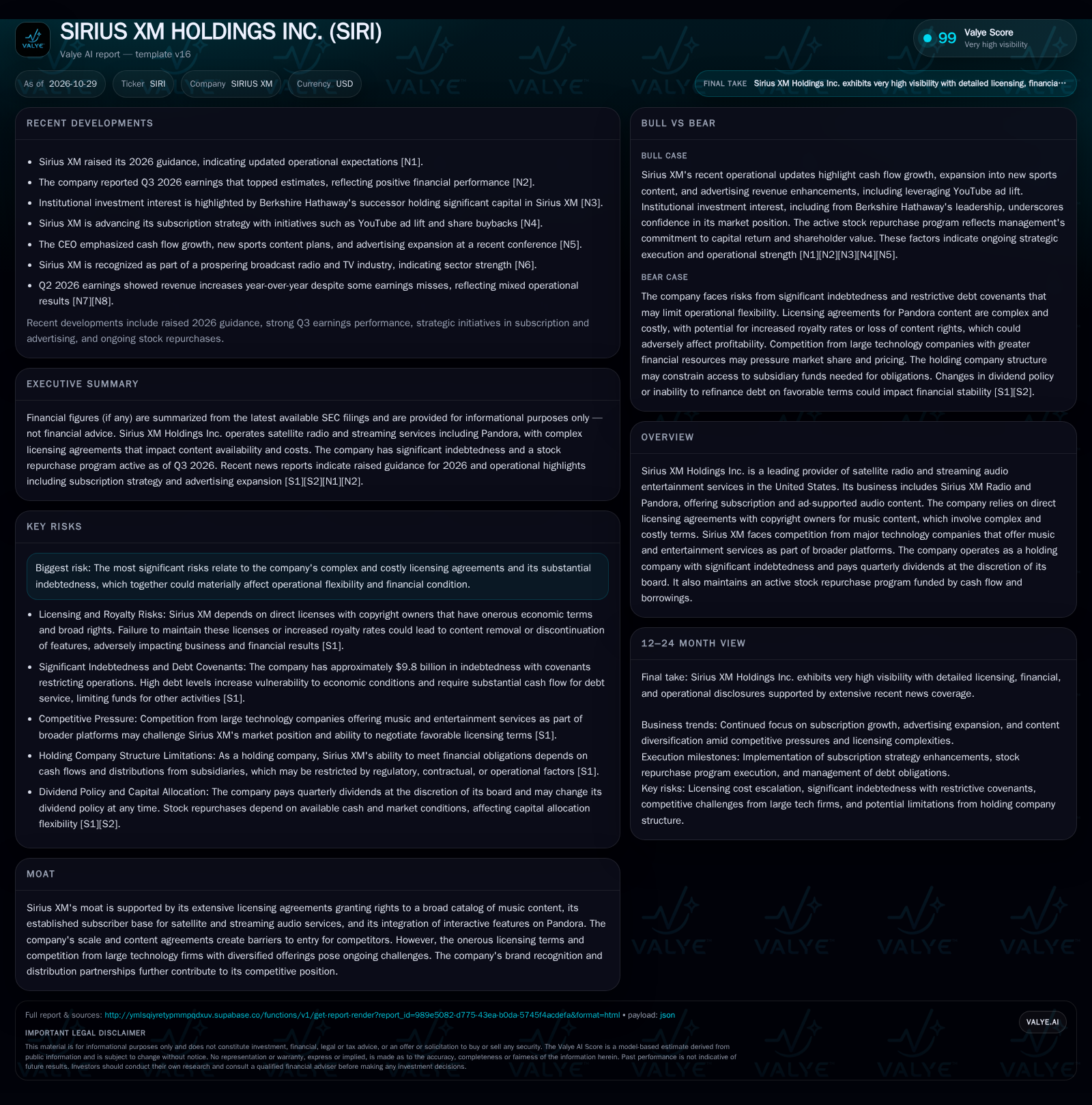
Sirius XM has raised its 2026 guidance and exceeded Q3 earnings expectations, driven by subscription strategy enhancements and advertising expansion. However, the company’s $9.8 billion in debt, costly music licensing agreements, and competition from tech giants create structural challenges. While buybacks and dividends support near-term shareholder returns, the sustainability of this model depends on maintaining content rights, managing debt service, and differentiating its audio offering in a rapidly evolving entertainment landscape. [S1] [S2] [N1] [N2] [N4] [N5]
Sirius XM Holdings sits at the crossroads of legacy subscription audio and the digital streaming revolution, seeking to harness its large subscriber base and exclusive content to fuel both organic growth and capital returns. Recent operational outperformance and raised guidance suggest resilience, but the company’s future will be shaped by its ability to navigate onerous licensing costs, defend its market position against tech giants, and service a substantial debt load. The interplay between content economics, subscriber engagement, and capital allocation will determine whether Sirius XM can sustain its distinctive position in the evolving audio entertainment market.
Sirius XM’s 2026 Outlook: Operational Gains Amid Structural Challenges
In Q3 2026, Sirius XM reported net income of $317 million, with basic EPS of $0.94 and diluted EPS of $0.78, exceeding analyst expectations and prompting a raise in 2026 operational guidance. This outperformance coincides with an active capital return program—$963 million remains under its buyback authorization, and quarterly dividends continue at the board’s discretion. The company’s licensing agreements for Pandora and Sirius XM content remain both a source of differentiation and a material cost burden, with terms that can constrain profitability and operational flexibility. [S1] [S2] [N1] [N2] [N4] [N5]
Revenue Dynamics: Balancing Subscription Growth, Advertising, and Licensing Expenses
Sirius XM’s revenue model hinges on two primary streams: subscription fees from satellite radio and streaming (including Pandora), and advertising revenue—especially from ad-supported streaming and integrated new initiatives such as YouTube ad lift. Subscription economics are driven by the company’s ability to maintain a differentiated content portfolio, justify premium pricing, and minimize churn in the face of free or bundled alternatives. Advertising growth depends on scale, audience engagement, and the ability to leverage digital targeting and cross-platform integration.
On the cost side, direct licensing agreements for music content (especially for Pandora) are not only expensive but also complex, often granting broad rights to licensors and exposing Sirius XM to volatile royalty rates and the risk of content removal. This structure reduces operating leverage: while the company’s fixed cost base (satellite infrastructure, content production, and technology) should, in theory, allow for margin expansion with scale, escalating licensing costs and competitive subscriber acquisition expenses can erode this benefit.
The company’s holding structure means it is dependent on the cash flows of its operating subsidiaries—a potential constraint if regulatory, contractual, or operational hurdles emerge. The sustainability of dividends and buybacks is therefore tightly linked to uninterrupted subsidiary performance and favorable debt market conditions.
Maintaining Competitive Edge: Content Rights, Brand Strength, and Platform Constraints
Sirius XM’s competitive advantages rest on its exclusive content deals, brand recognition, and a large, long-tenured subscriber base—particularly in the automotive channel, where satellite radio integration remains standard in many new vehicles. Its direct licensing agreements enable a broad, differentiated music and talk catalog, while the Pandora acquisition provided a digital footprint and data-driven advertising capabilities.
However, the company faces formidable competition from technology platforms such as Apple Music, Spotify, Amazon Music, and YouTube, which offer vast music libraries, personalized recommendations, and deep integration into mobile and home ecosystems—often subsidizing audio offerings as part of broader bundles. These tech giants can absorb higher royalty rates and invest aggressively in customer acquisition, making it difficult for Sirius XM to match on price or breadth of features.
Switching friction for consumers is moderate: while some long-time subscribers value curated content and exclusive sports/talk programming, digital natives may perceive little differentiation versus all-in-one streaming platforms. The key competitive question is whether Sirius XM can continue to command a premium for unique content and community, or whether commoditization and platform bundling will gradually erode its share.
Content and Data Initiatives as Tools to Offset Rising Costs
If Sirius XM successfully executes on its enhanced subscription strategy—leveraging exclusive sports and talk content, integrating new advertising initiatives (such as YouTube ad lift), and deepening cross-platform engagement—there is potential for both ARPU expansion and churn reduction. The company could use its data assets from Pandora and Sirius XM apps to personalize content and advertising, increasing both subscriber lifetime value and ad yield.
A favorable scenario would see the company negotiating more favorable licensing terms (or successfully passing higher costs to subscribers), while maintaining or growing its core automotive and mobile user base. Sustained cash flow would support both debt service and continued buybacks/dividends, reinforcing share price and institutional interest.
Confirmation would come in the form of above-peer subscriber retention, stable or rising ARPU, expanding ad revenue per user, and evidence of licensing cost containment relative to revenue growth.
Operating Within Narrow Margins in a Crowded Audio Market
The most plausible trajectory is one of modest revenue growth, driven by incremental gains in advertising and slow net subscriber additions, offset by ongoing pressure from licensing costs and competitive churn. Sirius XM is likely to maintain its core subscriber base in the auto channel, but faces persistent challenges in expanding digital-only subscriptions, especially among younger demographics.
Margins remain under pressure as licensing costs rise in line with industry trends and as the company must invest continuously in content and technology to remain relevant. Capital returns to shareholders (dividends and buybacks) continue, but may fluctuate based on quarterly performance and debt market conditions.
Rising Content Expenses and Market Disruption Threaten Profitability
The adverse scenario is triggered if Sirius XM loses key content licenses, faces an unexpected spike in royalty rates, or is unable to renew exclusive deals—leading to content gaps, subscriber attrition, and diminished pricing power. If large tech platforms further commoditize audio content (e.g., via bundled offerings or exclusive artist partnerships), Sirius XM could see accelerated churn, especially in its digital segments.
With high fixed obligations and a leveraged balance sheet, any material decline in cash flow could force reductions in dividends, suspension of buybacks, or even asset sales. The holding company structure could exacerbate liquidity strain if operating subsidiaries face regulatory or contractual restrictions on cash transfers.
Downside confirmation would include a sudden drop in subscribers, rising cost ratios, a cut to the dividend or buyback program, or debt covenant pressures leading to refinancing on unfavorable terms.
Factors Influencing Sirius XM’s Long-Term Strategic Position
Quarterly net subscriber additions and churn rates for both satellite and streaming segments—if disclosed—will indicate whether the company is maintaining or losing its core audience.
Trends in average revenue per user (ARPU) for both subscription and ad-supported products, reflecting pricing power and engagement.
Gross and net royalty/licensing costs as a percentage of revenue, revealing whether Sirius XM can contain content cost inflation.
Ad revenue growth rates, especially from digital and cross-platform initiatives such as YouTube ad lift.
Leverage ratios and any changes to debt covenants or refinancing terms, signaling potential financial flexibility or stress.
Any major changes to content licensing agreements or exclusive deal announcements, which could impact both differentiation and cost structure.
Disclaimer: This is research-only, informational analysis and not investment advice. It may include AI-generated interpretation and general industry context. Always verify important details using primary sources.

Comments