
Solesence Q2 2026: Operational Challenges and Settlement Impact on Liquidity
Solesence's Q2 2026 results highlight shipment delays and elevated costs alongside a settlement agreement that tightens near-term liquidity.
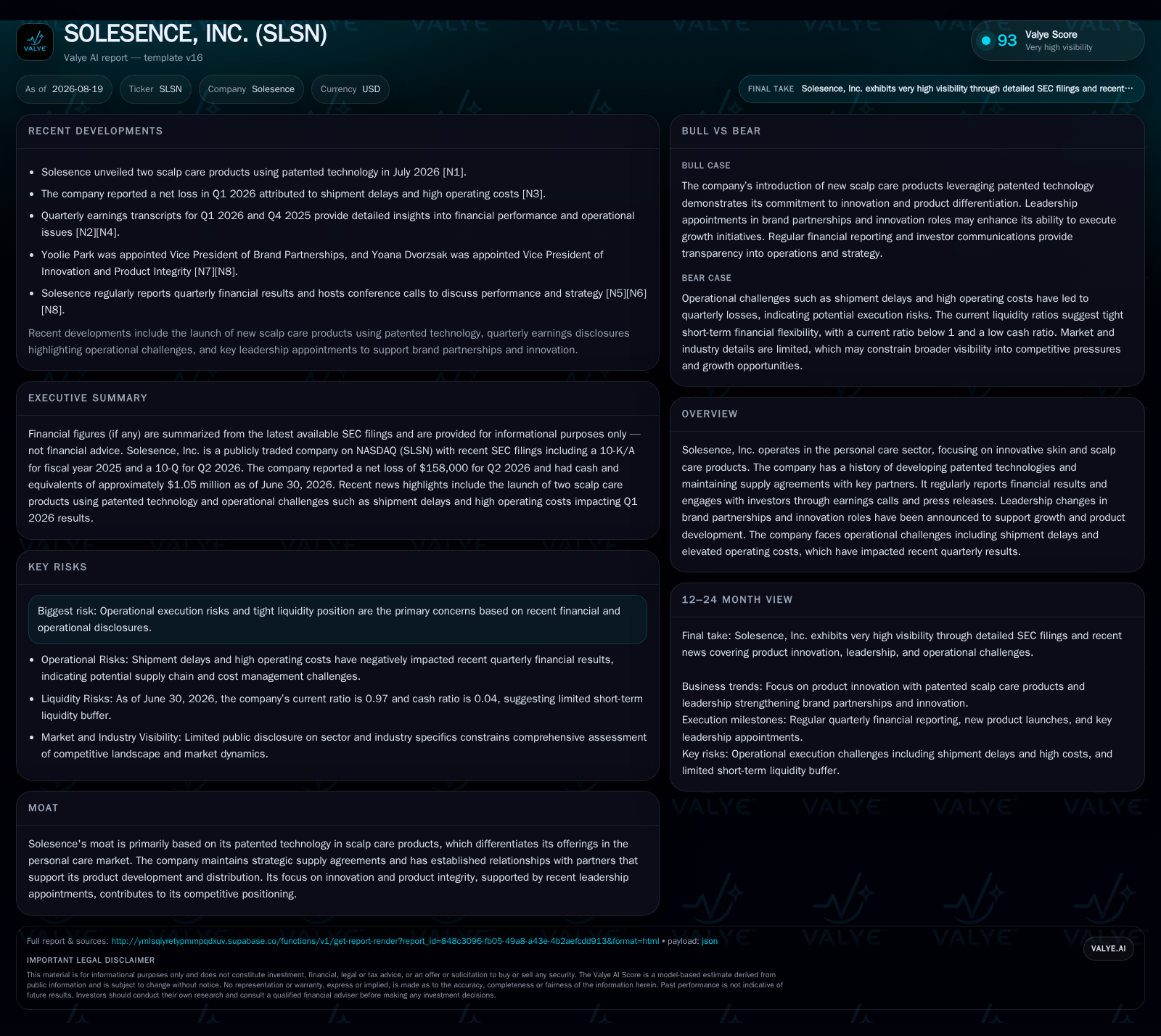
In Q2 2026, Solesence, Inc. faced operational execution difficulties including shipment delays and increased operating costs that pressured margins. A July 2026 settlement with Refy Beauty Ltd introduced a structured payment obligation, further constraining cash flow. Despite these challenges, Solesence's patented scalp care technology and supply agreements continue to support its competitive positioning. Key near-term risks include working capital constraints and execution risks, warranting close monitoring of operating results and liquidity metrics in upcoming quarters.
Q2 2026 Operating Performance and Challenges
Solesence, Inc.'s Q2 2026 operating results reveal significant execution challenges marked by shipment delays and elevated operating costs. These disruptions negatively impacted the company's margin profile during the quarter, consistent with reported supply chain issues and cost increases disclosed in the latest 10-Q filing [S2]. Such operational difficulties in the personal care products sector can directly erode gross margins and strain working capital, as timely product delivery and cost control are critical to sustaining profitability and customer satisfaction.
The shipment delays experienced by Solesence during this period appear to stem from disruptions in the supply chain, which may include delays in raw material procurement, manufacturing bottlenecks, or logistics challenges [S2]. Elevated operating costs further compounded these issues, likely reflecting increased expenses related to expedited shipping, overtime labor, or higher input prices. Together, these factors contributed to a compression of operating margins, as the company faced higher costs without commensurate increases in revenue or pricing power during the quarter
Operational execution risks such as these are particularly impactful in the personal care industry, where product freshness, availability, and brand reputation are closely tied to consumer loyalty and sales velocity. Delays in shipments can lead to lost sales opportunities, increased inventory holding costs, and strained relationships with wholesale partners. Elevated costs, if persistent, can erode profitability and limit the company's ability to invest in marketing or product innovation.
Settlement Agreement with Refy Beauty Ltd and Liquidity Implications
On July 6, 2026, Solesence entered into a Settlement Agreement with Refy Beauty Ltd to resolve disputes related to certain consumer care products previously sold to Refy [S3]. Under this agreement, Solesence committed to pay approximately $938,000 in twelve monthly installments beginning August 5, 2026. This structured payment schedule introduces a new near-term cash outflow obligation that tightens Solesence's liquidity position.
The settlement agreement also includes a six-month exclusivity period during which Solesence and Refy will collaborate on developing a new SPF product. This exclusivity arrangement potentially offers strategic benefits by aligning product development efforts and future supply agreements. Moreover, the installment payments made under the settlement may be credited against future purchases from Refy, providing some mitigation of cash outflows if the partnership progresses favorably [S3]
Despite these potential benefits, the immediate effect of the settlement is a reduction in cash flow flexibility. The settlement agreement imposes a structured payment schedule starting August 2026, which will impact near-term cash outflows [S3]. Current liabilities stood at $26.0 million, slightly exceeding current assets of $25.3 million, resulting in a current ratio of 0.97 [F1].
Cash and cash equivalents totaled $1.05 million at quarter-end, providing a limited buffer to cover immediate expenses and obligations [F1]. This modest cash position underscores the importance of effective cash flow management, especially in light of the new settlement payment obligations commencing shortly after the quarter ended.
The negative working capital position suggests that Solesence may need to optimize inventory levels, accelerate receivables collections, or negotiate extended payment terms with suppliers to improve liquidity. Without such measures, the company risks exacerbating its cash flow pressures, which could impact its ability to fund ongoing operations and invest in growth initiatives.
There is no evidence in the latest filings of recent refinancing activities or covenant relief that might alleviate these liquidity constraints [S2],[F1]. Consequently, Solesence's near-term financial flexibility appears limited, heightening the importance of resolving operational inefficiencies and managing settlement-related cash outflows prudently.
Business Model and Competitive Positioning
Solesence operates in the personal care products industry, focusing on skin and scalp care offerings underpinned by patented technology and strategic supply agreements [S1]. The company's patented scalp care technology provides a differentiated product offering in a market where innovation and product efficacy are key drivers of consumer preference.
Revenue is generated through product sales via both direct-to-consumer channels and wholesale partnerships, including agreements with entities such as Refy Beauty Ltd. These supply agreements facilitate broader market reach and distribution scale, which are essential for growth in the competitive personal care sector.
The business model's profitability and cash conversion hinge on several factors: product innovation that sustains pricing power, efficient supply chain and inventory management to control costs, and effective operational execution to ensure timely fulfillment. Disruptions in any of these areas, as evidenced by recent shipment delays and elevated costs, can materially affect margins and liquidity.
Strategic partnerships, such as the settlement and exclusivity agreement with Refy, may offer avenues for future revenue growth and product development. However, these arrangements also introduce contractual obligations and potential constraints that must be managed carefully to preserve financial flexibility.
Risks and Near-Term Outlook
The shipment delays and elevated operating costs reported in Q2 2026 represent temporary operational execution challenges that have pressured margins and liquidity [S2]. These issues appear linked to supply chain disruptions and cost increases rather than permanent structural changes, suggesting potential for resolution in upcoming quarters. Monitoring the company's ability to normalize operations and reduce costs will be critical to restoring margin stability.
However, the settlement agreement with Refy Beauty Ltd introduces a near-term cash outflow obligation that tightens Solesence's liquidity position and increases financial risk [S3]. The structured payment schedule and exclusivity period limit cash flow flexibility, emphasizing the importance of effective working capital management and operational improvements.
Key metrics to monitor in the near term include quarterly operating results for signs of shipment delay resolution and cost normalization, cash flow statements to assess the impact of settlement payments, and working capital indicators such as inventory turnover and receivables collection efficiency. Progress on the development of the new SPF product with Refy could also influence future supply agreements and revenue streams.
Failure to improve operational execution or to generate sufficient cash flow to meet settlement obligations could necessitate additional financing or restructuring, which may dilute shareholder value or disrupt growth plans.
The company's patented technology and strategic partnerships provide a solid foundation for competitive positioning, but near-term execution and liquidity challenges must be addressed to sustain growth and market presence in the personal care sector. Investors and stakeholders should closely monitor upcoming quarterly disclosures and cash flow developments to gauge the company's progress in overcoming these hurdles.
Disclaimer: This is research-only, informational analysis and not investment advice. It may include AI-generated interpretation and general industry context. Always verify important details using primary sources.

Comments