
Stoneridge Inc Accelerates Shift to Smart Electronics After Divesting Control Devices
Q1 2026 results underscore Stoneridge’s focus on electronics and vision systems amid ongoing market cyclicality.
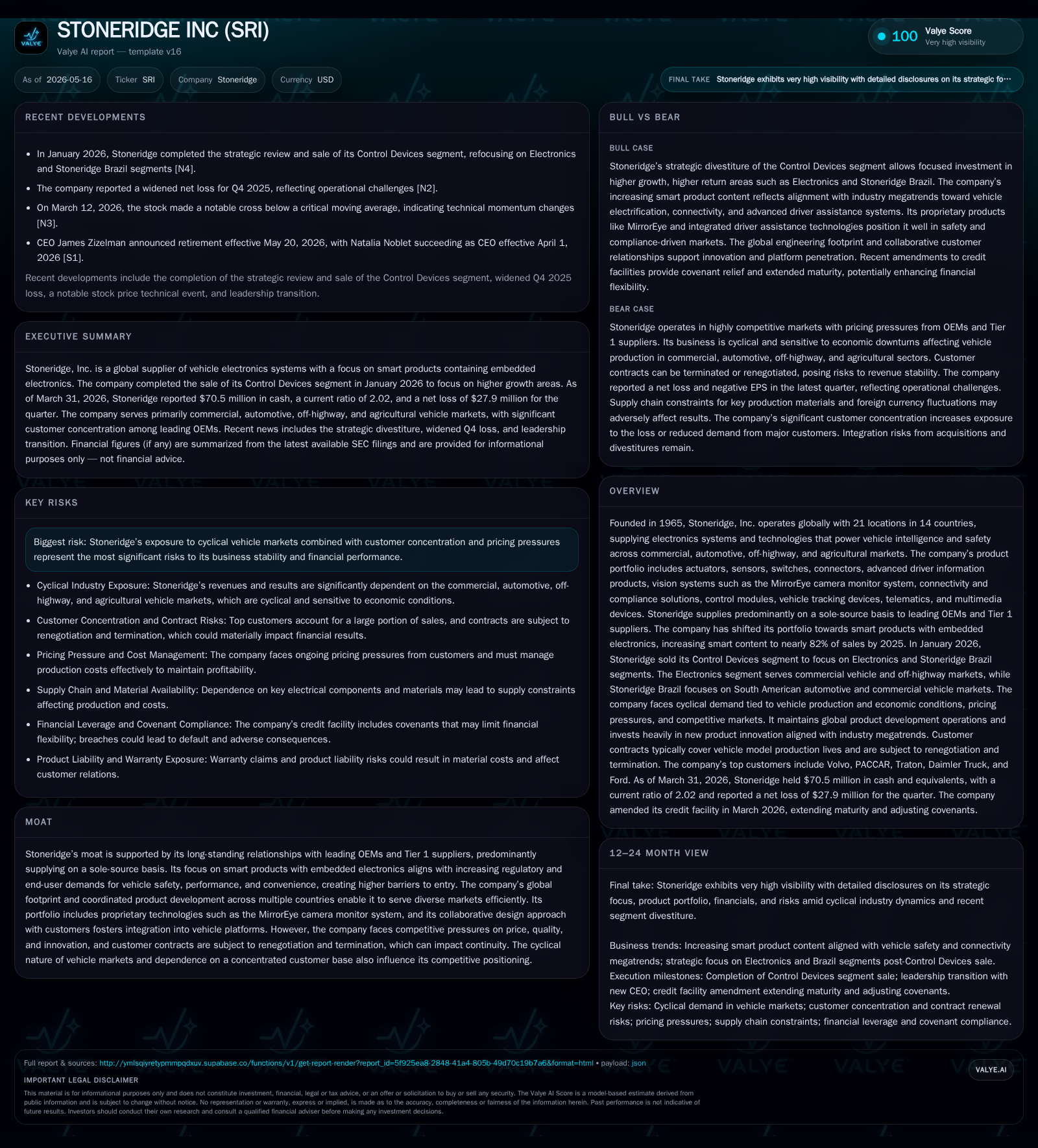
In early 2026, Stoneridge Inc completed the strategic divestiture of its Control Devices segment, intensifying its focus on electronics and connectivity solutions that power vehicle intelligence. The latest Q1 2026 filing reflects steady progress in smart product adoption, notably driven by strong sales of the MirrorEye camera monitor system. Despite inherent cyclicality in commercial automotive markets and concentrated customer relationships, Stoneridge leverages its technological edge and global footprint to pursue growth through advanced driver assistance and telematics applications. Key risks include demand volatility, pricing pressures, and integration challenges within a complex industry landscape.
Recent Operating Update
Stoneridge Inc’s most recent quarterly filing for Q1 ended March 31, 2026 [S2] reveals a company actively reshaping its portfolio following the January sale of its Control Devices segment [S1], [S3]. This divestiture aligns with management's strategy to concentrate capital and resources on higher-growth, higher-margin smart electronics products. The company highlights record quarterly sales for its MirrorEye camera monitor system — a key component of its vision systems offering — underscoring solid traction in both North American and European commercial vehicle markets [S15].
The Q1 reporting incorporates certain non-GAAP financial measures to delineate ongoing operational performance exclusive of one-time realignment costs tied to the Control Devices sale [S6]. While adjusted figures are useful for analyzing trends free from transitory items, GAAP-level commentary confirms sustained demand for embedded electronics even amid cyclical headwinds in commercial automotive production.
Business Model
Founded in 1965, Stoneridge operates globally, supplying custom-engineered electronic products that enable vehicle intelligence, safety, security, and convenience across diverse transportation segments [S1], [S17]. Its revenue model hinges primarily on sole-source contracts with leading original equipment manufacturers (OEMs) and Tier 1 suppliers. These contracts typically cover entire vehicle model lifecycles—generally three to seven years—and are often structured around fulfilling total production needs rather than fixed volumes.
Revenue drivers include unit shipments aligned with underlying vehicle production volumes, product pricing negotiated on model programs susceptible to renegotiation or cancellation risk, and evolving product mix favoring smart content with embedded electronics. The company’s offerings encompass actuators, sensors, switches (historically), advanced driver information displays, vision systems such as MirrorEye®, connectivity/compliance modules, telematics devices, multimedia units, and tracking/monitoring services.
Since divesting the Control Devices segment early 2026—the part responsible for traditional actuators/sensors/switches—Stoneridge now focuses predominantly on two reportable segments: Electronics and Stoneridge Brazil [S23]. The Electronics segment centers around integrated safety technologies and software-enabled products designed for regulatory compliance (notably safety mandates), while the Brazil unit delivers telematics and multifunctional aftermarket devices tailored for South American markets.
Margins hinge heavily on manufacturing efficiency given competitive pricing pressures from customers who relentlessly seek cost reduction. Cost control initiatives involve supplier collaboration to optimize input costs (semiconductors, printed circuit boards) combined with leveraging global engineering hubs located in Europe (Netherlands/Sweden/Estonia), the Americas (Brazil/US/Mexico), China (Suzhou), etc. Design-to-volume collaboration during new vehicle program ramps is critical due to long lead times but also creates switching barriers once embedded technologies are integrated into platforms.
Industry Structure and Competitive Position
Stoneridge operates within an intensely competitive industry characterized by several structural features: high customer concentration among global truck/OEM leaders (Volvo, PACCAR, Traton, Daimler Truck, Ford account collectively for ~57% sales) [S1], rapid technological evolution demanding ongoing R&D investment [S19], heightened regulatory demands especially around safety standards driving increased electronic content per vehicle [S1], and cyclical end-market demand sensitivity tied closely to macroeconomic cycles impacting commercial vehicle manufacturing volumes.
The company’s moat stems largely from long-standing sole-source relationships creating elevated re-switching costs. This advantage is bolstered by proprietary technologies such as the MirrorEye system—a camera monitoring solution replacing conventional mirrors—which improves visibility while meeting stricter fleet safety regulations. Its global footprint enables local engineering support adapted regionally for differing regulatory frameworks.
However, competitive pressures persist on multiple fronts: price negotiations that can compress margins; rival suppliers developing alternative sensor or telematics platforms; potential volume reductions due to OEM platform shifts or macro conditions; as well as technology obsolescence risk if innovation stalls. Maintaining collaborative engineering engagement throughout new model development cycles enhances customer lock-in but requires sustained capital expenditure.
Growth Drivers
- Increasing Electronic Content per Vehicle: Regulatory trends mandating blind spot detection systems, emissions monitoring, enhanced driver information displays fuel higher smart product penetration.
- Expansion of Vision Systems: Continued adoption of MirrorEye cameras provides safer alternatives to mirrors; this technology is gaining momentum particularly in large commercial vehicles subject to EU/US regulations.
- Telematics & Connectivity Solutions: Growing fleet management services coupled with embedded tracking improve operational efficiency for OEMs/end users.
- Geographic Expansion: Particularly through Stoneridge Brazil leveraging local OEM integrations plus aftermarket channels suited to emerging markets.
- OEM Program Wins: Successful entry into new models or refreshed platforms represents a substantive volume ramp lasting years.
- Digitalization & ADAS Integration: Broader move towards integrated driver assistance technology sets stage for future synergistic offerings combining telematics with safety systems.
Each growth driver correlates with measurable KPIs including program backlog awards (multi-year revenue pipeline), unit shipments paralleling new vehicle introductions, expansion of installed base/user conversions in telematics services, and margin improvement from scale economies on smart product manufacturing.
Risks / Watchpoints / Growth Constraints
- Cyclicality: Vehicle production volatility due to economic environment directly affects order volumes since revenues are closely linked to OEM manufacturing output.
- Customer Concentration: Over half of sales come from just five customers; loss or order reductions from any one could materially impact results.
- Pricing Pressures: OEMs wield considerable bargaining power pressing for cost reductions while demanding rising quality/performance.
- Contractual Uncertainty: Contracts cover program lifecycles but lack guaranteed volumes; cancellations or redesign decisions may truncate expected revenues.
- Supply Chain Exposure: Dependence on key raw materials—semiconductors especially—could disrupt timely fulfillment or raise costs.
- Technology Competitiveness Risk: Inability to innovate rapidly enough might result in erosion of market share versus agile competitors deploying newer sensor or display technologies.
- Integration Complexity: Aligning international design/manufacturing capabilities while standardizing platform solutions requires constant execution discipline.
- Regulatory Changes: Emerging safety/privacy/cybersecurity rules could increase compliance burden or limit product applicability requiring costly adjustments.
What To Watch Next
- Progress reports on MirrorEye adoption metrics across major fleets indicating penetration rates beyond pilot programs.
- Backlog trends reported in subsequent quarters reflecting customer awards tied to next-gen vehicle platforms.
- Quarterly gross margin trends clarifying impact of pricing negotiations versus cost control efficiencies post-Control Devices divestiture.
- Supply chain stability amid broader semiconductor availability conditions impacting electronics segment throughput.
- Capital expenditure plans targeting R&D investments focused on advancing integrated driver assistance functionality or telematics enhancements.
- Management commentary during upcoming earnings calls regarding pipeline wins in emerging geographies such as APAC or Latin America outside Brazil.
- Any updates concerning contractual terms renegotiations affecting volume guarantees or pricing concessions from large OEM accounts.
Financial Profile at a Glance
Latest financial snapshot
| Metric | Value | Period |
|---|---|---|
| Cash & equivalents | $71mm | |
| 2026-03-31 | ||
| Total debt | $181mm | |
| 2025-12-31 | ||
| Net debt | $110mm | |
| 2025-12-31 | ||
| Current assets | $348mm | |
| 2026-03-31 | ||
| Current liabilities | $173mm | |
| 2026-03-31 | ||
| Current ratio | 2.02x | |
| 2026-03-31 |
Source: SEC companyfacts cache [F1].
As of March 31, 2026 balance sheet data indicates $70.5 million cash & equivalents against current liabilities near $172.6 million yielding a healthy current ratio above 2x [F1]. Total debt stood at approximately $181 million by end-2025 translating into net debt near $110 million after offsetting cash holdings [F1].
This analysis is prepared solely for informational purposes without providing investment advice.
Disclaimer: This is research-only, informational analysis and not investment advice. It may include AI-generated interpretation and general industry context. Always verify important details using primary sources.

Comments