
Under Armour's Restructuring Advances Operational Efficiency Amid Competitive Pressures
The August 2026 quarter highlights ongoing restructuring efforts driving margin improvement and shifts in channel dynamics amid a challenging athletic apparel environment.
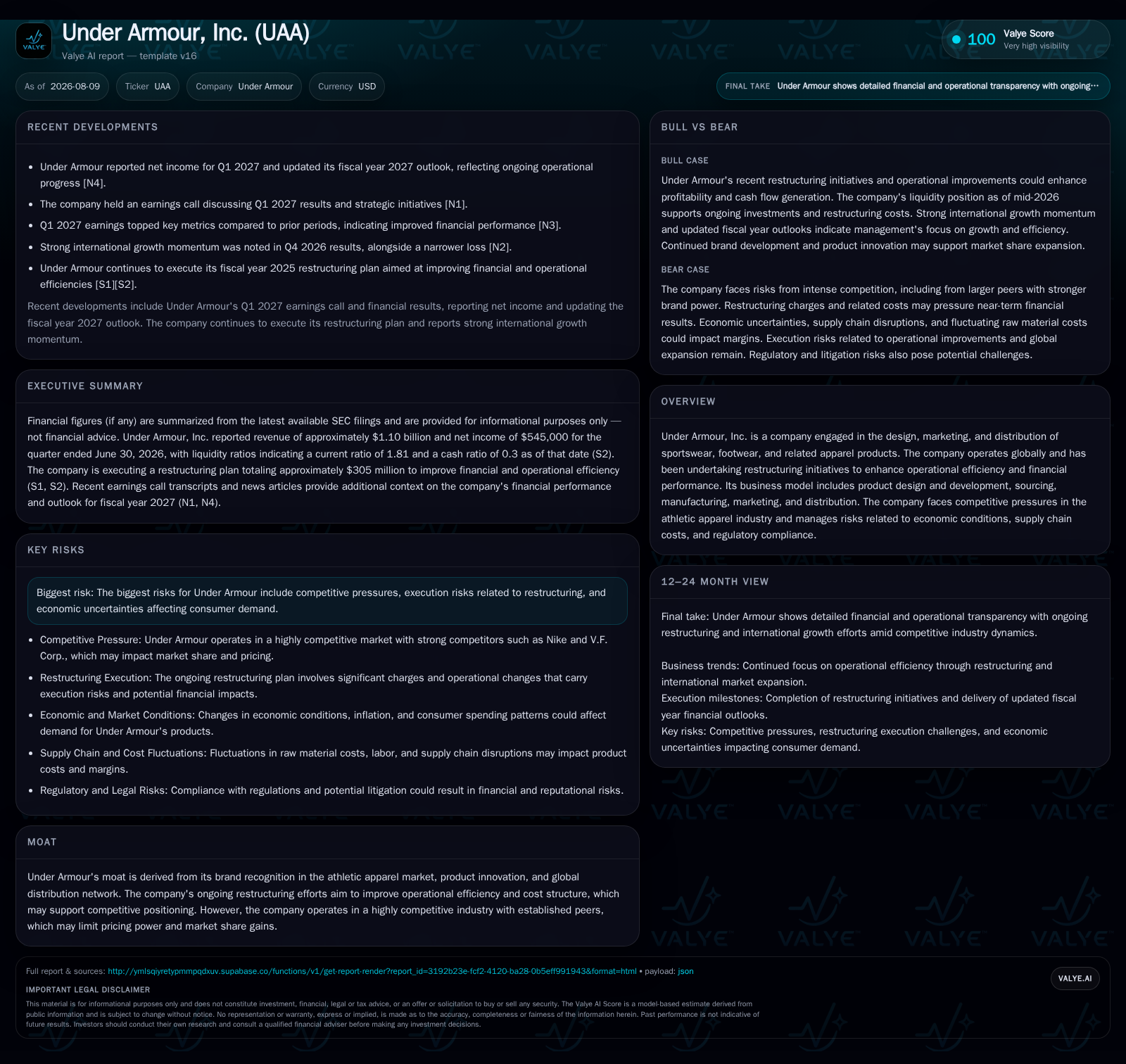
Under Armour’s latest quarterly filing reveals progress on a comprehensive restructuring plan that has introduced $261 million of charges but is reshaping the cost base and operational footprint. The company is witnessing an evolution in its revenue mix with direct-to-consumer channels gaining traction versus wholesale pressures, reinforcing gross margin resilience. Product innovation and marketing investments continue underpinning brand equity though competitive intensity from Nike, Adidas, and Puma persistently tests pricing and consumer loyalty. Supply chain enhancements have improved inventory turnover, helping to control costs. Execution risk remains elevated given macroeconomic headwinds and the complexity of transformation initiatives.
Latest Quarter Financial Results Highlight Restructuring Impact
-term uncertainty around costs but promises margin tailwinds if execution stays on track. Revenue performance during the quarter presented mixed signals during persistent volatile consumer demand globally but did not show material contraction relative to industry peers navigating similar macroeconomic environments [S2]. The reduction in operating loss relative to prior periods aligns with observable restructuring-induced cost containment.
Channel Evolution: Direct-to-Consumer Gains vs Wholesale Challenges
A defining feature of Under Armour's evolving business model is the shift towards direct-to-consumer (DTC) sales from wholesale distribution, consistent with broader athletic apparel sector dynamics emphasizing customer engagement and margin enhancement [S1][S2]. DTC comprises flagship retail outlets alongside rapidly scaling e-commerce platforms, which contribute higher average selling prices (ASPs) and improved gross profit margins given elimination of distributor markups. In contrast, wholesale channels face volume softness due to retailer inventory adjustments and cautious order pacing during economic uncertainty [S2]. This channel mix evolution improves revenue quality but imposes demands on marketing spend to sustain brand relevance directly with consumers. Under Armour reflects this trend through elevated marketing investments targeting personalized digital engagement and lifestyle positioning, intensifying competition within e-commerce-driven brand ecosystems particularly against global giants like Nike and Adidas known for their omnichannel sophistication [S1]. The shift also enhances inventory turnover rates by better aligning product availability with end-consumer demand signals versus bulk distributor shipments that carry higher markdown risks. Operationally, this requires more agile supply chain management linked closely to DTC sales cadence.
Brand Equity Reinforced by Innovation during Intensified Competition
Under Armour continues to leverage product innovation as a cornerstone of its brand strategy amidst a highly competitive landscape dominated by peers such as Nike, Adidas, and Puma [S1]. The company's design emphasis centers on performance apparel technology advancement blended with athleisure styling targeting both sportswear enthusiasts and lifestyle consumers. Evidence from annual disclosures highlights ongoing investment in research & development for materials innovation intended to differentiate the product pipeline while supporting premium pricing power through elevated ASPs [S1]. Marketing sponsorships remain integral for reinforcing brand loyalty among athlete communities and mass consumers alike despite increased promotional intensity across the sector [N6]. Successful new product launches are critical KPIs signaling market acceptance that could translate into growth vectors aligned with rising athleisure trends blending functionality with fashion. However, sustaining pricing amidst peer discounting pressures requires continued innovation momentum paired with effective distribution channel strategies.
Supply Chain Improvements Enhance Inventory Turnover and Cost Control
A key operational lever under Under Armour’s restructuring is enhanced supply chain management focusing on inventory efficiency and cost containment measures detailed in its sourcing disclosures [S1][S2]. Initiatives include consolidating supplier bases, optimizing manufacturing footprints via third-party contractors, leveraging logistics partnerships for faster replenishment cycles, and deploying advanced analytics for demand forecasting. These improvements have materially increased inventory turnover rates this quarter relative to trailing periods — directly reducing reliance on clearance markdowns that erode margins within athletic apparel retail cycles [S2]. Controlling cost of goods sold (COGS), particularly amid raw material price volatility affecting fabrics and synthetic components, underscores the importance of strategic procurement policies. While supply chain disruptions remain a risk factor sensitive to geopolitical or inflationary shocks, current evidence suggests Under Armour’s structured approach is mitigating some external cost pressures thus supporting gross margin stabilization.
Growth Vectors: Athleisure Trends and Geographic Expansion Opportunities
Market growth drivers for Under Armour include rising consumer health consciousness fueling demand for functional yet stylish athleisure wear that transcends traditional performance apparel uses [S1][N6]. Digital commerce expansion underpins geographic diversification ambitions beyond mature North American markets into emerging regions offering sizable untapped potential for lifestyle brand penetration. Strategic marketing alignment with health-oriented lifestyles supports these initiatives alongside sponsorship activations tailored regionally [N6]. E-commerce sales gains not only boost DTC contribution but facilitate scalable access to new demographics without substantial physical store capex commitments [S1]. Product innovation focused on sustainability also caters to evolving consumer preferences influencing purchase decisions in developed markets. This multi-pronged growth approach aims to chip away at entrenched competitors’ dominance by cultivating differentiated consumer experiences and broader market reach.
Risks: Execution Uncertainty Around Restructuring and Market Headwinds
Despite evident progress, Under Armour faces notable risks primarily centered on successful execution of complex restructuring plans required to achieve targeted efficiencies without disrupting core business functions [S1][S2][N6]. Economic headwinds including inflationary pressures affecting discretionary spending could constrain end-demand particularly impacting wholesale orders given retailer inventory caution [S2]. Intense competition exerts persistent pricing pressure limiting upward ASP trajectory while increasing marketing spend requirements may weigh further on near-term operating margins [S1]. Additional exposure arises from supply chain cost fluctuations caused by commodity price volatility or geopolitical trade restrictions jeopardizing planned COGS savings. Currency exchange rate volatility could also impair international sales results given increased geographic diversification efforts. Meeting milestone targets related to operational improvements remains crucial to justify ongoing transformation expenditures.
Near-Term Catalysts to Watch: Product Launches and Channel Penetration Metrics
Key upcoming indicators informing Under Armour’s trajectory include measurable success rates of new product introductions gauged through sell-through data and return rates as articulated in recent earnings discussions [N1][S2]. Monitoring same-store sales growth within DTC retail outlets will provide insights into consumer response effectiveness while tracking e-commerce acceleration relative to wholesale ordering cadence reveals channel momentum shifts [N1]. Guidance updates offered during quarterly conference calls will clarify management’s confidence level around restructuring completion timelines and margin recovery pathways [N1]. Additionally, marketing campaign outcomes correlating with sponsorship renewals or digital engagement metrics may signal shifting brand equity strength crucial for sustaining competitive relevance.
Financial Profile Discussion: Margin Dynamics, Liquidity & Capital Structure
As of June 30, 2026, Under Armour reported cash and equivalents totaling approximately $396 million against total debt near $600 million yielding net debt around $204 million—a moderate leverage profile given transformation stage needs [F1]. The current ratio stands at about 1.81 indicating healthy short-term liquidity coverage of obligations [F1], supporting continued investment in restructuring activities without immediate refinancing pressures. Gross margin trends reflect initial benefits from cost containment offset partly by elevated marketing expenditures supporting DTC growth investments although operating losses persist as anticipated during turnaround phases [S2]. Free cash flow generation potential remains contingent upon fully realizing structural savings embedded within restructuring programs as well as steady revenue expansions driven by evolving channel mixes. Maintaining disciplined capital allocation balancing near-term profitability improvements against longer-term brand-building imperatives will be critical moving forward.
This analysis incorporates findings from Under Armour's latest quarterly filings combined with annual report context to evaluate how operational changes interact with industry dynamics shaping performance outlooks. It leverages sector-relevant KPIs such as channel mix shifts towards direct-to-consumer sales enhancing margins and inventory turnover management through supply chain optimization—core levers influencing financial health amid competitive athletic apparel markets where global peers like Nike or Adidas set high benchmarks for brand excellence and innovation velocity.
Disclaimer: This article is an analysis based solely on publicly available information as of August 2026 without offering investment advice or forecasts regarding future performance.
Disclaimer: This is research-only, informational analysis and not investment advice. It may include AI-generated interpretation and general industry context. Always verify important details using primary sources.

Comments