
Zoetis: Resilient Animal Health Leader Fueled by Innovation, Scale, and Market Strength
While the company’s diverse portfolio and scale provide resilience, future growth and margin expansion hinge on continued R&D productivity, regulatory navigation, and the ability to manage industry and macroeconomic volatility.
Its broad portfolio and global reach offer competitive advantages, yet exposure to regulatory shifts, animal disease cycles, and economic swings remain material risks. Sustainable outperformance depends on translating R&D into differentiated products and managing operational complexity as the animal health landscape evolves.
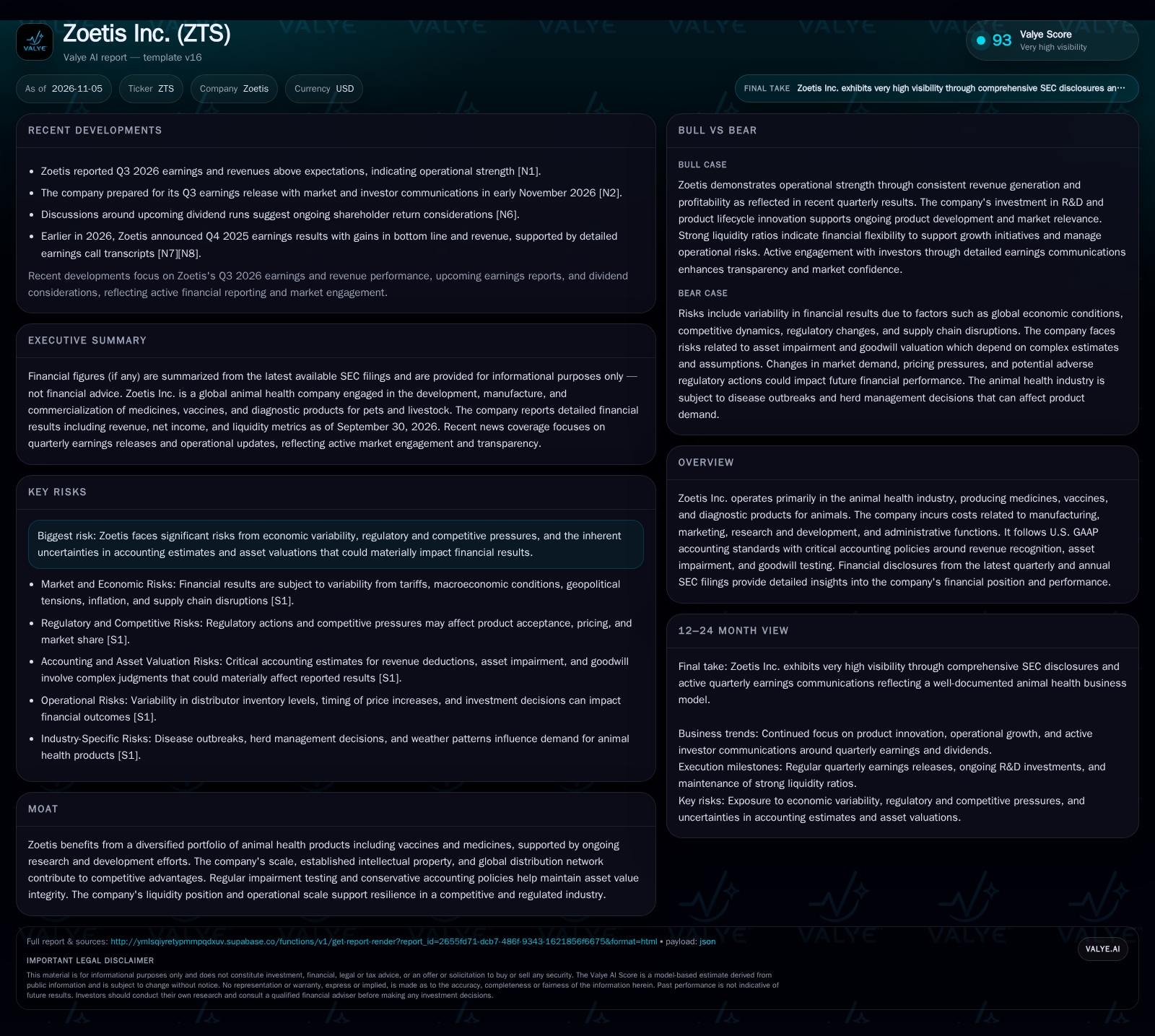
Zoetis, the global leader in animal health, posted Q3 2026 results that outpaced expectations, highlighting its resilience and operational momentum. With a broad suite of medicines, vaccines, and diagnostics for both companion animals and livestock, Zoetis leverages R&D scale and a robust balance sheet to sustain its market position. However, the company’s trajectory is shaped not just by product breadth, but also by its ability to navigate regulatory, economic, and biological volatility inherent to the sector. As Zoetis continues to invest in innovation and shareholder returns, the key questions center on whether it can convert R&D into durable growth and margin expansion amid shifting global dynamics.
Q3 2026 Results Highlight Financial Strength and Market Outperformance
Zoetis reported Q3 2026 revenue of $2.391 billion and net income of $591 million, with basic and diluted EPS of $1.44, surpassing analyst expectations and underscoring operational strength [S2] [N1]. The company reported cash and liquidity metrics for the period; these figures do not by themselves establish operating runway, investment capacity, financial flexibility, or financing capacity. [S2] These results, coupled with active investor communications and dividend discussions, reflect a company operating from a position of financial strength and transparency [N1] [N2] [N6]. Regular quarterly earnings disclosures and continued R&D spending further reinforce Zoetis’s commitment to both innovation and shareholder engagement [N7] [N8].
Transforming Innovation and Scale into Sustainable Profitability
Zoetis’s core business economics depend on the interplay of high-margin pharmaceuticals, vaccines, and diagnostics, sold globally to both pet and livestock markets. Revenue is driven by product volume, pricing, and mix, with companion animal products typically commanding higher margins due to less price sensitivity and greater willingness to pay among pet owners compared to livestock producers. The company’s cost base includes materials, manufacturing, royalties, marketing, R&D, and administrative overheads [S1].
R&D is a significant fixed cost, aimed at developing new drugs, lifecycle extensions, and navigating regulatory approvals—a process that creates both barriers to entry and long lead times. Once a product is approved, operating leverage can be substantial: incremental sales of established products often come with high gross margins, as fixed costs are spread over a larger revenue base. The company’s reference labs and diagnostics provide recurring revenue streams, though not all revenue is contractually recurring. Capital intensity is moderate, with periodic investment in facilities and equipment, but the model favors cash generation once products reach scale. The ability to maintain pricing, manage cost inflation, and launch differentiated products will determine future margin trajectory.
Zoetis’s Market Position Bolstered by Diverse Products and Strong Pipeline
Zoetis’s competitive edge lies in its broad, diversified portfolio across species and therapeutic categories, sustained R&D investment, global distribution, and established intellectual property [S1]. The animal health market is less consolidated than human pharma, with multiple multinational and regional players, but few can match Zoetis’s scale or product breadth. This provides negotiating leverage with distributors and veterinarians, and enables cross-selling across companion and production animal lines.
Key counterforces include generic competition (especially as patents expire), regulatory hurdles, and the threat of new entrants leveraging digital diagnostics or alternative biologics. Disease outbreaks and shifts in herd management can swing demand abruptly, challenging inventory management and forecasting. While switching costs for veterinarians and farmers are not as high as in some healthcare verticals, brand trust and demonstrated efficacy do create some stickiness. The question is whether Zoetis can maintain its innovation and IP edge as biosimilars and alternative therapies proliferate.
Breakthrough R&D and International Growth Drive Long-Term Value
In a favorable scenario, Zoetis’s ongoing R&D investments yield new, differentiated therapies and vaccines that command premium pricing and extend category leadership, particularly in companion animal and emerging livestock markets. Successful lifecycle management—such as new indications, formulations, or delivery methods—could lengthen product exclusivity and deepen customer reliance. Expansion into diagnostics and digital health solutions may create new recurring revenue streams and enhance the value proposition for veterinary customers.
Confirmation of this scenario would include above-market revenue growth, margin expansion from mix shift toward novel products, and evidence of strong uptake for recently launched therapies. Additional signals would be regulatory approvals in major markets, successful entry into new geographic regions, and continued outperformance in quarterly earnings reports relative to peers. If R&D productivity accelerates and Zoetis leverages its commercial infrastructure efficiently, the company could compound returns and reinforce its leadership.
Ongoing Execution Navigates Industry Cycles and Regulatory Changes
The most plausible trajectory is for Zoetis to maintain mid-single-digit revenue growth and stable margins, reflecting a balance of mature product franchises, incremental innovation, and disciplined cost management. The company’s scale and portfolio diversity provide resilience against species-specific or regional downturns, while regular product refreshes and incremental improvements support customer retention.
Regulatory or competitive headwinds may slow, but not derail, topline growth. The company’s ability to pass through moderate price increases, manage supply chain disruptions, and defend market share in its core franchises would affirm the base case.
Growth and Margins Vulnerable to Regulatory and Innovation Challenges
A downside scenario could materialize if Zoetis faces regulatory setbacks—such as delayed or denied approvals for key pipeline products, increased scrutiny over pricing, or adverse changes in veterinary drug regulations. Major animal disease outbreaks or shifts in herd management (e.g., herd reductions or alternative protein trends) could depress demand for livestock products, while competitive pressure from generics or biosimilars might erode pricing power and gross margins.
Confirmation would include revenue stagnation or decline, margin compression, and increased impairment charges on intangible assets. Early warning signs might be missed product launch timelines, negative regulatory developments, or a spike in inventory levels reflecting distributor destocking. If R&D fails to yield commercially successful products or if cost inflation outpaces pricing, Zoetis’s earnings power could be materially impaired.
Factors Shaping Zoetis’s Competitiveness in Animal Health’s Future
Quarterly revenue growth rates by product category and geography—especially if disclosed at the companion animal vs. livestock level—would clarify demand drivers and market share shifts.
R&D expense as a percentage of revenue, and disclosures on pipeline progress, would help gauge innovation productivity and future growth capacity.
Regulatory milestones for major pipeline assets, including approval timelines and label expansions, are critical for assessing near-term revenue catalysts.
Gross and operating margin trends, especially in the face of cost inflation or generic competition, will test the durability of Zoetis’s economics.
Inventory and distributor channel metrics (if disclosed) would reveal demand health and any emerging destocking or overstocking issues.
Updates on reference lab and diagnostics adoption rates could indicate traction in higher-recurring or higher-margin service lines.
Any material changes in goodwill or intangible asset impairment charges would signal risks to the underlying value of acquired or developed assets.
Management commentary on supply chain resilience, pricing strategy, and responses to disease outbreaks will provide insight into operational agility.
Disclaimer: This is research-only, informational analysis and not investment advice. It may include AI-generated interpretation and general industry context. Always verify important details using primary sources.

Comments