
Apple Inc.: Navigating AI Integration and Ecosystem Expansion Amid Operational Complexities
Apple advances its AI capabilities through a strategic Google partnership while managing its diverse consumer electronics ecosystem and evolving leadership dynamics.
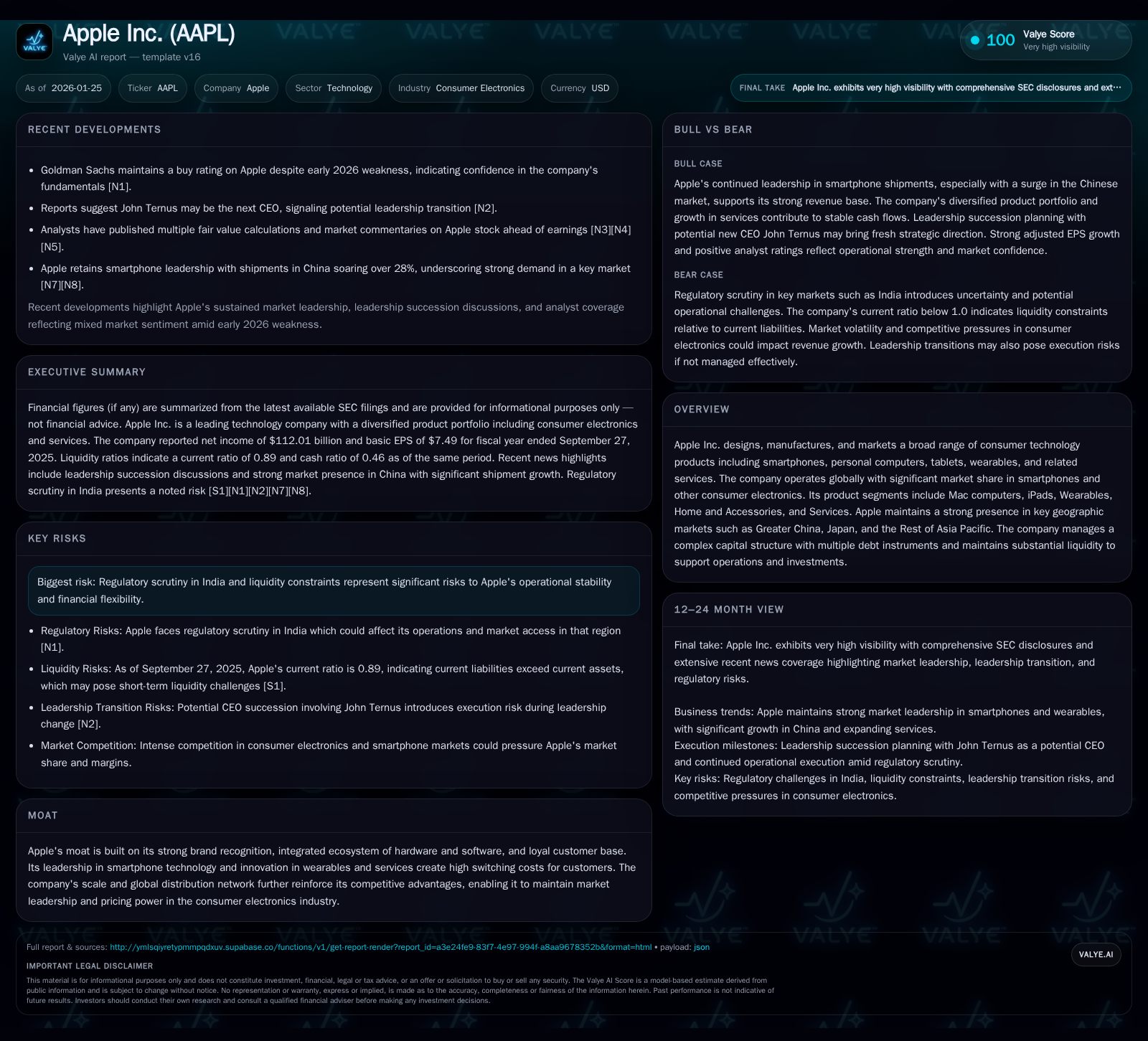
Apple's recent collaboration with Google to enhance Siri's AI underscores its strategic pivot toward artificial intelligence, a critical frontier for sustaining competitive advantage. The company’s business model intricately weaves hardware, software, and services into a high-margin ecosystem, supported by a sophisticated global supply chain and capital structure. Operational challenges include regulatory scrutiny in key markets like India and balancing liquidity amid sizable current liabilities. Leadership transitions and innovation in product lines such as foldable iPhones also mark pivotal developments shaping Apple’s trajectory.
What Changed Recently
Apple has accelerated its artificial intelligence initiatives, notably through a deal with Google aimed at enhancing Siri’s AI capabilities. This collaboration signals Apple’s recognition of AI as a strategic imperative to maintain its ecosystem’s competitiveness, especially against rivals like Microsoft who are aggressively integrating AI into their platforms [N1][N8][N9]. Analyst commentary and media coverage have highlighted this AI push as a key growth vector, alongside innovations like the foldable iPhone, which could redefine product categories if successfully executed [N11]. Leadership dynamics are also evolving, with speculation that John Ternus, Apple’s hardware head, may be groomed as a successor to CEO Tim Cook, suggesting potential shifts in strategic focus or operational emphases [N5]. However, despite these advances, Apple faces near-term headwinds including regulatory scrutiny in emerging markets such as India, and softness in early 2026 earnings forecasts that temper some optimism [N2][N13][Valye report]. Jim Cramer’s public remarks underline the stock’s current struggles and complexity of navigating this transition period [N6][N14].
Business Model as a System
Apple operates a tightly integrated business model that merges hardware, software, and services into a cohesive ecosystem. Its product portfolio includes flagship iPhones, Mac computers, iPads, and an expanding wearables and home accessories segment. These hardware products are complemented by Services—encompassing the App Store, iCloud, Apple Music, and subscription offerings—that deliver high-margin, recurring revenue streams [S1]. This integration fosters high switching costs, ensuring customer loyalty and enabling premium pricing.
Operationally, Apple maintains a complex global supply chain, leveraging a mix of in-house design and external manufacturing partners. The company’s capital structure is equally sophisticated, supported by multiple debt instruments maturing over various horizons, enabling strategic investments and share repurchases while preserving liquidity [S9][S13]. As of the latest period, Apple held $36 billion in cash and equivalents but faces current liabilities exceeding current assets, implying tight short-term liquidity management [S9]. The company’s geographic segmentation includes significant exposure to Greater China, Japan, and the broader Asia Pacific region, where regulatory and market conditions vary widely [S5][S7].
Industry Map & Competitive Battlefield
Apple’s competitive landscape spans consumer electronics, software services, and increasingly AI-driven interfaces. The smartphone market is intensely contested by Android OEMs, but Apple’s proprietary iOS ecosystem and hardware integration confer a substantial moat. Meanwhile, the wearables segment is growing, with Apple Watch and AirPods dominating but facing competition from specialized fitness and audio brands.
The AI frontier presents both an opportunity and challenge. Apple’s partnership with Google to improve Siri pits it against Microsoft’s Azure-backed AI ecosystem, which integrates deeply with Windows and Office suites [N9]. The race for AI supremacy in consumer technology is also attracting new entrants and established tech giants, raising the stakes for innovation speed and user experience.
Regulatory scrutiny and geopolitical tensions particularly concerning China and India add layers of complexity. India’s regulatory environment could restrict Apple’s market strategies and supply chain operations, while China remains critical for manufacturing and sales but is increasingly fraught with political risks [Valye report].
Where the Economics Become Real
Apple’s unit economics benefit from a premium pricing strategy supported by a loyal customer base and ongoing service monetization. Hardware margins are protected by scale and design innovation, while services deliver expanding contribution margins due to lower variable costs.
However, supply chain constraints—ranging from semiconductor availability to component costs—can pressure margins and delivery timelines. Innovation cadence is another bottleneck; the success of new products like foldable iPhones depends on consumer adoption and manufacturing scalability [N11]. Apple’s capital expenditures and R&D investments, though not publicly broken down in detail here, are substantial, underscoring the cost base underpinning future growth.
Liquidity management is crucial given the current ratio below 1, signaling that Apple must carefully balance cash flow generation and short-term obligations. The multi-tranche debt issuance strategy helps mitigate refinancing risks but requires vigilant capital allocation [S9][S13].
Diligence Questions / Disconfirming Signals
- How dependent is Apple on its Google partnership for AI capabilities, and does this indicate a gap in its internal AI development?
- What is the potential impact of regulatory actions in India and other emerging markets on Apple’s revenue growth and supply chain?
- How will the leadership transition, if John Ternus assumes CEO responsibilities, affect Apple’s strategic focus and risk appetite?
- Can Apple successfully scale new product categories like foldable iPhones without diluting its brand or margins?
- Does the current liquidity profile and debt maturity schedule pose risks in a tightening macroeconomic environment?
- How resilient is Apple’s ecosystem in the face of intensifying AI competition from Microsoft and others?
- Are there signs of slowing innovation cadence or customer saturation in core hardware segments?
Taken together, Apple stands at a critical junction where operational excellence, AI integration, and regulatory navigation will define its trajectory. The company’s entrenched ecosystem and financial resources provide a strong foundation, but execution risks and external pressures remain material considerations.
This analysis is based solely on publicly available information as of early 2026 and does not constitute investment advice or a recommendation. All forward-looking implications are subject to inherent uncertainties.
Disclaimer: This is research-only, informational analysis and not investment advice. It may include AI-generated interpretation and general industry context. Always verify important details using primary sources.

Comments