
Apple Inc.’s Strategic Shifts Amid AI Integration and Leadership Changes
Apple navigates a complex consumer electronics landscape with evolving AI partnerships and potential CEO succession, underpinning its ecosystem and market positioning.
Apple has recently strengthened its AI capabilities through a notable partnership with Google, signaling an intensified focus on integrating AI into its hardware and services. Leadership dynamics are shifting, with speculation around John Ternus potentially succeeding Tim Cook as CEO. Apple’s business model remains deeply rooted in a vertically integrated ecosystem spanning devices and services, supported by a robust capital structure. Competitive pressures from peers like Microsoft and regulatory risks in key markets pose ongoing challenges. Understanding Apple's unit economics, supply chain constraints, and evolving AI strategy is critical to grasping its future trajectory.
What Changed Recently
Apple's AI strategy gained significant attention with the announcement of a partnership with Google to enhance Siri's AI capabilities, a collaboration that likely accelerates Apple's AI roadmap by leveraging Google's AI infrastructure and expertise [N1, N8, N10]. This marks a strategic openness to external partnerships in an area where Apple historically favored internal development. Industry observers noted this move as a critical pivot amid a broader AI arms race among tech giants, highlighting Apple's ambition to maintain competitiveness in voice assistants and AI-driven services.
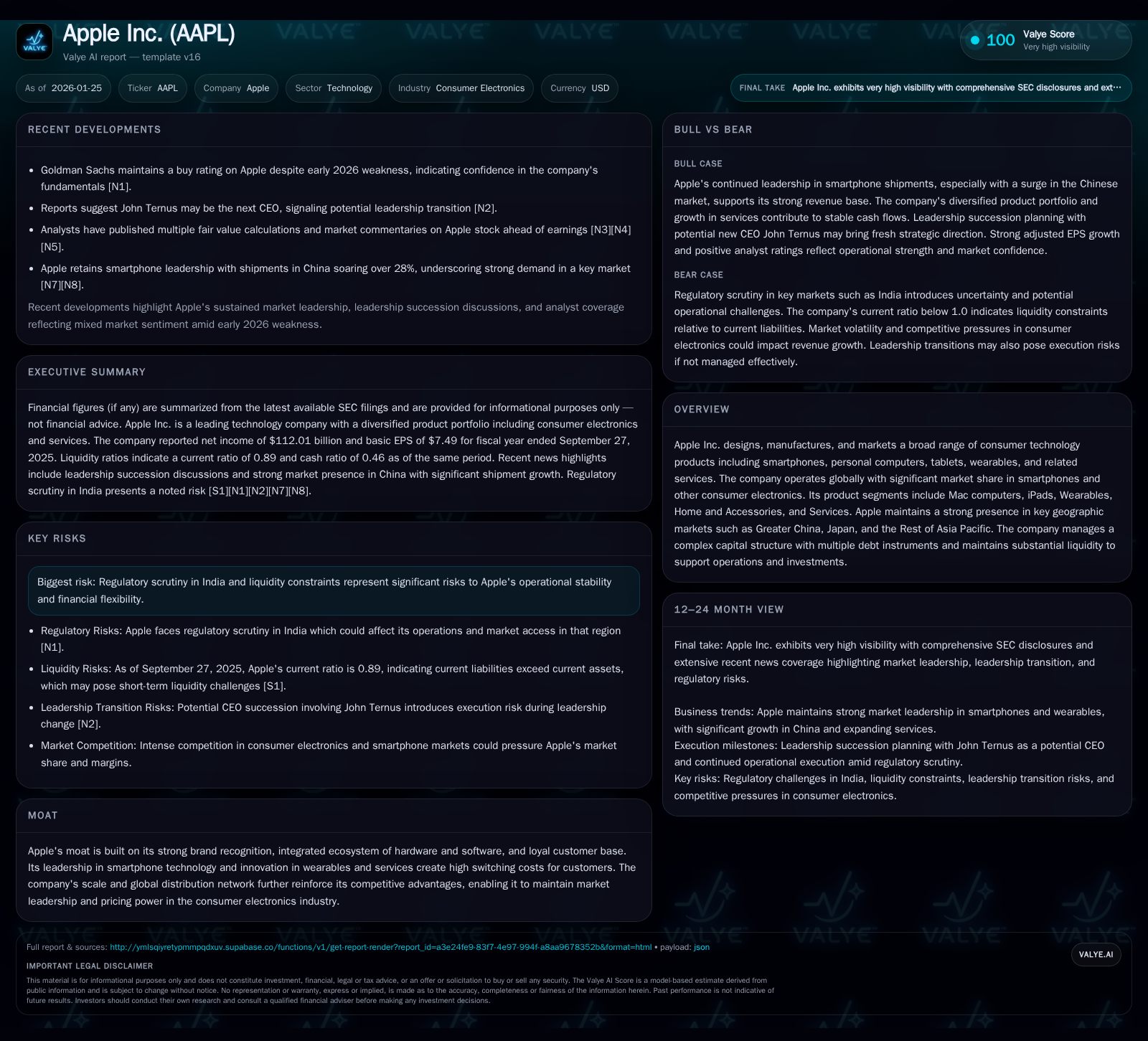
Simultaneously, speculation regarding Apple's leadership surfaced, with reports indicating that John Ternus, Apple's SVP of Hardware Engineering, could be the next CEO succeeding Tim Cook [N5]. This potential transition suggests a future focus on hardware innovation and operational excellence, given Ternus's background. While Tim Cook remains CEO, these reports inject uncertainty about strategic continuity and potential shifts in company culture and priorities.
Market commentary reflects mixed sentiment. Despite some early 2026 softness in Apple's stock performance, major firms like Goldman Sachs have maintained buy ratings, citing confidence in Apple's long-term positioning, though concerns about overreliance on Google for AI and regulatory risks in India temper enthusiasm [N2, N12, N14].
Business Model as a System
Apple's business model integrates hardware, software, and services into a tightly coupled ecosystem designed to lock in users and generate recurring revenue. The company designs, manufactures, and markets a range of consumer technology products including the iPhone, Mac, iPad, and Wearables/Home Accessories, complemented by its Services segment encompassing digital content, cloud services, and payment platforms [S1, S3].
This ecosystem approach creates high switching costs for customers, underpinning Apple's pricing power and brand loyalty. Devices are engineered to interoperate seamlessly, with proprietary operating systems (iOS, macOS, watchOS) and software platforms enhancing user experience. Services revenue provides margin stability and growth potential, less sensitive to hardware sales cycles.
Apple operates globally with notable revenue contributions from Greater China, Japan, and the Rest of Asia Pacific regions [S5, S7]. Geographic diversification helps mitigate regional risks but also exposes Apple to regulatory scrutiny, especially in India where compliance costs and policy interventions could impact sales and operations.
Capital structure management is sophisticated, featuring multiple debt instruments with maturities extending into the 2030s and beyond. This financial flexibility supports R&D investments, share repurchases, and supply chain resilience. As of the latest data, Apple holds approximately $36 billion in cash and equivalents but reports a current ratio below 1 (0.89), indicating current liabilities outpace current assets, a common profile for large-cap tech firms with efficient working capital management [S9, S13].
Industry Map & Competitive Battlefield
Apple inhabits the intersection of consumer electronics, software services, and emerging AI-enabled technologies. Its product and services ecosystem places it in competition with a broad range of players:
Smartphones and Personal Computing: Competitors include Samsung, Google, and Microsoft. Apple's advantage lies in seamless hardware-software integration and premium branding.
Wearables and Accessories: This segment faces competition from Fitbit (Google), Samsung, and emerging Chinese brands, but Apple Watch and AirPods maintain strong market leadership.
Services and AI: Here, Apple competes with Google (Alphabet), Microsoft, Amazon, and Meta across cloud, AI assistants, and digital content. Recent collaboration with Google on Siri AI upgrades is noteworthy but also reflects a competitive tension where Apple must balance partnerships and independent innovation [N9].
AI Ecosystem: The AI frontier is a rapidly evolving battlefield. Microsoft’s aggressive investments and ecosystem tie-ins contrast with Apple’s traditionally cautious but increasingly collaborative approach. The Google partnership may signal a strategic shift to avoid falling behind in AI capabilities.
Regulatory pressures add complexity, especially in large markets like India, where compliance costs and policy uncertainty create operational headwinds [Valye report excerpt].
Where the Economics Become Real
Apple’s unit economics revolve around premium pricing, high margins, and ecosystem monetization. Hardware gross margins typically range in the 30-40% band, supported by scale manufacturing and supply chain optimization. Services margins are higher, benefiting from recurring revenues and lower capital intensity.
Supply chain and procurement remain critical constraints. Apple leverages a global supplier base but must navigate component shortages, cost inflation, and geopolitical risks, especially in China. Its capital investments and inventory management strategies aim to mitigate these bottlenecks.
The Services segment, including App Store, Apple Music, iCloud, and Apple Pay, delivers growing revenue streams with lower variable costs. This segment's expanding contribution helps smooth revenue volatility tied to hardware product cycles.
Capital structure efficiently supports these economics. Apple’s substantial debt issuance at low rates funds share repurchases and R&D without stressing liquidity, though the current ratio below 1 signals tight working capital management that requires careful monitoring [S9, S13].
Diligence Questions / Disconfirming Signals
How deeply reliant is Apple on Google’s AI infrastructure for long-term AI roadmap success, and what are the risks if this partnership falters or competitive tensions escalate?
What strategic changes might John Ternus bring as potential CEO, and how could leadership transition affect innovation cycles and culture?
To what extent can Apple sustain pricing power amid intensifying competition and global economic pressures?
How do regulatory developments, particularly in India and China, threaten Apple's growth, and what mitigation strategies are in place?
Are supply chain bottlenecks easing or worsening, and how will component cost inflation impact margins?
What is Apple's plan to address investor concerns about AI capability gaps compared to Microsoft and Google?
Does the current liquidity position and capital structure adequately support upcoming investments and potential macroeconomic shocks?
How resilient is the Services segment to shifts in user behavior or regulatory changes concerning app store commissions?
Closing Thoughts
Apple remains a dominant force in consumer electronics, leveraging a powerful ecosystem and brand to maintain market leadership. Recent AI collaborations and leadership speculation indicate a phase of strategic evolution. However, the interplay of competitive pressures, regulatory risks, and operational constraints demands continuous vigilance. Understanding the nuances of Apple’s business model, capital management, and industry positioning is essential to contextualizing its next chapter.
This analysis is based on current publicly available information and industry understanding. It is intended for informational purposes and does not constitute investment advice.
Disclaimer: This is research-only, informational analysis and not investment advice. It may include AI-generated interpretation and general industry context. Always verify important details using primary sources.

Comments