
AptarGroup’s First Quarter Signals on Innovation and Geopolitical Headwinds
AptarGroup's Q1 2026 results highlight resilience through innovation in dispensing technologies despite rising input costs and geopolitical risks.
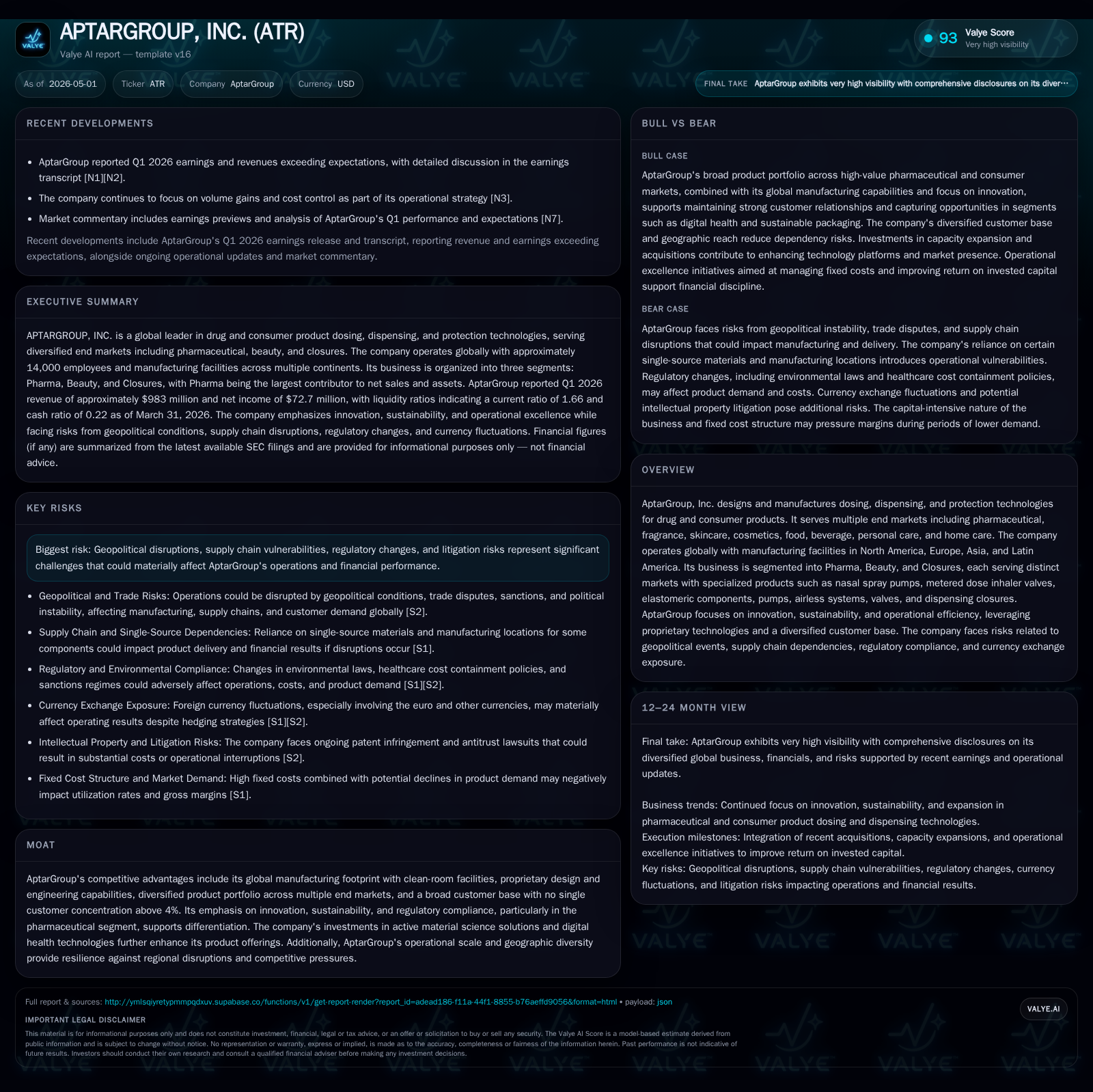
In Q1 2026, AptarGroup faced inflationary pressures from raw materials and energy costs alongside supply chain challenges linked to geopolitical tensions, notably the ongoing conflict in Ukraine. The company implemented price increases to offset these headwinds while maintaining solid demand across its Pharma and Beauty segments. Aptar’s diversified global footprint and proprietary technology underpin its competitive edge amid evolving regulatory landscapes and customer preferences for sustainability and connected health solutions. Key risks include ongoing geopolitical disruptions, supply chain vulnerabilities, and complex regulatory demands, though the innovation pipeline and sustainability initiatives remain potent growth drivers.
Q1 2026 Operating Performance and Immediate Market Context
AptarGroup's latest quarterly filing dated May 1, 2026 [S2] underscores a business environment marked by persistent inflationary pressures on raw materials, shipping, and energy costs driven largely by ongoing geopolitical tensions including the continuing conflict in Ukraine. Despite these headwinds, the company reported robust demand momentum supported by price increases aimed at mitigating cost inflation. Market reception has remained strong with Aptar citing new order records particularly within pharmaceutical metered dose inhalers (MDIs) and beauty dispensing pump systems [N2]. The company noted that while some supply chain disruptions linger due to regional conflicts and sanctions-related compliance requirements especially regarding Russia-related activities [S2], operational execution remains resilient.
Management commentary from recent earnings discussions reflects confidence in their pricing power enabled by differentiated product offerings as well as a broad customer base spanning pharma to consumer products [N1]. Cost pressures have yet to significantly erode margins due to swift price adjustments alongside productivity enhancements. Crucially, Aptar benefits from contractual mechanisms allowing escalated pricing in certain segments that partially insulates it from raw material volatility.
AptarGroup’s Business Model: Product Lines and Customer Solutions
AptarGroup operates through three core business segments — Pharma, Beauty, and Closures — each serving distinct but complementary end markets [S1][S12]. Revenue generation occurs primarily via sales of dosing, dispensing, and protection technologies custom-engineered for a diverse customer base encompassing pharmaceuticals, fragrances, skincare, cosmetics, food & beverage, personal care, and home care sectors.
Pharma segment offerings include metered dose inhaler valves facilitating precise aerosolized drug delivery predominantly for respiratory illnesses like asthma and COPD. Elastomeric primary packaging components such as stoppers for vials and pre-filled syringe parts constitute another critical product line requiring strict compliance with clean-room standards due to sterility demands [S1].
Beauty products cover finger-actuated pumps designed for lotions or sprays offering ease of use combined with aesthetic appeal tailored for luxury skincare and cosmetics packaging. Closures represent both dispensing caps enabling controlled product release without cap removal as well as non-dispensing closures used widely across personal care and household goods.
The business model emphasizes proprietary polymer-based material science which enables innovative formulations including sustainable resins that improve recyclability or reusability aligned with evolving consumer preferences [S24]. Importantly, no single customer exceeds a 4% concentration threshold reflecting a well-diversified revenue base mitigating dependence risks [S13]. Aptar leverages high-tech manufacturing operations worldwide including North America, Europe, Asia, and Latin America with extensive clean-room facilities enabling adherence to stringent quality control regimes critical for pharma device certification.
Competitive Position and Industry Dynamics in Dispensing Technologies
Within the competitive landscape characterized by both private regional players and large publicly traded entities targeting similar specialized packaging solutions [S16], Aptar maintains a differentiated position via its integrated capabilities in design innovation, advanced materials engineering (notably active material science), manufacturing precision (high-speed injection molding with robotic automation), and broad geographic reach.
Regulatory compliance is a core competitive moat particularly in pharmaceutical applications where product approvals hinge on rigorous FDA standards or EU guidelines for combination drug/device products [S10]. This regulatory barrier supports pricing power as switching costs are high given the need for re-certification if alternative suppliers are selected.
Supply chain robustness is challenged by dependencies on certain single-source raw materials such as specific rubber compounds essential for elastomeric components. While safety stock buffers are maintained to mitigate disruption risks arising from geopolitical instability (e.g., Middle East tensions affecting logistics) or sanctions regimes (notably related to Russia/EU/US policies), these remain watchpoints given external headwinds [S12][S23].
Technological leadership extends into emerging digital health solutions integrated into drug delivery devices that facilitate remote patient monitoring or adherence tracking, positioning Aptar well within the healthcare industry’s digital transformation trend [S26].
Key Growth Drivers: Innovation, Sustainability, and Digital Health Integration
Aptar’s sustained investments in R&D create a robust innovation engine fueling growth prospects beyond incremental volume increases. A focal point is advancement of connected dosage devices within the Pharma segment that leverage sensor technology combined with companion diagnostic software—often regulated as digital therapeutics—to optimize patient outcomes across pulmonary diseases, oncology, diabetes management among others [S26][N1].
Complementing this is a strategic push towards sustainability-driven product platforms utilizing post-consumer recycled content polymers (PCR resins) which respond directly to shifting consumer preferences favoring environmentally responsible packaging. Such initiatives also anticipate tightening government regulations banning hazardous substances like PFAS chemicals in packaging supply chains globally [S14][S20].
Innovation further extends into active material science where proprietary polymer formulations provide improved barrier properties or drug compatibility enhancing device performance thus facilitating premium pricing structures [S24]. These advancements unlock new applications in both pharma therapeutic areas as well as growing Beauty segments seeking differentiation via enhanced user experience.
The breadth of end markets served creates multiple demand vectors providing resilience against cyclical downturns affecting individual sectors—for instance strong pharma pipeline somewhat offsets softness in certain discretionary beauty categories during economic slowdowns.
Risks and Constraints: Geopolitics, Supply Chain, Regulatory Environment
Geopolitical developments represent a salient risk factor impacting costing structures prominently highlighted in recent filings [S2][S9]. Indirect consequences of the Russia-Ukraine conflict surface through elevated energy prices inflating manufacturing overheads alongside disruptions causing delays or surcharges on shipment routes especially through Eastern Europe or Middle East corridors. Compliance burdens related to sanctions regimes impose operational complexity around Russian market exposure though currently supported by licensed exceptions.
Potential escalation of trade disputes or deterioration in US-China relationships could spur import/export tariffs or restrictive trade policies adversely affecting global supply chains critical for timely procurement of specialty resins or components sourced from Asia. Single-supplier dependencies within Pharma elastomeric inputs exacerbate vulnerability should alternative sources prove unavailable or more costly [S13][S29].
Regulatory enforcement intensifies risks related to product approvals delaying time-to-market particularly given increasing scrutiny around combination products merging device-drug attributes. Any failure or delay in FDA/EU clearances could hamper revenue recognition timeline substantially [S10]. Ongoing litigation involving patent infringement claims (notably against ophthalmic-related products) along with antitrust allegations further create outcomes uncertainty potentially impacting reputational standing or financial exposure due to indemnification claims uses resources diverting managerial focus [S4][S5][S18].
Inflation pass-through depends on customers' willingness to accept price increases without significant volume sensitivity—failure here would pressure margins severely given current elevated fixed cost structure owing to specialized manufacturing infrastructure requiring high utilization rates for optimal profitability [S25].
Upcoming Catalysts and Monitoring Points for Investors
Key near-term milestones include monitoring management’s subsequent quarterly guidance updates expected after Q1 results release focusing on margin trajectory post-price adjustments amid easing raw material cost trends if any emerge. The introduction timeline for new connected device platforms embedded within Pharma segment drug delivery products stands out as an important execution marker alongside scaling newly launched sustainable dispensing systems targeting premium Beauty market brands.
Contract wins reflective of expanded digital health partnerships or enhanced customer collaborations implementing lifecycle service models can validate commercial acceptance of innovation strategies. Tracking regulatory approvals or notifications around Combination Product frameworks will be essential due to implications on market accessibility particularly spanning European Union jurisdictions.
Additionally relevant are progress reports on mitigating supply chain cost inflation either via sourcing diversification initiatives or factory productivity enhancement programs designed to improve capacity utilization rates thereby reducing excess cost absorption during cyclical demand fluctuations.
Legal developments concerning intellectual property disputes require watchfulness given potential financial impact or licensing conditions arising from ongoing antitrust cases reported last year which may set precedents influencing future competitive dynamics within key product verticals.
Latest Financial Snapshot
Latest financial snapshot
| Metric | Value | Period |
|---|---|---|
| Cash & equivalents | $223mm | |
| 2026-03-31 | ||
| Current assets | $1768mm | |
| 2026-03-31 | ||
| Current liabilities | $1063mm | |
| 2026-03-31 | ||
| Current ratio | 1.66x | |
| 2026-03-31 |
Source: SEC companyfacts cache [F1].
| Metric | Value (USD) | Period End |
|---|---|---|
| Cash & Equivalents | 222,529,000 | |
| 2026-03-31 | ||
| Current Assets | 1,768,272,000 | |
| 2026-03-31 | ||
| Current Liabilities | 1,063,033,000 | |
| 2026-03-31 | ||
| Current Ratio | 1.66 | |
| 2026-03-31 |
The balance sheet as of Q1-end reflects prudent liquidity management capturing a current ratio above 1.6 indicative of adequate short-term asset coverage over liabilities amid volatile external conditions. Cash reserves provide a buffer supporting working capital requirements even under stressed supply chain scenarios while likely enabling continued investment into R&D initiatives driving long-term growth vectors.
Disclaimer: This report is an independent analysis based on publicly available SEC filings and verified news sources solely intended for informational purposes without any investment recommendation or advice.
Disclaimer: This is research-only, informational analysis and not investment advice. It may include AI-generated interpretation and general industry context. Always verify important details using primary sources.

Comments