
AptarGroup Strengthens Multi-Segment Delivery Solutions Amid Global Supply and Regulatory Pressures
Q2 2026 results reflect resilience in pharmaceutical and consumer product dispensing amid raw material and geopolitical challenges.
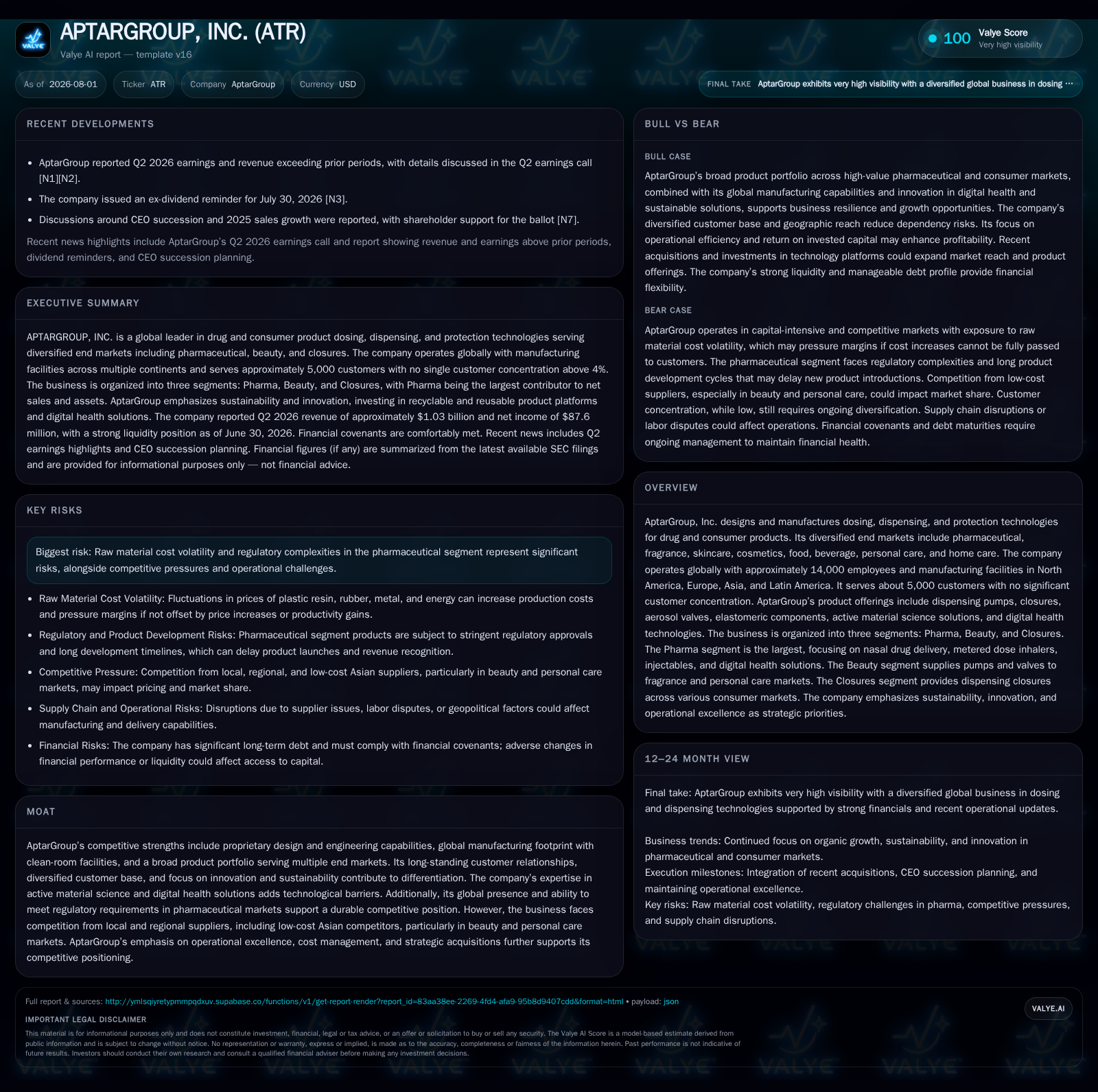
AptarGroup, Inc. reported solid operating performance in Q2 2026, supported by steady demand in its Pharma segment and innovation-driven Beauty and Closures segments. The company benefits from a diversified, global footprint with approximately 14,000 employees and nearly 5,000 customers worldwide, limiting customer-concentration risk. While raw material cost volatility and regulatory complexity remain key risks, ongoing investments in proprietary designs, active material science, and digital health technologies underpin differentiation. AptarGroup’s financial position remains sound, with manageable leverage and liquidity cushioning near-term uncertainties.
Recent Operating Update
The July 30, 2026 earnings release reiterates solid operating momentum with particular strength in pharmaceutical dispensing solutions including nasal drug delivery systems and metered dose inhalers (MDIs) used dominantly for respiratory ailments such as asthma and COPD [S3], [N1]. Digital health solutions remain an expanding component aimed at enhancing patient adherence through connected devices enabling remote monitoring by care providers.
Business Model Analysis
AptarGroup operates as a leading upstream supplier of specialty industrial components focused on dosing, dispensing, and protection technology. It primarily sells dispensing pumps, closures (dispensing/non-dispensing caps), aerosol valves for pressurized containers, elastomeric components used in injectable packaging (stoppers, plungers), active materials science innovations targeting drug delivery enhancements, and integrated digital health devices that augment compliance and monitoring [S1].
Revenue stems from direct product sales to approximately 5,000 diversified customers across pharmaceutical manufacturers (largest segment), beauty brands, food & beverage companies, personal care providers, and home care firms. Product pricing is influenced by complexity (e.g., nasal spray systems vs standard lotion pumps), customization levels requiring proprietary design work often done collaboratively early in product development cycles, volume contracted under long-term supply agreements or annualized purchase orders subject to repricing clauses tied to raw materials or regulatory changes.
Profitability drivers depend heavily on product mix—pharmaceutical components carry higher margins due to strict quality/regulatory barriers versus more commoditized parts in beauty closures where price competition from Asian suppliers is more intense. Manufacturing efficiency including clean-room certified facilities worldwide ensures compliance for pharma clients while diversified geography limits single-region disruption risk.
The company's innovation emphasis addresses customer demand for differentiated ease-of-use features (e.g., finger-actuated dispensing), dosage accuracy critical in pharmaceuticals (MDIs), sustainability through recyclable or reusable components especially for beauty/personal care markets, and incorporation of digital layers for patient engagement – all catering to strong end-user trends favoring convenience and safety concurrently [S1], [N1].
Industry Structure & Competitive Position
Operating in specialty industrial components tailored for drug delivery and consumer packaged goods places AptarGroup among a select set of technologically sophisticated peers like West Pharmaceutical Services and Gerresheimer AG in pharmaceuticals; Berry Global Group competes more on consumer packaging breadth rather than dispensing tech sophistication.
Barriers to entry arise from patented proprietary designs, specialized materials science expertise necessary for active pharmaceutical ingredient compatibility (e.g., elastomeric compounds meeting FDA regulations), clean-room production capabilities certified internationally for primary packaging, and extensive regulatory approvals particularly in pharma where non-compliance risks costly recalls or denial of market access.
Despite these advantages mitigating many low-cost regional competitors' attacks in high-tech pharma segments, beauty and personal care arenas face increased competition from lower-cost Asian suppliers offering standard dispensing pumps or closures with slimmer margins. Aptar employs operational excellence programs alongside ongoing R&D spending to protect these franchises while seeking incremental innovation to maintain differentiation.
Global supply chain challenges including geopolitical tensions affecting trade flows between Americas/Europe/Asia add complexity but Aptar’s multi-continent manufacturing footprint provides buffer capacity flexibility.
Growth Drivers
Key levers include rising pharmaceutical demand driven by biologics growth requiring sophisticated dosing technologies such as MDIs remodelling respiratory disease treatment landscapes. Additionally, patients and regulators increasingly demand integrated digital therapeutic monitoring tools which Aptar supplies through connected devices enhancing adherence – a market structural growth driver beyond cyclical industry rhythms.
Another driver is the accelerating push for sustainability across all end markets. Aptar’s investment in recyclable materials for pharma packaging anticipates regulations tightening on waste reduction while consumer-facing beauty/personal care brands seek reusable pump dispensers aligning with circular economy principles.
Emerging markets expansion presents further opportunity given rising healthcare expenditure coupled with localized manufacturing needs requiring tailored dispensing solutions meeting national regulatory regimes.
Finally, innovation in active material science addressing drug stability or enhanced delivery efficacy opens new platform avenues potentially unlocking adjacent product lines.
Risks & Watchpoints
Raw material cost inflation remains a significant margin pressure source given sensitivity to polymer resin prices which are partly driven by oil derivatives subject to macroeconomic fluctuations. Increased tariffs or sanctions related to geopolitical conflicts could restrict supply sources elevating input costs further.
Regulatory complexity especially within the Pharma segment poses timeline risks; elongated approval cycles may delay launch cadence of new products affecting expected revenue streams.
Litigation risk under antitrust scrutiny around component supply ties into competition law investigations notably referencing recent patent infringement suits in Europe and U.S.-based antitrust complaints stemming from component sourcing dynamics; outcomes could impose additional operating constraints or costs [S12], [S23].
Competitive pressure persists most acutely in Beauty/Personal Care segments where lower-cost manufacturers compete aggressively on price possibly eroding market share if innovation does not keep pace.
Supply chain disruptions due to pandemic residual effects or energy cost spikes threaten production continuity; Aptar’s layered manufacturing sites partly mitigate but do not eliminate this risk entirely.
What to Watch Next
Short-term milestones include tracking new product introduction rates especially within Pharma relating to digital health integrations as indicators of future revenue mix improvements. The progress of sustainability platform rollouts driving recyclable/eco-friendly dispensing solutions will be crucial to gauge customer acceptance amid increasing regulatory scrutiny globally.
Monitoring operating margin trends linked to raw material cost pass-through effectiveness will clarify margin durability under commodity price volatility.
Attention should also be paid to any development in ongoing litigation cases that may impact operational flexibility or expose unexpected liabilities.
The company’s current ratio stood at approximately 1.61, indicating sufficient short-term asset coverage over liabilities enhancing operational liquidity management capability [F1]
The company’s ability to innovate amid supply chain challenges while maintaining broad customer diversification shapes its risk-return profile without guaranteeing any specific outcome or investment action.
Disclaimer: This is research-only, informational analysis and not investment advice. It may include AI-generated interpretation and general industry context. Always verify important details using primary sources.

Comments