
Best Buy’s Omnichannel and Retail Media Strategies Strengthen Market Position
Best Buy leverages its expansive store network, vendor partnerships, and growing retail media platform to navigate competitive pressures and evolving consumer preferences in technology retail.
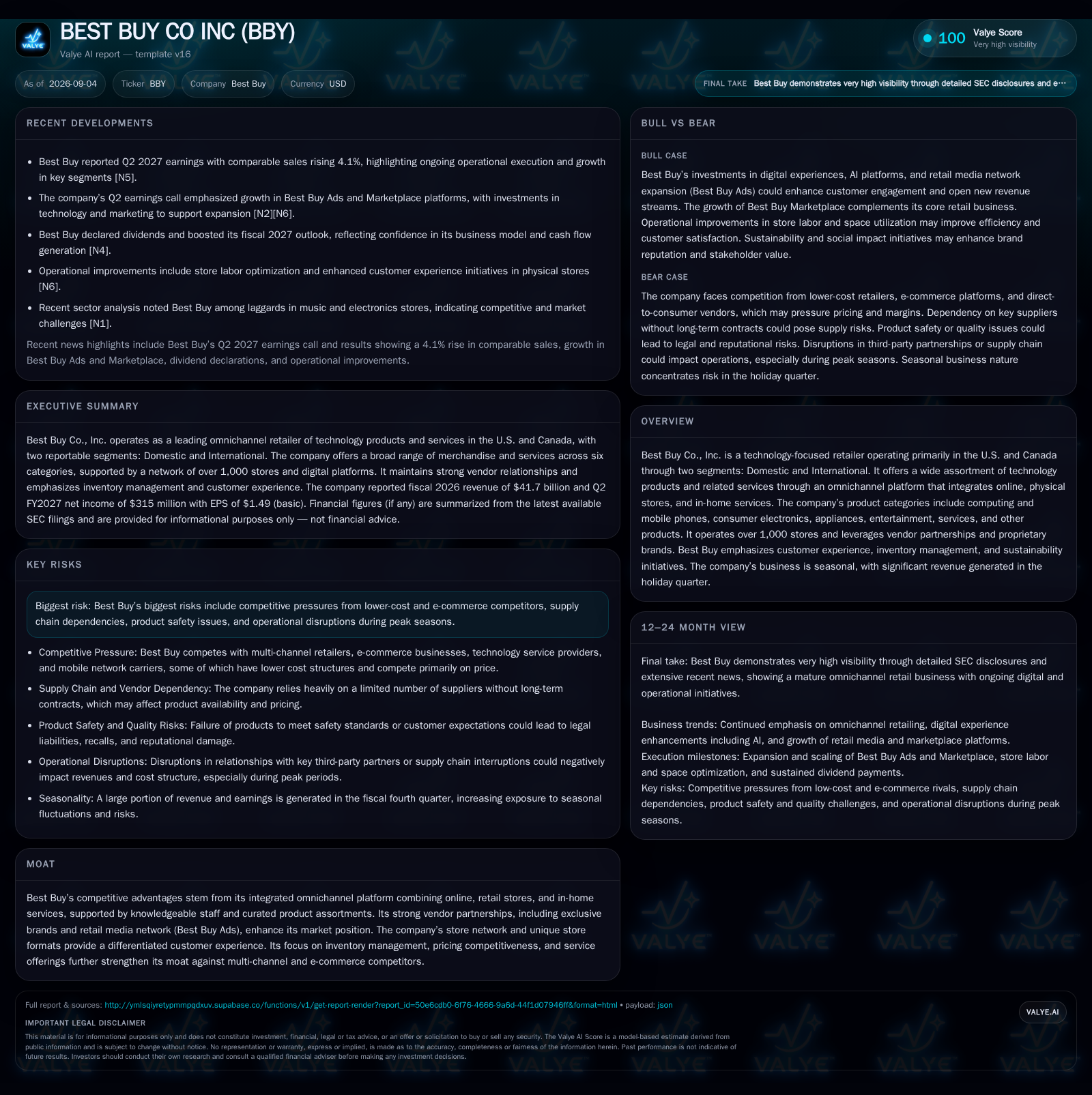
Best Buy’s 2026 performance reflects a solid omnichannel strategy combining physical stores and digital platforms, with growth driven by retail media and marketplace expansions. The company’s economics hinge on balancing inventory and vendor relationships against seasonal demand while managing competitive threats from e-commerce and value retailers. Future outcomes depend on scaling digital initiatives, sustaining vendor exclusivity, and operational efficiency improvements amid supply chain and market risks.
Best Buy Co., Inc. stands out as a mature omnichannel retailer focused on technology products and services across the U.S. and Canada. As of fiscal 2026, the company operated over 1,000 stores integrated with digital and in-home services, generating $41.7 billion in revenue. Recent quarterly results show 4.1% comparable sales growth, driven by expansion in its retail media network and marketplace platforms. Yet, the company faces complex dynamics including a concentrated supplier base, pronounced seasonality, and intense competitive pressures from e-commerce and discount retailers. How Best Buy balances digital innovation, vendor relationships, and operational efficiencies will shape its medium-term trajectory in a rapidly evolving retail landscape.
Best Buy’s Recent Growth Highlights and Operational Initiatives
Best Buy’s Q2 fiscal 2027 results revealed a 4.1% increase in comparable store sales, underpinned by strong performance in its Best Buy Ads retail media platform and Marketplace business. Management highlighted ongoing investments in technology and marketing to fuel these growth areas, signaling a strategic emphasis on digital revenue streams beyond traditional retail sales [N5][N2][N6].
Operationally, the company is optimizing store labor and space utilization to improve efficiency and customer experience, which is critical given its large store footprint exceeding 1,000 locations. Additionally, Best Buy reaffirmed its dividend policy and raised fiscal 2027 guidance, reflecting confidence in its cash flow generation and business model resilience amidst competitive headwinds [N4][N6].
Omnichannel Retailing and Service Integration Drive Revenue and Cost Dynamics
Best Buy generates revenue through six core categories including Computing and Mobile Phones, Consumer Electronics, Appliances, Entertainment, Services, and Other products. Its omnichannel model allows customers to shop in stores, online, or via in-home services, leveraging an integrated platform that enhances customer convenience and service differentiation. Pricing is influenced by vendor agreements and competitive positioning, while volume and mix effects vary seasonally, especially with holiday-quarter revenue concentration [S1].
Operational economics balance fixed costs such as store labor and logistics infrastructure against variable costs including inventory procurement and marketing. The company’s large physical footprint entails significant fixed operating expenses, but also creates operating leverage as comparable sales grow. Capital needs focus on technology investments for digital platforms and supply chain enhancements. Inventory management efficacy is crucial given reliance on top suppliers accounting for ~80% of merchandise spend, exposing the company to supply chain and pricing risks tied to vendor terms and market demand fluctuations.
Strong Vendor Ties and Service Ecosystem Bolster Defenses Against E-Commerce Rivals
Best Buy’s competitive advantages stem from its unique integration of physical stores, digital channels, and in-home services delivered by knowledgeable staff. This omnichannel ecosystem creates switching frictions by combining product assortment, expert support (Geek Squad), and convenience options like curbside pickup and ship-from-store. Vendor partnerships with leading brands such as Apple and Samsung, which represent a majority of its merchandise spend, enable curated assortments and potential exclusives that enhance customer value [S1].
However, the company faces intense competition from online pure-plays, discount retailers, and direct-to-consumer channels. Lower-cost competitors can pressure pricing and margins, while e-commerce platforms offer scale and convenience that challenge physical store relevance. Best Buy’s retail media network (Best Buy Ads) and marketplace platform provide differentiation by monetizing vendor relationships through advertising and third-party sales, potentially increasing customer engagement and non-transactional revenue streams, but also exposing the company to risks if vendor support weakens.
Digital Platform Expansion Catalyzes Revenue Diversification and Margin Expansion
In a favorable scenario, Best Buy successfully scales its retail media network and marketplace, leveraging vendor data and customer insights to drive advertising revenues and marketplace commissions. This progression could enhance average revenue per customer and improve margins by shifting revenue mix towards higher-margin digital services. Confirmation would come from accelerating growth rates in Best Buy Ads and Marketplace revenue, improvements in customer digital engagement metrics, and rising contribution margins from these segments [N2][N6].
Additionally, operational improvements in store labor efficiency and space utilization could unlock fixed cost leverage, further boosting profitability. Strategic vendor partnerships may deepen, enabling exclusive product launches or bundled service offerings that reinforce Best Buy’s differentiated value proposition. A falsification test would be stagnation or decline in digital revenue growth, persistent margin pressure from discounting, or failure to convert vendor interest into effective retail media monetization.
Omnichannel Execution Supports Growth Despite Competitive Challenges
The base case envisions Best Buy maintaining its core omnichannel retail strength with steady growth in comparable sales and gradual expansion of retail media and marketplace contributions. The company continues to invest prudently in technology and marketing, balancing operating costs with moderate efficiency gains from store optimization. Vendor partnerships remain stable but without significant expansion of exclusives or new digital monetization breakthroughs [N5][N6].
Seasonality and supplier concentration risks persist but are managed through inventory controls and vendor agreements. Competitive pressures from e-commerce and discount retailers limit pricing power, keeping margins relatively flat. Confirmation of this scenario would include consistent but unspectacular sales growth, slow but positive digital revenue contribution increases, and stable operating margins. Falsification would be a sudden margin contraction or a digital revenue breakthrough deviating from the moderate trajectory.
Intensified Competition and Supply Disruptions Pressure Margins and Growth
In a downside scenario, Best Buy encounters intensified price competition from e-commerce giants and value retailers, eroding selling prices and compressing margins. This pressure could be exacerbated by supply chain disruptions or vendor contract challenges, reducing product availability or increasing costs. The company’s reliance on a concentrated supplier base without long-term contracts could magnify these risks, especially during peak holiday seasons [S1].
Operational disruptions such as labor inefficiencies or failure to execute store optimization could further impair profitability. Additionally, if digital initiatives like Best Buy Ads fail to gain traction, the company might lose a critical avenue for margin expansion and revenue diversification. Confirming signs would include declining comparable sales, margin compression, inventory shortages, or stagnant digital platform growth. Conversely, strong operational discipline or swift vendor renegotiations would help falsify this scenario.
Metrics to Track Best Buy’s Digital Growth and Operational Resilience
Key metrics to monitor include revenue growth rates and margin contribution from Best Buy Ads and Marketplace platforms, which would reveal the success of digital diversification efforts. Customer engagement indicators such as app usage, digital conversion rates in major categories, and membership growth in My Best Buy programs would also help assess adoption of new digital experiences [N2][N6].
Operational KPIs such as comparable store sales trends, inventory turnover, and labor cost as a percentage of sales would provide insight into store efficiency and inventory management. Supplier concentration risk could be tracked by changes in the share of merchandise sourced from top suppliers and any disclosed vendor contract terms. Monitoring holiday quarter performance is crucial given the seasonality and concentration of earnings. Finally, tracking dividend sustainability and cash flow metrics would inform potential financial flexibility amid competitive and operational pressures.
Disclaimer: This is research-only, informational analysis and not investment advice. It may include AI-generated interpretation and general industry context. Always verify important details using primary sources.

Comments