
Butterfly Network: Embedded Ultrasound Ambitions, Supply Chain Tensions, and the Road to Sustainable Growth
Butterfly Network’s proprietary Ultrasound-on-Chip™ technology and Butterfly Embedded™ licensing program position it at the intersection of hardware innovation and platform economics. However, concentrated revenue streams, ongoing net losses, and reliance on a fragile supply chain highlight the tension between transformative potential and persistent operational risks.
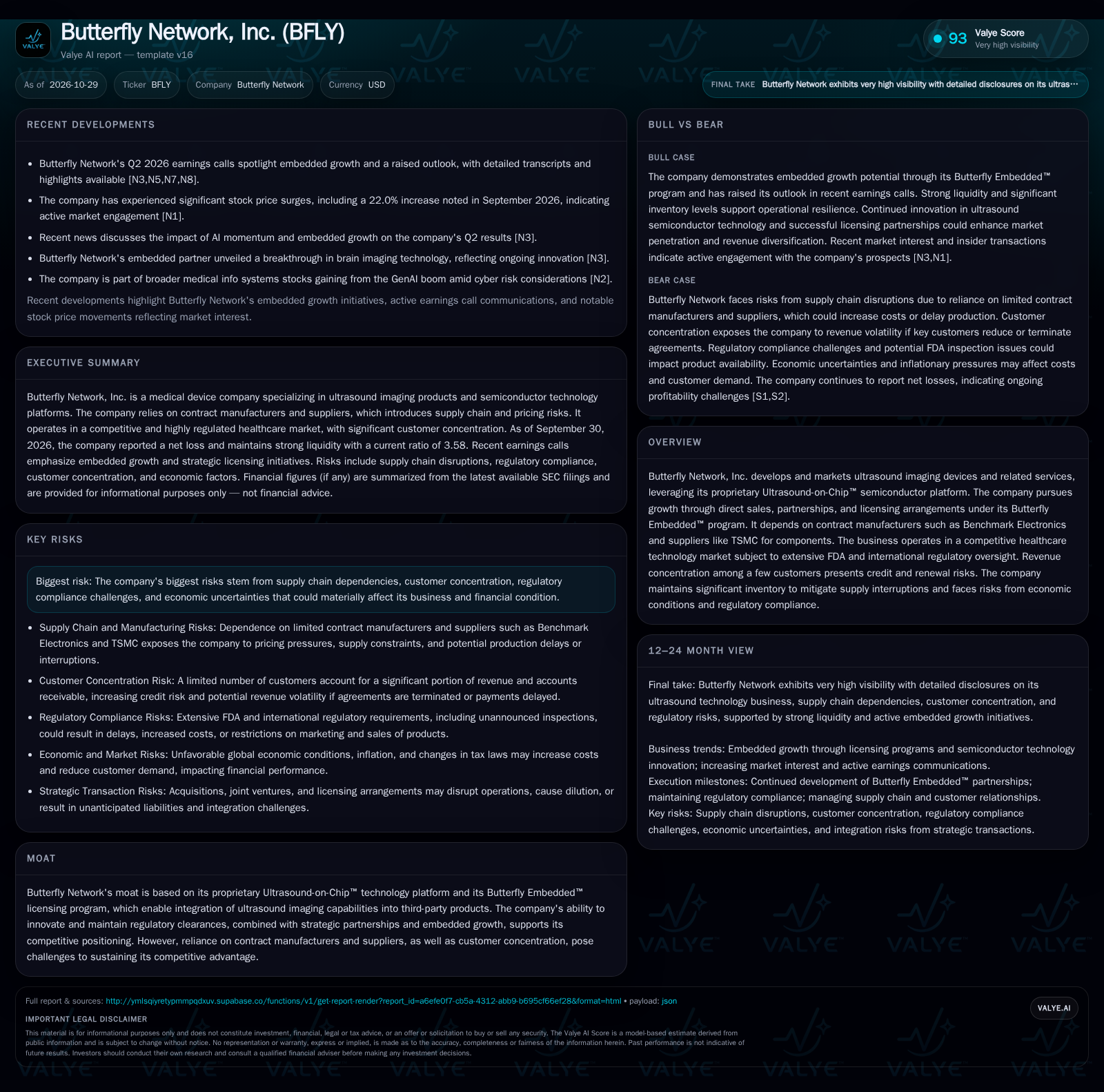
Butterfly Network, Inc. leverages its Ultrasound-on-Chip™ platform and Butterfly Embedded™ licensing to drive growth in medical imaging, supported by reported liquidity position and recent embedded innovation milestones. However, significant customer concentration, supply chain dependencies, and ongoing net losses underscore both opportunity and risk as the company navigates a competitive and regulated healthcare technology landscape. [S1] [S2] [N3] [N1]
Butterfly Network, Inc. is attempting to reshape the ultrasound imaging market with its Ultrasound-on-Chip™ platform and Butterfly Embedded™ licensing program, blending hardware innovation with platform economics. For Butterfly Network to realize its vision of democratizing medical imaging, it must turn embedded technology momentum into diversified, recurring revenues—while navigating regulatory, supply chain, and competitive threats.
Recent Financials, Customer Concentration, and Embedded Growth Initiatives
As of September 30, 2026, Butterfly Network reported a net loss of $12.8 million for the first nine months of the year, translating to a basic and diluted EPS of -$0.05 per share. The company’s cash and cash equivalents stood at $122.3 million, with a current ratio of 3.58, suggesting strong near-term liquidity. However, revenue remains highly concentrated: two customers accounted for more than 10% of both revenue and accounts receivable. This creates significant credit and renewal risk, as a change in purchasing behavior from these customers could materially impact results. Meanwhile, Q2 2026 earnings calls and news coverage highlighted 'embedded growth'—notably through the Butterfly Embedded™ licensing program and a breakthrough in brain imaging technology—pointing to ongoing product innovation and partnership momentum. [S2] [N3] [N1]
How Butterfly Network’s Business Model Could Scale—And Where It May Hit Friction
Butterfly Network’s core economics hinge on a mix of device sales, software and services, and—most importantly for future scalability—licensing revenues from the Butterfly Embedded™ program. Traditional hardware sales in medical imaging are capital-intensive and can face margin pressure due to competition and procurement cycles. The platform’s Ultrasound-on-Chip™ technology theoretically allows for cost-efficient manufacturing and broader integration, but the company’s reliance on contract manufacturers and advanced suppliers like TSMC means component costs and supply reliability are largely out of its direct control. This raises the risk of margin compression if input costs rise or if supply disruptions occur.
The key to improved operating leverage lies in expanding high-margin, recurring revenue streams—namely, software subscriptions and licensing fees from embedding the company’s technology into third-party platforms. If Butterfly Network can achieve a critical mass of licensing partners, fixed R&D and regulatory costs could be amortized over a larger revenue base, improving profitability. However, given current customer concentration and ongoing net losses, the company remains dependent on continued innovation and successful commercialization to achieve sustainable positive cash flow.
Proprietary Technology Versus an Evolving Medical Imaging Landscape
Butterfly Network’s moat is built on the proprietary Ultrasound-on-Chip™ platform and the potential for its Butterfly Embedded™ program to become a standard in portable and integrated ultrasound imaging. This technology enables miniaturization and integration into point-of-care devices, which could disrupt legacy cart-based ultrasound systems and expand the addressable market to new care settings and geographies.
However, the medical imaging sector is intensely competitive, with established players in hardware, software, and cloud-based diagnostics. New entrants and incumbent device manufacturers alike are investing in AI-driven imaging, enhanced connectivity, and handheld form factors. Butterfly’s dependence on a narrow supplier base and contract manufacturers leaves it potentially vulnerable to competitors with greater supply chain control or deeper integration with healthcare systems. Furthermore, regulatory barriers, procurement friction, and hospital inertia can slow adoption, even for technologically superior products.
Embedded Licensing Unlocks Recurring Revenue and Accelerates Adoption
In a favorable scenario, Butterfly Network successfully scales its Butterfly Embedded™ licensing program, signing multiple large OEM and platform partners who integrate Ultrasound-on-Chip™ into a wide array of devices—ranging from specialized medical equipment to consumer-adjacent health monitors. This would drive a shift from episodic hardware sales to recurring, high-margin licensing and software revenues, improving gross margin and reducing the company’s reliance on a handful of large direct customers.
Confirmation of this scenario would include public announcements of new, high-profile embedded partnerships, significant growth in licensing and software revenue as a share of total revenue, and evidence of durable multi-year agreements. If disclosed, a rising proportion of recurring revenue and a broadening customer base would further validate the embedded growth thesis. Sustained innovation—such as the recent breakthrough in brain imaging—would support the company’s ability to command premium pricing and maintain technological differentiation. [N3]
Incremental Progress Amid Persistent Concentration and Profitability Headwinds
The most plausible medium-term outcome is that Butterfly Network continues to demonstrate incremental embedded growth, evidenced by periodic new licensing and co-development deals, but remains reliant on a small number of major customers for the bulk of its revenue. The company’s operating losses persist as fixed costs for R&D, regulatory compliance, and go-to-market remain high relative to the revenue base.
This scenario would be confirmed by ongoing, but lumpy, partnership announcements and revenue growth that does not yet translate into sustained profitability or a materially diversified customer mix. If disclosed, stagnant or modestly improving gross margins and continued customer concentration would suggest that Butterfly is making progress, but faces a long road to scalable, recurring economics.
Supply Chain Disruption or Customer Loss Triggers Financial Stress
A negative scenario would be triggered if Butterfly Network experiences a significant supply chain disruption—such as a production halt at a key contract manufacturer or component shortage from TSMC—or if it loses a major customer that accounts for more than 10% of revenue. Given the company’s current net losses and concentrated revenue base, such an event could lead to a sharp decline in sales, inventory write-downs, and a rapid burn of cash reserves.
Evidence supporting this downside would include disclosures of supply interruptions, order deferrals, or lost contracts; a spike in inventory or receivables write-offs; or a sudden drop in reported revenue. Regulatory setbacks, such as adverse FDA findings or delayed product clearances, could exacerbate the impact by restricting market access or increasing compliance costs.
Milestones and Metrics That Will Shape Butterfly Network’s Next Chapter
The share of revenue derived from licensing and software versus traditional hardware sales—if disclosed—would help assess the transition to a scalable platform business.
Announcements of new Butterfly Embedded™ partnerships, particularly with large OEMs or platform providers, would test whether the company can broaden its customer base and reduce concentration risk.
Gross margin trends, especially as the mix shifts between hardware and software/licensing, would indicate progress toward improved operating leverage.
Customer concentration metrics—such as the percentage of revenue or accounts receivable from the top two customers—would reveal whether diversification is taking hold.
Inventory levels and turnover rates would help evaluate how effectively the company is managing supply chain risk and demand forecasting.
Updates on regulatory approvals, inspections, or compliance issues would signal potential headwinds or catalysts in market access.
Evidence of recurring revenue growth, such as multi-year licensing contracts or subscription-based software uptake, would support the embedded growth thesis.
Cash burn rates and changes in net loss trajectory will remain important until the company demonstrates a clear path to profitability.
Disclaimer: This is research-only, informational analysis and not investment advice. It may include AI-generated interpretation and general industry context. Always verify important details using primary sources.

Comments