
Beyond Meat’s Strategic Repositioning Tests Growth Amid Industry Contraction and Cost Pressures
Beyond Meat pursues diversification beyond plant-based meat into new protein adjacencies while managing margin recovery and operational challenges.
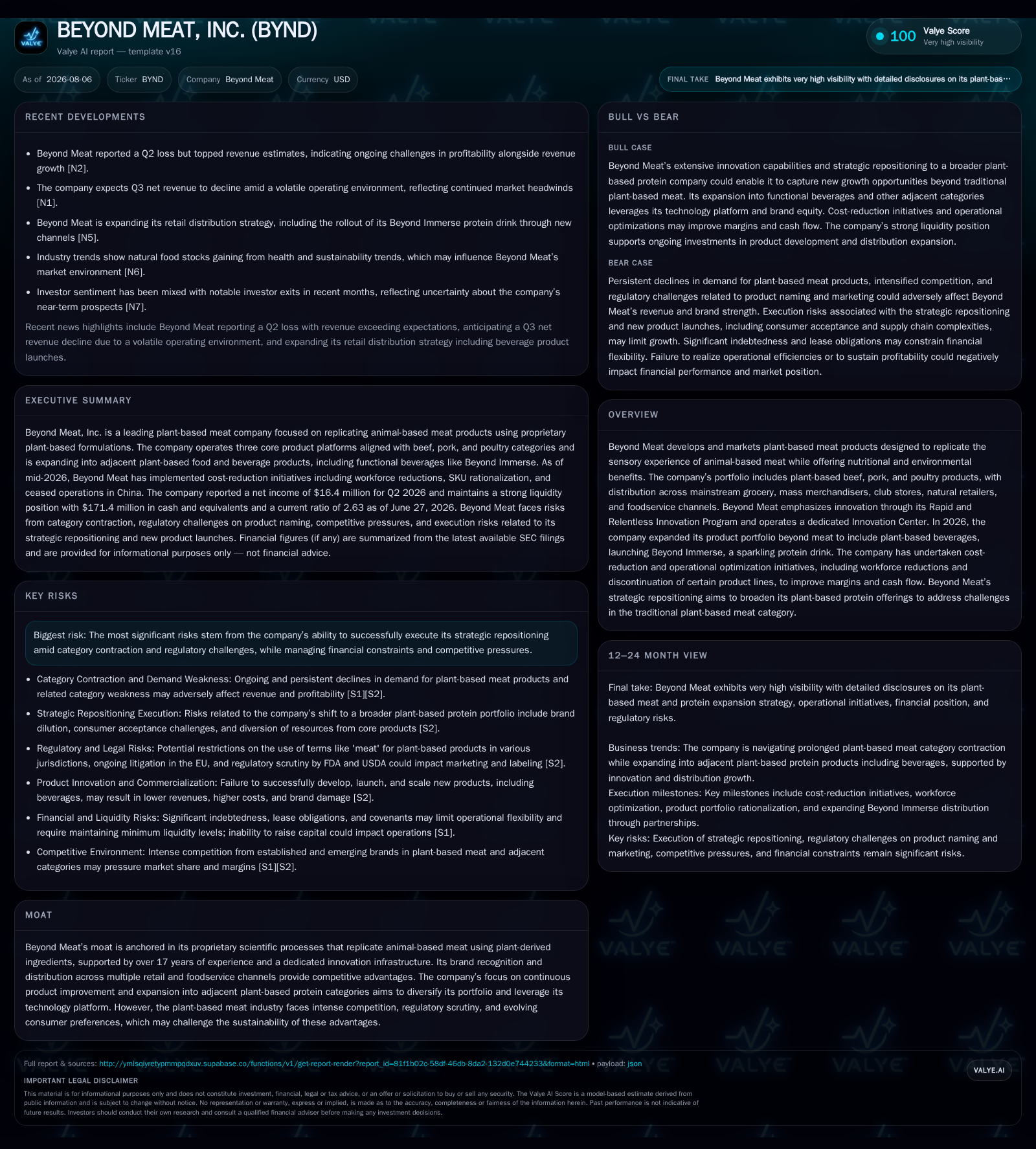
In Q2 2026, Beyond Meat reported revenue surpassing estimates but sustained losses amid ongoing category contraction in plant-based meat. The company is executing a strategic repositioning toward a broader plant-based protein portfolio beyond traditional meat alternatives, exemplified by launching Beyond Immerse, a sparkling plant-based protein beverage. This pivot responds to persistent demand weakness in core categories but introduces execution risks including brand dilution, consumer adoption uncertainty, and operational complexity. Concurrent cost-reduction and capacity optimization efforts aim to stabilize margins and cash flow. Regulatory pressures on product labeling and ingredient sourcing, alongside intense competition from both plant-based and incumbent meat producers, add layers of risk. Monitoring distribution expansion and product innovation rates will be key indicators of repositioning success.
Recent Operating Update
Beyond Meat's latest quarterly filing for Q2 2026 reveals revenue exceeding analyst estimates despite the ongoing volatile environment impacting demand for plant-based meat alternatives [S2][N2]. However, the company continues to report operating losses driven by persistent category contraction. The second quarter marks an inflection point wherein Beyond Meat formally announced its strategic repositioning away from being solely a plant-based meat producer toward a broader “Beyond The Plant Protein Company” identity. This shift aims to stabilize growth by entering adjacent plant-based protein categories beyond traditional beef-, pork-, and poultry-aligned products that have seen multi-year declines in consumer demand [S2][S1].
This repositioning was anchored by the launch of Beyond Immerse—a sparkling plant-based protein beverage—illustrating the company's ambition to capture new consumption occasions and diversify revenue streams beyond conventional meat alternatives [S2]. While this diversification leverages their proprietary knowledge in plant proteins developed over nearly two decades, it requires significant investment in R&D, branding, marketing, and channel development with uncertain short-term returns
Concurrently, Beyond Meat continues cost-reduction efforts initiated since 2022 targeting margin recovery through lean value streams in its core platforms. These include workforce reductions, SKU rationalization leading to the discontinuation of certain less profitable product lines, facility optimizations including ceasing operations in China indefinitely, and supply chain fine-tuning aimed at lowering COGS per unit [S1][N9]. These moves are critical given that gross margin expansion is necessary for sustainable profitability during negative cash flow trends.
Business Model Analysis
Beyond Meat operates at the intersection of food technology innovation and consumer packaged goods marketing within the highly dynamic plant-based foods industry. Its primary revenue derives from developing scientifically formulated plant-based proteins designed to emulate animal-derived meats' taste, texture, and sensory characteristics using plant-sourced amino acids, lipids, carbohydrates, trace minerals, and water [S1]. The company monetizes primarily through sales across multiple channels: traditional grocery retailers (mainstream grocery stores, mass merchandisers), club stores (e.g., Costco), natural food retailers (Whole Foods), extensive foodservice distribution networks (including restaurants and schools), and direct-to-consumer via limited-time exclusive releases through their Beyond Test Kitchen platform launched late 2025 [S1].
The monetization model depends heavily on maintaining strong consumer adoption—driven by taste fidelity improvements—and broad retailer/foodservice penetration. Product pricing reflects premium positioning compared with animal-protein counterparts but faces pressure from both incumbent meats’ price competitiveness and other emerging plant-based entrants offering lower-cost or differentiated products.
Innovation activities are central to Beyond Meat’s moat; their Rapid and Relentless Innovation Program focuses on continuous formulation enhancements across beef-, pork-, poultry-aligned proteins while simplifying ingredient lists to appeal to clean-label trends. Expansion into adjacent categories like functional beverages (Beyond Immerse) aims to diversify the portfolio leveraging their protein expertise while capturing growing consumer interest in health-oriented snack/drink formats [S1][S2].
Margins are sensitive to raw material sourcing costs for specialized plant proteins—often commodity-driven yet subject to supply chain volatility—and manufacturing efficiencies at scale. Capacity utilization also impacts unit economics since overheads are relatively fixed once production lines are established. The company’s decision to rationalize SKUs signals a move toward optimizing inventory turnover and minimizing obsolescence risks amid a fickle consumer base.
Industry Structure and Competitive Position
The plant-based foods sector is fragmented yet quickly consolidating as major traditional meat producers like Tyson Foods expand sustainable protein portfolios while pure-play innovators such as Impossible Foods aggressively scale proprietary technology platforms. Beyond Meat occupies a leadership position in terms of brand recognition within plant-based meat alternatives but faces stiff competition on multiple fronts: from incumbent animal protein producers expanding into blended or hybrid products; other start-ups innovating on novel ingredients or sensory replication; and adjacent category competitors like Oatly commanding functional beverage segments.
Regulatory constraints constitute an emerging competitive dimension where naming conventions—particularly around using terms like "meat," "beef," or "chicken"—are increasingly contested by authorities globally. For example, regulatory bodies in Switzerland have prohibited use of certain traditional meat terms for plant-based products deemed misleading under food law [S10], with similar developments occurring in other jurisdictions impacting labeling freedom—hence consumer messaging clarity—and marketing costs [S22][S24]. These factors require Beyond Meat to navigate complex compliance demands while sustaining compelling brand positioning.
Distribution breadth across retail formats is vital given shifting shopping patterns favoring omnichannel availability including e-commerce grocery fulfillment. The company’s presence across mainstream grocery chains complemented by club stores offers broad reach but requires tailored trade promotion strategies balancing private-label competitor incursions typical in mass merchandiser environments.
Growth Drivers
Key growth levers include rising global consumer awareness around sustainability issues related to animal agriculture coupled with health-conscious dietary shifts driving interest in plant proteins. Innovation enhancing taste parity with animal meats can convert trial consumers into repeat buyers—a critical metric given historically low repeat purchase rates hindered category adoption.
Expansion into adjacent plant-based protein categories like functional beverages taps growth markets fueled by demand for convenient nutrition delivery formats supporting active lifestyles. Early stage product launches like Beyond Immerse target this expanding functional drink market segment while leveraging existing supply chain partners discussed during recent investor communications [N9][S2].
Increased penetration within foodservice channels opens large-volume distribution opportunities but requires different logistical capabilities versus grocery retail. Also important is geographic expansion into markets where regulatory environments support or incentivize sustainable protein alternatives or where conventional animal proteins face supply constraints.
Further cost structure improvements remain pivotal: economies of scale combined with greater ingredient sourcing flexibility may allow competitive pricing against both animal- and other plant-protein options thereby stimulating volume growth while improving gross margins.
Risks and Watchpoints
Among the foremost risks is execution uncertainty of the strategic repositioning beyond core plant-based meats. Diversification introduces complexities including varied supply chain demands across different categories (meat substitutes vs beverages), increased R&D expense burden without assured commercial success for newly launched products [S2][S24]. Brand dilution or consumer confusion may ensue if expanded offerings do not meet taste expectations or align clearly under the Beyond Meat brand ethos.
Demand volatility remains acute as the core category has seen persistent contraction due to economic headwinds including inflationary pressures reducing premium-priced discretionary spending alongside evolving consumer preferences possibly shifting toward alternative protein sources such as cultured meats or blends.
Regulatory challenges pose risks regarding labeling restrictions potentially limiting marketing claims or shelf designation impeding visibility relative to animal proteins. Non-compliance risks could lead to recalls or legal actions adding costs or harming reputation.
Financially, leverage levels applying stress on liquidity expose vulnerability if revenue momentum falters further requiring capital raises which may dilute shareholders or impose restrictive covenants limiting operational flexibility [F1]. Inventory management is an ongoing watchpoint given historical excess stock provisions highlighting forecasting difficulties.
What To Watch Next
Critical near-term markers include incremental traction for newly introduced product adjacencies such as Beyond Immerse driven by innovation pipeline effectiveness measuring SKU launches contributing meaningful revenue share without eroding margins.
Expansion metrics in retail distribution breadth especially qualifying new national grocery chains or club store listings will indicate progress against channel penetration targets. Foodservice growth is another signal watching order volume increases from restaurant partnerships.
Gross margin trajectory reflecting success from cost-reduction initiatives combined with pricing power retention amid competitive pressures will serve as bellwethers regarding operational leverage delivered through manufacturing optimization.
Monitoring external regulatory developments affecting permissible product descriptors or nutrition labeling requirements across key markets will forecast potential compliance cost impacts.
Finally, financial health indicators such as quarter-end cash balances relative to debt maturing volumes alongside covenant compliance updates will indicate balance sheet resilience important for sustaining strategic plays over time.
Financial Profile Discussion
As of June 27, 2026 quarter-end [...] Beyond Meat's liquidity position showed cash & equivalents totaling $171 million versus total debt approximating $324 million resulting in net debt around $152 million with a healthy current ratio of 2.63 reflecting conservative short-term liability coverage [F1]. Such liquidity provides some buffer amid ongoing investment requirements linked to strategic repositioning alongside operational runway support.
However significant leverage stemming partially from prior debt restructurings imposes interest burden constraints that press management focus toward gross margin recovery complemented by operating expense reductions targeting positive EBITDA conversion probabilities [S1]. Recent equity issuances associated with debt exchanges have diluted existing holders which may weigh on valuation sentiment though preserve near-term solvency.
Free cash flow improvement remains contingent on steady top-line stabilization combined with disciplined capital expenditure spending aligned with innovation center priorities rather than capacity expansions given market contraction headwinds currently faced [S1][N9]. Close scrutiny of working capital management specifically inventory control will continue as excess inventory markdowns disclosed previously underscore historical challenges forecasting rapidly evolving demand patterns
Overall financial stability is balanced between necessary capital deployments fueling diversification ambitions against tight operational leverage demanding rigorous execution discipline.
This analysis is based solely on publicly available SEC filings up to August 2026 combined with recent company announcements without any investment advice offered herein. It incorporates general industry understanding regarding the evolving dynamics within the plant-based foods sector framing key operational metrics relevant for assessing Beyond Meat's trajectory amid competitive and regulatory challenges.
Disclaimer: This is research-only, informational analysis and not investment advice. It may include AI-generated interpretation and general industry context. Always verify important details using primary sources.

Comments