
Dole plc 2026: Portfolio Refocus, Global Disruption, and the Economics of Scale in Fresh Produce
Dole’s exit from Fresh Vegetables, its diversified global footprint, and recent earnings volatility highlight both operational resilience and persistent exposure to macro shocks. The company’s vertically integrated model and extensive logistics network offer structural advantages—but margin pressure and unpredictable supply dynamics remain central investment questions.
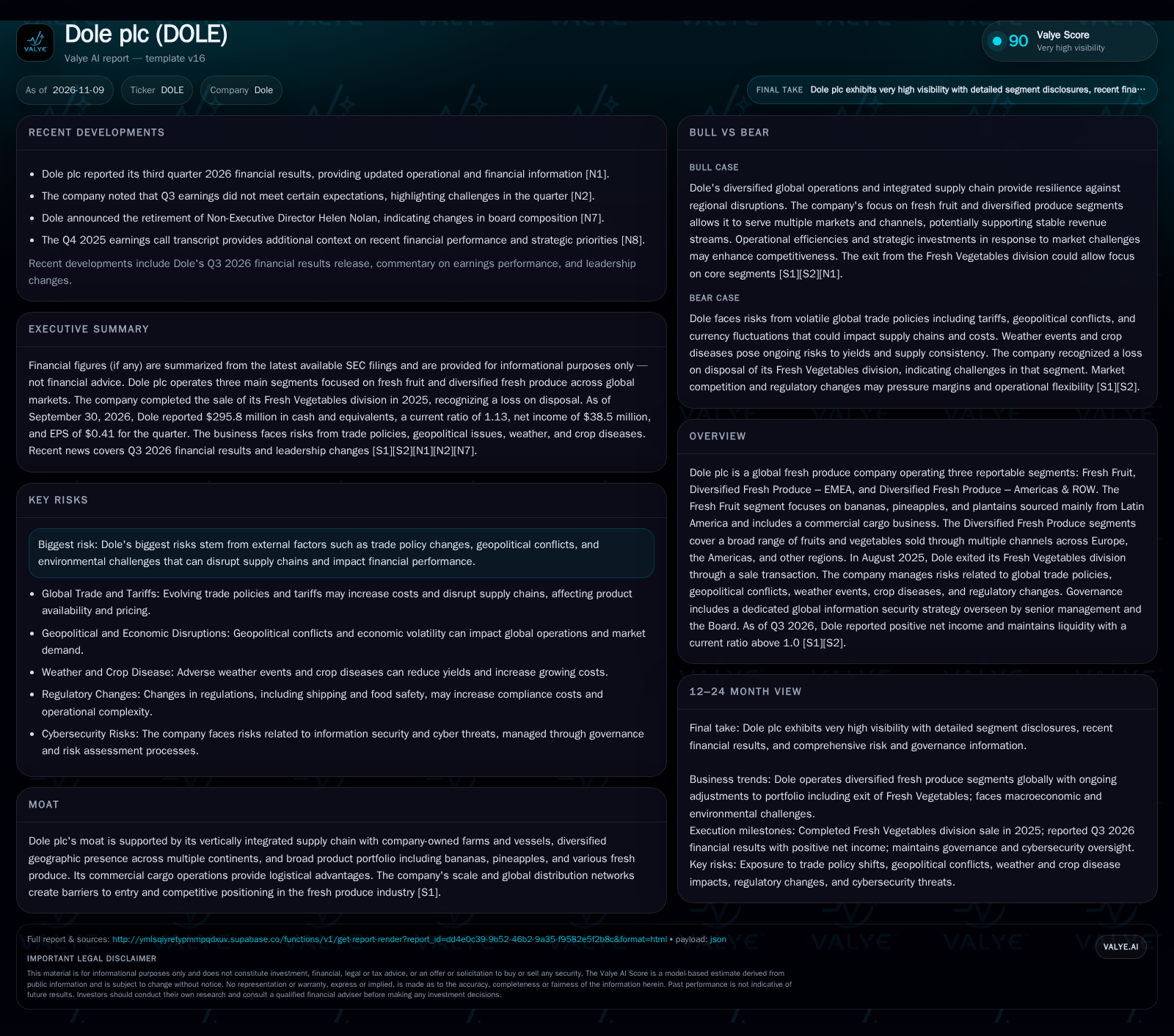
Dole’s 2026 performance reflects a sharpened focus on its core fresh fruit and diversified produce businesses following the sale of its Fresh Vegetables division. While the company benefits from scale and integration across global markets, Q3 results fell short of some expectations and underscore the ongoing tension between operational advantages and exposure to global trade, weather, and regulatory risks. The key challenge for Dole is whether its supply chain depth and broad channel reach can consistently offset shocks to input costs and demand volatility. [S1] [S2] [N1] [N2]
Dole plc’s 2026 story is shaped by both operational recalibration and external turbulence. The company’s divestiture of its Fresh Vegetables division signals a tighter strategic focus on its most defensible and scale-driven categories: bananas, pineapples, and an expanding range of diversified fruits. Despite robust logistics infrastructure and broad market access, Dole’s Q3 results highlight the persistent challenge of managing through global trade disruptions, weather volatility, and shifting regulatory environments. The crux for investors is whether Dole’s integrated model and channel breadth can consistently deliver resilient margins in a world of unpredictable shocks and rapidly changing costs. [S1] [S2] [N1] [N2]
Portfolio Streamlining and Macroeconomic Headwinds Define the Current Landscape
Dole’s business profile in late 2026 is notably more focused following the August 2025 exit from its Fresh Vegetables division, a move that resulted in a pre-tax loss of $14.7 million but allowed the company to reduce its revolving credit facility debt. This divestiture narrows Dole’s scope to three primary segments: Fresh Fruit, Diversified Fresh Produce – EMEA, and Diversified Fresh Produce – Americas & ROW, each with global reach across retail, wholesale, and food service channels. [S1]
For the quarter ended September 30, 2026, Dole reported cash and equivalents of $295.8 million, a current ratio of 1.13, and net income of $38.5 million, or $0.41 per share. However, Q3 earnings missed some market estimates, reflecting ongoing pressures from global trade policies, geopolitical tensions, fuel price volatility, and weather disruptions. [S2] [N2]
Recent board changes, including the retirement of Non-Executive Director Helen Nolan, indicate continued evolution in governance as Dole navigates a volatile macro environment. [N7]
How Dole’s Integrated Model Shapes Margin Dynamics and Capital Needs
Dole’s core economics rest on high-volume, low-margin distribution of fresh produce, with profitability hinging on operational scale, supply chain efficiency, and the ability to manage input cost volatility. The company’s vertical integration—owning farms, operating its own shipping fleet, and managing logistics—allows for greater control over sourcing and distribution costs, and can create negotiating leverage with both suppliers and buyers. [S1]
Pricing power is generally limited in commoditized produce markets, but Dole’s scale and ability to serve multiple channels (retail, wholesale, food service, e-commerce) across continents may permit selective premiumization or rapid channel-mix shifts in response to demand or supply shocks. The commercial cargo business provides an incremental revenue stream and can help offset logistics costs when vessel capacity is underutilized for produce transport.
The capital intensity of farming, shipping, and distribution means Dole requires ongoing investment in assets and working capital. The sale of the Fresh Vegetables division reduced debt, but the business remains exposed to swings in input costs (fuel, labor, fertilizer), crop yields, and currency fluctuations—factors that can compress margins rapidly if not offset by operational efficiencies or pricing adjustments.
Scale, Supply Chain Integration, and the Limits of Moat Durability
Dole’s competitive position is anchored in its global supply chain integration, geographic diversification, and ability to source from both company-owned and third-party farms. This creates structural barriers to entry for smaller or regional players, particularly in the high-volume banana and pineapple categories, where Dole is a leading global producer. [S1]
However, the fresh produce industry remains intensely competitive and price-sensitive. Dole competes with other multinational produce companies, large regional suppliers, and, in some segments, vertically integrated retailers. Substitutes are limited for staple fruits, but switching among branded suppliers is relatively easy for large retail customers, keeping pricing power in check.
Technology-driven supply chain improvements and the rise of direct-to-consumer or e-commerce produce models could erode some traditional distribution advantages. Dole’s ability to maintain a moat will likely depend on ongoing investment in logistics, digital traceability, and the expansion of differentiated or premium product lines.
If Dole’s Supply Chain Flexibility and Channel Diversification Absorb Global Shocks
A favorable scenario for Dole would see its integrated logistics and diversified sourcing enable the company to quickly adjust to regional disruptions—whether from trade barriers, weather events, or regulatory shifts—by redirecting supply and flexing channel mix. If Dole can maintain or even expand margins through operational efficiencies, pass-through pricing, or growth in higher-value product categories, the business could deliver more consistent earnings despite macro volatility.
Confirmation of this scenario would come from sustained or improving segment margins, evidence of successful price adjustments in response to input cost spikes, and continued growth in differentiated or premium produce lines. Accelerated adoption of digital supply chain tools or traceability systems that lower spoilage and logistics costs would further support the thesis.
Falsification would be signaled by persistent margin erosion despite stable or growing volumes, or by an inability to pass through costs in key markets, indicating that scale and integration are not sufficient to buffer against external shocks.
Volatility Remains, but Scale and Diversification Support Relative Stability
The most plausible outlook is that Dole continues to experience quarters of both challenge and resilience, with core fresh fruit and diversified produce businesses absorbing some, but not all, of the shocks from global trade, weather, and regulatory volatility. Segment performance will likely oscillate based on regional disruptions, currency swings, and commodity price shifts, but overall profitability remains positive, anchored by the company’s scale and operational flexibility. [S1] [S2] [N1]
In this scenario, Dole’s exit from Fresh Vegetables streamlines management focus and improves capital allocation, but does not fundamentally alter exposure to macro risks. Confirmation would come from ongoing positive net income, steady or improving free cash flow, and evidence that Dole can reallocate supply and adjust pricing to partially offset cost spikes. Falsification would be signaled by recurring earnings misses, rising debt, or a decline in core segment volumes.
When External Shocks Overwhelm Operational Advantages
A negative outcome could occur if a combination of adverse trade policies, geopolitical disruptions, severe weather, or crop disease leads to sustained input cost inflation and supply interruptions that Dole cannot offset through pricing or operational adjustments. If major retail customers respond to cost increases by shifting to alternative suppliers or private label, volume losses could compound margin pressure.
This scenario would be confirmed by a material decline in segment revenue, negative net income over multiple quarters, or the need for additional debt financing despite prior deleveraging from asset sales. Early warning signs could include rising working capital needs, increased spoilage or logistics costs, and loss of share in key markets.
Milestones That Will Test Dole’s Ability to Deliver Resilient Margins
Quarterly segment margin trends—especially in Fresh Fruit and Diversified Fresh Produce—would help determine if supply chain and pricing strategies are offsetting input cost volatility.
Volume changes by major product category (bananas, pineapples, avocados, berries, etc.), if disclosed, would indicate whether Dole is maintaining or growing share in its core markets.
Updates on operational efficiencies, digital supply chain investments, or logistics cost reductions would clarify the company’s ability to improve profitability in a volatile environment.
Evidence of pricing pass-through—such as average realized prices for core products—would show whether Dole can adjust to rising costs without losing volume.
Cash flow from operations and net debt trends will be important for monitoring capital discipline and the impact of macro shocks on liquidity.
Announcements of new customer contracts, channel partnerships, or premium product launches could signal incremental revenue and margin opportunities.
Material impacts from weather events, crop disease, or trade policy changes should be tracked for their effect on yield, costs, and supply chain reliability.
Board and management composition changes, especially in risk oversight or supply chain leadership, may influence strategic direction and operational resilience.
Disclaimer: This is research-only, informational analysis and not investment advice. It may include AI-generated interpretation and general industry context. Always verify important details using primary sources.

Comments