
Elutia Narrows Focus on Drug-Eluting Biologics Amid Legal and Financial Pressures
Following the divestiture of its cardiac device assets, Elutia concentrates on advancing its proprietary drug-eluting biomatrix platform, while navigating significant litigation risks and sustained operating losses.
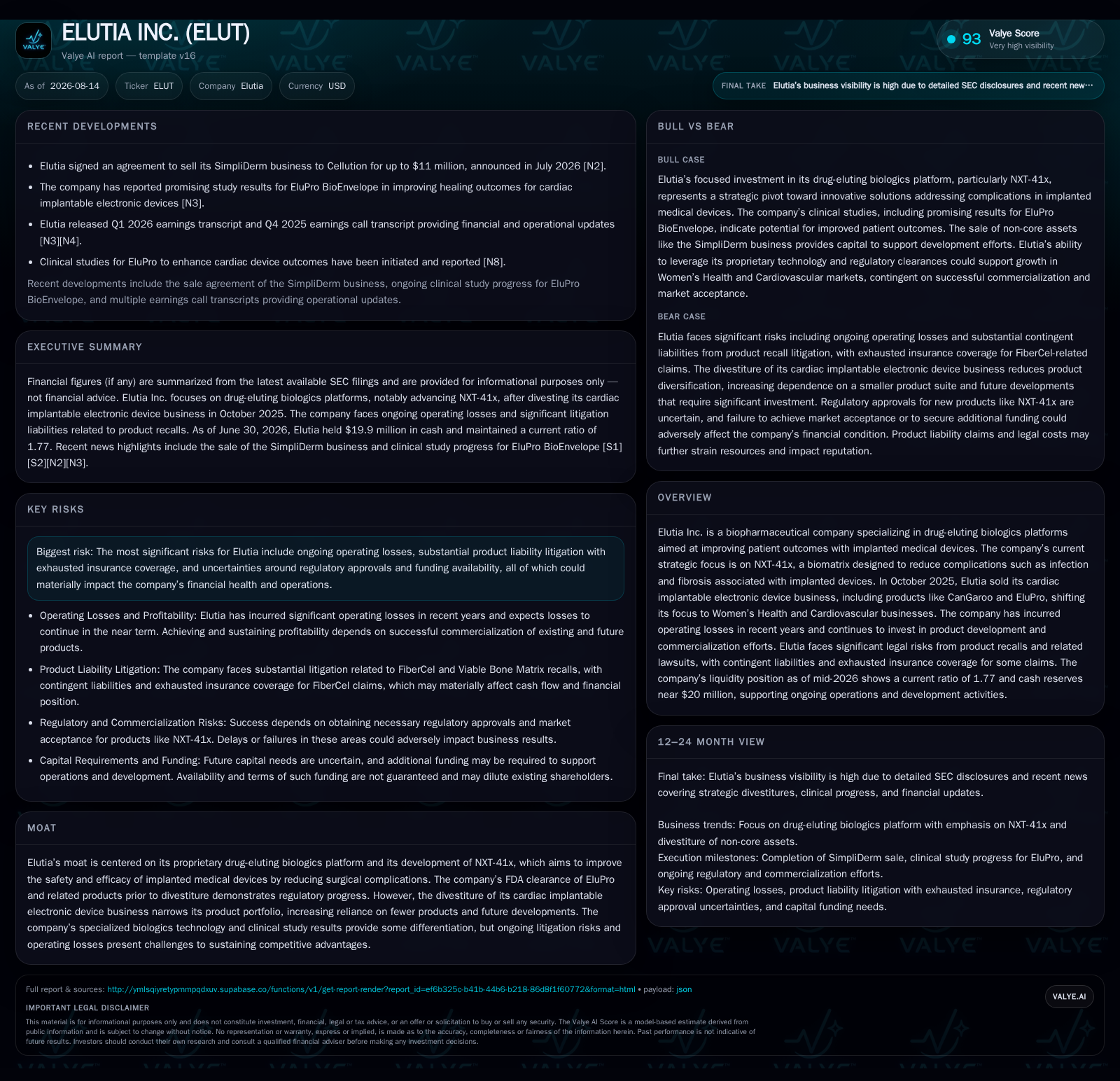
In Q2 2026, Elutia completed the sale of its cardiac implantable electronic device business, streamlining operations around the NXT-41x drug-eluting biomatrix platform targeting Women’s Health and Cardiovascular segments. This strategic refocus prioritizes clinical development and commercialization of biologic products designed to reduce fibrosis and infection complications in implantable devices. Despite FDA clearances supporting regulatory pathways, the company faces ongoing operating losses and substantial product liability litigation with exhausted insurance coverage. Key monitoring points include regulatory milestone progress, legal developments, and cash runway management.
Q2 2026 Operating Update: Strategic Divestiture Refines Business Focus
Elutia’s Q2 10-Q filing confirms the completion of a strategic divestiture finalized in late 2025 that sold its cardiac implantable electronic device assets, including legacy hardware such as CanGaroo and EluPro [S1][S2][S3]. This move eliminates capital-intensive manufacturing operations tied to medical devices, concentrating the company’s efforts exclusively on proprietary drug-eluting biologics centered on the NXT-41x biomatrix platform. While this streamlining simplifies operations, it concurrently heightens execution risk due to increased reliance on a narrower portfolio focused on novel biologic technologies [S2].
Capital freed from the divestiture has been redirected toward pipeline advancement, emphasizing therapeutic areas like Women’s Health and Cardiovascular medicine where implant safety improvements are in demand [S3]. The company disclosed potential milestone payments linked to this transaction that could provide incremental revenue contingent on future regulatory and commercial milestones [S3]. However, persistent operating losses reflect the high-cost nature of biologics development and clinical trials [F1]. As of June 30, 2026, Elutia reported a current ratio of approximately 1.77—indicating moderate liquidity but limited financial flexibility during ongoing R&D expenditures [F1].
Business Model: Proprietary Biomatrix Platform Targeting Implant Safety Challenges
Elutia’s core asset is the NXT-41x biomatrix platform—a proprietary drug-eluting scaffold engineered to locally release therapeutic agents that mitigate post-implant complications such as fibrosis and infection [S1]. These complications are leading causes of implant failure and costly reoperations. By enhancing biocompatibility through controlled drug delivery, NXT-41x addresses key clinical pain points that differentiate it within an advanced surgical adjunct niche.
The company’s prior FDA clearances for products like EluPro (now divested) establish regulatory familiarity with implant adjunct biologics [S1]. Progression through ongoing clinical trials for NXT-41x remains crucial; timely FDA approvals will enable commercialization by validating safety and efficacy profiles necessary for physician adoption and payer reimbursement [S5]. This biologic platform contrasts with competitors primarily offering coating-based solutions or non-drug-eluting materials, positioning Elutia in a specialized segment demanding robust clinical evidence.
Competitive Landscape: Focused Pipeline Amid Litigation and Regulatory Risks
Within the biopharmaceutical sector addressing implantable medical devices, Elutia operates alongside companies developing biologic coatings or integrated drug-eluting technologies. Unlike some peers with diversified portfolios or device manufacturing capabilities, Elutia’s recent divestiture has concentrated business risk around fewer candidates.
Significantly, the company is managing substantial product liability litigation related to prior cardiac device recalls. Exhausted insurance coverage amplifies contingent liabilities that could materially impact cash flow and investor confidence [S5][S17][S18]. These legal challenges pose reputational risks alongside direct financial exposure from settlements or judgments.
Operating losses continue due to sustained R&D investment essential for advancing clinical-stage biologics while revenues remain constrained post-divestiture [F1]. Regulatory delays common in this industry could exacerbate cash burn without offsetting income from milestone or royalty streams.
Growth Drivers: Regulatory Milestones, Market Specialization, Licensing Opportunities
Key growth catalysts include achieving pivotal FDA approvals for NXT-41x, which would validate claims around infection control and fibrosis reduction—features particularly valued in Women’s Health reconstructive procedures and cardiovascular implants where tissue compatibility is critical [S1][N2]. Progression through late-stage clinical trials will be closely watched as indicators of commercial readiness.
Targeting specialized markets aligns with increasing demand for biologic-enhanced implants tailored to complex healing environments. Additionally, licensing deals exemplified by the recent SimpliDerm asset sale (up to $11 million) demonstrate potential to monetize non-core assets while fueling core pipeline investment [N2][S10]. Partnerships with established device manufacturers could accelerate market penetration by embedding Elutia’s biomatrix technology into third-party implants without heavy internal manufacturing costs.
Risks: Litigation Exposure, Portfolio Concentration, Financial Sustainability
Elutia faces significant legal risks from prior product recalls with exhausted insurance coverage necessitating recognition of sizeable contingent liabilities [S5][S17][F1]. Such exposures constrain available capital for growth initiatives.
Portfolio concentration following asset sales increases vulnerability to regulatory setbacks or unfavorable clinical outcomes impacting near-term viability.
Financially, negative operating income reflects ongoing investment in research over near-term profitability [F1]. Although a current ratio above one suggests short-term solvency, limited cash reserves relative to operating losses underscore funding risks if legal expenses or development timelines extend unexpectedly.
Key Monitoring Points: Regulatory Progress, Commercial Launches, Litigation Outcomes
Investors should monitor forthcoming FDA review updates or approval announcements related to NXT-41x that will directly affect market entry timing [S2][S3]. Clinical trial data releases will further clarify the platform’s efficacy trajectory.
Legal developments including litigation resolutions or settlements remain critical given their potential impact on contingent liabilities and financial flexibility [S18]
New licensing agreements or strategic partnerships may indicate expanding commercialization capacity without large capital expenditures.
Financial Profile Discussion: Modest Liquidity Amid Ongoing Losses
As of June 30, 2026, Elutia held approximately $19.9 million in cash against $21 million in current liabilities resulting in a current ratio of about 1.77—a sign of moderate liquidity but not ample cushion against extended operating deficits or unexpected legal costs [F1]
Operating income remains negative reflecting continued heavy R&D spending required for advancing drug-eluting biologics rather than profitability at this stage [F1]. The absence of recent total debt updates limits clarity on leverage; last reported debt was $18.6 million at end-2021 [F1]. Milestone revenues from asset sales provide some intermittent inflows but do not substitute recurring earnings.
Overall, Elutia balances critical clinical development investments against legal cost pressures within a narrowed product focus following portfolio rationalization.
This analysis is based solely on publicly filed SEC documents through August 14, 2026. It integrates sector expertise relevant to biopharmaceuticals for implantable medical devices without speculative assumptions.
Disclaimer: This is research-only, informational analysis and not investment advice. It may include AI-generated interpretation and general industry context. Always verify important details using primary sources.

Comments