
Figma, Inc. Expands AI-Driven Platform to Define Next-Gen Software Development
Figma’s latest quarter underscores AI integration and multi-product expansion driving its unified design-to-code SaaS platform.
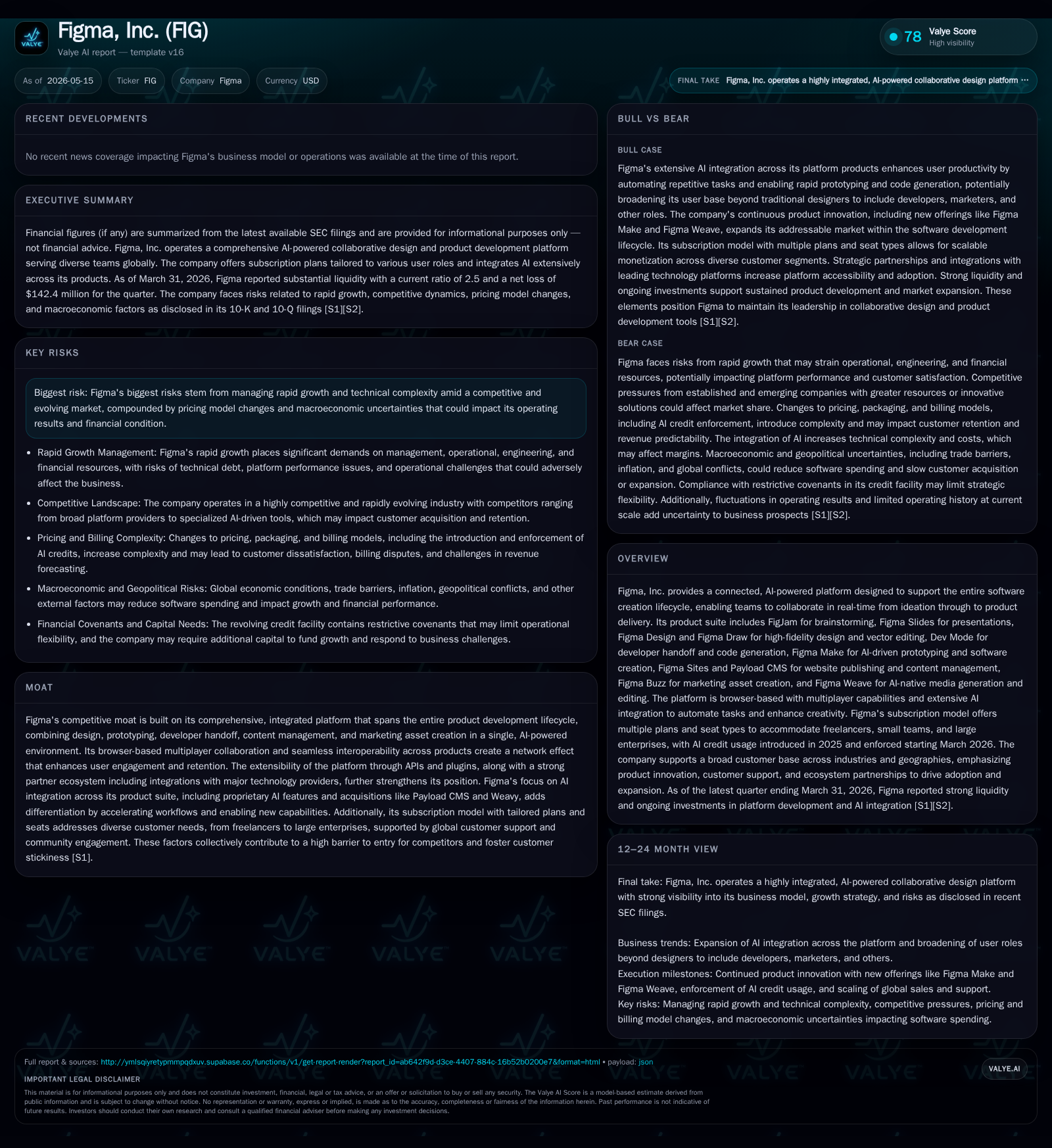
In its most recent quarterly filing dated May 14, 2026, Figma reported sustained platform momentum characterized by ongoing product rollouts like Figma Make and Weave that embed generative AI across the software creation lifecycle. The company’s subscription-based model targets diversified user roles beyond designers, leveraging multiplayer browser collaboration to foster network effects and high engagement. Its competitive moat benefits from extensibility through APIs, deep integrations with developer ecosystems, and a growing partner base including ChatGPT and Claude. Despite rapid growth, risks include scaling operational complexity, intensifying competition, and optimizing pricing strategies in an evolving market environment. Monitoring enterprise adoption metrics, AI feature deployment pacing, and international expansions will be key to validating growth durability in upcoming quarters.
Latest Quarterly Developments Highlighting Platform Momentum
Figma's quarterly report filed on May 14, 2026 (Form 10-Q) confirms sustained momentum in its strategy of deepening AI integration within its comprehensive software creation platform [S2][S3]. The company highlighted progressive rollout of key products: Figma Make, enabling AI-powered prototyping from simple text prompts or existing designs; Weave, supporting AI-native media generation and editing; along with expansions of FigJam for brainstorming and Figma Slides for presentations. These developments exemplify Figma’s effort to extend coverage from conceptual collaboration through technical implementation and even marketing asset creation within a unified system.
Underlining this are enhancements to the browser-based multiplayer environment facilitating real-time collaboration among diverse roles — designers, developers, marketers — accessible via URL without client installs [S2]. The latest filings also discuss subscription plan refinements designed to capture tailorable licensing needs from freelancers to large enterprises while simultaneously integrating AI-driven automation to accelerate workflows.
This near-term operating update validates scalable adoption as the firm navigates post-IPO market maturity whilst investing heavily in product innovation connected by AI advancements that broaden functional reach beyond pure design.
Figma’s Business Model: Comprehensive SaaS Platform Combines Design and Code
Figma utilizes a subscription-based revenue model segmented by tiered plans tailored to a spectrum of users from individual freelancers (Starter plan) through small teams (Professional) to large organizations requiring advanced governance capabilities (Organization plan with Governance+ add-on) [S1][S18]. This multi-plan structure supports flexible seat types addressing varying security needs, administrative controls, and collaborative workflows.
Its product portfolio spans the entire software product lifecycle: FigJam facilitates ideation; Figma Design and Figma Draw enable precise graphic work; Dev Mode offers developer handoff including code generation; Figma Make introduces AI-guided prototyping; while Figma Buzz caters to marketing asset creation. Browser-based multiplayer functionality tightly integrates these modules into a seamless collaborative experience fostering network effects — as more users join teams on the platform, switching costs rise due to intertwined workflows.
Revenue mechanics hinge on seat counts multiplied by plan pricing tiers. Volume growth derives from user additions within existing customers expanding seats plus new customer acquisitions drawn by integrated offerings. Margins benefit from software-as-a-service economies of scale but remain influenced by investments in R&D and customer support infrastructure. Retention efforts focus on delivering continuous value via product updates backed by global multilingual support infused by AI-assisted customer service agents.
AI-Powered Innovation as a Differentiator in Software Creation
AI serves as a central strategic pillar for Figma’s differentiation. Embedded generative AI capabilities empower users across skill levels to accelerate ideation and execution phases. For example, Figma Make transforms text prompts or early mocks into functional prototypes or even fully coded web applications [S1]. Concurrently, Weave introduces media generation/editing features allowing creative teams to produce assets natively within the platform.
Collaborations with external large language models like OpenAI’s ChatGPT and Anthropic's Claude expand Figma's ecosystem reach while enabling conversational interfaces directly tied into design workflows. This hybrid approach positions Figma not just as a design tool but as an automation engine enhancing productivity by reducing manual repetitive tasks while democratizing access for non-expert contributors.
This integration enhances user stickiness because creative professionals can iterate faster on ideas without leaving the centralized workspace. By fusing design intent with automated technical outputs seamlessly through AI assistance, Figma moves closer to becoming an end-to-end low-code/no-code platform augmented by natural language interfaces.
Competitive Landscape and Industry Dynamics: Network Effects and Integration Depth
The design software market remains competitive with entrenched players such as Adobe (Illustrator/Photoshop), Sketch (Mac-centric), alongside emergent low-code platforms encroaching on adjacent workflows [S1]. However, Figma’s browser-first multiplayer model fosters synchronous collaboration at scale globally — a feature many traditional incumbents lack or only partially offer.
Network effects arise as multidisciplinary product teams spanning design through development adopt Figma simultaneously; this ecosystem lock-in is reinforced by plugin architecture and open APIs permitting extensive customization and integration with third-party tools such as Atlassian Jira or GitHub repositories [S20]. This extensibility converts Figma into a central hub embedded into customers’ digital product lifecycles.
Moreover, partnerships extending into AI providers expand functionality breadth versus competitors relying mainly on standalone capabilities. Despite these strengths, well-funded incumbents maintain competitive pressure especially through bundling legacy creative suites with cloud services creating retention hurdles for some corporate accounts.
Key Growth Drivers: User Expansion, Platform Adoption, and AI Enhancements
Measured KPIs underscoring growth include rising monthly active users (MAUs), notably shifting towards non-designers who formed approximately two-thirds of MAUs in late 2025 [S22]. Growing penetration within product teams — encompassing project managers, marketers, researchers — drives seat count expansions per customer alongside consistent new customer acquisitions domestically and internationally.
Product innovation fuels use case diversification: continuous introduction of AI features like prototype generation (Make) broadens platform utility beyond core visual design tasks [S2]. Geographic expansions target underpenetrated markets leveraging cloud delivery advantages over desktop-installed alternatives.
The subscription base benefits from self-service channels supplemented by direct sales targeting medium-to-large enterprises requiring specialized governance features (Governance+) impacting average revenue per user positively [S18]. QR campaigns promoting tutorials via YouTube streams or social platforms support organic acquisition funnel efficiency.
Risks and Constraints: Growth Management, Competition, Pricing Sensitivity
Potential constraints identified include operational scaling challenges inherent in rapid headcount increases — employee base grew ~20% year-over-year ending 2025 [S1] — which can impact culture cohesion or execution agility if not managed rigorously. Technical complexity rises proportionally with platform scope necessitating robust infrastructure investments.
Competitive risks materialize from larger firms capable of leveraging broader budgets towards R&D or marketing initiatives plus startup challengers innovating niche workflow optimizations threatening market share erosion [S2]. Pricing model changes intended to optimize monetization may induce churn if perceived value mismatches occur amidst evolving customer budgeting cycles during uncertain macroeconomic conditions.
Regulatory exposure related to data privacy laws (e.g., EU Digital Services Act) could increase compliance burdens affecting operational costs or product feature sets particularly around content moderation [S24]. Also relevant are security risks given extensive cloud-hosted collaboration environments.
Upcoming Catalysts and Strategic Milestones to Monitor
Investors should track key indicators including significant enterprise deals closed or retention improvements signaling continued trust among large accounts [S2][S3]. Product release roadmaps focusing on expanded AI capability deployment timelines will reveal execution prowess critical for maintaining technological leadership.
Expansion initiatives targeting new international territories merit attention as localized compliance frameworks evolve along with demand patterns. Observing sequential quarterly revenue growth rates will provide insight into whether deceleration risks flagged in risk disclosures materially manifest or if adoption scales sustainably amidst competitive dynamics.
Current Financial Position and Capital Structure Snapshot
Figma reported robust liquidity at quarter-end March 31, 2026 with $405.7 million in cash & equivalents alongside $1.94 billion current assets versus $774.5 million current liabilities producing a current ratio of approximately 2.5x indicating ample short-term financial flexibility [F1].
Operating losses remain substantial reflecting continued investment emphasis: annualized operating income was negative $1.29 billion as of YE 2025 demonstrating high-growth mode prioritizing platform expansion over immediate profitability [F1].
Disclaimer: This is research-only, informational analysis and not investment advice. It may include AI-generated interpretation and general industry context. Always verify important details using primary sources.

Comments