
Coca-Cola’s Q2 2026 Volume Growth and Strategic Brand Expansion Reshape Market Momentum
Coca-Cola’s Q2 2026 report highlights robust volume growth driven by brand innovation and bottler collaboration amid regulatory and currency challenges.
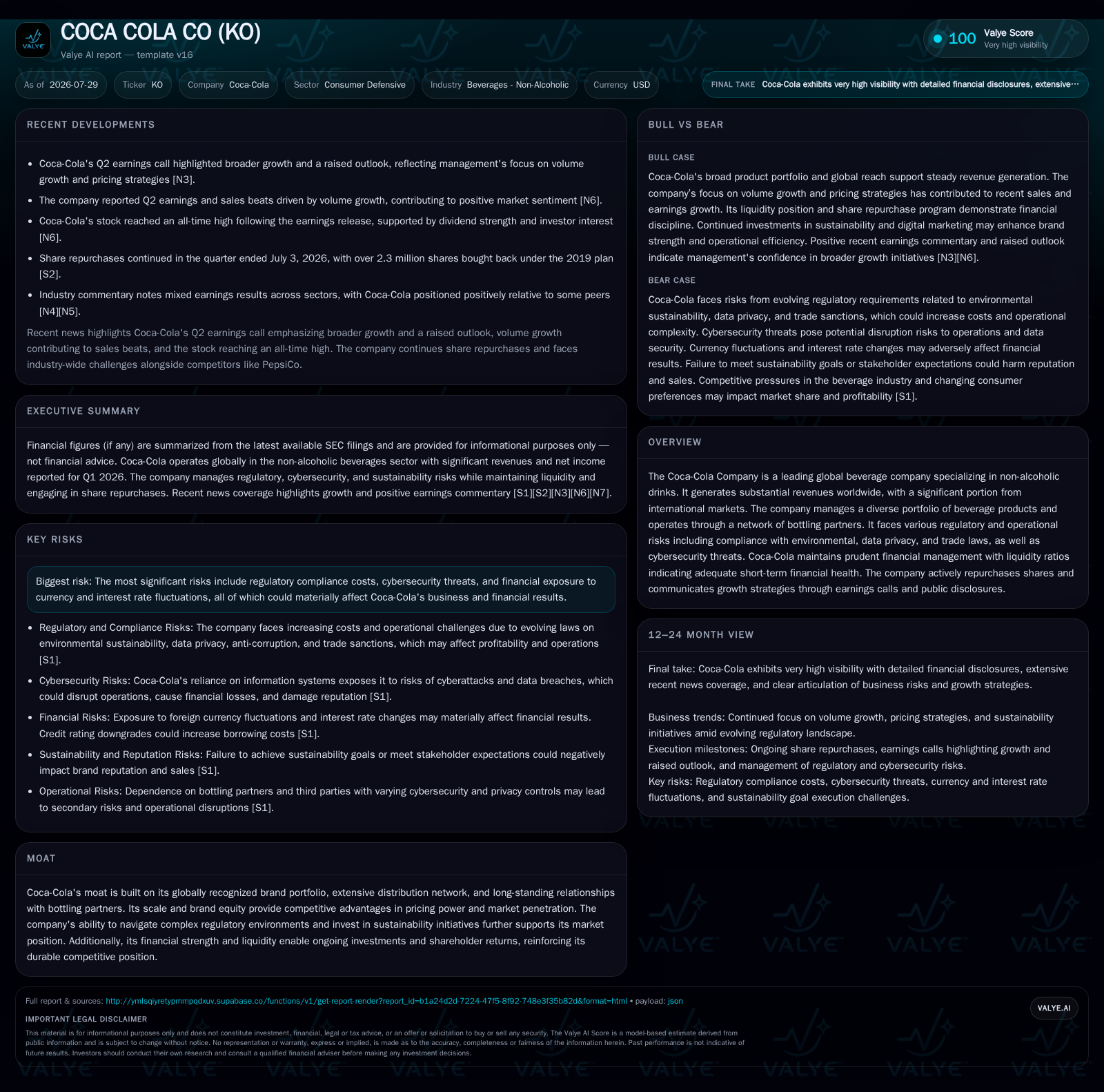
In Q2 2026, Coca-Cola posted encouraging volume growth alongside elevated average selling prices, reflecting resilient consumer demand despite inflationary pressures. The company’s extensive bottling partnerships have been pivotal in expanding distribution reach and smoothing supply chain constraints. Meanwhile, ongoing product portfolio innovation—including health-conscious product reformulations—supports steady pricing power. Regulatory compliance costs and currency fluctuations remain significant factors influencing operating margins and international revenue reporting. Coca-Cola continues to balance aggressive share repurchase programs with sustainability investments, underpinning its durable competitive position.
Q2 2026 Volume Growth and Pricing Strength Reflect Resilient Consumer Demand
In the second quarter of 2026, The Coca-Cola Company reported broad-based volume growth across key product categories, including its core carbonated soft drinks and expanding health-oriented beverage lines, which complemented gains from elevated average selling prices (ASPs) [S2][N3][N9]. This dual driver of volume and pricing growth signals robust consumer demand resilience amid ongoing global inflationary pressures. The company’s pricing strategy effectively balances affordability with margin preservation, leveraging strong brand equity to maintain market relevance despite economic headwinds. Volume growth, measured in units sold, combined with ASP increases, supports net operating revenue expansion while mitigating input cost inflation impacts.
Bottling Partners: Critical Drivers of Distribution Reach and Supply Chain Agility
Coca-Cola’s operational model relies heavily on its extensive network of bottling partners who manufacture, package, and distribute products across millions of retail outlets worldwide [S1][S2]. These bottlers play a pivotal role in inventory turnover efficiency and supply chain responsiveness, enabling the company to navigate global logistical disruptions and raw material cost inflation. The collaborative relationship with bottlers facilitates agile supply chain management, ensuring product availability and service levels remain consistent. Bottler performance metrics such as distribution penetration, inventory turnover rates, and order fulfillment speed are key indicators of operational health and directly influence sales velocity and cost structure.
Product Portfolio Innovation Enhances Market Penetration and Pricing Power
Coca-Cola continues to innovate within its product portfolio by focusing on low-calorie, functional, and premium beverage segments that align with evolving consumer preferences for healthier options [S1][S2]. This includes reformulating existing products to reduce sugar content and introducing new variants that expand category appeal. Such innovation supports sustained or improved ASPs by differentiating offerings and reducing reliance on promotional discounts, thereby protecting gross margins. The company manages promotional intensity carefully to stimulate volume growth without eroding pricing power, reflecting disciplined marketing investments aligned with volume-mix-price optimization.
Regulatory and Environmental Compliance Increasingly Impact Cost Structure
The company faces growing regulatory pressures related to packaging laws, environmental compliance, and carbon emissions reporting, which affect both Coca-Cola and its bottling partners [S1][S4]. New and evolving regulations mandating eco-friendly packaging materials, recycling fees, and extended producer responsibility increase capital expenditures and operational costs. These compliance requirements may necessitate product reformulations and packaging redesigns, potentially constraining long-term margin expansion. Additionally, trade compliance obligations across multiple jurisdictions require robust governance to mitigate legal and operational risks.
Capital Allocation Balances Share Repurchases with Sustainability Investments
During Q2 2026, Coca-Cola repurchased approximately 2.4 million shares at an average price of $78.53 per share under its authorized share repurchase program, reflecting a continued commitment to returning capital to shareholders [S2]. Concurrently, the company invests in sustainability initiatives, including packaging innovations aimed at reducing environmental impact, signaling a strategic balance between short-term financial returns and long-term brand durability. This capital allocation approach supports competitive positioning by reinforcing brand equity and meeting increasing consumer and regulatory expectations for sustainability.
Currency Volatility and Geographic Diversification
With nearly $29 billion of net operating revenues generated outside the United States in 2025, Coca-Cola’s financial results are materially influenced by foreign currency fluctuations [S1]. Translation exposure can affect reported revenues and operating income, depending on exchange rate movements. The company’s broad geographic footprint helps mitigate concentrated currency risks, but ongoing monitoring of hedge effectiveness and regional macroeconomic conditions remains essential to managing translation impacts and preserving financial stability.
Risk Factors: Regulatory Scrutiny, Competitive Pricing, and Cybersecurity Governance
Key risks include intensifying regulatory scrutiny around plastic packaging waste management, sugar and sweetener taxes, and labeling requirements, which could affect product affordability and demand elasticity [S1][S4]. The non-alcoholic beverage sector experiences high promotional intensity as competitors defend market share, potentially pressuring ASPs and necessitating increased marketing spend. On cybersecurity, Coca-Cola maintains a comprehensive governance framework led by a Chief Information Security Officer (CISO) reporting directly to the Chief Information Officer (CIO), supported by cross-functional oversight committees that manage enterprise-wide cyber risk, incident prevention, and response [S1]. Given the increasing sophistication of cyber threats, sustained investment in cybersecurity is critical to safeguarding operational continuity.
Near-Term Growth Catalysts: New Product Launches and Bottler Operational Metrics
Investor attention will focus on the company’s execution of new product introductions, particularly in premium and functional beverage categories, which have demonstrated early success in driving incremental price and mix benefits [N3][S2]. Equally important are bottler operational metrics such as distribution penetration gains, inventory turnover efficiency, and responsiveness to market demand shifts. These indicators provide insight into supply chain health and its impact on sales velocity and cost management, serving as key near-term growth catalysts.
This analysis integrates Coca-Cola’s latest quarterly disclosures with sector-specific operational and financial metrics, emphasizing how volume growth, pricing strategies, bottler partnerships, regulatory cost dynamics, and capital allocation decisions interact within the global non-alcoholic beverage industry. The company’s entrenched brand equity and expansive bottling network underpin resilient demand momentum despite inflationary and currency headwinds, while robust cybersecurity governance aligns with best practices for operational risk management.
Disclaimer: This is research-only, informational analysis and not investment advice. It may include AI-generated interpretation and general industry context. Always verify important details using primary sources.

Comments