
Pliant Therapeutics' Strategic Push in Integrin Inhibitors Highlights Potential and Uncertainties
Clinical advances in integrin inhibition for oncology coincide with ongoing financial strain and developmental risks.
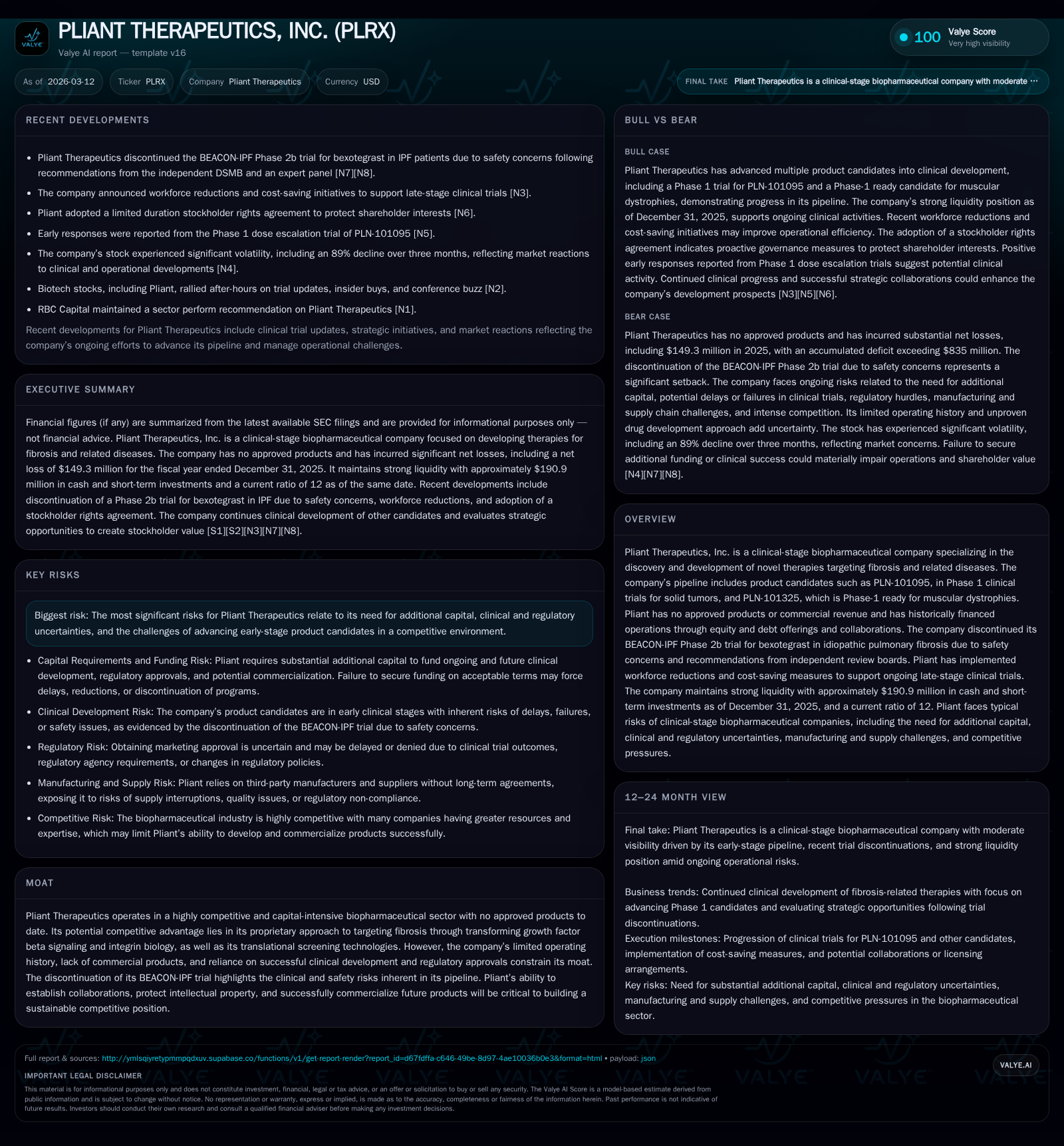
Pliant Therapeutics is advancing its lead candidate PLN-101095, an oral dual inhibitor targeting αvβ8 and αvβ1 integrins, demonstrating encouraging Phase 1 responses in immune checkpoint inhibitor-resistant solid tumors. While the company’s proprietary platform leverages integrin biology with translational screening technologies, it remains pre-revenue and faces typical biotech challenges including clinical setbacks such as trial discontinuation in fibrosis indications. Financials show a pattern of substantial but decreasing losses amid tightening capital management and cost control measures. Upcoming milestones include Phase 1b expansion and AACR presentations, yet regulatory and healthcare compliance burdens compound operational complexity in a highly competitive environment.
Clinical Progress Spurs Optimism: Positive Phase 1 Data for PLN-101095
Pliant Therapeutics’ lead candidate PLN-101095 represents an innovative approach within immuno-oncology by inhibiting the integrins αvβ8 and αvβ1—key mediators of transforming growth factor-beta (TGF-β) activation within tumor microenvironments. TGF-β suppresses T-cell infiltration and cytokine release, contributing to resistance against immune checkpoint inhibitors (ICIs).
In 2025, positive Phase 1 open-label dose-escalation data demonstrated anti-tumor activity when PLN-101095 was combined with pembrolizumab in patients with ICI-resistant solid tumors [S1]. Among ten secondary ICI refractory patients across three highest dose cohorts, four responded: one confirmed complete response (CR) and three partial responses (PR) (two confirmed). Tumor types benefiting included cholangiocarcinoma, melanoma, head and neck squamous cell carcinoma (HNSCC), and non-small cell lung cancer (NSCLC). Responders exhibited large increases in plasma interferon-gamma (IFN-γ) after 14 days of PLN-101095 monotherapy—consistent with IFN-γ’s role enhancing anti-tumor immunity. The median treatment duration was about 15 months as of November 2025; the drug was generally well tolerated [S1].
An accelerated development plan includes a Phase 1b indication expansion enrolling NSCLC, clear cell renal cell carcinoma, and tumors with high tumor mutational burden. Patients receive two weeks of PLN-101095 monotherapy followed by combination therapy with pembrolizumab. Enrollment activities target Q2 2026 start with interim data expected in 2027 [S1]. Comprehensive Phase 1 data will be presented at AACR Annual Meeting April 2026.
Proprietary Integrin Biology Platform Underpins Pipeline
Beyond PLN-101095, Pliant's proprietary platform comprises over 15,000 integrin-binding molecules designed for both direct inhibition of pathological integrin activity and integrin-mediated targeted drug delivery—applicable across oncology and fibrosis indications [S1]. Targeting TGF-β activating integrins αvβ8/αvβ1 aims to sensitize resistant tumors to ICIs while potentially reducing systemic toxicities seen with broader TGF-β pathway inhibitors.
The pipeline also includes PLN-101325 for muscular dystrophies poised for Phase 1 initiation pending preclinical readiness.
Historical Financial Performance Summary
Historical performance (annual)
| FY | Net ($mm) | CFO ($mm) | OpInc ($mm) | Capex ($mm) | Net YoY |
|---|---|---|---|---|---|
| 2025 | -149 | -128 | -156 | 0 | +29.0% |
| 2024 | -210 | -156 | -228 | 4 | -30.4% |
| 2023 | -161 | -116 | -184 | 1 | -30.8% |
| 2022 | -123 | -95 | -127 | 2 |
Source: SEC companyfacts cache [F1].
Capital returns and efficiency (annual)
| FY | FCF ($mm) | ROE% |
|---|---|---|
| 2025 | -129 | -82.4 |
| 2024 | -159 | -69.2 |
| 2023 | -117 | -34.1 |
| 2022 | -96 | -39.4 |
Source: SEC companyfacts cache [F1].
Figures reflect USD millions except CapEx where thousands are used [F1]. Operating losses remain significant but show improvement year-over-year reflecting operational efficiencies; however, negative operating cash flows persist.
Capital Structure and Liquidity Position
As of December 31, 2025, Pliant held $45.4 million in cash and equivalents with current assets totaling approximately $196 million versus $16 million in current liabilities—yielding a current ratio near 12x indicating healthy short-term liquidity [F1]. The company continues to finance operations predominantly through equity offerings, debt instruments, and prior collaborations [S2]. Recent cost containment efforts include workforce reductions supporting capital discipline [S1],[S2].
No dividends or share repurchases have been indicated given ongoing investment needs.
Clinical Setbacks Highlight Development Risks
The BEACON-IPF Phase 2b study investigating bexotegrast for idiopathic pulmonary fibrosis was discontinued due to safety concerns raised by independent monitoring committees [S1]. This underscores the clinical risk profile associated with fibrosis programs where adverse events can be unpredictable.
Such setbacks elevate development costs and regulatory scrutiny which may impact timelines for other pipeline candidates.
Regulatory Compliance Complexity
Pliant operates under extensive regulatory frameworks addressing anti-kickback statutes, fraud prevention laws, environmental health regulations related to hazardous materials handling, post-marketing obligations, and evolving healthcare reforms including Medicare pricing changes . Noncompliance risks include significant penalties that could disrupt business operations.
Robust internal controls are required to navigate these multi-jurisdictional legal frameworks especially as commercialization activities advance.
Competitive Landscape Considerations
Pliant competes against larger biopharmaceutical companies possessing broader pipelines and deeper capital resources [S15]. Its dual selective inhibition approach targeting αvβ8/αvβ1 offers potential differentiation but remains clinically unproven beyond early trials.
Competitors also include academic institutions and biotech firms exploring alternative TGF-β antagonists or stromal targeting therapies which may reach markets earlier.
Strategic partnerships will likely be essential for commercialization scale should regulatory approvals be achieved.
Conclusion: Scientific Promise Amidst Operational Challenges
Pliant Therapeutics advances promising integrin-targeted therapies exemplified by PLN-101095’s encouraging immuno-oncology profile but continues to face substantial net losses exceeding $100 million annually without commercial revenues [F1]. The discontinuation of key fibrosis programs highlights clinical risk while regulatory complexity adds operational overhead.
Upcoming Phase 1b data releases in mid-2027 alongside AACR presentations represent critical inflection points for validating therapeutic potential.
Investors should weigh scientific innovation against typical biotech volatility while monitoring liquidity given sustained cash burn absent product-generated income.
This analysis synthesizes publicly available regulatory filings ([S#]) and verified financial disclosures ([F1]). It does not constitute investment advice but aims to provide detailed insight into Pliant Therapeutics’ strategic trajectory within biotechnology innovation contexts.
Disclaimer: This is research-only, informational analysis and not investment advice. It may include AI-generated interpretation and general industry context. Always verify important details using primary sources.

Comments