
Postal Realty Trust Q1 2026: Acquisition Growth and Leasing Stability Face New Market Tests
Q1 2026 results highlight portfolio expansion via insider acquisitions and near-full occupancy amid continuing USPS dependency.
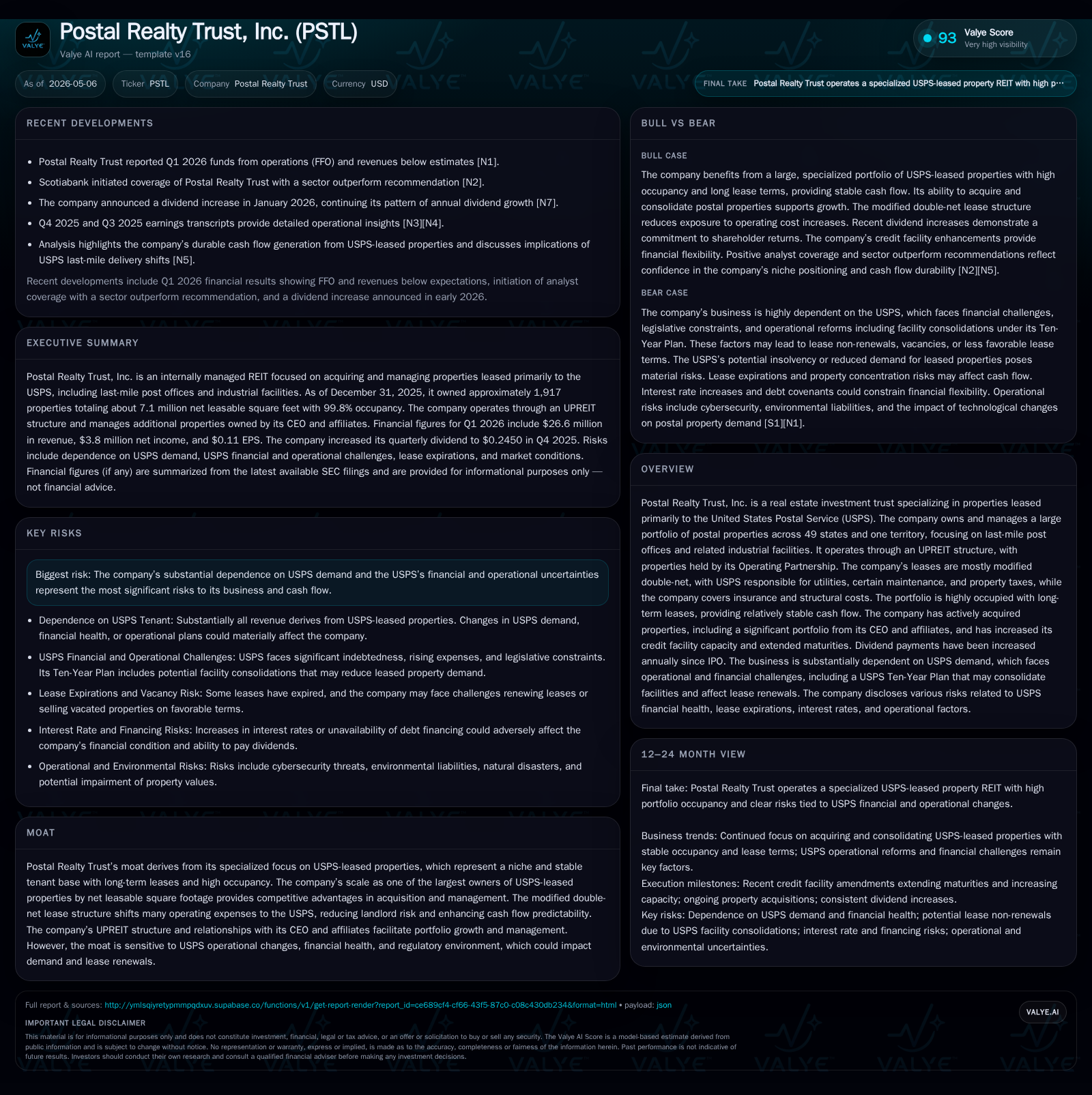
Postal Realty Trust’s Q1 2026 update underscores its ongoing strategy of acquiring USPS-leased properties from related parties, strengthening its portfolio with a recent $11.5 million acquisition approved by independent directors. The company’s modified double-net lease structure with USPS tenants supports stable cash flow, reflected in portfolio occupancy near 99.8%. However, reliance on USPS’s financial health and operational shifts remains a key risk. Recent capital structure refinements provide flexibility for further growth, but future cash flow stability hinges on lease renewals and USPS’s viability.
Q1 2026 Operating Update Highlights
Postal Realty Trust’s most recent quarterly filing dated May 5, 2026 reveals continued execution of its acquisition strategy focused primarily on properties leased to the United States Postal Service (USPS). During Q1, the company acquired a portfolio of 12 postal properties from entities affiliated with CEO Andrew Spodek for approximately $11.53 million in cash, excluding closing costs. This transaction was vetted and approved by a special committee composed solely of independent directors to address potential conflicts of interest, signaling governance diligence in related-party deals [S2][S3].
This acquisition fits the company’s broader consolidation theme of increasing scale in USPS-leased real estate through private agreements enabled by ROFO (right of first offer) contracts. The newly acquired properties encompass about 58,564 net leasable square feet with a weighted average rental rate of roughly $15.58 per square foot.
Complementing acquisition activity, Postal Realty Trust continues to report exceptionally high portfolio occupancy rates. As of December 31, 2025, occupancy stood at approximately 99.8%, underlining lease renewal success and the stickiness of its tenant base despite the complex operational environment facing USPS [S1][F1].
Business Model and Portfolio Quality
Postal Realty Trust operates as an internally managed real estate investment trust (REIT) specializing in postal properties leased almost exclusively to the USPS. Its business model hinges on generating stable rental income from a vast portfolio that includes last-mile post offices and other logistics-related industrial facilities spread across 49 states plus one U.S. territory.
A distinctive feature is its UPREIT (Umbrella Partnership Real Estate Investment Trust) structure through which the Operating Partnership directly or indirectly holds the properties. The company owns roughly 79.3% of outstanding partnership units as of late 2025 [S1]. This structure facilitates tax-efficient property contributions from affiliated sellers such as CEO Spodek and enables property acquisitions under favorable terms.
Most leases are modified double-net agreements where the USPS is responsible for utilities, some maintenance obligations, and property tax reimbursements while Postal Realty handles insurance premiums along with roof and structural integrity costs [S1]. This leased expense allocation notably reduces landlord exposure to variable operating costs such as fluctuating utilities or routine maintenance expenditures, driving predictability in cash flows.
As a result, Postal Realty Trust witnessed strong portfolio metrics at year-end 2025 with around $716.6 million invested across approximately 1,917 real estate assets totaling about 7.1 million net leasable interior square feet—all leased predominantly to USPS occupants—with a weighted average remaining lease term of roughly four years [S1].
Competitive Position in USPS-Leased Real Estate
Postal Realty Trust claims the position as the largest owner and manager by net leasable square footage within the niche market of USPS-leased properties. This scale provides competitive advantages both in sourcing assets and operational efficiencies related to managing specialized postal facilities [S1][N3].
Entry barriers for competitors stem from the specialized nature of these assets tied closely to federal agency leasing requirements coupled with regulatory complexity surrounding USPS real estate holdings.
Furthermore, the company benefits from its ROFO agreement with CEO-affiliated entities managing over 300 additional postal properties—an essential pipeline for accretive acquisitions—adding a layer of proprietary deal flow uncommon among typical REITs [S1][N7].
Lease structures further enhance competitive positioning: modified double-net leases allocate certain cost burdens to tenants that reduce volatility for landlords while fostering longer-term tenancy given USPS operational necessities in last-mile logistics hubs.
However, intense tenant concentration remains an inherent vulnerability exacerbated by ongoing USPS financial pressures and regulatory oversight. Any substantial restructuring or footprint reduction at USPS could disproportionately impact Postal Realty Trust compared to more diversified peers [S8][N3].
Growth Drivers: Strategic Acquisitions and Lease Structures
The main growth driver consists of disciplined acquisitions primarily sourced through ROFO arrangements with CEO-related affiliates—a continuation evident in recent Q1 transactions valued at over $11 million—and bolstered by a full-year target acquisition volume exceeding $120 million communicated late in 2025 [S6].
This pipeline feeds into expanding net rentable square footage under management while reinforcing concentrated expertise in postal logistics real estate.
Lease terms underpin cash flow stability due to their modified double-net nature whereby Postal Realty faces limited exposure to operating cost inflation since utility bills, maintenance specifics tied to day-to-day operations, and most property taxes pass through to the tenant (USPS). This defensive positioning supports more predictable earnings streams even amid broader inflationary macroeconomic cycles.
Lastly, dividend policy signals confidence in sustaining steady cash flow; annual incremental raises have been consistent since IPO inception—with the quarterly dividend reaching $0.2450 for Q4 2025—highlighting management’s intent to return capital while reflecting underlying business resilience within the specialized lease framework [S1].
Risks and Operational Constraints Regarding USPS and Market Dynamics
High tenant concentration represents Postal Realty Trust’s most salient risk facet given that virtually all rents derive from leases with the financially constrained USPS—subject to congressional regulation, funding uncertainties, political decisions, labor costs pressures including pension liabilities—to name but a few challenges facing that entity [S1][S8].
Potential adverse outcomes include reductions in leased property requirements due to operational consolidations or service model changes at USPS which could lead to non-renewal or lease termination risks for Postal Realty Trust.
Moreover, possession by government entities introduces complexities such as eminent domain risks or protracted litigation challenges that could materialize despite current absence of significant legal proceedings reported by the trust [S23].
Geographic concentration across nearly all US states dilutes regional market risk somewhat but does not offset dependence on singular federal tenant stability.
Lastly, environmental liabilities typical in older industrial/postal facilities pose contingent expense potential requiring vigilance during acquisitions especially in cases lacking surviving seller warranties fully mitigating remediation responsibilities.[S12]
Key Milestones and Upcoming Catalysts to Monitor
Important near-term developments include:
- Lease expiry schedules impacting future rental renewal rates; attention needed on potential negotiation outcomes or vacancies translating into increased capital expenditures or downtime.
- Execution against acquisition volume target guidance exceeding $120 million annually serves as an early indicator of sustained portfolio growth momentum.[S6]
- Monitoring credit facility covenant tests particularly total leverage ratios and fixed charge coverage ratios based on latest credit agreements governing borrowing capacity.[S4]
- Future announcements regarding dividend policy adjustments which may reflect evolving confidence in cash flow sustainability.[S2]
- Any updates on USPS operational restructuring plans presented via public news or governmental releases which would directly influence underlying tenant demand.
- Progression in deploying advanced property management tech or Artificial Intelligence integration potentially hinted indirectly through disclosures.[S1]
These elements collectively will define execution quality against strategy amid external uncertainties.
Current Financial Snapshot
Current liquidity remains limited relative to total indebtedness; however, leverage remains consistent with REIT norms given predictable lease income streams enhanced by strong occupancy levels nearing full utilization at year-end.[F1][S2][S3]
This capital posture aligns with aggressive acquisition funding needs while balancing dividend continuity commitments made publicly since IPO inception.
Disclaimer: This analysis is based exclusively on publicly filed SEC documents as well as verified industry news sources as cited; it does not constitute investment advice or recommendations regarding Postal Realty Trust stock.
Disclaimer: This is research-only, informational analysis and not investment advice. It may include AI-generated interpretation and general industry context. Always verify important details using primary sources.

Comments