
Ryman Hospitality Properties’ Group-Oriented Hotels Drive Growth Despite Rising Costs and Debt Profile
Ryman Hospitality Properties leverages its niche in upscale, group-focused hotels and entertainment assets to sustain revenue growth amid cost pressures and a sizable debt load.
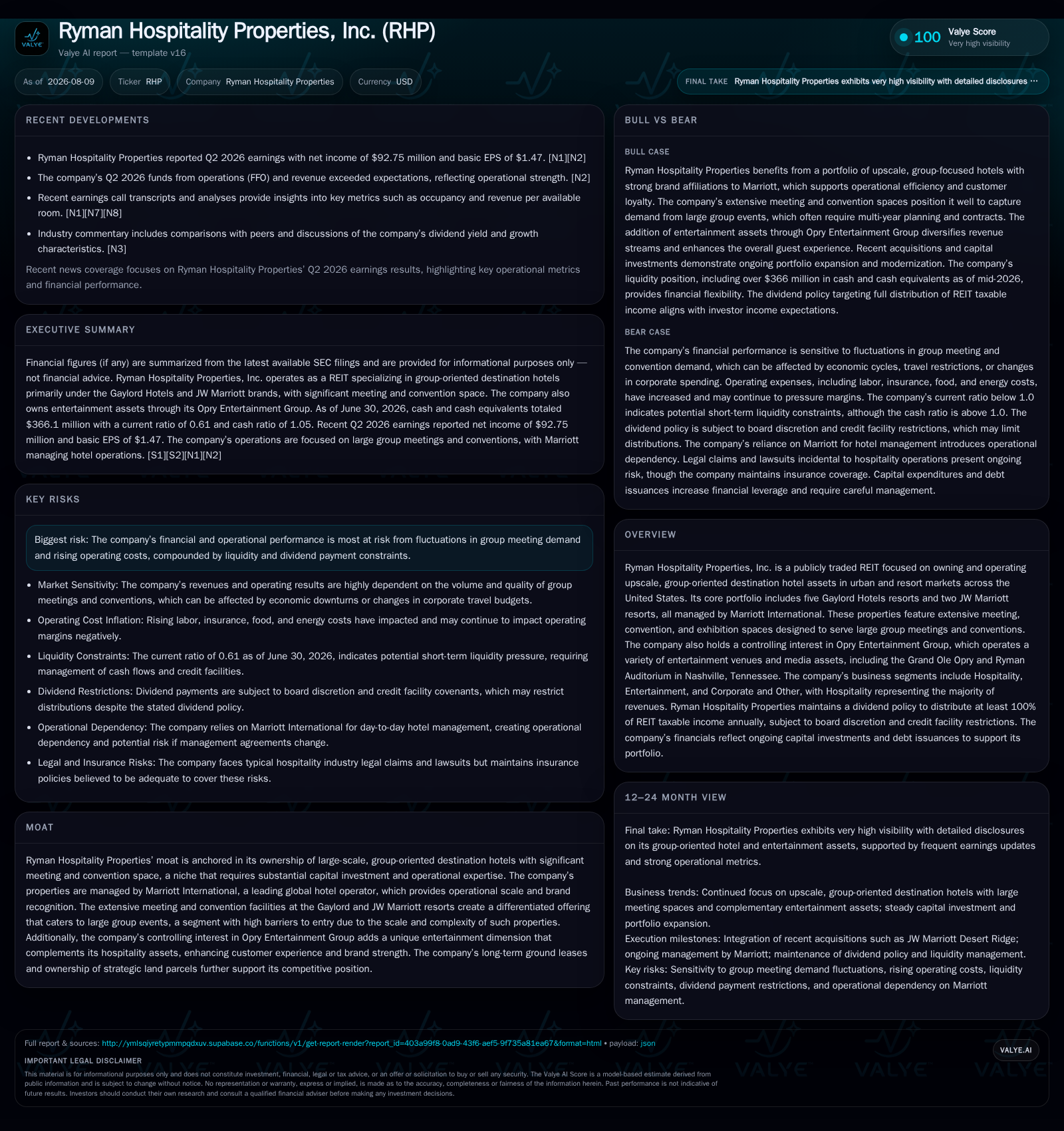
Ryman Hospitality Properties, Inc. reported a solid financial performance for the quarter ended June 30, 2026, reflecting strength in its core group-oriented destination hotel portfolio managed by Marriott International. With a specialized asset base centered around extensive meeting and convention space, Ryman has carved a moat difficult for peers to replicate. However, rising operating costs and leverage remain ongoing challenges. The company’s diversified revenue streams including entertainment venues add resilience, while its capital expenditure plans signal continued investment to enhance property appeal. Monitoring meeting space utilization and refinancing progress will be key to assessing near-term operating momentum.
Recent Operating Update: Sustained Revenue Strength Amid Inflationary Pressures
Ryman Hospitality Properties reported second-quarter 2026 results evidencing solid top-line momentum supported by robust demand for its upscale group-oriented hotels managed by Marriott International [S2][N1][N2]. The company operates a portfolio rich in extensive meeting and convention facilities anchored by the Gaylord brand—five properties with large-scale meeting spaces complemented by two JW Marriott resorts [S1]. This unique asset specialization drives differentiated revenue streams from transient room rentals, group bookings, extensive food and beverage catering tied to conferences, and event space rentals.
Despite positive occupancy trends and average daily rate improvements indicating pricing power in this niche segment, Ryman disclosed escalating operating expenses driven primarily by inflation across labor markets, utilities, and routine maintenance requirements [S2]. Such cost pressures compressed operating margins relative to prior periods but reflected industry-wide challenges among hospitality REITs exposed to rising input costs.
Customers typically comprise corporate clients booking rooms en masse for conferences, associations organizing exhibitions or events needing adjacent lodging plus massive meeting space, along with leisure travelers attracted by resort amenities.
Revenue generation is multifaceted: transient room fees contribute directly; extensive food and beverage services tied to large group gatherings provide substantial supplemental income; rental income from selling or leasing exhibit halls or ballroom space diversifies the top line [S1]. The presence of owned entertainment venues like the Grand Ole Opry further supplements income through ticket sales and related ancillary spending with synergistic traffic benefits for adjacent hotel stays
Centralized hotel operation is handled through Marriott International via management agreements covering day-to-day service delivery. This model allows Ryman to focus on real estate asset ownership, capital improvements, leasing arrangements with subsidiaries or third parties that operate the hotels under brand standards. The value creation relies heavily on maintaining high occupancy rates especially for group bookings that yield premium pricing due to concentrated guest stays requiring extensive infrastructure.
Industry Structure and Competitive Positioning: Moat Rooted in Capital-Intensive Convention Properties
In the hospitality REIT sector focused on upscale lodging with convention facilities, Ryman occupies a strong competitive niche marked by high barriers to entry due to capital intensity required for constructing large meeting spaces often exceeding half a million square feet per property [S1]. Competitors include Host Hotels & Resorts with more diversified portfolios but less concentration in mega-convention hotels; Pebblebrook Hotel Trust targeting urban hotels; Service Properties Trust blending hotel ownership with entertainment venues akin to Ryman.
The company's ongoing partnership with Marriott confers operational scale advantages versus smaller owners attempting independent management. Furthermore, owning iconic entertainment assets such as Ryman Auditorium adds unique branding differentiation not commonly seen among pure-play hospitality REIT peers [S1]
However, geographic concentration primarily across U.S. urban resort locations like Nashville (Opryland), National Harbor (Washington DC), Texas (Gaylord Texan), Florida (Gaylord Palms), Colorado (Gaylord Rockies), San Antonio (JW Marriott Hill Country), Phoenix (JW Marriott Desert Ridge) elevates exposure to regional economic cycles affecting travel demand [S1]. Such concentration requires vigilant monitoring amid macroeconomic headwinds impacting discretionary business travel.
Growth Drivers: Capitalizing on Rising Group Meeting Demand With Strategic Upgrades
Underlying structural demand growth for large group meetings fueled by corporate events spending recovery post-pandemic augments Ryman's principal revenue drivers. Increased appetite globally for conferences translates into rising occupancy levels predominantly within expansive convention centers attached or adjacent to these resorts.
The company is investing heavily ($350–450 million planned capital expenditures for 2026) focusing on upgrading critical assets such as expanding meeting space at flagship Gaylord Opryland coupled with room renovations at Gaylord Texan and JW Marriott Hill Country. New venue development projects including Category 10 Las Vegas aim at enhancing entertainment complementary offerings stimulating cross-segment synergies between Hospitality and Entertainment divisions [S25][S26]. While revenue momentum partially offsets this trend, margin pressure could persist if cost pass-through mechanisms weaken.
Dependence on the convention business exposes revenue streams heavily to macroeconomic fluctuations influencing corporate travel budgets. Competitive threats include alternative lodging providers such as Airbnb capturing transient leisure dwellers who might otherwise fill hotel rooms during non-event periods.
Dividend sustainability hinges on consistent funds from operations meeting minimum taxable income payout requirements inherent in REIT structures [S1]. Sudden declines in group event bookings or unexpected capex needs could pressure cash flow available for distributions.
What to Watch Next: Execution on CapEx & Refinancing Progress Shapes Trajectory
Key indicators include post-renovation occupancy rates at renovated properties like Gaylord Texan where improved guest experience should reflect in higher ADRs (average daily rates) and RevPAR (revenue per available room).
Meeting space utilization percentages will reveal whether updated conference capacity substantiates expected revenue growth forecasts.
Debt refinancing activities approaching the 2027 maturity will test capital markets access amid prevailing rates; successful extensions or prepayments would signal balance-sheet resilience.
Additionally, traction from new entertainment venues such as Category 10 Las Vegas provides insight into diversification success beyond lodging-centric revenues enhancing long-term business model stability.
Financial Profile Discussion
On the balance sheet front as of June 30, 2026, Ryman held approximately $366 million in cash equivalents against total debt approximating $4 billion recorded at year-end 2025, implying net debt near $3.6 billion after cash offsets [F1]. This sizeable leverage is typical for capital-intensive hospitality REITs but underlines reliance on sustained operating cash flow generation.
Operating cash flows have been sufficient thus far to fund dividends aligned with policy distributing at least 100% of REIT taxable income annually while allocating capital toward growth initiatives such as major renovations and expansion projects detailed previously [S1][S25]. Continued monitoring of funds from operations (FFO) relative to both debt service requirements and dividend payouts remains imperative.
This analysis focuses solely on publicly disclosed financial filings up to August 7, 2026, integrating recent quarterly developments with broader industry context relevant to investors assessing Ryman Hospitality Properties’ operational trajectory without providing investment research views.
Disclaimer: This is research-only, informational analysis and not investment advice. It may include AI-generated interpretation and general industry context. Always verify important details using primary sources.

Comments