
Ulta Beauty’s Sales Momentum and Margin Gains Signal Resilient Specialty Retail Model
Ulta Beauty’s strong first-quarter results demonstrate durable growth through elevated customer engagement, expanding ticket sizes, and margin improvement amidst ongoing inflationary pressures.
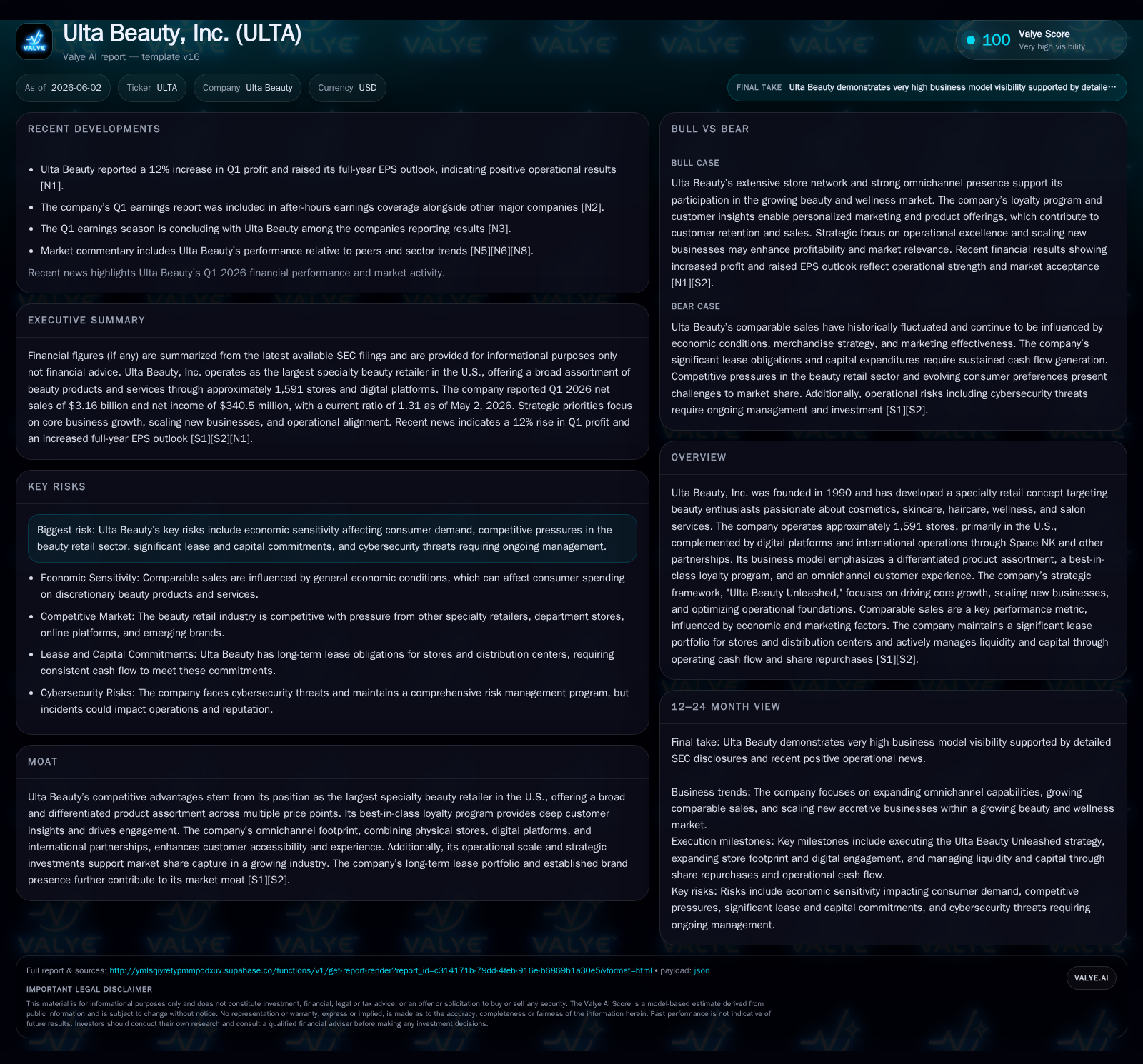
In its latest quarterly filing ending May 2, 2026, Ulta Beauty reported a comparable sales increase of 2.9%, supported by a 3.7% rise in average ticket and a 1.6% growth in transactions. Gross profit expanded by 13.8%, pushing margins to 40.1%, underscoring operational resilience in a challenging macro environment. The company’s omnichannel model, multi-tiered product assortment, and best-in-class loyalty program continue to drive customer retention and cross-channel synergies. While it faces risks from inflation impacts on consumer spending and significant lease obligations, Ulta is investing in new stores, brand launches, and salon services to sustain long-term growth.
Strong Quarterly Performance Highlights Resilience
Ulta Beauty’s Q1 fiscal 2026 results demonstrate sustained momentum despite persistent inflationary pressures impacting the broader retail landscape [S2]. For the quarter ending May 2, comparable sales increased by 2.9% supported by a robust 3.7% rise in average ticket values coupled with a moderate transaction uplift of 1.6%. This blend points toward healthier basket sizes alongside growing customer visits—both critical levers in specialty retail success [S2]. Gross profit expanded meaningfully by $153 million (13.8%), translating into a gross margin gain of 100 basis points to reach 40.1%. This margin expansion underlines Ulta’s ability to manage inflation-driven cost pressures via merchandising mix optimization and operational efficiencies.
Ulta’s Business Model: Broad Assortment and Customer Centricity
Ulta Beauty operates a differentiated specialty retail concept focused on beauty enthusiasts—consumers seeking self-expression through cosmetics, skincare, haircare, fragrance, wellness products, and unique salon services [S1][S2]. Its approximately 1,591 U.S.-based stores are complemented by digital platforms that support an integrated omnichannel experience. A key pillar is the company’s best-in-class loyalty program enabling data-driven personalized engagement that fosters repeat purchasing and higher lifetime value.
Revenue streams derive from retail product sales weighted across categories with cosmetics comprising about 40% of net sales, skincare/wellness at around 24%, haircare near 18%, fragrance at 12%, while services contribute about 4%. The salon business co-located within stores complements merchandise sales, boosting overall customer spend per visit [S2]. This diverse assortment across multiple price tiers helps Ulta appeal to a wide demographic while providing pricing flexibility in varied economic conditions.
Competitive Positioning in U.S. Specialty Beauty Retail
Ulta holds a commanding position as the largest specialty beauty retailer in the U.S., leveraging scale with over 1,500 stores concentrated in high-traffic power centers along with strategic international presence via partnerships like Space NK [S1][S2]. Maintaining a substantial lease portfolio predominantly with long-term fixed commitments provides location stability but introduces fixed cost considerations relative to more flexible models.
Compared against category specialists or mass-market retailers (e.g., Sephora or department stores), Ulta’s strength lies in its hybrid strategy: blending curated high-end beauty brands with mass-market offerings under one roof alongside accessible salon services. This breadth expands its addressable market and fortifies resilience against market share erosion while nurturing pricing power through differentiated assortments.
Loyalty Program Dynamics and Omnichannel Synergies
Ulta’s loyalty program remains central to driving transaction growth (+1.6%) and average ticket (+3.7%) dynamics evidenced this quarter [S2]. By rewarding product purchases as well as salon services consistently across channels, it embeds customers deeply into its ecosystem. The program’s data insights guide targeted marketing efforts that enhance both customer acquisition efficiency and retention rates.
E-commerce integration further strengthens the omni-channel footprint with digital sales complementing physical store visits rather than cannibalizing them—a critical dynamic given changing consumer shopping behaviors post-pandemic [S1]. International reach through Space NK supplements domestic growth avenues while broadening brand exposure.
Growth Catalysts: New Stores, Brand Launches, and Services Expansion
Strategically focused investments underpin growth plans. Inventory net increased by roughly $265 million (12.5%), driven by new brand introductions—including proprietary/exclusive lines—acquisition-related additions such as Space NK product assortment, and incremental store openings domestically [S7]. Capital expenditures decreased modestly quarter-over-quarter but remain focused on new store buildouts alongside remodeling projects.
Salon services payroll expense reflects deliberate investment in human capital to elevate service quality—a key differentiator in specialty beauty retail—enhancing guest experience and driving ancillary revenue streams [S2]. Supply chain enhancements aim to optimize fulfillment efficiency balancing inventory levels with demand agility.
Challenges and Risks: Inflation, Lease Commitments, and Market Competition
While results show resilience, Ulta acknowledges risks from ongoing macroeconomic volatility including persistent inflation potentially constraining discretionary spending among beauty enthusiasts [S1][S2]. Fixed lease obligations amounting to significant long-term charges introduce operational leverage that could pressure margins should customer traffic weaken.
Competition intensifies both from bricks-and-mortar specialists expanding their footprints and online disruptors leveraging direct-to-consumer models placing pricing pressure on established retailers. Additionally, management highlights the importance of robust cybersecurity measures actively overseen by an experienced executive team given increasing digital engagement [S1]. These factors collectively pose monitoring priorities for sustaining competitive positioning.
Looking Ahead: Key Metrics and Execution Milestones to Monitor
Market watchers should focus on sequential comparable sales progression particularly transaction/ticket interplay post-Q1 alongside gross margin trajectory as cost pressures persist [S13]. Store opening cadence aligned with strategic expansion targets remains pivotal alongside rollout success of newly launched private label or exclusive brands.
Service revenue growth will serve as an early indicator of sustained salon business vitality while vendor partnerships’ evolution may enhance assortment depth further stimulating foot traffic [N13][S23]
Brief Financial Position Update
Financially sound liquidity sustains Ulta’s capacity to fund growth initiatives comfortably. As of May 2, the company held approximately $166 million in cash equivalents [F1]. The current ratio is approximately 1.31, indicating reasonable short-term asset coverage for liabilities [F1].
The capital structure provides flexibility essential for investment in store expansions, technology enhancement, inventory build-up tied to new launches, and share repurchase programs underscored by strong operating cash flows.
Disclosure: This analysis is for informational purposes only and does not constitute investment advice or research views.
Disclaimer: This is research-only, informational analysis and not investment advice. It may include AI-generated interpretation and general industry context. Always verify important details using primary sources.

Comments