
AltEnergy Acquisition Corp: Deadline Extensions, Liquidity Constraints, and the Clock on SPAC Value Realization
After multiple deadline extensions and a delisting from Nasdaq, AltEnergy Acquisition Corp faces mounting pressure to complete a business combination before May 2026. With minimal liquidity outside its trust account and ongoing operational costs, the window to unlock value for shareholders is narrowing sharply.
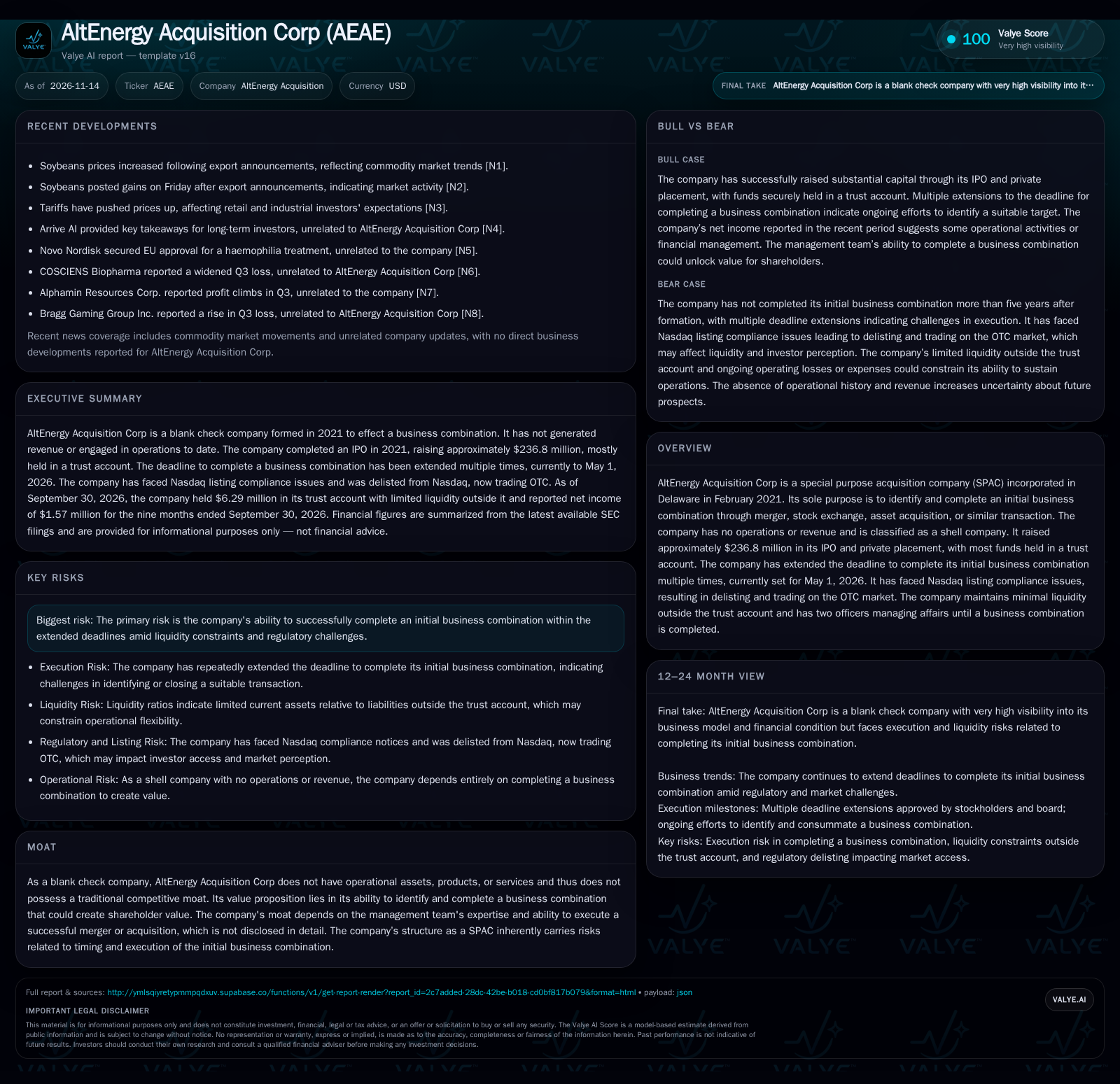
AltEnergy Acquisition Corp, a SPAC formed in 2021, has yet to complete its initial business combination and now trades OTC after delisting from Nasdaq. [S1] [S2]
AltEnergy Acquisition Corp, a SPAC launched in early 2021, is approaching a critical inflection point. Having failed to secure a business combination after multiple deadline extensions, the company now faces the dual pressures of dwindling trust assets and OTC trading status following its Nasdaq delisting. With liabilities outweighing assets and limited cash outside the trust account, AltEnergy’s ability to consummate a value-creating transaction is in question. The coming months will test both management’s execution capabilities and the fundamental viability of the SPAC model under adverse market and regulatory conditions.
Deadline Pressures and Delisting Redefine the SPAC’s Urgency
AltEnergy Acquisition Corp is now operating under a tight timeline: the deadline to complete its initial business combination has been extended multiple times, currently set for May 1, 2026, with further extensions possible only to May 2, 2025, subject to board approval. This ongoing delay highlights persistent difficulties in identifying or closing a suitable deal more than five years post-IPO. [S1]
The company’s securities were delisted from Nasdaq due to failure to meet minimum holders and market value requirements, and now trade OTC. This delisting not only restricts access to certain institutional investors but also diminishes perceived legitimacy and can negatively impact liquidity and share price. [S1]
As of September 30, 2026, AltEnergy’s trust account balance had fallen to $6.29 million, while current liabilities reached $8.81 million. The company reported a current ratio of 0.03 for the period. [S2]
Net income for the nine months ended September 30, 2026, was $1.57 million, but this is not indicative of underlying operating strength, as the company remains a shell without revenue-generating activities. [S2]
SPAC Economics: The All-or-Nothing Equation
As a SPAC, AltEnergy’s economics are binary: value is realized only if it can close a business combination before its deadline. The capital structure consists of the IPO and private placement proceeds, most of which were placed in a trust account. These funds are protected until a merger, but redemptions and ongoing search and administrative costs steadily erode the trust, shrinking the capital available for any eventual transaction.
The company’s only recurring costs are legal, regulatory, and administrative fees, funded from limited cash outside the trust. [S2]
If a deal is struck, the transaction may involve issuing additional shares or warrants, resulting in significant dilution for existing shareholders. Alternatively, incurring debt could heighten post-merger financial risk, reducing flexibility and increasing vulnerability to adverse market or regulatory developments.
SPAC Market Dynamics and the Race for Attractive Targets
AltEnergy competes with hundreds of other SPACs and private equity vehicles for a limited pool of attractive acquisition targets. The protracted search period and repeated deadline extensions suggest that competition is fierce and that either suitable targets are scarce or AltEnergy’s value proposition has not resonated with potential counterparties.
The company’s delisting and OTC trading status further diminish its competitive appeal, as many targets may prefer a SPAC partner with a major exchange listing, which facilitates broader investor access and higher perceived prestige. The lack of full-time management and limited cash for due diligence or deal sweeteners also puts AltEnergy at a disadvantage compared to more resource-rich or better-connected SPAC peers.
As the SPAC market matures, target companies are increasingly able to negotiate favorable terms or simply wait for more attractive offers, raising the bar for deal quality and execution.
Unlocking Shareholder Value Through a Targeted, Timely Deal
The most favorable outcome for AltEnergy is the identification and successful completion of a business combination with a high-quality target before the May 2026 deadline. If the company can leverage its remaining trust assets as a meaningful incentive and negotiate a deal that is both accretive and meets regulatory and shareholder approval, material value could be unlocked for current holders.
Evidence that would confirm this scenario includes the announcement of a signed definitive agreement with a credible target, rapid movement through SEC review, and minimal further redemptions. A high-profile or strategically differentiated target—ideally one with a strong growth profile or visibility into near-term cash flow—would increase the likelihood of post-merger trading stability and the potential for re-listing on a major exchange.
Falsification would occur if no credible deal is announced by early 2026, or if a proposed transaction is rejected by shareholders or regulators.
Erosion of Trust Assets and the Risk of a Forced Wind-Down
The most plausible trajectory is that AltEnergy continues incurring operating and search costs while struggling to secure a suitable target. Trust assets are gradually depleted by ongoing expenses and potential further redemptions, reducing the capital available to entice a target or complete a merger.
In this scenario, the company may pursue last-minute negotiations with less attractive or riskier targets, resulting in a deal with heavy dilution for existing shareholders or poor long-term prospects. Alternatively, failure to secure a deal before the deadline would trigger a liquidation, with remaining trust assets distributed to shareholders—likely at a value below the original $10 per share IPO price after accounting for prior redemptions and expenses.
Confirmation would come from continued deadline extensions, lack of deal announcements, or shareholder votes against proposed transactions. Falsification would require a credible, high-quality business combination announcement and swift progress toward closing.
Failure to Close: Liquidation and Minimal Recovery
In the adverse case, AltEnergy fails to identify or close a business combination before the final deadline. The company would then be forced to liquidate, returning the remaining trust assets to shareholders, likely after deducting further administrative and wind-down expenses.
Given the current liability overhang and the depletion of trust funds, ultimate recovery per share could fall well below the original IPO price, particularly if additional costs or creditor claims emerge. Shareholder value could be further eroded by the OTC trading environment, which may limit liquidity and realization of any final distributions.
Confirmation of this downside would be the absence of a credible deal or extension by the final deadline, or public statements from management signaling the intention to wind up and liquidate.
Testing the AltEnergy Thesis: What Will Determine the Outcome?
Announcement of a definitive business combination agreement with a credible, high-quality target.
Material changes in the trust account balance due to additional redemptions, operating costs, or unexpected liabilities—if disclosed.
Progress toward regulatory and shareholder approvals for any announced transaction, including SEC filings and proxy statements.
Evidence of sponsor or insider financial support to bridge liquidity gaps or fund additional search and closing costs.
Any attempt or success in re-listing the company’s securities on a major exchange, which would boost credibility and investor access.
Shareholder voting outcomes on proposed transactions or further deadline extensions.
Updates on current liabilities, including any new claims or litigation that could further erode trust assets—if disclosed.
Disclosure of changes to management or board composition that might impact deal execution or market perception.
Disclaimer: This is research-only, informational analysis and not investment advice. It may include AI-generated interpretation and general industry context. Always verify important details using primary sources.

Comments