
American Eagle Outfitters Strengthens Omni-Channel Leadership with Robust Brand Momentum
AEO’s latest quarter showcased strong Aerie growth and operational moves that cement its competitive edge and growth trajectory.
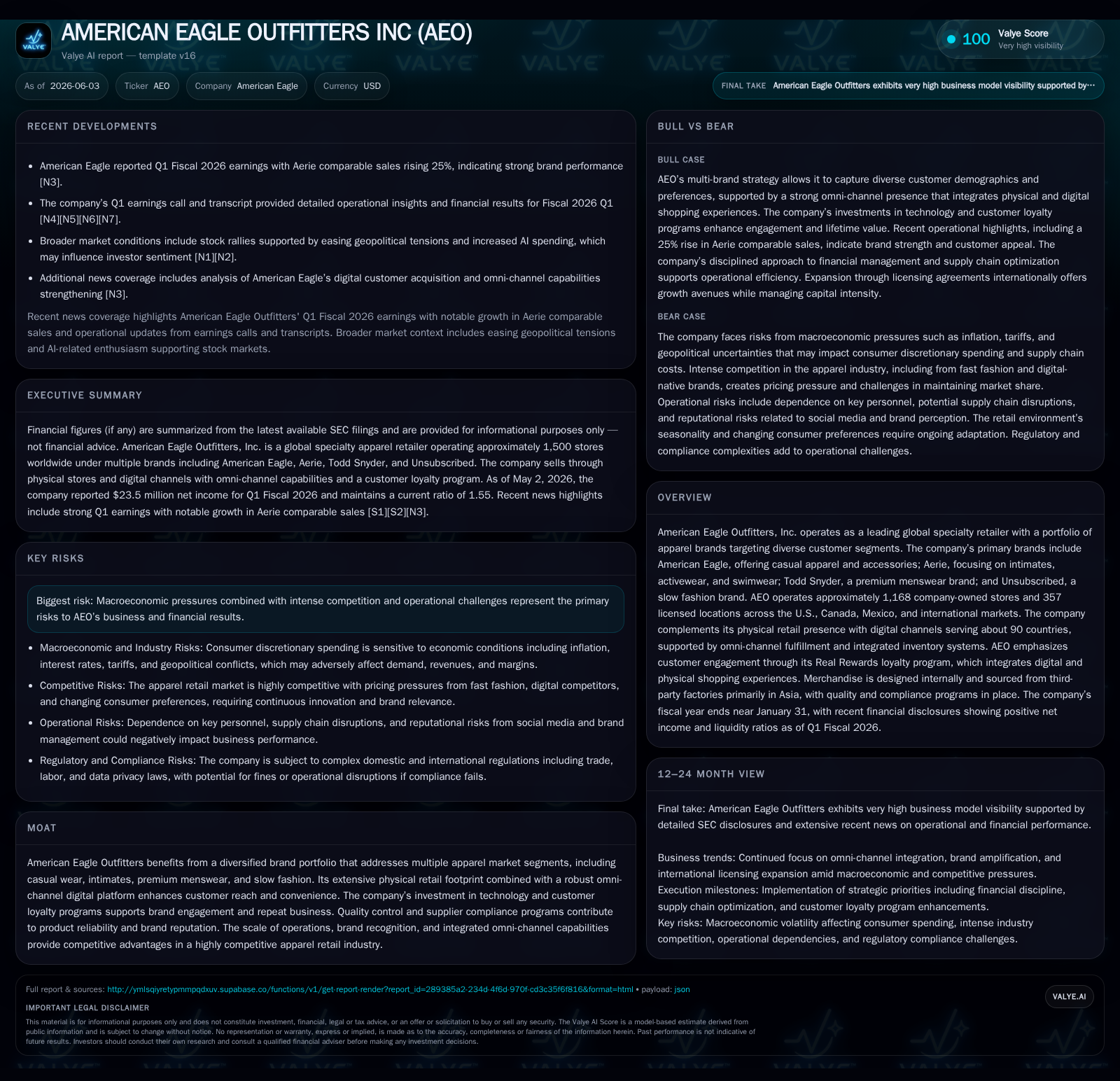
In the first quarter ended May 2, 2026, American Eagle Outfitters reported standout same-store sales growth driven by its Aerie brand, alongside disciplined inventory management and strategic supply chain optimization. The company continues to leverage a diverse brand portfolio that spans casual wear, intimates, premium menswear, and slow fashion, supported by an integrated omni-channel platform and a robust loyalty program. These operational strengths position AEO well amid prevailing macroeconomic headwinds and intense retail competition. However, ongoing risks from consumer spending sensitivity and supply chain cost pressures require continued vigilance. Going forward, near-term sales trends and margin sustainability will be key metrics to monitor.
Latest Quarterly Operating Results: Key Drivers and Implications
American Eagle Outfitters’ most recent quarterly filing (Q1 fiscal 2026 ending May 2) underscores significant momentum largely propelled by the Aerie segment. This brand delivered approximately 25% same-store sales growth, substantially outpacing the broader retail apparel environment marked by discretionary spending caution [S2][N2]. Such robust comp performance drove operating income improvements to $226 million in the quarter ended January 31, 2026—an important signal of both consumer appeal and operational effectiveness [F1].
Concurrently, AEO has taken deliberate steps in managing inventory tightly against rising input costs and markdown pressures. Notably, the strategic shutdown of Quiet Platforms—a regional fulfillment network servicing both internal operations and third-party customers—demonstrates a firm approach toward streamlining supply logistics to reduce complexity and enhance margin control [S1][S4]. This move aligns with broader industry trends favoring leaner distribution models where fulfillment is increasingly integrated across stores and centralized warehouses.
Diverse Brand Portfolio: Revenue Streams and Customer Engagement
American Eagle Outfitters’ business model rests on a multi-brand strategy targeting complementary consumer lifestyle segments. The flagship American Eagle brand emphasizes casual apparel with a heritage in denim leadership, appealing broadly to the digital-native youth demographic seeking authenticity and personal expression. Meanwhile, Aerie stands out by focusing on intimates, activewear (including OFFLINE by Aerie), swimwear, all anchored by progressive messaging around inclusivity and body positivity [S1][S4].
The company supplements these with premium menswear through Todd Snyder—offering tailored elegance inspired by Savile Row fashion—and Unsubscribed, a slow fashion line championing timeless designs made sustainably. Each brand operates both physical retail stores—approximately 805 for AE and 332 standalone locations for Aerie as of early 2026—and extensive direct-to-consumer digital channels spanning roughly 90 countries globally [S1][S4][S10]
Product design is controlled internally to align with brand DNA while leveraging global third-party factories primarily in Asia for cost-effective sourcing. This balance aims to maintain quality standards without compromising margin discipline [S24]. The Real Rewards loyalty platform integrates online and offline customer experiences offering tiered benefits that enhance lifetime value through repeat purchase incentives
Omni-Channel Operations: Inventory Integration and Fulfillment Efficiency
Central to American Eagle's competitive moats is well-developed omni-channel infrastructure that unifies inventory visibility across all physical stores and e-commerce warehouses. This engineering of inventory as a single pool permits flexible fulfillment methods such as "ship to home," "buy online ship from store," curbside pickup, or "store-to-door" shipping where customers order within stores but receive home delivery—all of which cater to enhanced convenience while managing logistics costs [S10].
The removal of Quiet Platforms reflects a pivot away from dispersed third-party fulfillment services toward a more integrated supply chain tailored purely for company needs—expected to sharpen turnaround times while reducing redundancy [S4]. Additionally, focused merchandise inspection programs uphold product reliability amidst complex global sourcing networks [S19].
Such investments in distribution efficiency directly impact critical KPIs like inventory turns and markdown cadence—which underpin gross margin stabilization amid volatility in raw material prices such as cotton inflation affecting many apparel retailers currently.
Industry Positioning: Competitive Set and Supply Chain Considerations
American Eagle Outfitters’ expansive brand portfolio contrasts with some specialty apparel peers who concentrate on mono-brand or fast-fashion models—for example, Abercrombie & Fitch focuses on core youthful lifestyle apparels while Victoria's Secret targets intimates but with different positioning. AEO’s capability to cater to varied market niches while operating nearly 1,500 total retail locations (company-owned plus licensed) provides scale advantages in marketing reach and vendor negotiations [S1].
However, the apparel retail sector remains competitively intense with pricing power constrained by consumers’ discretionary spending elasticities amid ongoing macroeconomic uncertainties including the potential for recessionary pressures in primary markets like the U.S. Inflationary impacts for commodities such as cotton also introduce cost headwinds that require agile supply chain responses.
Furthermore, regulatory compliance entails vigilance over labor practices at manufacturing sites globally alongside adherence to import tariffs, trade regulations including the Uyghur Forced Labor Prevention Act provisions. Such factors contribute layers of risk that can affect product availability or cost structures if suppliers face disruptions or audits [S5][S15].
Growth Drivers: Digital Investments and Loyalty Program Leverage
AEO’s longer-term growth orientation hinges on deepening digital engagement via advanced mobile technologies coupled with targeted digital marketing aimed at driving qualified traffic conversion rates on www.ae.com, www.aerie.com, plus dedicated brand apps. This focus aligns with shifting consumer shopping habits favoring seamless hybrid retail experiences blending online convenience with tactile in-store interaction.
The Real Rewards loyalty program serves as a cornerstone asset fostering higher frequency visits through multi-tiered rewards incentivizing spend upgrades while delivering exclusive perks such as early product access or enhanced shipping benefits. Integration of credit card partnerships within this ecosystem adds financial stickiness through specialized discounts enhancing wallet share among top-tier consumers [S24][N4].
Recent strong Aerie comps indicate that these initiatives resonate well particularly among younger demographics seeking authentic brand stories combined with convenience—validate continuing investments underpinning future revenue expansion potential.
Risks and Constraints: Macroeconomic Sensitivity and Cost Pressures
Despite encouraging momentum, American Eagle remains exposed to tangible risks including downturns in consumer confidence driven by volatile interest rates or labor market uncertainties which could depress discretionary apparel spend. The company’s reliance on foreign manufacturing introduces vulnerabilities related to geopolitical tensions or supply chain disruptions impacting lead times or costs.
Cotton price inflation exemplifies commodity-driven margin pressure typical in this space; any sustained spikes could constrain profitability unless offset by pricing strategies or efficiency gains.
Regulatory complexities around product safety standards, data privacy laws governing customer information usage especially under evolving AI legislation frameworks in multiple jurisdictions present compliance burdens potentially elevating operational costs or exposing reputational risks if mishandled [S1][S5][S13].
What to Watch Next: Guidance, Execution Milestones, and Market Signals
Key near-term indicators include follow-through on same-store sales trends particularly maintaining or growing Aerie’s outsized momentum; monitoring markdown cadence aligned with inventory turn metrics reflecting supply-demand balance will shed light on gross margin trajectories.
Progress on expanding licensing agreements internationally—especially in Asia where digital marketplaces amplify reach—and ongoing store footprint optimizations will be telling on execution discipline.
Updates on omni-channel technology rollouts enhancing checkout convenience or personalization capabilities will hint at further strengthening customer engagement.
Management commentary during upcoming earnings reports about cost inflation management strategies or pricing elasticity assessments could clarify resilience amid uncertain economic environments [S3][N3]
Financial Snapshot: Profitability, Liquidity, and Balance Sheet Strength
At the end of Q1 fiscal 2026 reporting period (May 2), American Eagle Outfitters held $103 million in cash equivalents against zero reported debt yielding net cash position supportive of flexibility for investment priorities or unexpected contingencies [F1]. Current assets stand at approximately $1.24 billion versus current liabilities near $802 million resulting in a healthy current ratio around 1.55 indicating short-term liquidity sufficiency
Operating income reached about $226 million (quarter ended January 31), complemented by net income nearing $192 million illustrating solid earnings generation capacity amidst mixed macroeconomic signals [F1][S2]. This conservative capital structure underpins potential strategic agility within both domestic markets heavily weighted towards U.S., Canada operations alongside international expansion ambitions.
Disclaimer: This analysis is based solely on publicly available SEC filings dated through June 3, 2026 (,[F1]) supplemented by related news disclosures () without speculative projections or investment advice.
Disclaimer: This is research-only, informational analysis and not investment advice. It may include AI-generated interpretation and general industry context. Always verify important details using primary sources.

Comments