
Bicycle Therapeutics: Platform Potential, Pipeline Contraction, and the Stakes of Oncology Innovation
Bicycle Therapeutics is navigating a pivotal transition: deep cost cuts and pipeline reprioritization sharpen its focus on next-generation oncology assets, but the absence of product revenue, reliance on collaborations, and the inherent risk of early-stage modalities test the durability of its novel peptide platform.
Bicycle Therapeutics enters late 2026 with reported liquidity position and a narrowed oncology pipeline after halving operating expenses and deprioritizing select programs. Its proprietary Bicycle® platform—synthetic constrained peptides—remains unproven at commercial scale, and the company’s future depends on upcoming clinical data, partnership execution, and its ability to convert unique molecular design into a viable therapeutic and business model.
Bicycle Therapeutics, known for its proprietary platform of synthetic, structurally constrained peptides called Bicycle® molecules, is at a crossroads as 2026 closes. The company has undertaken a dramatic halving of its operating expenses, deprioritized parts of its pipeline after regulatory setbacks, and now relies on a smaller set of oncology-focused programs for future growth. The stakes are clear: can Bicycle’s innovative platform deliver meaningful clinical—and ultimately commercial—value before funding or scientific momentum runs out?
Recent Pipeline Cuts and Financial Restructuring Shape Bicycle's 2026 Trajectory
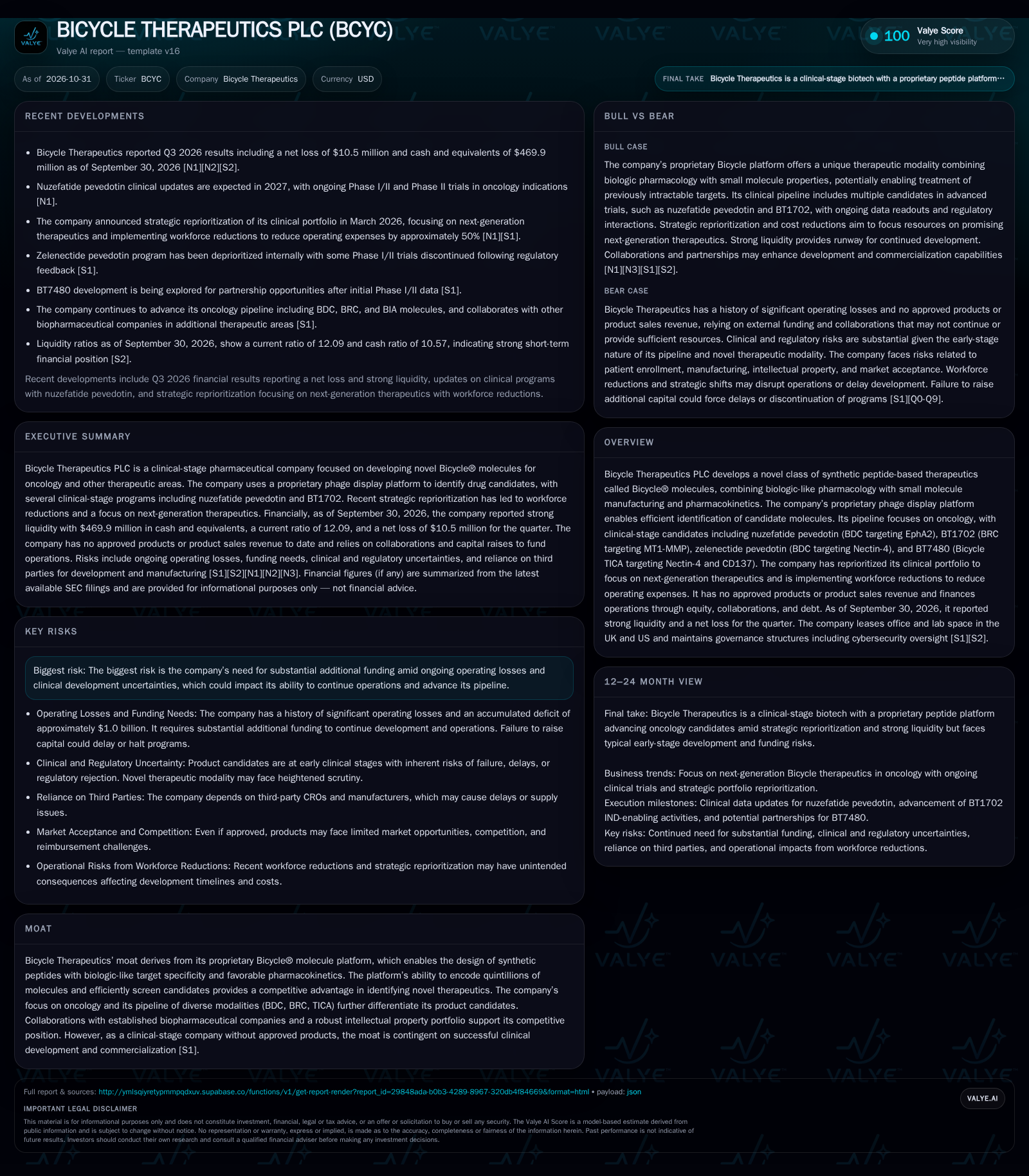
Bicycle Therapeutics closed the third quarter of 2026 with $469.9 million in cash and equivalents and a current ratio of 12.09, following a strategic decision to reduce operating expenses by approximately 50% through workforce reductions and portfolio narrowing [S2]. This move was triggered by regulatory feedback leading to the deprioritization of zelenectide pevedotin and the discontinuation of some associated trials [S1]. The lead asset, nuzefatide pevedotin, remains in ongoing Phase I/II and II clinical trials for advanced solid tumors and metastatic pancreatic ductal adenocarcinoma, with critical data readouts expected in 2027 [N1] [S1]. No products have been approved or commercialized, and the company continues to report net losses, with a $10.5 million loss in Q3 2026 [S2]. Revenue is limited to collaborations, several of which have recently ended [S1] [S2]. These developments collectively represent a decisive pivot toward a smaller, more focused oncology pipeline and a leaner cost structure, but leave the company with heightened dependence on the success of a few near-term clinical programs.
Platform Economics: Promise and Uncertainties in Translating Peptide Innovation to Value
Bicycle’s business model is predicated on the potential to create highly selective, potent therapeutics by leveraging its phage display platform to generate and screen vast libraries of synthetic peptides. If successful, these molecules could combine the target specificity of biologics with the manufacturability and tissue penetration of small molecules, theoretically enabling differentiated efficacy and safety profiles in oncology and beyond.
However, with no products yet approved and no product sales, the company’s economics are entirely pre-commercial and reliant on external funding. Operating costs have historically been high due to R&D intensity, but the recent 50% reduction in expenses aims to extend the cash runway and concentrate resources on the most promising assets [S1]. Revenue to date has been derived from collaboration agreements with large pharmaceutical partners—such as Bayer, Novartis, Ionis, and Genentech—providing milestone payments and R&D support, but some of these partnerships have ended, reducing near-term non-dilutive funding [S1] [S2].
If a Bicycle molecule succeeds in late-stage trials and secures approval, the economic upside could be substantial due to the large addressable markets in oncology. Typical industry practice would involve high gross margins for successful proprietary oncology drugs, but this is offset by the need for significant ongoing investment in clinical development, commercialization, and post-market studies. The company’s capital needs remain substantial, and future funding (either through additional partnerships, equity issuance, or debt) is likely unless a commercial launch or major out-licensing deal occurs.
Assessing Differentiation: Platform, Pipeline, and the Competitive Oncology Landscape
Bicycle’s competitive positioning rests on its proprietary peptide modality, which is designed to access targets considered intractable for traditional small molecules or antibodies. The platform’s ability to generate structurally unique molecules at scale could, if validated, offer a pipeline advantage by enabling first-in-class or best-in-class assets.
However, the oncology drug development space is intensely competitive and crowded with established players developing antibody-drug conjugates, radioconjugates, and immune cell agonists—often with deeper pipelines, larger commercial infrastructure, and more clinical data. The company’s collaborations with major pharma suggest external validation of the platform, but the recent termination of some partnerships and deprioritization of programs indicate that the translation from platform promise to pipeline success is not guaranteed [S1].
Potential substitutes include next-generation biologics, bispecific antibodies, and small-molecule inhibitors targeting similar pathways. The question is whether Bicycle’s molecules can deliver superior efficacy, safety, or convenience, and whether switching costs or intellectual property protection will be sufficient to defend share if and when products reach market. Until clinical data from lead programs read out, the company’s competitive moat remains largely theoretical.
Breakthrough Clinical Data and Strategic Partnerships Catalyze Value Creation
The most favorable scenario for Bicycle Therapeutics is that nuzefatide pevedotin and/or BT1702 demonstrate compelling efficacy and safety in ongoing trials, particularly in indications with high unmet need such as metastatic pancreatic ductal adenocarcinoma. Positive data could accelerate regulatory pathways, attract new or expanded partnerships, and potentially enable out-licensing or co-commercialization deals that bring in substantial upfront and milestone payments.
If the company secures a major partnership for BT7480 based on initial Phase I/II data, this could provide both non-dilutive funding and external validation of the platform’s versatility. A commercial launch—albeit likely several years away—would transform the business model, introducing high-margin product revenue and potentially justifying further investment in pipeline expansion.
Evidence that would confirm this scenario includes: (1) robust mid- or late-stage clinical results with clear differentiation from existing therapies; (2) the announcement of new collaborations or licensing agreements with meaningful financial terms; and (3) regulatory progress such as breakthrough therapy designation or expedited review status. Falsification would come from negative or inconclusive trial outcomes, inability to secure partnerships, or regulatory setbacks.
Concentration on Core Programs Sustains Operations Pending Pivotal Trial Results
The most plausible near-term outcome is that Bicycle Therapeutics sustains operations by focusing on its trimmed pipeline, using its substantial cash reserves to advance nuzefatide pevedotin and BT1702 through key clinical milestones. The company may continue to seek partnership opportunities for BT7480 and other assets, but is unlikely to secure major new collaborations until more clinical data are available.
Progress is measured by successful patient enrollment, clean safety signals, and incremental efficacy data in ongoing trials. The risk of further pipeline attrition remains present, but a full strategic reset or forced asset sale is not imminent as long as liquidity holds.
Confirmation of this scenario would come from steady clinical progress, controlled cash burn in line with guidance, and periodic partnership updates—even if not transformative. Falsification would involve unexpected trial discontinuations, rapid cash depletion, or significant adverse regulatory feedback.
Clinical Failures or Funding Shortfall Force Further Retrenchment or Strategic Alternatives
The principal risk is that one or more of the remaining core assets fail in the clinic, either due to lack of efficacy, safety concerns, or regulatory barriers. Given the company’s reliance on a small number of lead programs, any major clinical setback could make it difficult to attract new partnerships or justify continued independent development, particularly given the absence of product revenue and the recent termination of some collaborations.
If clinical progress stalls and external funding options dry up, Bicycle could be forced to pursue more drastic cost reductions, halt additional programs, or seek a sale of assets or the company itself. The company’s large accumulated deficit and lack of commercial traction would limit negotiating leverage in such a scenario.
Downside confirmation would include negative or inconclusive clinical data, public acknowledgment of difficulties in fundraising, additional workforce or program cuts, or a strategic review announcement. Falsification of this outcome would require clear positive clinical progress and evidence of sustained or renewed partner interest.
Milestones That Will Determine Whether Bicycle’s Platform Can Deliver Durable Value
Clinical trial results and updates for nuzefatide pevedotin, particularly in metastatic pancreatic ductal adenocarcinoma and other advanced solid tumors, will be decisive for the company’s future trajectory.
Progression of BT1702 toward IND submission and eventual entry into clinical trials would test the platform’s ability to generate a pipeline beyond the lead asset.
The pace and outcome of partnership discussions for BT7480, including any disclosed deal terms or strategic collaborations, will provide a barometer of external confidence in the platform.
Regulatory interactions, including feedback on trial design, safety, or efficacy endpoints, will help clarify the path to potential approval and commercial viability.
Any announcements of new or expanded collaborations, licensing deals, or co-development agreements, with disclosure of financial terms if available, would help validate the business model.
Updates on terminated or at-risk collaborations, and whether the company is able to replace lost external funding, will impact near-term potential financial flexibility.
Disclaimer: This is research-only, informational analysis and not investment advice. It may include AI-generated interpretation and general industry context. Always verify important details using primary sources.

Comments