
Avis Budget’s Fleet Composition and Pricing Pressures Shape Q2 Performance
Avis Budget Group's Q2 2026 results reveal margin pressures from fleet composition shifts and intensified pricing competition amid volatile used vehicle markets.
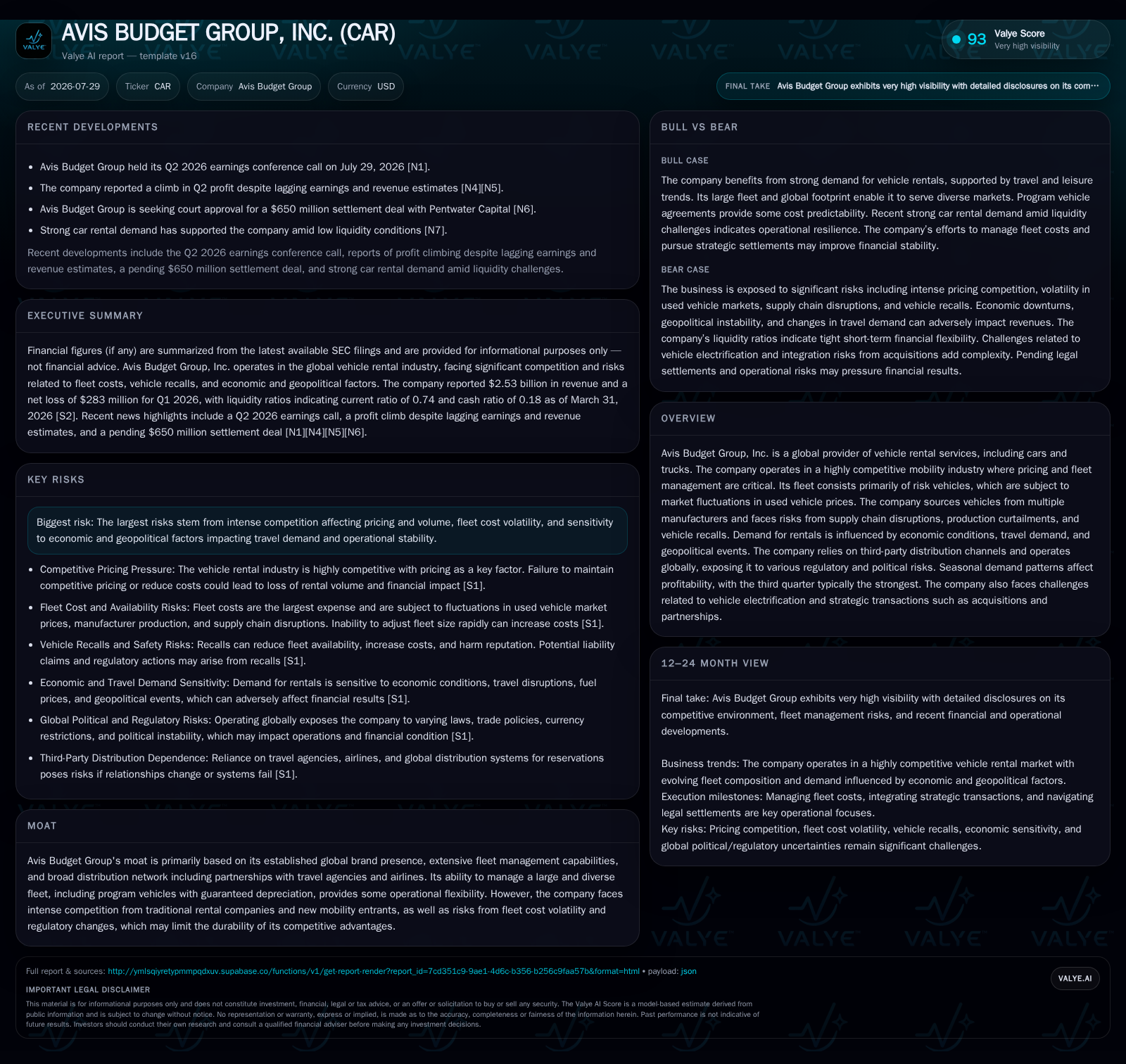
In its latest 10-Q, Avis Budget Group highlighted key operational shifts in its fleet composition and pricing dynamics that are influencing revenue and profitability in Q2 2026. The company's heavy reliance on risk vehicles exposes it to used car market volatility, while competitive pricing pressures impact rental rates and utilization metrics. Seasonal demand patterns continue to influence quarterly results, with distribution partnerships remaining a crucial factor for customer access. Growth opportunities tied to vehicle electrification and mobility innovation face regulatory and competitive headwinds. Financially, Avis maintains a solid cash position but contends with a tight current ratio and notable leverage requiring ongoing liquidity management.
Q2 2026 Operational Update: Fleet Composition and Pricing Dynamics
Avis Budget Group’s Q2 2026 10-Q filing reveals that the company’s rental fleet remains heavily weighted toward risk vehicles, which accounted for approximately 84% of the fleet during the period [S2][S1]. Risk vehicles, unlike program vehicles, do not benefit from guaranteed depreciation rates through manufacturer agreements, exposing Avis to significant variability in fleet depreciation costs driven by fluctuations in used vehicle residual values. This fleet composition directly impacts key operating metrics such as fleet turnover costs, depreciation expense, and ultimately gross margins.
Fleet utilization and average daily rental rate (ADR) continue to be critical KPIs influencing revenue per available vehicle (RevPAV). Avis reported that seasonal adjustments in fleet size are ongoing to align capacity with demand patterns, but the high proportion of risk vehicles increases margin volatility due to less predictable residual value outcomes [S2]. This dynamic underscores the importance of fleet sourcing strategy in balancing program and risk vehicles to manage earnings variability.
Fleet Economics Under Pressure: Used Vehicle Market Volatility
The company’s reliance on risk vehicles exposes it to cyclical used vehicle market conditions, particularly the pricing of one- to two-year-old used cars [S1][S2]. Avis detailed that depreciation expense and gains or losses on vehicle disposals are materially affected by fluctuations in used vehicle residual values, which have been volatile due to changes in consumer demand, inventory levels, new vehicle pricing, and broader economic factors
Used vehicle disposal channels include traditional auctions, online platforms, direct-to-dealer sales, and retail lots. Variability in prices realized through these channels can lead to increased losses on disposals or higher depreciation charges when market prices fall below book values. This pressure on fleet economics can compress operating margins if replacement vehicle acquisition costs do not adjust favorably in tandem.
Effective fleet sourcing remains a strategic priority, with program vehicles offering more predictable depreciation but representing a smaller portion of the fleet. Maintaining a high risk vehicle mix suggests Avis is positioned for potential earnings volatility in the near term, contingent on used vehicle market trends.
Competitive Pricing Environment and Impact on Utilization
Avis operates in a highly competitive vehicle rental market characterized by pricing pressure from traditional rental companies and emerging mobility disruptors [S1]. The company acknowledged that pricing competition remains a primary factor affecting rental volume and revenue. In Q2 2026, this competitive environment contributed to subdued ADR growth despite pockets of demand strength.
Fleet utilization rates showed some softness relative to seasonal expectations, reflecting the trade-off between sustaining rental volumes through pricing concessions and the margin dilution caused by lower rates [S2]. This tension highlights the challenge of optimizing fleet utilization while preserving profitability amid aggressive pricing dynamics.
Distribution Channels: Complexity and Customer Reach
Avis leverages a broad distribution network encompassing direct reservation channels and third-party partnerships, including travel agencies, airline loyalty programs, and global distribution systems (GDS) [S1]. These channels expand customer access and diversify booking sources but introduce complexity in managing commission structures, pricing consistency, and transaction volumes.
The company’s filings emphasize sensitivity to changes in third-party agreements or shifts in channel volumes as potential risks to top-line performance. Nonetheless, this diversified distribution approach mitigates concentration risk and supports customer acquisition across multiple geographies and segments.
Seasonality and Fleet Management
Seasonal demand patterns remain a defining characteristic of Avis’s business, with Q3 typically representing peak leisure travel periods that drive higher rental volumes and improved margins [S1]. Q2 2026 results reflected a transitional phase with moderate revenue growth and utilization metrics consistent with early seasonal ramp-up.
Fleet sizing decisions are closely aligned with these seasonal trends, balancing the need to add capacity ahead of peak demand while minimizing idle fleet costs during softer periods. This tactical fleet management is essential to optimizing revenue and controlling depreciation expense.
Growth Initiatives: Electrification and Mobility Innovation
Avis has committed to expanding its electric vehicle (EV) fleet as part of broader sustainability and regulatory compliance efforts [S1][S2]. While fleet electrification offers long-term growth potential and aligns with emerging environmental mandates, it presents near-term cost challenges including higher acquisition prices for EVs and uncertain residual value trajectories given evolving market adoption.
Beyond electrification, Avis is investing in advanced fleet management and dynamic pricing technologies designed to enhance utilization and revenue optimization. These innovations aim to improve responsiveness to real-time demand fluctuations but must be balanced against existing cost pressures and competitive pricing constraints.
Risks and Operational Challenges
Key risks identified include intensifying pricing competition that could necessitate further rate concessions, thereby compressing operating margins [S1][S2]. Regulatory developments related to emissions standards and travel restrictions may increase fleet costs or suppress demand temporarily.
Supply chain disruptions remain a concern, with potential delays in vehicle deliveries impacting fleet turnover and availability [S20]. Additionally, rising insurance and labor costs, including those related to independent contractor regulations, add complexity to cost management
Monitoring Points and Upcoming Catalysts
Future quarterly earnings releases will be important to monitor for updates on rental volume trends, ADR and RevPAV movements, and progress on fleet electrification targets discussed at recent investor forums [N1][N3]. The pace of fleet renewal, particularly the integration of EVs, will be a key indicator of operational flexibility amid used vehicle market volatility. Changes in third-party distribution agreements should also be watched closely for their impact on customer acquisition costs and revenue mix.
Financial Position and Liquidity
As of March 31, 2026, Avis Budget Group reported cash and cash equivalents of $528 million, with current assets totaling approximately $2.18 billion against current liabilities of about $2.95 billion, resulting in a current ratio of 0.74 [F1][S2]. This ratio signals some working capital constraints requiring careful liquidity management.
While total and net debt figures from prior periods indicate ongoing leverage considerations, no updated debt levels were disclosed in the latest quarter [F1]. Avis’s capital structure includes asset-backed securities financing complemented by traditional credit facilities, making continued access to credit markets critical amid potential volatility.
This analysis is based exclusively on publicly filed SEC documents and reported financial data through mid-2026. It contextualizes Avis Budget Group’s operational and financial performance within the competitive vehicle rental industry, emphasizing sector-relevant KPIs such as fleet composition, utilization, ADR, and fleet depreciation dynamics. The discussion highlights the interplay between fleet sourcing strategies, pricing competition, distribution complexity, and emerging growth initiatives like electrification.
Financial Snapshot
- Cash & equivalents: $528 million (as of 2026-03-31) [F1]
- Current assets: $2.18 billion (as of 2026-03-31) [F1]
- Current liabilities: $2.95 billion (as of 2026-03-31) [F1]
- Current ratio: 0.74 (as of 2026-03-31) [F1]
Disclaimer: This is an informational analysis based on public filings and does not constitute investment advice or research views.
Disclaimer: This is research-only, informational analysis and not investment advice. It may include AI-generated interpretation and general industry context. Always verify important details using primary sources.

Comments