
Option Care Health Navigates Reimbursement Pressures with Scale and Cybersecurity Oversight
Q2 2026 results highlight revenue resilience amid reimbursement headwinds and the importance of operational risk management.
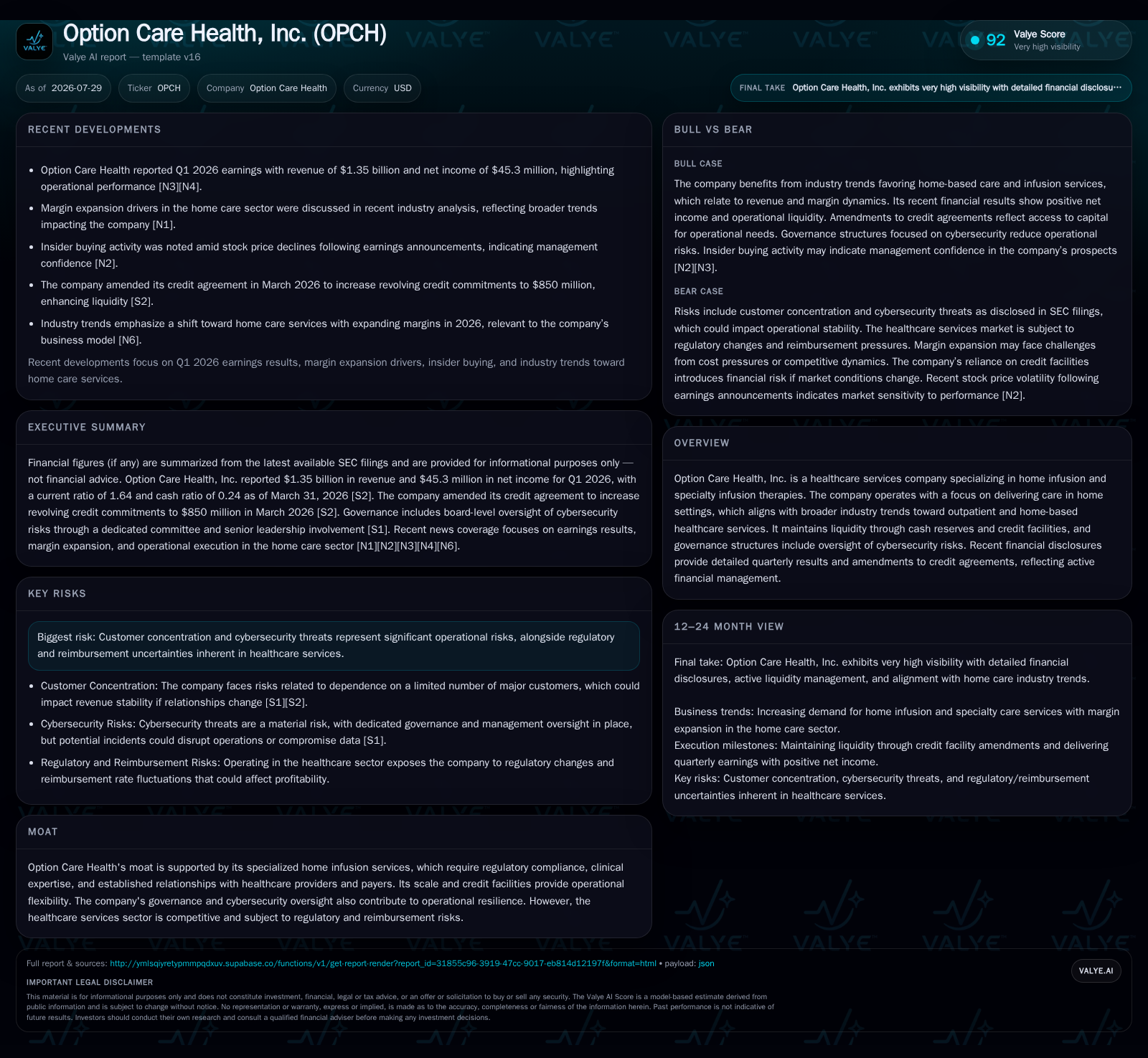
Option Care Health delivered steady second-quarter 2026 results, reflecting stable patient volumes and strategic financial management despite ongoing reimbursement challenges endemic to home infusion services. The company's specialized home infusion model positions it well in a shifting healthcare landscape favoring outpatient care, supported by robust cybersecurity governance and active credit facility management. However, risks remain from payer concentration, reimbursement variability, and regulatory complexities that require close monitoring.
Recent Operating Update: Q2 2026 Results and Financial Developments
Cybersecurity governance remains a strategic priority, with oversight provided by the Quality, Technology and Compliance Committee (QTCC) at the board level. The QTCC receives regular updates from the Chief Information Security Officer (CISO), who leads a comprehensive cybersecurity program designed to mitigate risks associated with protected health information and operational continuity in a highly regulated environment [S1]. This governance structure aligns with industry best practices to address increasing cyber threats targeting healthcare providers.
Business Model: Home Infusion Therapy and Revenue Drivers
Option Care Health operates within the home healthcare services industry, specializing in home infusion therapy that delivers complex intravenous treatments—including antibiotics, hydration, parenteral nutrition, and specialty medications—directly to patients in their homes [S1]. Revenue is primarily generated through payer reimbursement models involving Medicare, Medicaid, and private insurers, with payments tied to service volume, negotiated reimbursement rates, and payer contracts. The company’s monetization depends heavily on maintaining high patient adherence and clinical compliance to ensure ongoing therapy utilization and eligibility for reimbursement.
The business model requires sophisticated care coordination, integrating pharmaceutical supply chain management and medical device deployment to safely administer therapies outside traditional inpatient settings. Option Care’s scale provides some leverage in payer negotiations, but reimbursement variability and rate reductions remain endemic risks. Key operating metrics include patient volume, average revenue per patient, payer mix, clinical outcomes, and readmission rates, all of which directly influence operating margins and cash flow stability.
Industry Structure and Competitive Landscape
The home healthcare and specialty infusion sector is positioned at the nexus of healthcare providers, payers, pharmaceutical suppliers, and patients, emphasizing outpatient care to reduce costs and improve patient outcomes. Option Care competes with other home healthcare providers, specialty pharmacy services, and hospital outpatient infusion centers, which often benefit from hospital referral networks but may face higher cost structures.
Peer companies such as DaVita Inc. illustrate the industry trend toward expanding specialized outpatient care through integrated platforms that combine clinical management with payer partnerships [N2]. Option Care’s competitive positioning leverages its scale, clinical expertise, and payer relationships to navigate reimbursement challenges and regulatory oversight. Maintaining clinical compliance and cybersecurity risk management are critical differentiators that support payer trust and patient safety.
Growth Drivers and Market Dynamics
Demographic trends, particularly the aging U.S. population, drive sustained demand for home-based chronic disease management and specialty infusion therapies. Payer incentives increasingly favor value-based reimbursement models that encourage shifting care from inpatient to outpatient settings, expanding the addressable market for home infusion providers.
Technological advancements in infusion devices and telehealth monitoring enhance patient adherence and enable remote clinical oversight, reducing hospital readmissions—a key quality metric influencing reimbursement eligibility. Additionally, the expansion of reimbursable therapy categories and strategic partnerships with payers and health systems contribute to more stable referral networks and contract terms, supporting predictable patient volume growth.
Risks and Operational Watchpoints
Customer concentration risk remains significant, with a reliance on a limited number of large payers exposing Option Care to potential contract renegotiations or payment delays that could impact cash flow and margins [S1][S2]. Changes in Medicare and Medicaid reimbursement policies represent a critical external risk, given their substantial influence on home healthcare economics.
Cybersecurity threats pose ongoing operational risks; breaches could disrupt services or result in regulatory penalties under HIPAA. Clinical compliance risks, including staffing shortages or procedural lapses, could increase adverse events, damaging reputation and payer relationships.
Competitive pressures from hospital outpatient centers and specialty pharmacies may compress pricing, while pharmaceutical and medical device supply chain disruptions could constrain service delivery capacity.
Key Metrics and Monitoring Priorities
Investors and analysts should monitor quarterly trends in patient volume and average revenue per patient to assess demand dynamics and payer reimbursement impacts. Changes in payer mix or contract terms warrant close scrutiny for potential margin effects.
The effectiveness of telehealth and remote monitoring initiatives can be evaluated through clinical outcomes such as reduced readmission rates and improved patient adherence. Capital deployment efficiency will be reflected in the utilization of the expanded revolving credit facility and related investments in clinical and technological capabilities.
Regulatory developments affecting home healthcare reimbursement policies remain a pivotal external factor influencing long-term profitability and growth prospects.
This analysis integrates the latest SEC filings through July 2026 with industry context to provide a detailed overview of Option Care Health’s operating environment, business model, competitive positioning, growth drivers, risk factors, and financial status. It emphasizes the importance of payer reimbursement dynamics, cybersecurity governance, and clinical compliance in shaping the company’s performance within the home healthcare services sector.
Disclaimer: This is a research-only, informational analysis and does not constitute investment advice. All data and claims are sourced from publicly available SEC filings and credible news reports.
Disclaimer: This is research-only, informational analysis and not investment advice. It may include AI-generated interpretation and general industry context. Always verify important details using primary sources.

Comments