
Coherus Oncology’s Growth Reliant on LOQTORZI Commercial Expansion and Pipeline Progress
Q1 2026 results reveal ongoing operating losses but progress in LOQTORZI sales and strategic pipeline development.
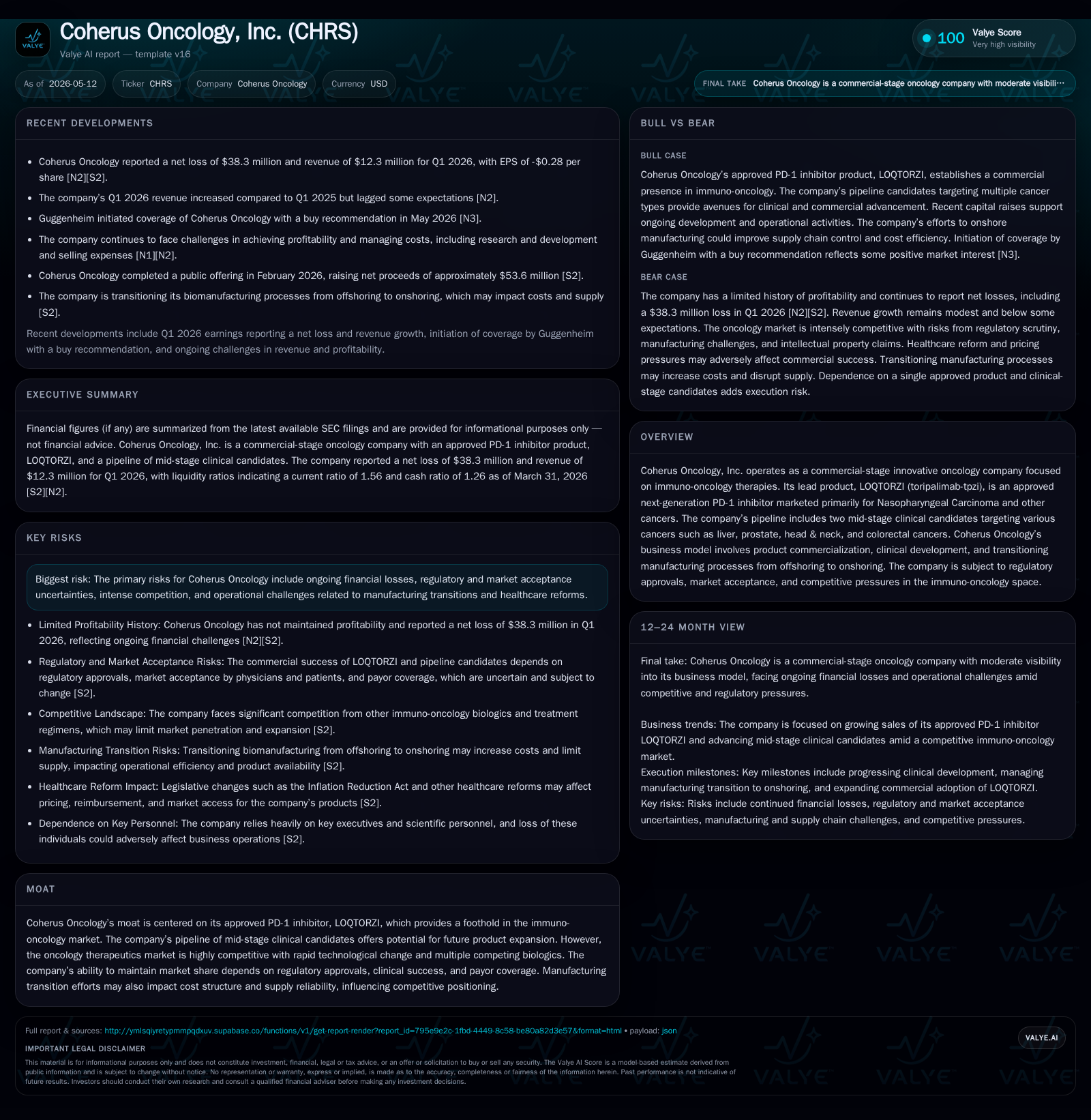
Coherus Oncology, Inc. remains focused on commercialising its approved PD-1 inhibitor LOQTORZI, targeting nasopharyngeal carcinoma and expanding indications, supported by a mid-stage pipeline in various cancers. Its Q1 2026 filing highlights steady revenue from LOQTORZI but ongoing losses as the company invests in development and manufacturing scale-up. Competitive pressures, regulatory scrutiny, and healthcare reforms pose risks, while manufacturing transitions aim to enhance cost structure and supply chain reliability. The path to growth hinges on successful market adoption, clinical progress of pipeline candidates, and maintaining payor coverage amid industry cost containment.
Recent Operating Update
Coherus Oncology's Q1 2026 filing ([S2], [S3]) confirms continued commercialization of its lead PD-1 inhibitor, LOQTORZI (toripalimab-tpzi). The product generated $11.8 million in net revenues during the quarter ended March 31, 2026. Despite generating sales, the company continues to report operating losses as it invests heavily in advancing its clinical pipeline and building commercial infrastructure.
This latest quarterly update shows Coherus actively transitioning its manufacturing processes from offshore suppliers to more localized onshore production — a strategic move aimed at improving cost efficiency and supply reliability. However, this operational shift also introduces execution risk amid regulatory compliance demands under FDA oversight ([S2]).
Importantly, Coherus notes a cash position of approximately $115 million with a current ratio of about 1.56 ([F1]), which management believes is sufficient to fund planned expenditures for at least the next twelve months ([S14]). This liquidity position supports ongoing clinical development programs and sales expansion initiatives despite negative earnings.
Business Model
Coherus Oncology operates a vertically integrated model centered on developing innovative immuno-oncology agents and commercializing them primarily in the U.S. market. Revenue currently derives mainly from net product sales of LOQTORZI for nasopharyngeal carcinoma (NPC), where it holds FDA approval both as monotherapy post-platinum chemotherapy failure and as first-line treatment combined with cisplatin and gemcitabine ([S1]).
The company’s revenue mechanics hinge on physician prescription adoption validated by clinical guidelines placement and reimbursement coverage by third-party payors, including Medicare Part B for physician-administered therapies ([S2], [S17]). Volume growth depends on increased patient diagnosis, physician acceptance, broader label indications via ongoing trials, plus insurance formulary inclusion which affects pricing power.
Margins and cash conversion are influenced by drug manufacturing costs — now undergoing transformation with the shift toward onshoring — pricing environment shaped by competitive biosimilars or biologics in immuno-oncology landscape plus healthcare reform pressures such as the Inflation Reduction Act () that imposes price negotiation constraints ([S15], [S22]). While marketing efforts focus on expanding awareness among oncologists treating NPC and related cancers, long-term commercial success depends on ability to expand indications through proprietary combinations utilizing pipeline agents.
Industry Structure & Competitive Position
Coherus operates within a highly dynamic immuno-oncology sector dominated by several established biologics targeting PD-1/PD-L1 axes developed by pharma incumbents like Merck (Keytruda) and Bristol-Myers Squibb (Opdivo). The competition features rapid innovation cycles with increasing emphasis on combination regimens utilising checkpoint inhibitors plus novel agents aiming at resistance mechanisms or alternative immune pathways.
LOQTORZI represents Coherus’ entry as a next-generation PD-1 inhibitor with initial approval in NPC — a relatively niche oncology segment compared to broader solid tumors targeted by larger peers. This narrower market footprint provides an initial foothold but limits scale absent expansion into more common cancers such as head & neck squamous cell carcinoma or colorectal cancer targeted by its pipeline mid-stage candidates ([S1], [S21]).
The marketplace demands continuous clinical differentiation and favorable payer coverage terms. Manufacturing scalability and supply chain robustness increasingly factor into commercial viability. Coherus’ move to localize production aims to mitigate risks of supply disruptions seen among biologics manufacturers facing complex Cold Chain logistics ().
Customer behavior is shaped by oncologists’ trust in clinical efficacy/safety profiles backed by robust trial data and guideline endorsements facilitating prescribing decisions. Uptake benefits from limited available competitive therapies in this indication.
Pipeline Clinical Progress: Two mid-stage candidates targeting liver, prostate, head & neck, colorectal tumors complement LOQTORZI’s potential indication breadth expansion through combination therapies — a path designed to create differentiated regimens increasing overall addressable market size ([S21]).
Ex-U.S. Licenses: Holding global rights enables Coherus to out-license international territories as pivotal clinical data materializes, allowing partnerships that can accelerate geographical expansion without proportionate capital burden ([S21]).
Manufacturing Onshoring: Transitioning manufacturing closer to core markets is expected to optimize cost structures over time enhancing gross margins while improving supply stability — critical given biologic complexity ().
Regulatory Approvals & Reimbursement: Securing additional label expansions alongside attaining durable coverage agreements with payors will be essential growth enablers enhancing prescription volume trajectories.
Risks & Growth Constraints
Coherus faces significant industry-standard challenges: ongoing financial losses highlight capital intensity inherent to oncology drug development with uncertainty around achieving sustained profitability ([F1], [S2]).
Regulatory scrutiny remains substantial given the complexity of developing biologics; delays or failures could stall anticipated growth pipelines ([S2]). Additionally, sudden disruptions at the FDA due to resource limitations or policy shifts can impact approval timelines adversely.
Competition from large biopharma firms offering similar or potentially more efficacious PD-1/PD-L1 inhibitors threatens market share and pricing flexibility ([S2], ). Pricing pressures intensified by recent U.S. healthcare reforms including IRA impose constraints on allowable price increases potentially compressing margins ([S15], [S22]).
Manufacturing transitions carry operational risks impacting supply continuity. Execution missteps could hinder revenue recognition or increase costs unexpectedly.
Dependence on third parties for clinical trial execution introduces added risk should contract research organizations fail meeting timelines or compliance mandates ([S2]). Legal/regulatory compliance costs associated with pharmaceutical industry-specific laws add potential liabilities if violated deliberately or inadvertently ([S17]). Finally, inflationary pressures may exacerbate operational expense inflation affecting overall cost profiles ([S18]).
What to Watch Next
Key forthcoming milestones will include:
- Q2-Q4 2026 updates on LOQTORZI sales momentum indicating market penetration curves.
- Clinical trial data readouts for tagmokitug and casdozokitug assessing efficacy/safety signals impacting regulatory submission plans.
- Announcements regarding licensing agreements outside the U.S. concerning pipeline candidates.
- Progress reports on manufacturing transition stages highlighting cost impacts or supply improvements.
- Changes in payor coverage policies tied to new federal/state healthcare legislation affecting reimbursement landscape.
- Updated guidance (if provided) clarifying capital runway expectations or potential funding requirements amid cash burn patterns.
Financial Profile Summary
Latest financial snapshot
| Metric | Value | Period |
|---|---|---|
| Cash & equivalents | $115mm | |
| 2026-03-31 | ||
| Current assets | $206mm | |
| 2026-03-31 | ||
| Current liabilities | $132mm | |
| 2026-03-31 | ||
| Current ratio | 1.56x | |
| 2026-03-31 |
Source: SEC companyfacts cache [F1].
Note: Latest total debt data is dated; current exact debt balances unconfirmed per filings.[F1]
The company’s cash position supports near-term operations alongside incoming revenues from LOQTORZI sales. However, continued operating losses underscore reliance on capital markets or partnerships for sustained development funding.[F1][S14]
This analysis synthesizes Coherus Oncology's most recent financial disclosures alongside industry context without making investment recommendations or predictions about future performance.
Disclaimer: This is research-only, informational analysis and not investment advice. It may include AI-generated interpretation and general industry context. Always verify important details using primary sources.

Comments