
CenterPoint Energy: Infrastructure Scale, Regulatory Forces, and the Next Phase of Utility Resilience
With a vast regulated asset base spanning electricity and natural gas, CenterPoint Energy is navigating the dual challenge of operational risk and evolving regulatory expectations. Recent profit growth, asset divestitures, and customer-focused initiatives frame a new chapter—where resilience, rate design, and infrastructure modernization will likely determine the company’s trajectory.
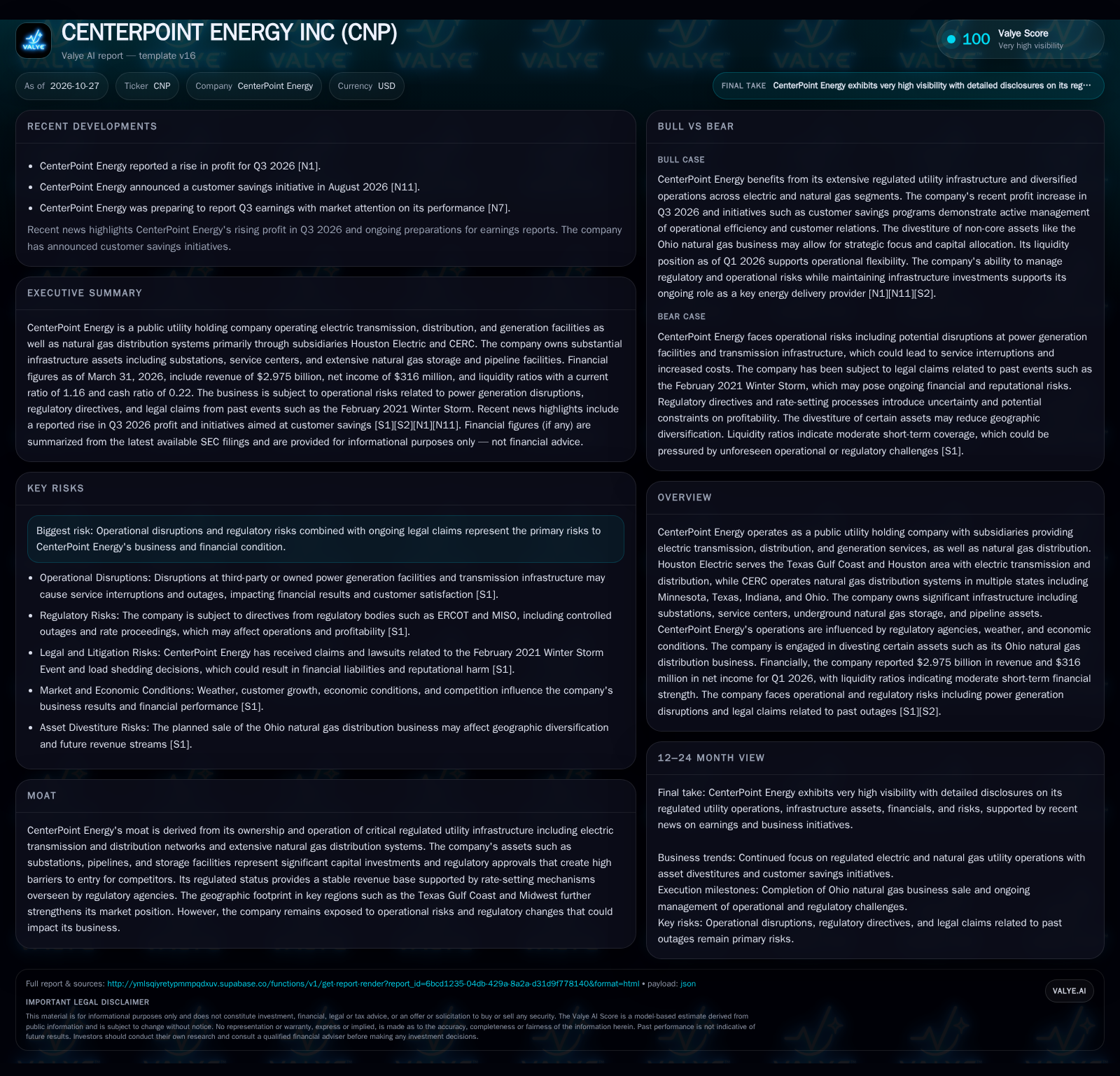
CenterPoint Energy’s Q3 2026 profit increase and ongoing asset divestitures underscore a refocusing on core regulated utility operations. While its infrastructure scale and rate-based business model support stable earnings, operational disruptions, regulatory directives, and legal liabilities remain persistent risks. The company’s financials show reported liquidity position and an active approach to customer relations, but future value hinges on regulatory outcomes, cost management, and the success of strategic initiatives.[S1] [S2] [N1]
CenterPoint Energy enters late 2026 at a strategic crossroads: its expansive regulated infrastructure positions it as a backbone utility for the Texas Gulf Coast, Midwest, and other key regions, but the company’s risk profile remains defined by operational volatility, regulatory intervention, and legacy legal liabilities. Recent profit gains and customer-focused programs highlight management’s efforts to drive efficiency and maintain public trust, while the planned sale of its Ohio gas business signals a renewed focus on core markets. The company’s performance over the next several years will likely depend on its ability to manage rate cases, cost inflation, grid modernization, and the evolving expectations of regulators and customers alike.
Recent Profitability, Asset Sales, and Customer Initiatives Set the Tone
CenterPoint Energy reported a rise in Q3 2026 profit, reflecting a period of relative operational and rate stability. This comes amid a broader strategic shift, as the company moves to divest its Ohio natural gas distribution business—a transaction expected to close in late 2026—which may allow CenterPoint to sharpen its focus on core markets but reduces geographic diversification.[S1] [N1]
The company also announced a customer savings initiative in August 2026, signaling management’s responsiveness to regulatory and public pressure on affordability and service reliability.
Financially, as of March 31, 2026, CenterPoint reported $2.975 billion in quarterly revenue, $316 million in net income, and liquidity metrics with a current ratio of 1.16 and cash ratio of 0.22—indicative of moderate short-term coverage but not substantial financial slack.[S2]
The business remains exposed to operational risks, regulatory directives, and legal claims—especially those stemming from the 2021 winter storm event and subsequent service interruptions.[S1]
How CenterPoint Monetizes Regulated Infrastructure—and the Levers That Matter
CenterPoint Energy’s economics are anchored in the regulated utility model: revenue is largely determined by state and regional rate-setting agencies that allow cost recovery plus a regulated return on invested capital. This model creates relatively stable cash flows, but also means earnings growth is closely tied to capital deployment, prudent cost management, and the outcome of rate cases.
The company’s asset base is extensive, including 355 substations, 141,000 miles of gas mains, and significant storage and service infrastructure.[S1] These assets are capital-intensive and require ongoing investment, but once rate-based, they support predictable returns. Operating leverage is present but limited by regulatory frameworks that aim to balance profitability with customer affordability.
Volume drivers include regional economic growth and weather patterns, which influence electricity and gas demand. Pricing is dictated by regulatory approval, while mix is shaped by the balance between electric and natural gas operations. The announced sale of the Ohio gas business could reduce revenue base but may free up capital for reinvestment in higher-growth or more strategic areas.
[S2]
Barriers to Entry, Regulatory Shields, and the Limits of Utility Moats
CenterPoint’s competitive position is underpinned by high barriers to entry: building duplicative electric and gas networks is economically prohibitive and subject to stringent regulatory approvals. The company’s regulated monopoly status in its core service territories shields it from direct competition in transmission and distribution.
However, utility moats are not absolute. Regulatory agencies can constrain returns, mandate costly upgrades, or impose penalties for perceived service failures. Cost overruns, reliability issues, or customer dissatisfaction can trigger adverse rate decisions or reputational harm.
Substitution threats are limited in the near term—customers have few alternatives for electric or gas delivery—but over the long term, distributed generation (solar, batteries), electrification trends, and policy changes could erode utility dominance, especially if rate structures shift or customer-owned resources become more economical.
Peer competition is most relevant in the context of regulatory benchmarking, capital allocation, and investor perceptions, rather than direct market share battles.
What Could Unlock Durable Value: Regulatory Wins and Infrastructure Modernization
The most favorable scenario for CenterPoint involves a virtuous cycle: successful completion of the Ohio gas business sale enables redeployment of capital into core markets, funding grid modernization, resilience upgrades, or advanced metering. If management executes on customer savings initiatives and operational reliability, the company could secure favorable regulatory outcomes—higher allowed returns, smoother cost recovery, or accelerated rate base growth.
Upside would be confirmed by evidence such as consistent above-peer allowed returns on equity, successful delivery of major capital projects on time and on budget, and customer satisfaction metrics supporting constructive rate cases. Accelerated adoption of distributed energy resources (DERs) could be a tailwind if CenterPoint is able to integrate these assets and earn on them within the regulated framework.
A notable reduction in legal liabilities—such as favorable resolution of winter storm claims—would further unlock capital and reduce risk premiums.
Stable Operations, Regulatory Scrutiny, and Incremental Progress
The most plausible trajectory is one of steady but unspectacular progress: CenterPoint continues to deliver regulated utility services, with earnings shaped by allowed returns, capital deployment pace, and regulatory scrutiny. Revenue and profit growth track inflation and modest customer additions, while cost pressures and periodic storm impacts create earnings volatility.
The company’s strategic focus narrows post-Ohio divestiture, but this does not dramatically alter its risk/reward unless new growth opportunities or efficiency gains are realized. Regulatory agencies remain vigilant on rate design and affordability, constraining outsized margin expansion.
Evidence to the contrary would include adverse rate cases, significant cost overruns, or an uptick in legal or regulatory penalties.
Where It Could Go Wrong: Regulatory Pushback, Storm Fallout, and Cost Escalation
Downside risk centers on a confluence of regulatory, operational, and legal setbacks. If CenterPoint faces unfavorable rate case outcomes—such as disallowed cost recovery, lower allowed returns, or mandated customer refunds—earnings power could be impaired. Major storm events or system failures could trigger large-scale outages, costly repairs, and renewed legal liabilities.
Cost inflation in labor, materials, or required investments (e.g., for resilience or decarbonization) could outpace regulatory recovery, compressing margins. The loss of Ohio’s revenue base could expose the remaining portfolio to concentration risk if regional economies weaken.
Downside would be confirmed by evidence such as denied or delayed rate increases, material legal settlements or judgments, deterioration in service reliability metrics, or rising debt costs due to credit rating pressure.
Milestones and Metrics That Will Test the CenterPoint Investment Thesis
Progress and ultimate terms of the Ohio natural gas business divestiture, including use of proceeds and impact on capital allocation.
Trends in allowed returns on equity (ROE) and regulatory outcomes in core service territories—especially Texas and Indiana.
Execution and customer impact of the 2026 customer savings initiative, including any regulatory settlements or rate adjustments tied to the program.
Resolution and financial impact of legal claims related to the February 2021 winter storm event.
Quarterly service reliability indices (e.g., SAIDI/SAIFI) and any major outage events or regulatory investigations.
Capital investment levels and the pace of rate base growth, particularly in grid modernization or resilience projects.
If disclosed, trends in customer growth, churn, or satisfaction within the company’s major utility segments.
Disclaimer: This is research-only, informational analysis and not investment advice. It may include AI-generated interpretation and general industry context. Always verify important details using primary sources.

Comments