
DTE Energy's Capital Intensity and Regulatory Dynamics Shape its Clean Energy Transition
Michigan-based DTE Energy balances substantial regulated utility investment with evolving environmental mandates and market risks.
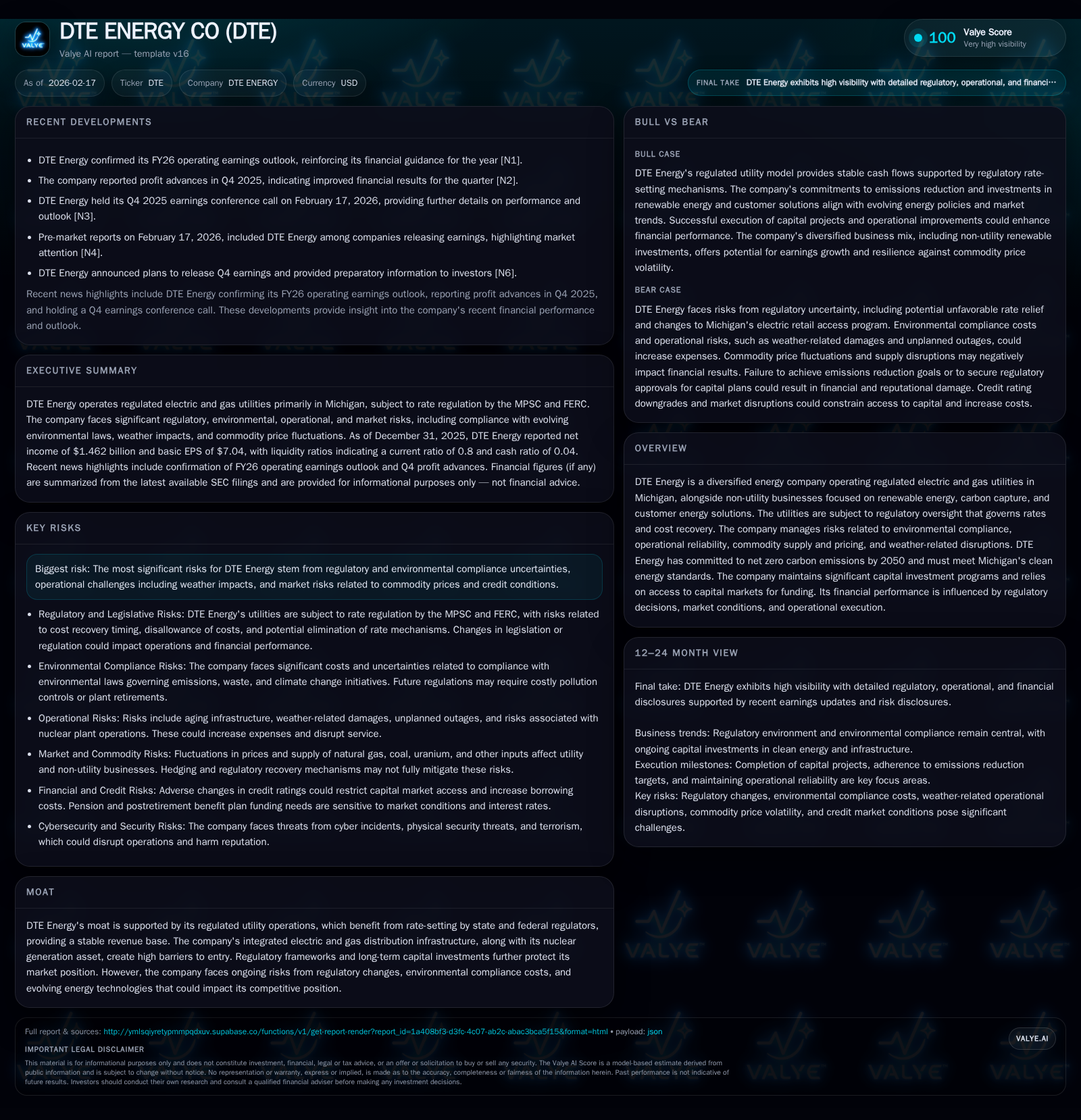
DTE Energy, a Michigan-focused electric and gas utility, operates under stringent regulatory oversight that governs rates and cost recovery while managing significant capital investment demands. Its commitment to net-zero carbon emissions by 2050 and compliance with Michigan's 100% clean energy standard by 2040 drive a complex transition, made challenging by regulatory, environmental, operational, and weather-related risks. The company’s integrated infrastructure, including nuclear generation, underpins its competitive moat but also subjects it to unique operational and compliance demands. DTE’s liquidity depends on capital market access amid rising funding needs driven by infrastructure modernization and renewable investments.
Company Overview
DTE Energy Co operates primarily as a regulated electric and gas utility in Michigan while pursuing growth in renewable energy projects, carbon capture technologies, and customer-centric energy solutions. The regulated utilities form the backbone of its business model, generating largely stable revenues supported by regulatory frameworks administered by the Michigan Public Service Commission (MPSC) for electricity and natural gas distribution services [S1][S4].
This integrated business structure provides DTE Energy a moat underpinned by long-term rate-setting processes that allow cost recovery plus a regulated return on invested capital, especially for large infrastructure assets with high barriers to entry such as its transmission grid and nuclear power plant [F1]. Non-utility segments augment the base business but face more direct exposure to competitive forces and commodity price fluctuations.
Regulatory Environment and Rate Setting
Electric and gas rates are tightly controlled by state (MPSC) and federal regulators (FERC) with approvals required for all material rate changes. This process ensures that DTE Energy can recover prudently incurred expenses but introduces lag risks between cost incurrence and recovery through customer rates. Regulators periodically scrutinize cost elements, including operation & maintenance expenses, capital investments, fuel procurement costs, environmental compliance spending, and depreciation schedules [S4][S6]. Disallowance or reimbursement delays can materially impact cash flows.
Michigan's partial retail electric choice program adds complexity; while alternative electric suppliers (AES) can serve up to 10% of retail loads under legislated caps, full service customers returning from AES contract require utility backup capacity which can pressure the generation fleet's economics. This hybrid market framework poses legislative and financial uncertainties influencing load forecasts and resource planning [S4][S10].
Environmental Compliance and Clean Energy Transition
DTE is subject to extensive environmental regulation encompassing air emissions controls, water quality standards, waste management protocols, and federal fuel standards. Compliance drives significant ongoing capital expenditure commitments especially for pollution control retrofits or plant retirements. The entity bears joint liability for historical site remediation costs which are inherently uncertain in both timing and magnitude [S4][S14].
Crucially, Michigan requires utilities like DTE to meet a 100% clean energy standard by 2040 along with intermediate carbon reduction targets aligned towards net zero emissions by 2050. Achieving this demands shifting generation portfolios away from fossil fuels toward renewables plus deploying emerging technologies like battery storage or carbon sequestration. Technological progress is pivotal but unpredictable; regulatory approvals for capital plans transitioning generation assets present an additional hurdle [S19][S14].
Energy waste reduction initiatives mandated by state law also complement these goals but can reduce volumetric sales growth by lowering customer consumption, presenting revenue headwinds despite social benefits [S10].
Operational Risks: Weather, Infrastructure Aging & Nuclear Operations
DTE’s utilities operate critical infrastructure subject to physical wear-and-tear given many components' service life nearing design limits. Unexpected equipment failures or outages can increase costs through emergency repairs or market purchases of power at spot prices above internal generation costs [S20][S19].
Weather volatility — such as storms causing distribution line damage or extreme temperatures affecting demand patterns — introduces considerable operational risk. Storm restoration expenses may exceed regulatory allowances creating earnings variability. Moreover, such events risk reputational damage and trigger regulator scrutiny [S8][S20].
Ownership of a nuclear generating plant introduces specialized risk domains. Nuclear facilities command enhanced security measures, rigorous federal oversight driving elevated capex requirements, complex decommissioning obligations funded through dedicated trust assets vulnerable to market swings, plus inherent operational hazards that could disrupt output or financial results if incidents occur [S12][S20].
Financial Position: Capital Markets Access & Leverage Profile
Maintaining liquidity is critical as DTE navigates a capital-intensive modernization trajectory. As of latest filings year-end 2025, cash balances were $208 million against current liabilities of $5.4 billion resulting in a subunit current ratio (~0.8), signaling heavy short-term obligations relative to liquid assets [F1].
The firm actively utilizes debt markets evidenced by multiple junior subordinated debenture series extending decades into the future — instrumental in funding capital programs including renewable integrations . Rising macroeconomic interest rates represent risks escalating borrowing costs while credit rating downgrades could restrict market access requiring higher funding costs or collateral postings.
Pension obligations also impose cash flow strains dependent upon asset returns relative to projected liabilities; poor performance here could necessitate further cash contributions affecting discretionary investment capacity [S13][S15].
Non-Utility Business Growth Opportunities & Risks
While core earnings derive from utilities insulated from competition due to regulation, DTE has directed initiatives toward non-utility renewable natural gas projects plus energy-related technology solutions aiming to leverage U.S. federal incentives like the Renewable Fuel Standard and tax credits linked to low-carbon deployment [S16]. These endeavors carry growth potential but remain sensitive to policy shifts—such as IRS audits disallowing claimed credits—or fluctuating commodity prices impacting project's profitability.
Non-utility segment performance variability introduces diversification but also economic cyclicality reflecting greater susceptibility than the regulated business lines [S17][S16].
Workforce Stability Considerations
The company employs roughly 7,450 represented workers with major labor contracts expiring in 2027. Labor disputes such as strikes could disrupt operations substantially increasing costs and affecting service reliability during negotiations or work stoppages [S19]. This highlights the importance of proactive labor relations management amid broader uncertainties.
Sector Contextual Analysis
Shares crossing above the 200-day moving average recently signal renewed technical interest possibly reflecting confidence in execution of strategic growth plans amidst sector peers showing mixed earnings trends recently [N12][N14]. Remaining committed to capex scaling while managing accelerating regulatory requirements is a balancing act typical across regulated utilities shifting toward decarbonization.
Key sector-native factors include monitoring rate case outcomes influencing allowed ROE levels as reg heads peg utility valuation proxies on these metrics deeply tied with capital deployment ambitions; asset obsolescence risk inherent in fast-evolving technology adoption curves; plus increasing emphasis on cyber resilience given interconnectivity of grid components spanning hundreds of vendor systems vulnerable to attacks or outages beyond sole control [S7][S11].
Conclusion
DTE Energy’s strategic position as a Michigan-regulated utility supported by legacy infrastructure combined with ambitious clean energy targets encapsulates the classic tradeoffs facing traditional utilities modernizing their generation fleets amid external pressures including evolving regulations, variable weather patterns impacting system reliability costs, competitive retail access dynamics tempered by legislative caps, alongside ensuring capital market access remains unencumbered at reasonable funding rates.
Achieving its mid-century net zero goal will necessitate navigating regulatory uncertainties carefully while investing heavily in infrastructure resilience — both physical assets aging out and digital security frameworks — alongside fostering non-utility innovation segments benefiting from subsidy frameworks yet exposed to policy risk.
The company's moat entrenched in rate-regulated earnings offers stability but not immunity from operational shocks or environmental mandates influencing financial outcomes going forward.
This analysis is based on publicly available information from DTE Energy's latest SEC filings up to February 2026 and recent earnings disclosures without providing investment advice or recommendations.
Disclaimer: This is research-only, informational analysis and not investment advice. It may include AI-generated interpretation and general industry context. Always verify important details using primary sources.

Comments